Alvin Lucier
Since its advent within the broader of movement of modernism during the early years of the 20th century, avant-garde music has almost always struggled to reach the audience for which it was conceived. It is a diverse creative territory, forward thinking and radical by nature, that pursues the unknown, attempting to create new forms of organized sound that are more democratic, accessible, and open than those of the past.
Emerging during the late 1950s and across the 1960s, the second generation of the post-war avant-garde can be regarded as a representational return to the ideologies that define the practice. As a result, they collectively created what is arguably the most revolutionary body of thought and action within 20th century music.
Despite the persistence of the definitions and perceptions cemented by their predecessors, these artists and their work —Éliane Radigue, Pauline Oliveros, Alvin Curran, Takehisa Kosugi, Frederic Rzewski, David Behrman, Terry Riley, Robert Ashley, Steve Reich, La Monte Young, Tony Conrad, Gordon Mumma, and countless others have yielded unparalleled influence.
As a total work, Chambers contends with the relationship between the knowing and understanding of what we hear, our perception of the source of a sound, and its relation to space. When viewed in the immediate context of Vespers, as it is here, it presents as an unexpected inversion of what was to come. While it plays on the relation of sight and the sonic actor, here what is seen and unseen takes on a dynamically different role. Equally, there is not one space to perceive, but many.
For the realization of Chambers, battery-operated radios, tape recorders, and various kinds of electric toys are hidden in paper bags, shoes, kettles, a suitcase, and other small resonant spaces, which not only limit the perception of these object to their sounds alone, but take on the role of acoustic actors on the sounds within, each space becoming as individual and distinct as the object it contains. Taking it one step further, rather than being static, these "chambers" are carried by performers into larger ones —those in which the work is performed— further altering the sounds which occupy them, drawing the ear, once again, to the action of that which contains a body of sound.
Because the works of Alvin Lucier have occupied a seminal place in the landscape of avant-garde sound for more than half a century, their materiality forming the bedrock on which so many have subsequently built, there can be a natural tendency to focus on their immediate forms, each springing from a radical and forward thinking approach to the generation of sound —what the sounds are and what makes them, rather than how they operate and why they were made. This, at least in some part, underscores the importance of this reissue of the two works before us now.
Like most of Lucier's efforts from the 1960s, there is a purity to discover them in recorded form that draws the ear toward the remarkable territories of conceptualism and ideology that lay at their core. Not only are they a crucial window into Lucier's early years and less acknowledged efforts, but they activate a more dynamic awareness, philosophically, of the broad creative paradigm and context in which he has continuously worked. These are works which belong to a movement which sought to rejoin the avant-garde with the society it was conceived to serve. A human music of expanded consciousness, to be occupied, tapping the fundamental need to communicate and understand through sound.
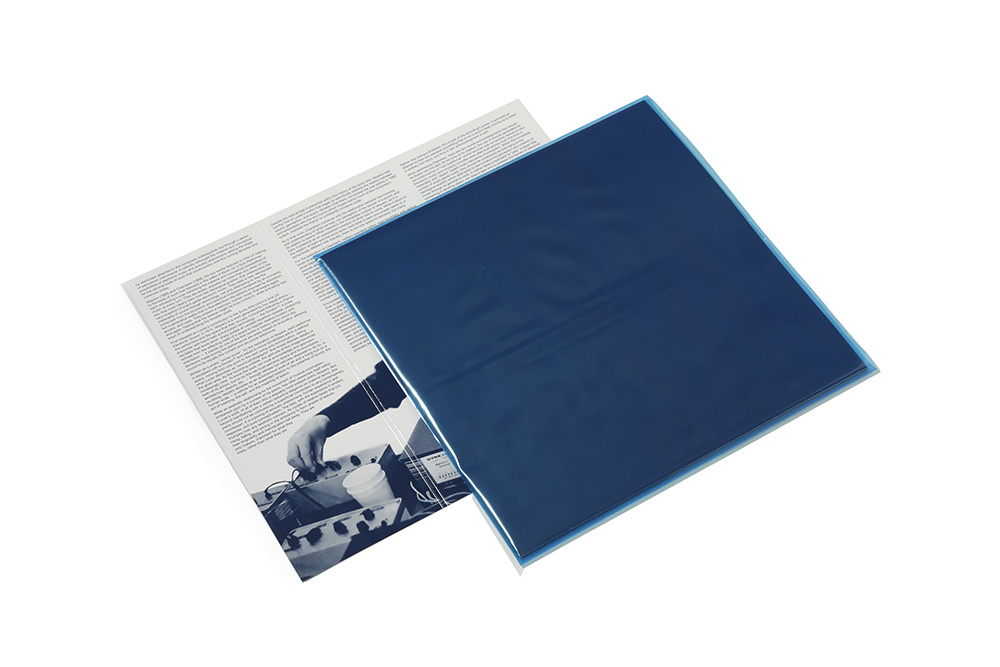
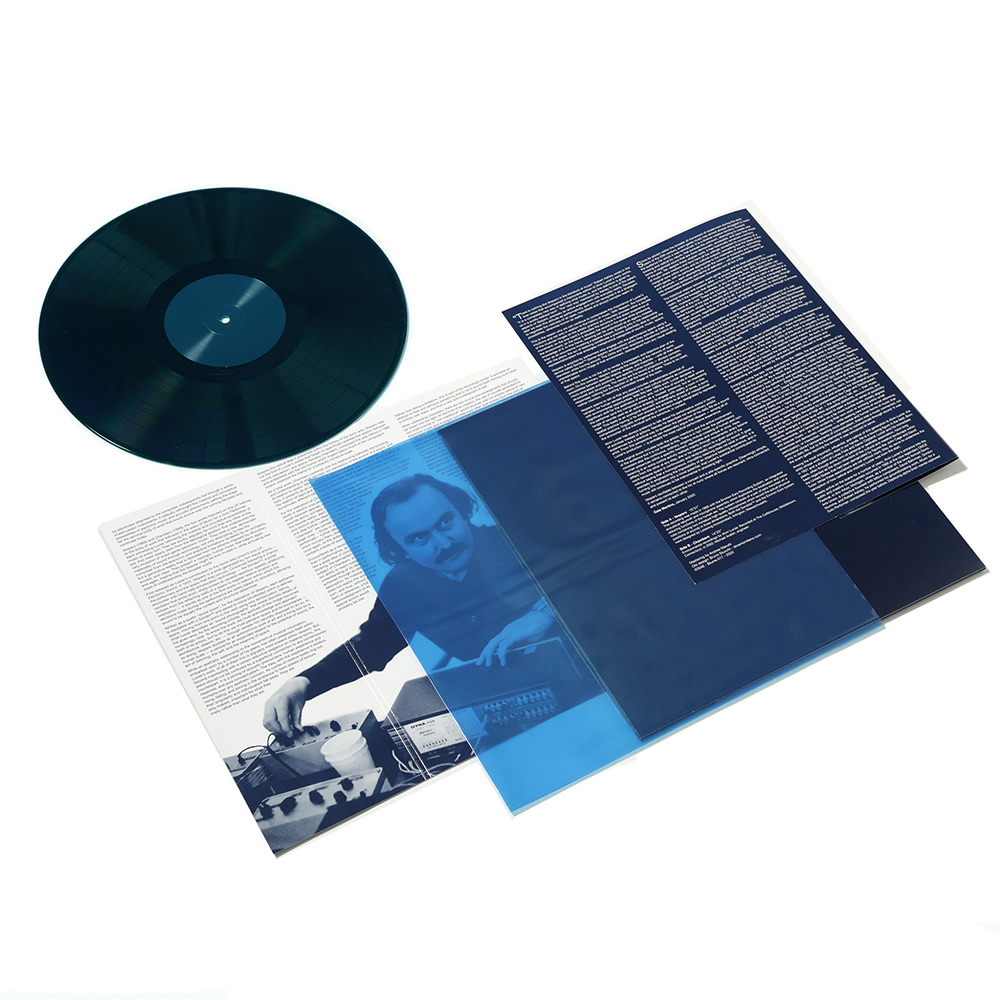
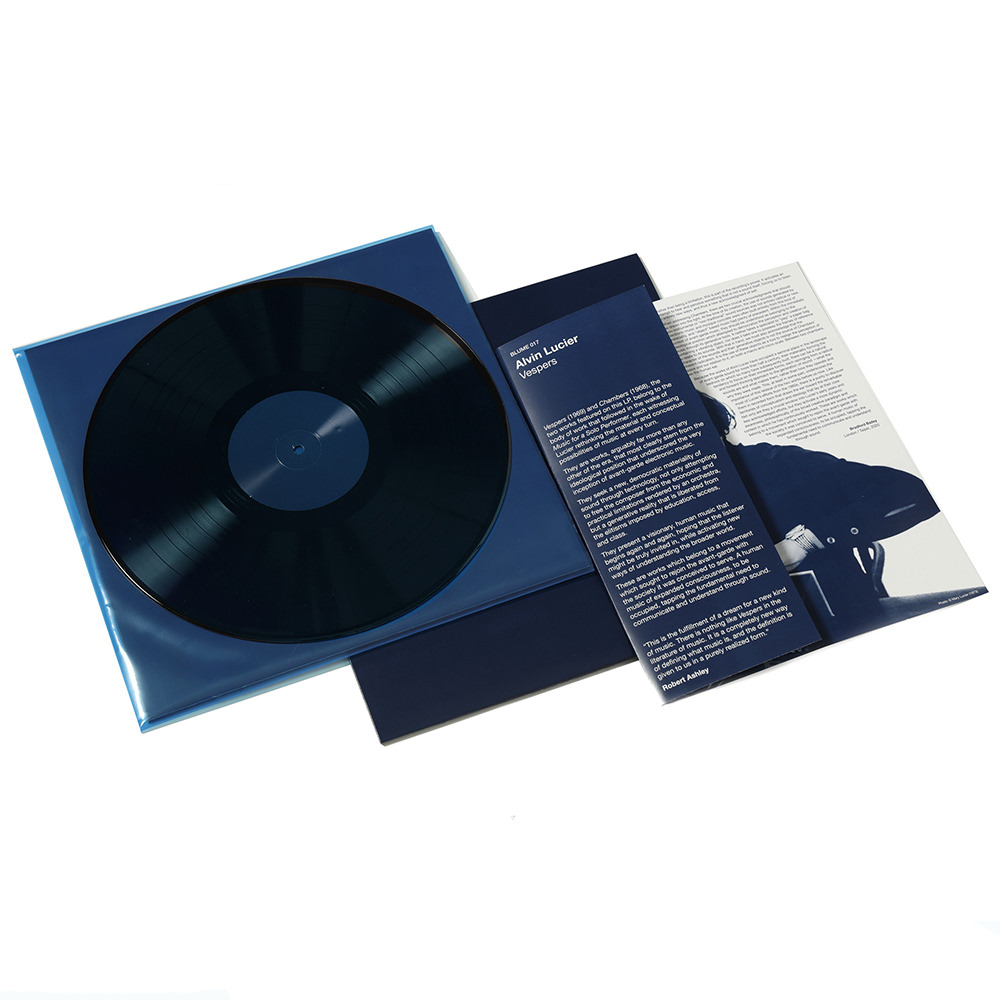
Vespers is released by Blume in an edition of 300 copies on 160gr audiophile coloured (dark blue) vinyl, housed in the label's traditional monochrome package coming with a newly designed obi-strip/insert with an introduction by Robert Ashley, liner-notes by Bradford Bailey and Gaia Martino, and also including a printed inner sleeve housing a Nagaoka anti-static record sleeve, plus an all-new transparent colour-matching outer plastic sleeve.