★Wergo
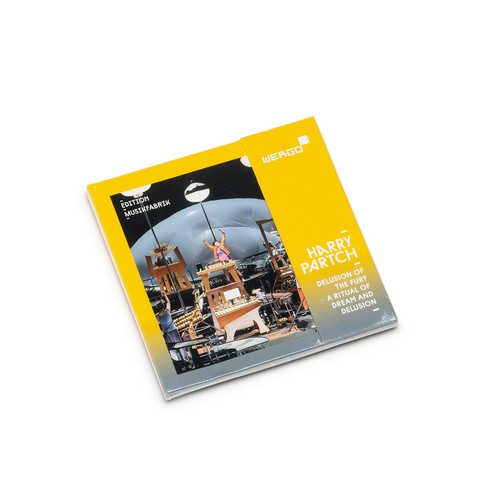
Delusion Of The Fury
“It was only with Partch that a music began to take shape that could do equal justice to the physical desire for rhythmic pulse and a curiosity for new, unheard sounds; a music that enthralls us despite, or rather, precisely because of its unfamiliarity. A music for which we have no category, and which has no location, and yet in a strange way is grounded.” – Heiner Goebbels
The American composer Harry Partch (1901-1974) is considered a pioneer of the Just Intonation movement and was far ahead o…
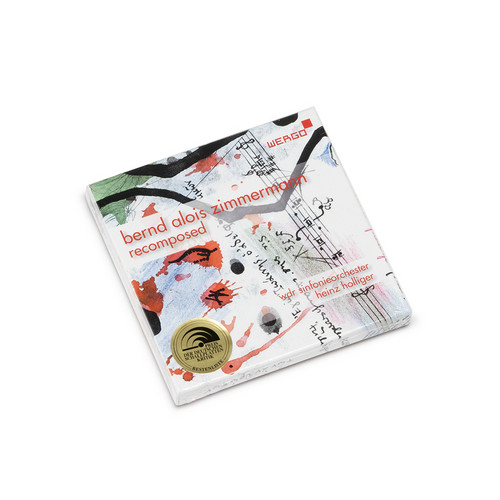
Recomposed
*2024 stock* Bernd Alois Zimmermann (1918–1970) was one of the most distinctive composers in the musical avant-garde after the Second World War. While Karlheinz Stockhausen served as a kind of ‘generator’ in Cologne during the 1950s and 60s, inventing completely new sounds and techniques, Zimmermann was in many ways his opposite, a ‘transformer’ who redefined previously existing material by placing it in new contexts and collage-like structures, anticipating the ideas of the Postmodernists.
Zimm…
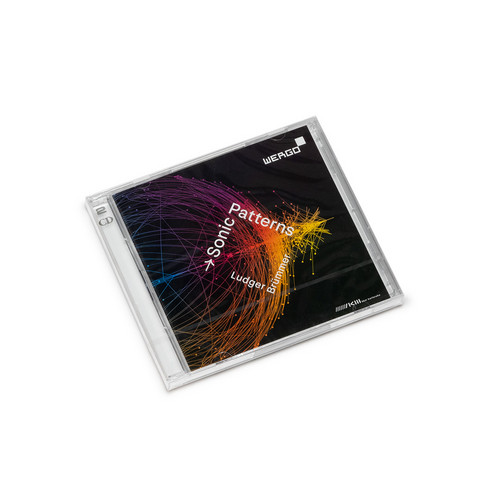
-> Sonic Patterns
For decades, Ludger Brümmer has represented a unique, courageous, and often instantly recognisable voice in electronic, algorithmic, and computer music. He develops structures that lead to aesthetic experiences normally found, if at all, only in the most expressive of instrumental works.
Ludger Brümmer’s music is dominated by processes. All processes are on a trajectory towards a climax or evolve from a climax to a minimum. Ultimately, a complete lack of orientation is to be achieved in the clim…
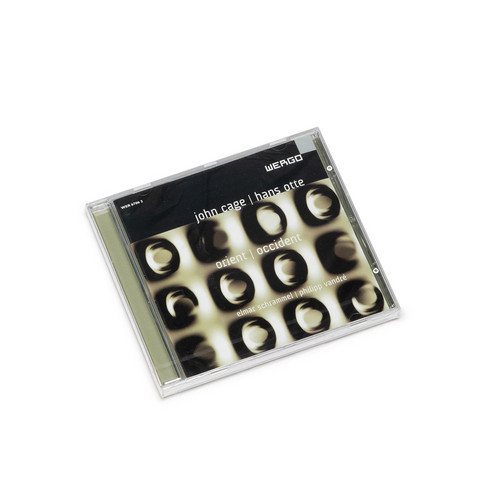
Orient | Occident
*2024 stock* Live recording of the piano recital for the eightieth birthday of composer Hans Otte that Philipp Vandré and Elmar Schrammel presented at the Akademie Schloss Solitude in Stuttgart. A selection of John Cage's "Sonatas and Interludes" for prepared piano was interwoven with selections from Hans Otte's piano cycles "Das Buch der Klänge" (The book of sounds) and "Stundenbuch" (Book of hours). This concert experiment, conceived by Ingo Ahmels, paid quiet homage to the "beautiful piano so…
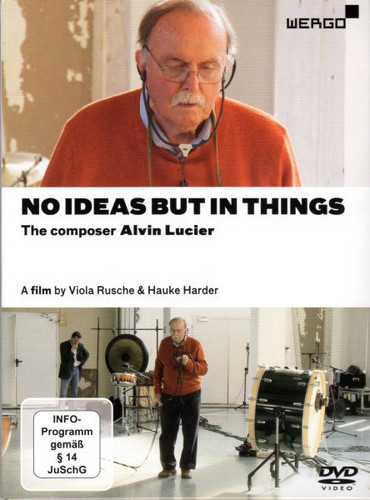
No Ideas But In Things
*2024 stock* “Don’t ask me what I mean, ask me what I’ve made.” - Alvin Lucier
The American Alvin Lucier is one of the most significant composers of New Music in the twentieth century. Being one of the first representatives of live electronic music, he explored in his works the nature and the effect of sound phenomena such as resonances, echoes and interferences, with the boundaries between installation, performance, composition and science becoming blurred.
In the present documentary film by Vi…
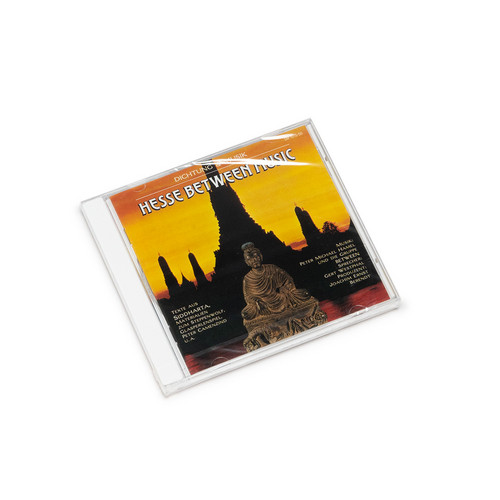
Hesse Between Music (Dichtung & Musik)
*2024 stock* Produced in 1974 by Joachim-Ernst Berendt, this synthesis of Hermann Hesse’s writing with Peter Michael Hamel’s music, of spirituality and art, of sitar and church organ, of meditative sounds and jazz rhythms, of silence and passion remains unique today and in the meanwhile it has obtained a legendary reputation. Further releases of the formation Between from the 1970s are re-released as cds on the Intuition label: "Einstieg - Re-Entry", "And the Waters Opened", "Silence Beyond Time…
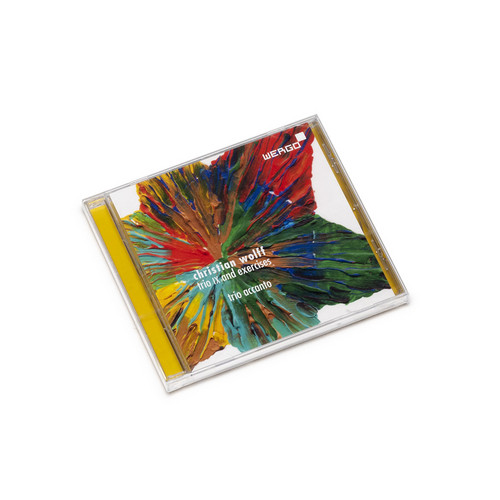
Trio IX / Exercises
The American composer Christian Wolff (b. 1934) is the last living representative of the New York School (Rauschenberg, Rothko, etc.). Wolff was not even an adult when he studied with Grete Sultan and John Cage. Wolff’s music was much more politically motivated than that of Feldman and Cage, which is evident on this new Wergo album by Trio Accanto. The album features first recordings made in close collaboration with Wolff in the studios of Deutschlandfunk Cologne/Germany. Wolff's great “Trio IX …
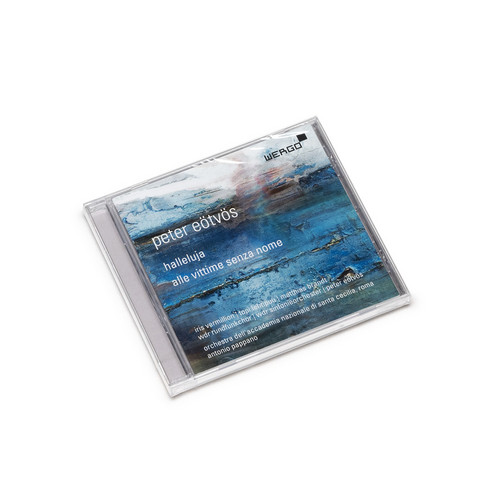
Halleluja / Alle Vittime Senza Nome
*2022 stock* 'Halleluja, Peter Eötvös’s “stuttering oratorio”, with a text by the novelist Péter Esterházy, was first performed in 2016. It’s built around the historical figure of Notker Balbulus, Notker the Stammerer, a ninth-century Benedictine monk who was a chronicler and composer. But, Eötvös insists, “It is not so much a portrait of Notker as of the times in which we live … At first the choir represents a society that says ‘hallelujah’ to everything: they have to be satisfied with everythi…
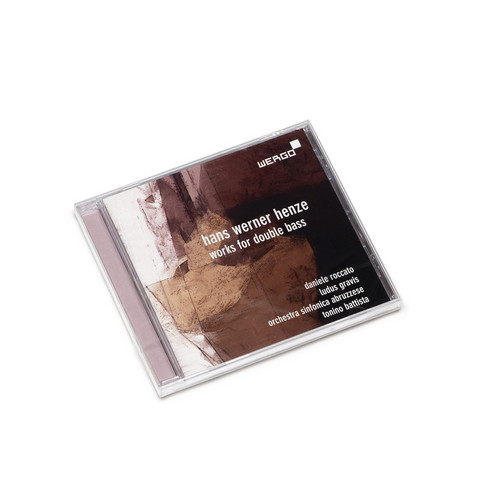
Works For Double Bass
*2022 stock* 'Hans Werner Henze was, during his lifetime, probably the most-performed composer of western modern music, and his advanced yet sensuously traditional music remains an important presence on stages around the world today. Henze was deeply attached to Italy, where he spent a large part of his life. The roots of this album go back to a personal meeting between Henze and the Italian double bass virtuoso Daniele Roccato when Roccato was attempting to obtain Henze’s blessing for a theater…
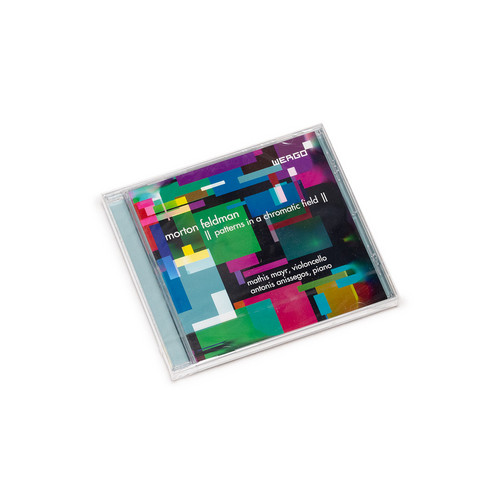
Patterns In A Chromatic Field
'Morton Feldman has proved one of the 20th century’s most influential composers. Yet he remains one of its most enigmatic, and his late works retain an aura of mystery steeped with the grandeur, anxiety and quietly changing colour he adored in abstract expressionist painting and, latterly, Anatolian rug design. Patterns in a Chromatic Field (1981) is perhaps the most rhythmically active of these famously long, static pieces, which showed his increasing preoccupation with matters of form, scale a…
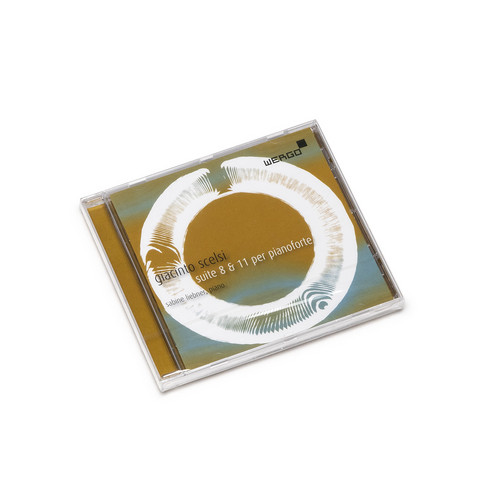
Suite 8 & 11 per pianoforte
Giacinto Scelsi (1905–1988) is one of the most unusual composers of the twentieth century, a unique figure whose importance was only fully recognized and celebrated after his death. During his lifetime, he was often dismissed, especially in Italy, as a pretentious dilettante because he did not notate his music himself. Beginning in the mid-1950s, he recorded his improvisations at the piano and had them transcribed by others. In this way, in the course of only a few years hundreds of piano pieces…
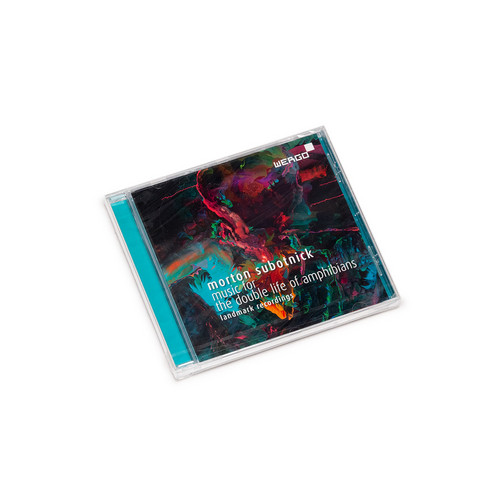
Music For The Double Life Of Amphibians (Landmark Recordings)
'The literal meaning of “amphibian” is “double life” and applies to animals living part of their lives in water and part of their lives on land. In the program note to his electroacoustic classic Music for the Double Life of Amphibians, Morton Subotnick states that “amphibian” is to be taken as a metaphor for the work’s structure and programmatic content, which follow a metamorphosis of being through the stages of amphibian to beast to angel. But it also applies to the musical material, the doub…
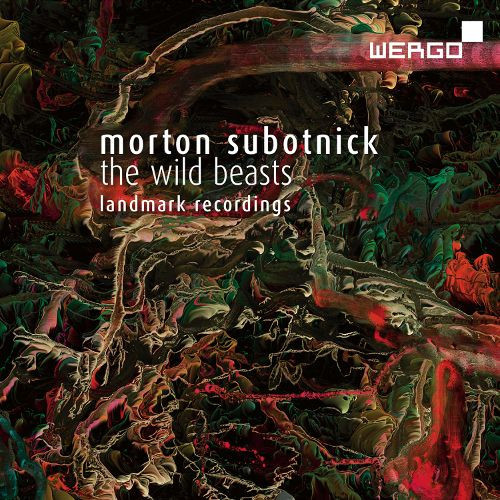
The Wild Beasts - Landmark Recordings
*2022 stock* Morton Subotnick achieved fame in the field of electronic music with Silver Apples of the Moon and The Wild Bull, his best-known tape works of the late 1960s. Since then, he has been active combining electronics with other media, notably employing gestural sketches on tape to alter sounds produced by voices and instrumentalists. The two works on this 2015 Wergo release are representative of Subotnick's methods, using a trumpet with a chamber ensemble in After the Butterfly, to reali…
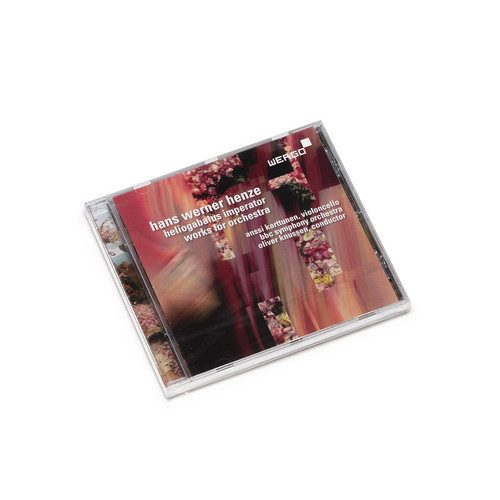
Heliogabalus Imperator / Works For Orchestra
*2022 stock* The relationship between Hans Werner Henze and Oliver Knussen was one of great mutual respect. The German composer admired the British conductor and composer for electrifying performances of Henze’s own and other composers’ works. Knussen was an untiring and enthusiastic champion of his friend Henze’s music. The recordings collected here display Knussen’s deep understanding of Henze’s music. Knussen conducts the BBC Symphony Orchestra in sensitive and meticulous performances of comp…
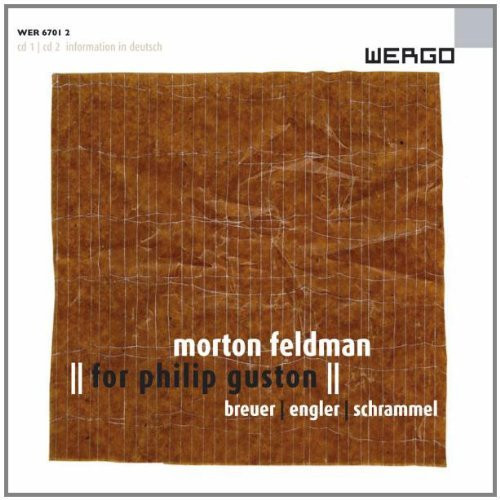
For Philip Guston
*2022 stock* Performed by Julia Breuer (flutes), Matthias Engler (vibraphone, marimba, glockenspiel, tubular bells), Elmar Schrammel (piano, celesta). Recorded 2007. One of Feldman's classic long-term late works, written in 1984. Wergo is proud to present Morton Feldman's four-hour-long trio For Philip Guston, performed by the ensemble Breuer-Engler-Schrammel. Feldman disagreed with those who regarded his works since the 1970s as being too long. 'In music, it's very difficult to distinguish betw…
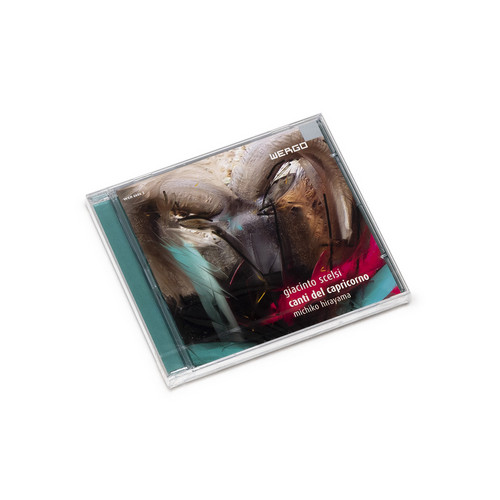
Canti Del Capricorno
*2022 stock* Michiko Hirayama inspired Giacinto Scelsi to write his twenty-part cycle "Canti del Capricorno" between 1962 and 1972. To this day the Japanese singer (b. 1923) is a unique performer of this spiritual yet energy-filled work for solo voice, with instrumental accompaniment for certain songs: Scelsi’s notes in his own hand in the score; that is her treasure, when she comes to Ulm in May 2006 to give a concert in the series neue musik im stadthaus. Michiko Hirayama is a vocal power stat…
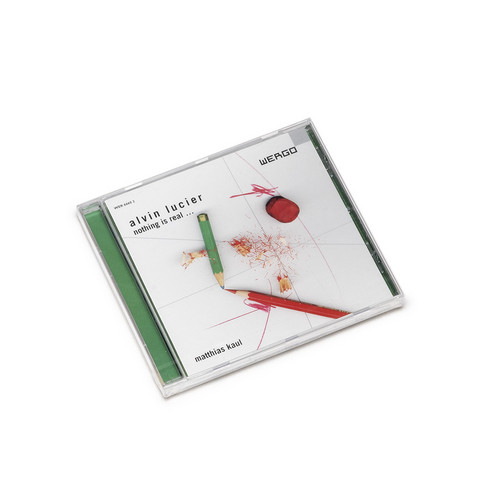
Nothing Is Real ...
CD with 20-page booklet. Recorded March 2001, Hessischer Rundfunk, Frankfurt. "Time and again I find myself having to pare away any musical gestures in a work in order to uncover the true idea in a piece." Alvin Lucier said this about his own practice of stripping composition back to its acoustic logic - removing the performer's ego, the expressive gesture, the narrative arc, until only the phenomenon remains. What is left, in each of the five works gathered here, is resonance: sympathetic vibra…
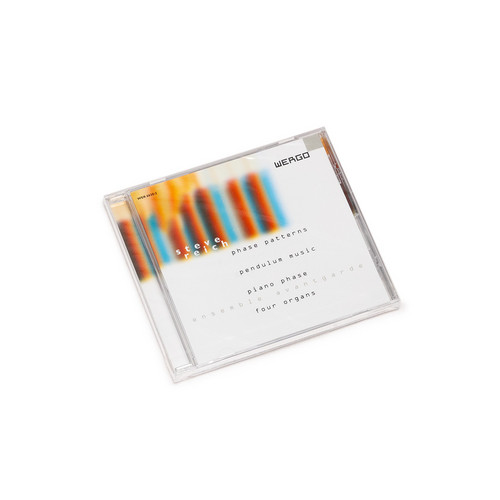
Phase Patterns / Pendulum Music / Piano Phase / Four Organs
"What I'm interested in is a compositional process and a sounding music that are one and the same thing" (Steve Reich, 1968). Minimal music, which numbers Steve Reich among its founders and as one of its most significant representatives, existed for hardly more than ten years. The Ensemble Avantgarde presents a wonderful survey of Reich's minimal music-compositions. The conceptional concentration in the musical work on the structurally simple means of its creation is seen especially in Reich's "…
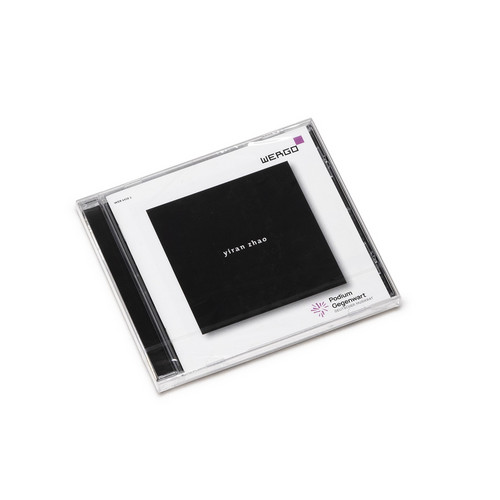
s/t
Yiran Zhao makes use not only of musical elements but also of objects, bodies, movements and light-sources as compositional material. Many of her pieces inhabit the various boundary states between instrumental music, performance, sound-installation, and video-art. Leonie Reineke describes the composer in the CD-booklet as a “prudent researcher“, who encounters the sonic cosmos of her environment with great earnestness, and comes microscopically close to things.
In the composition “Piep“ she focu…
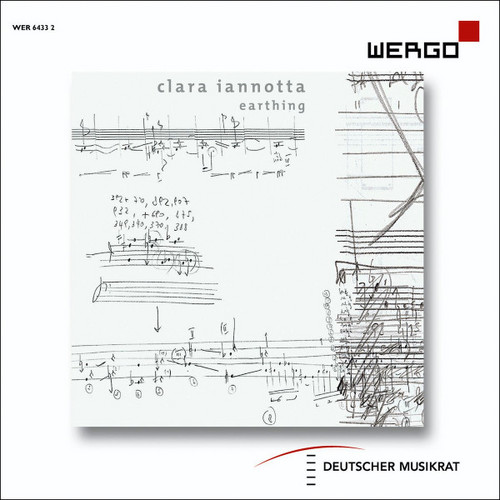
Earthing
"String quartet” seems a rather reductive way of describing any of the four utterly compelling works by Clara Iannotta that the Jack Quartet play here. For as well as demanding that the string players employ every conventional technique, the Italian composer extends their sound world farther, both with electronics and with “found objects” applied to the strings and bodies of the instruments.
The four pieces all date from the last seven years. The earliest, A Failed Entertainment, borrows the wor…