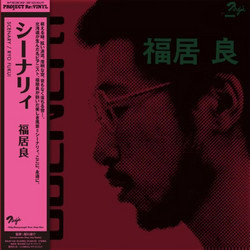
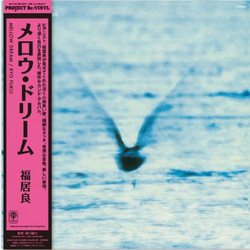
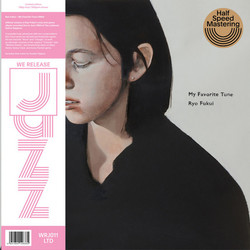
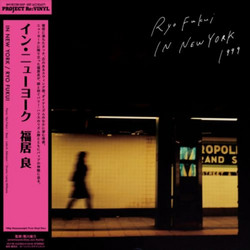
Arriving a full 17 years after Mellow Dream, My Favorite Tune occupies a singular place in Ryo Fukui’s small but beloved discography: it is his third album, and his first and only solo piano recording. Stripped of rhythm section and studio gloss, the record presents Fukui at his most direct, sitting alone at the keyboard with a handful of pieces that defined him and a few that had, until then, existed only in the privacy of his own travels and practice. For listeners who came to know him through the sparkling trio interplay of Scenery and Mellow Dream, this album offers a rare chance to hear what lies beneath – the touch, time and inner singing that powered those earlier sessions.
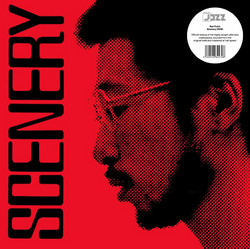
The programme is a gift to devotees. Signature pieces “Scenery” and “Mellow Dream” reappear in solo form, their themes distilled and laid bare. Without bass and drums, Fukui leans into their melodic and harmonic cores: left‑hand figures become more orchestral, right‑hand lines linger over turns of phrase, and familiar progressions acquire new shades as he revoices chords, shifts inner lines and plays more freely with rubato. Alongside these classics, the album introduces “Voyage” and “Nord”, both composed during a journey through northern regions, and “Nobody’s”, a dedication infused with his deep respect for mentor Barry Harris. The set reads like a private favourites reel: not a greatest‑hits package, but a sequence of tunes that map his musical and personal compass points.
What emerges is a portrait of two abiding currents in Fukui’s playing, finally allowed to coexist without mediation. On one side is the depth and weight he cultivated as a bebop pianist: the crisp articulation, the sure harmonic footing, the sense of swing that persists even in unaccompanied contexts. On the other is the “Hokkaido sensibility” that had always underpinned his work – a feeling for space, seasonal melancholy, clear air and long horizons that gave even his most bustling trio sides a particular openness. On My Favorite Tune, those vectors fuse. Tempos breathe more, dynamics stretch further, and silences carry as much meaning as any cascade of notes.
Pieces like “Voyage” and “Nord” make this fusion especially vivid. You can hear the trace of travel in their structures: motifs that feel like landmarks returning on a long journey, harmonies that open out into bright, wintry vistas before tightening again. “Nobody’s” folds Harris’s bebop pedagogy into this world, taking the language of New York and filtering it through Fukui’s centred, northern lens. Throughout, the pianist’s touch ranges from granite‑solid attacks to the gentlest caresses, and his control of pedal and resonance turns the instrument into its own small orchestra.
For fans, the album’s selection is nothing short of a delight, bringing together cornerstone tunes and late‑composed gems in a context that foregrounds their shared DNA. For newcomers, it offers an unusually clear entry point: one player, one piano, no distractions, the essence of Ryo Fukui’s musical character preserved in every phrase. My Favorite Tune is not only a highlight of his catalogue; it is a work that truly deserves to be passed down through time, a quiet, enduring testament to how a single musician’s sound can hold both the crowded energy of bebop and the vast, snow‑lit silence of Hokkaido within the same pair of hands.