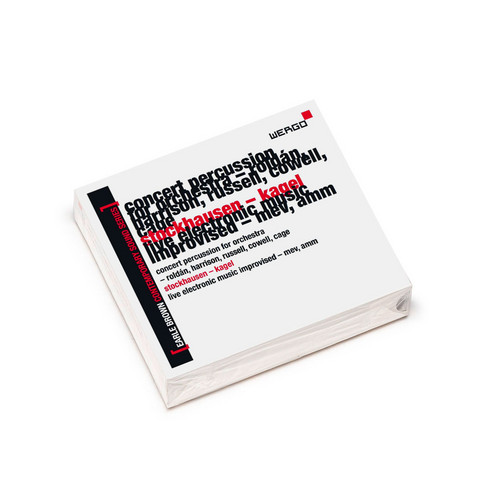
Earle Brown Contemporary Sound Series Vol. 1
Few figures of the American avant-garde wore as many hats as Earle Brown. Composer, graphic notation pioneer, member of the New York School alongside John Cage, Morton Feldman, and Christian Wolff - but also, and crucially, a record producer whose ear shaped one of the most important document series in 20th century music. Between 1960 and 1973, working first for Time Records and then Mainstream Records, Brown curated the Contemporary Sound Series - 18 LPs presenting works by 49 composers from 16…
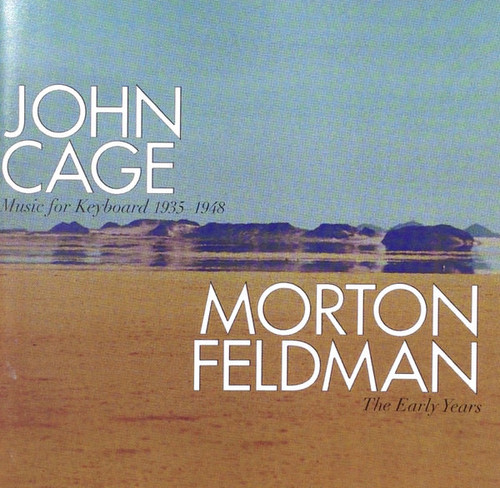
Music For Keyboard 1935-1948 / The Early Years
This double-CD set combines two of the key titles of Columbia Records's
legendary "Music of Our Time" series curated by David Behrman. Jeanne
Kirstein's recording of Cage's early keyboard works remains a touchstone
of Cagean interpretation notwithstanding the passage of time. Christian
Wolff recalls, "I remember Cage saying that Jeanne Kirstein's playing
caught the spirit in which the pieces were written at the time he wrote
them-a kind of simple excitement and enthusiasm (also, surely, ou…
A Retrospective (1977-2009)
The music on this disc was written over a period of more than thirty years. Over the course of those years, so much has changed in technology, in music, in life in general. But throughout the work represented here one can recognize the remarkable, entirely original voice of Charles Dodge (b. 1942). He is truly a composer who writes music that does not sound like anybody else's. He has never been part of any “ism” or movement; he is his own category. And although his stylistic approach and his…
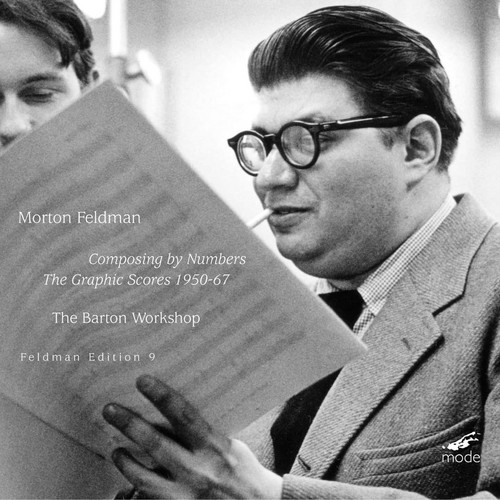
Composing By Numbers: The Graphic Scores 1950-67
Thirteen of Morton Feldman's graphic scores, 1950-67, played by the Barton Workshop and soloists including Frank Denyer and Taco Kooistra, with first recordings of several ensemble works. Volume 9 of Mode's Feldman Edition.
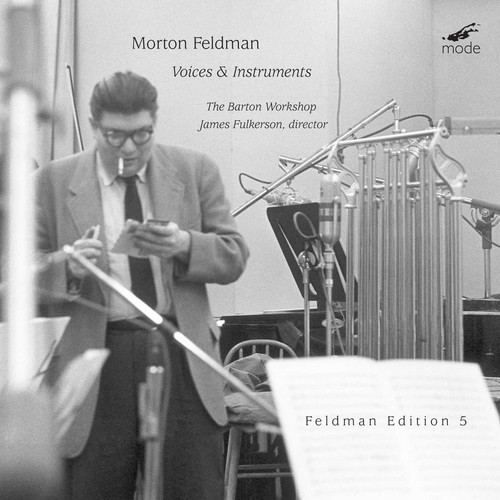
Voices and instruments
Feldman works for voices and instruments from 1949 to 1971, three of them first recordings, including Journey to the End of Night, The O’Hara Songs and Four Instruments, played by The Barton Workshop.