We use cookies on our website to provide you with the best experience. Most of these are essential and already present.
We do require your explicit consent to save your cart and browsing history between visits. Read about cookies we use here.
Your cart and preferences will not be saved if you leave the site.

Jean-Claude Eloy

Jean-Claude Eloy makes electronic works that last a whole evening and ask for the patience of a ceremony. Born in 1938 in Mont-Saint-Aignan, he took first prizes in piano, chamber music, counterpoint and Ondes Martenot at the Paris Conservatoire, studied composition with Darius Milhaud, attended Darmstadt and was in Pierre Boulez's masterclass in Basel from 1961 to 1963. The turning point came in the studio: Shânti (1972 to 1973), realised at the WDR studio in Cologne, then Gaku-no-Michi (1977 to 1978) at the NHK studio in Tokyo, four hours of sound built from Japanese temples, streets and voices.
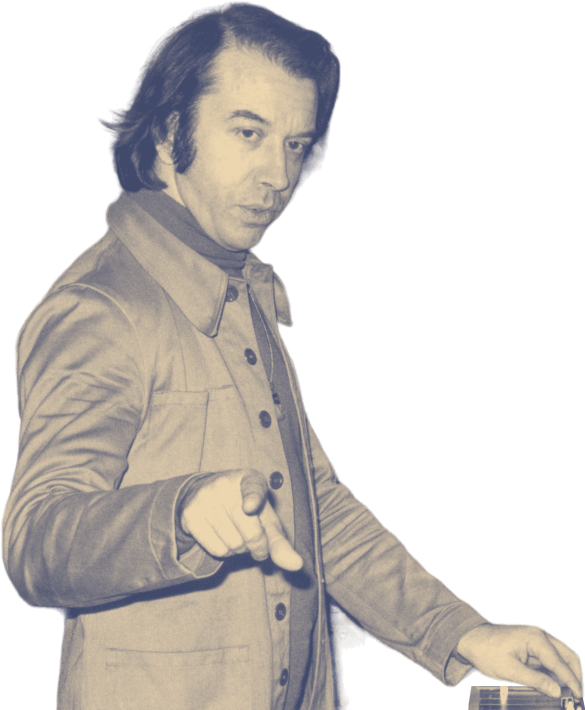
Jean-Claude Eloy makes electronic works that last a whole evening and ask for the patience of a ceremony. Born in 1938 in Mont-Saint-Aignan, he took first prizes in piano, chamber music, counterpoint and Ondes Martenot at the Paris Conservatoire, studied composition with Darius Milhaud, attended Darmstadt and was in Pierre Boulez's masterclass in Basel from 1961 to 1963. The turning point came in the studio: Shânti (1972 to 1973), realised at the WDR studio in Cologne, then Gaku-no-Michi (1977 to 1978) at the NHK studio in Tokyo, four hours of sound built from Japanese temples, streets and voices.
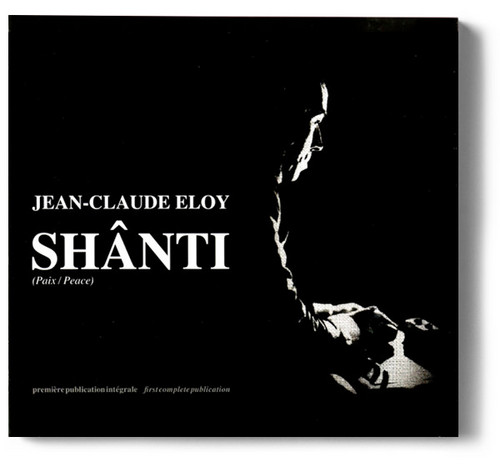
Shanti (1972-73)
Packaged in a 6 panel digipak. Includes a 16 page booklet in French & English. A massive, four side-long drone-epic masterpiece “Shânti” (1972-73) for electronic and concrete sounds, in a spectacular double CD digipack issue. A hundred-and-thirty-five minute piece of "meditation music" for a four-track magnetic tape by Jean-Claude Eloy, produced in the Electronic Studio of the Radio of Cologne “The term “meditation music” triggered many conflicting comments including positive ones (“... let us s…
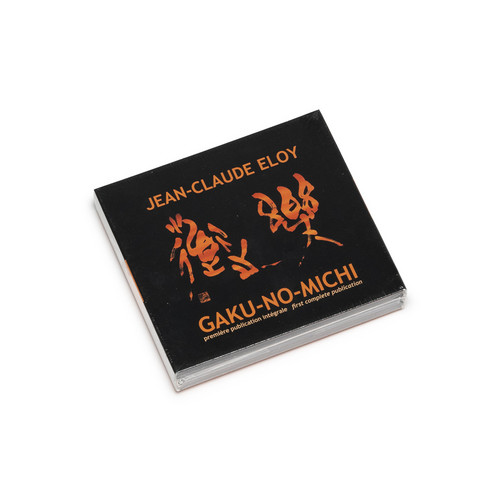
Gaku-No-Michi (1977-78)
A work of genuinely monumental proportions. Jean-Claude Eloy's Gaku-No-Michi - subtitled "Tao of Music" or "Ways of Music" - stands among the towering achievements of 20th Century electroacoustic practice. Produced at the electronic music studio of NHK Radio in Tokyo between 1977 and 1978, its four hours of concrete and electronic sound unfold as what the composer called "a film without images" - an immense, spiraling architecture of sonic transformation that remains, nearly five decades on, as …
1 2