We use cookies on our website to provide you with the best experience. Most of these are essential and already present.
We do require your explicit consent to save your cart and browsing history between visits. Read about cookies we use here.
Your cart and preferences will not be saved if you leave the site.

John Cage

John Cage (1912 to 1992) was an American composer, writer, philosopher and printmaker, and the figure who did most to widen the idea of what music can be. Educated in California and on a study tour of Europe, he studied with Henry Cowell and Arnold Schoenberg, gave up painting for music in 1934 and in 1940 devised the prepared piano, inserting bolts and rubber between the strings so that one instrument became a percussion orchestra. From Music of Changes (1951) he composed with chance operations drawn from the I Ching, so that his own taste would no longer decide the notes, and with 4'33" (1952) he framed silence and the sounds around it as a piece.
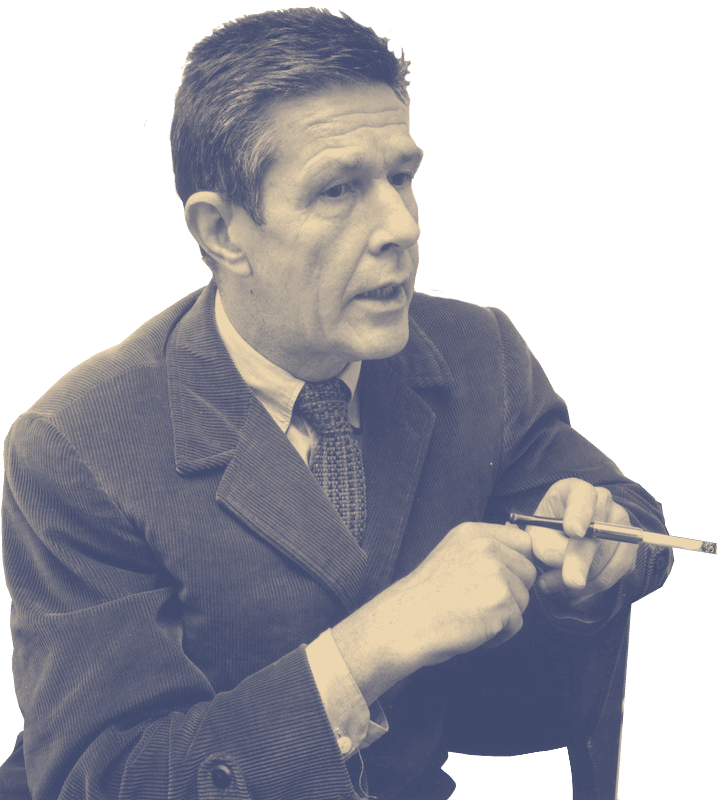
John Cage (1912 to 1992) was an American composer, writer, philosopher and printmaker, and the figure who did most to widen the idea of what music can be. Educated in California and on a study tour of Europe, he studied with Henry Cowell and Arnold Schoenberg, gave up painting for music in 1934 and in 1940 devised the prepared piano, inserting bolts and rubber between the strings so that one instrument became a percussion orchestra. From Music of Changes (1951) he composed with chance operations drawn from the I Ching, so that his own taste would no longer decide the notes, and with 4'33" (1952) he framed silence and the sounds around it as a piece.
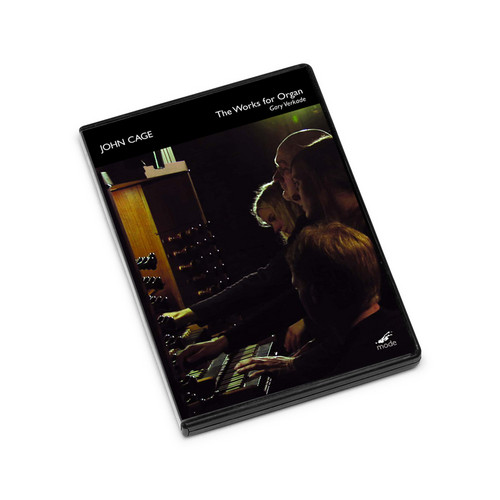
The Works for Organ
First complete recording of John Cage's works for organ, played by Gary Verkade on the organ of Gammelstad Church, Sweden: Some of 'The Harmony of Maine', Souvenir, ASLSP and Organ2/ASLSP, with 4'33'' on the DVD only.
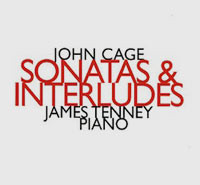
Sonatas & Interludes
How rare, and valuable, it is to be able to experience one composer’s masterwork through the sensibility of another significant, stylistically distinct composer – via a performance that reveals unexpected aspects of both. that is to say, an appro…
Music Of Changes
The title is a double pun. The score is the first that John Cage devised allowing the hexagrams of the I Ching to fully determin e how the music would procee d, event by event, gesture by gesture—the musical details (pitch, duration, dynamic s, d…
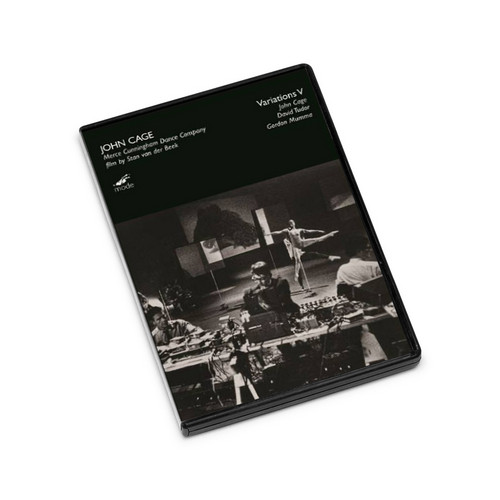
Variations V
First commercial release of John Cage's Variations V, the 1966 NDR Hamburg television production with David Tudor, Gordon Mumma and the Cunningham Dance Company, with the Paris 1966 audio, dancer interviews and a 12-page book.
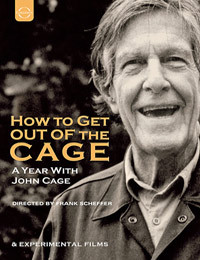
How To Get Out Of The Cage
From 1982 to 1992 Frank Scheffer worked with John Cage on many different occasions, which resulted in a unique archive of historical audio-visual material. Based on this unique archive, including interviews, musical performances and images of diff…
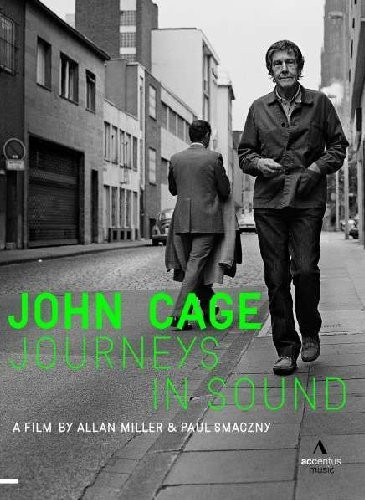
Journeys in Sound
This documentary by Oscar-winner Allan Miller and Emmy-winner Paul Smaczny pays tribute to the most fascinating American avant-garde composer John Cage. Shot in America, Germany and Japan, the program premieres rare archival footage; presenting conce…
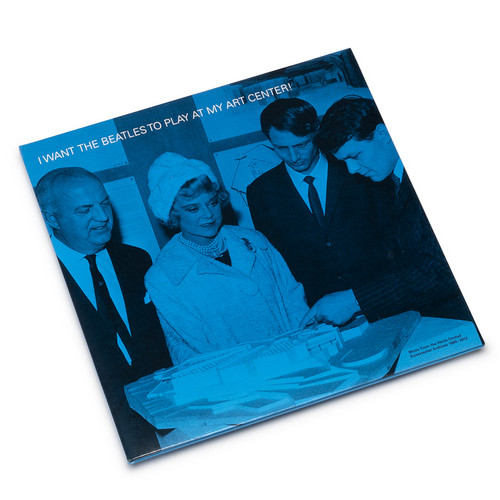
I Want the Beatles to Play at my Art Center
Music From the Henie Onstad Kunstsenter Archives 1968-2011. This 2LP presents seminal works of music from the nearly 50-year history of Henie Onstad Kunstsenter (HOK). When HOK founder Sonja Henie exclaimed that she wanted The Beatles to play at her …
Song Books
Works for voices & electronics, performed by Lore Lixenberg, Gregory Rose, and Robert Worby. Recorded in 2012. "This year, 2012, the maverick American experimental composer John Cage would have been 100 years old. He defined experimental music in th…
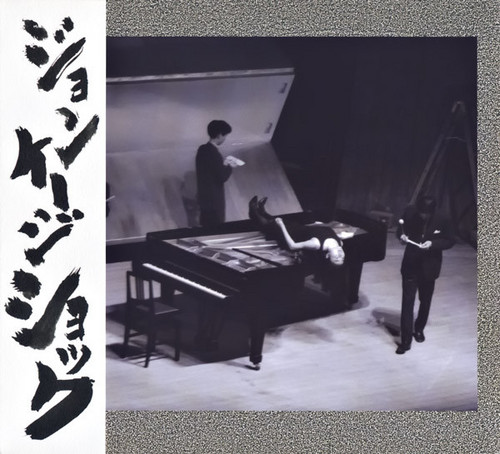
John Cage Shock Vol. 2
Volume 2 in EM Records' John Cage Shock series lifts off with a fiery example of David Tudor's piano virtuosity, his mastery of dynamics well-evident in a performance of Klavierstücke X (1961) by Karlheinz Stockhausen. The titular shock of this serie…
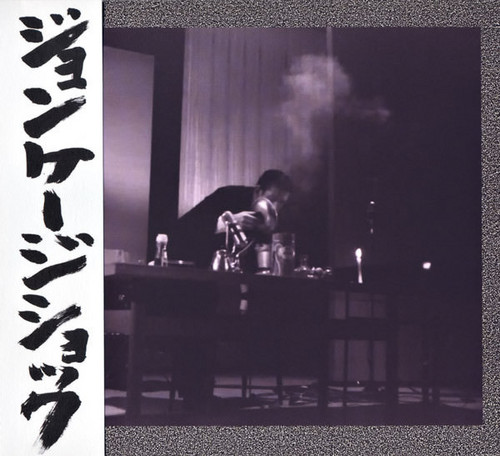
John Cage Shock Vol. 3
The final CD of the John Cage Shock series features John Cage's 0'00" (1962), also referred to as 4'33" No. 2, performed by the composer, with daily activities such as writing and drinking coffee amplified by contact microphones into sonic abstract…
John Cage Shock Vol. 1
In October 1962, John Cage and his great interpreter/co-visionary David Tudor visited Japan, performing seven concerts and exposing listeners to new musical worlds. This legendary "John Cage Shock," as it was dubbed by the critic Hidekazu Yoshida, …
Shock
of EM Records' John Cage Shock series, compiled from the three CD releases. Featured works: 26'55.988" for 2 Pianists and a String Player, Piano Music #7, 0'00", Variations II. Performers include: David Tudor, Toshi Ichiyanagi, Kenji Kobayashi, Yoko …
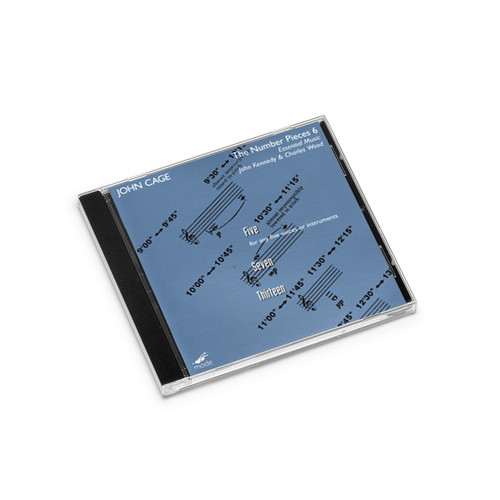
The Number Pieces 6
Three of John Cage's late number pieces, Five, Seven and Thirteen, recorded in 1993-94 by Essential Music of New York and released for the first time. Thirteen, Cage's final completed work, is heard in only its second recording.
Earle Brown Contemporary Sound Series Vol. 1
Few figures of the American avant-garde wore as many hats as Earle Brown. Composer, graphic notation pioneer, member of the New York School alongside John Cage, Morton Feldman, and Christian Wolff - but also, and crucially, a record producer whose ea…
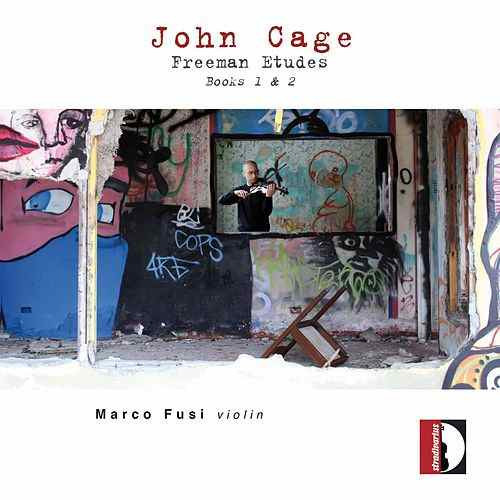
Freeman Etudes - Books 1&2
Amazing CD of Cage's Freeman Etudes with the amazing performance of Marco Fusi.  
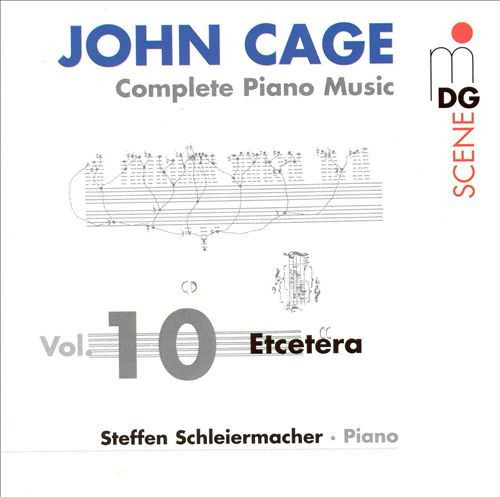
Complete Piano Music Vol. 10 - Etcetera
“The interpreter is a very important person indeed in Cage’s piano music, and a top international expert like Steffen Schleiermacher is a must for a complete recording such as this one: he knows the nuts and bolts and all the fine nuances.”
Silenzio
*Italian language edition* This volume presents fully translated into Italian the landmark texts of the post-World War II musical avant-garde. Master John Cage revolutionized the traditional and academic concept of music and pushed into new frontiers…
How To Get Started
"John Cage conceived How To Get Started almost as an afterthought -- a performance substituting for another that was previously planned in 1989 for delivery at 'Sound Design: An Invitational Conference on the Uses of Sound for Radio Drama, Film, …
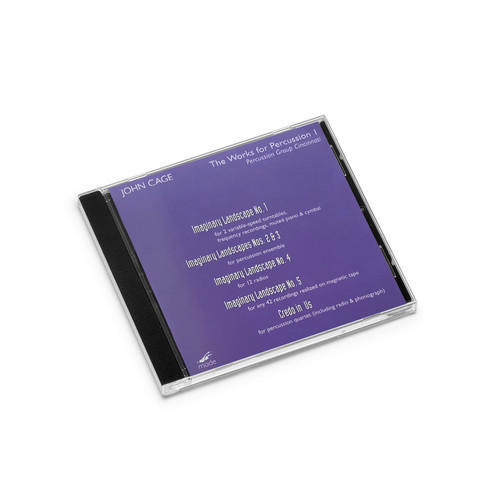
The Works for Percussion I
The complete Imaginary Landscapes 1-5 and Credo in US by John Cage, with radios, phonograph records and percussion, played by Percussion Group Cincinnati in the first volume of the Mode Cage percussion works.
Radio music (1956)
Four different versions of Radio Music (1956) from John Cage performed by S. Pittis, JH Peron, Z. Diermaier. Each version is 6 minutes long and uses radio as only sound source.
1 5 6 7 8 9 10 11 12 13