We use cookies on our website to provide you with the best experience. Most of these are essential and already present.
We do require your explicit consent to save your cart and browsing history between visits. Read about cookies we use here.
Your cart and preferences will not be saved if you leave the site.

John Cage

John Cage (1912 to 1992) was an American composer, writer, philosopher and printmaker, and the figure who did most to widen the idea of what music can be. Educated in California and on a study tour of Europe, he studied with Henry Cowell and Arnold Schoenberg, gave up painting for music in 1934 and in 1940 devised the prepared piano, inserting bolts and rubber between the strings so that one instrument became a percussion orchestra. From Music of Changes (1951) he composed with chance operations drawn from the I Ching, so that his own taste would no longer decide the notes, and with 4'33" (1952) he framed silence and the sounds around it as a piece.
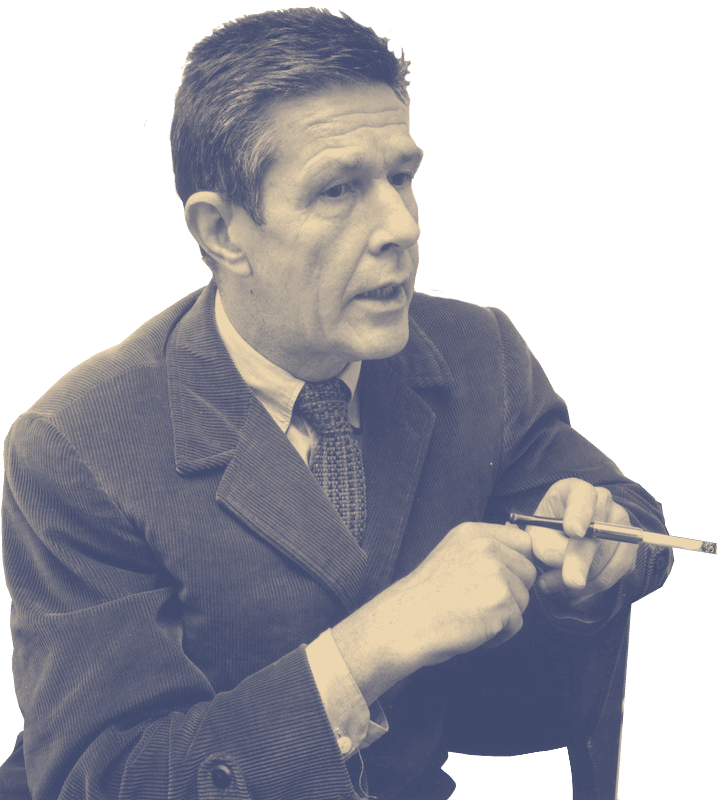
John Cage (1912 to 1992) was an American composer, writer, philosopher and printmaker, and the figure who did most to widen the idea of what music can be. Educated in California and on a study tour of Europe, he studied with Henry Cowell and Arnold Schoenberg, gave up painting for music in 1934 and in 1940 devised the prepared piano, inserting bolts and rubber between the strings so that one instrument became a percussion orchestra. From Music of Changes (1951) he composed with chance operations drawn from the I Ching, so that his own taste would no longer decide the notes, and with 4'33" (1952) he framed silence and the sounds around it as a piece.
John Cage
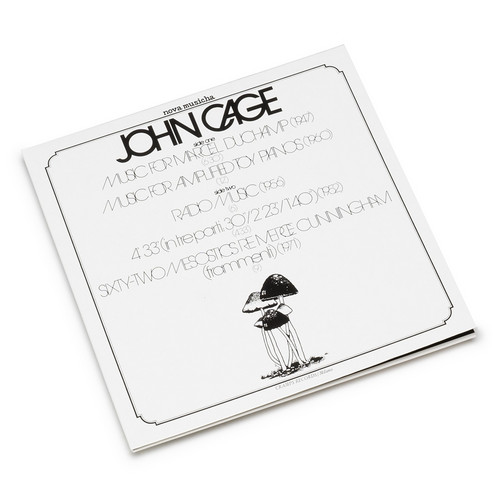
** 180Gr White Vinyl. edition of 500 ** One of the better realizations of John Cage's work, this was also the first “Nova Musicha” collection release. The LP contains five John Cage’s compositions for "prepared" piano, played and performed by various artists: Juan Hidalgo, Walter Marchetti, Gianni-Emilio Simonetti and Demetrio Stratos.  In these perfomances, the sound of the piano was altered by placing objects (preparations) between or on the strings or on the hammers or dampers. Toy pianos and…
Hymnkus Thoreau Drawings Two
Hymnkus Thoreau Drawings Two features three rarely encountered works by John Cage, interpreted by Apartment House. The album brings together the sparse, spatial interplay of “Two”, the poised transformations of “Thoreau Drawings”, and the hypnotic, layered repetitions of “Hymnkus” in performances marked by clarity, restraint, and ensemble sensitivity.
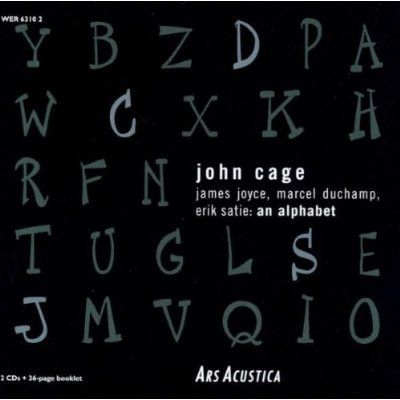
James Joyce, Marcel Duchamp, Erik Satie: An Alphabet
*2022 stock* This work began life as a radio play in 1982, a commission from and for Klaus Schöning and Cologne’s WDR. Working on the principles of collage, Cage brought together 15 unlikely characters – Narrator, James Joyce, Marcel Duchamp, Vocoder, Erik Satie, Jonathan Albert, Mao Tse Tung (as a child), Henry David Thoreau, Rrose Selavy, Thorstein Veblen, Buckminster Fuller, Brigham Young, and Robert Rauschenberg – who speak together, their dialogue comprised of literal quotations, freely ada…
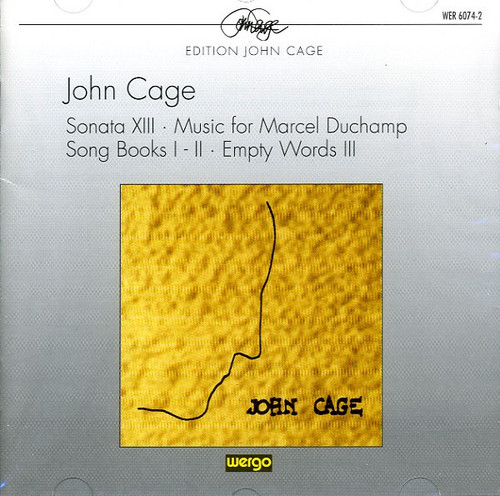
Sonata XIII / Music For Marcel Duchamp / Song Books I-II / Empty Words III
*2022 stock* John Cage's first manifesto, written in 1937, was called The Future of Music: Credo, and the future it described was an "all-sound music" open to every kind of noise. This volume of Wergo's Edition John Cage follows that idea across three decades, from the prepared piano of the 1940s to the vocal and spoken works of the 1970s. Sonata XIII, from the Sonatas and Interludes, and Music for Marcel Duchamp are pieces for prepared piano, played by Peter Roggenkamp: screws, bolts and rubber…
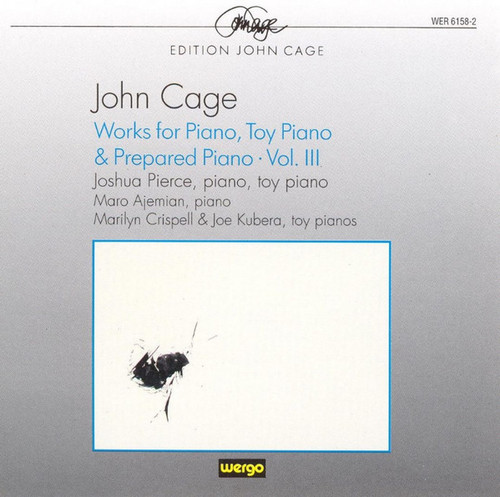
Works For Piano, Toy Piano & Prepared Piano · Vol. III
*2022 stock* It may come as a surprise but one of the leading creators of keyboard music in the twentieth century is a composer by the name of John Cage. Cage’s reputation is so deeply associated with the avantgarde, with chance music, graphic notation, performance art, technology and Zen Buddhism that is early, conventionally-notated music for percussion ensemble and keyboards is sometimes neglected. Or was until recently. In the last few years – with the advent of performances and recordings l…
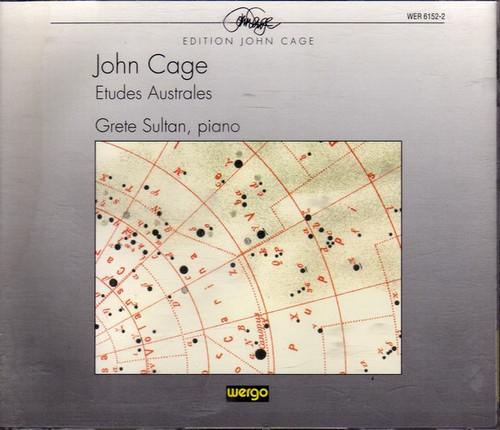
Etudes Australes
*2022 stock* 'Etudes Australes was composed specifically for Grete Sultan, so this album is among the definitive recordings. As an indeterminate piece for solo piano (okay, well, a "duet for two hands"), this sounds very similar to Music of Changes, Winter Music, etc. Here, though, Cage generates indeterminacy by turning once again to using star charts as tools of composition, as he did previously in the wonderful Atlas Eclipticalis. In a way, I find the piano to be more suited to star charts th…
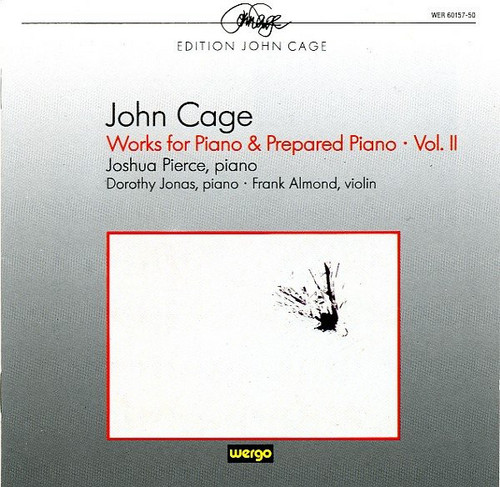
Works For Piano & Prepared Piano · Vol. II (1944-1958)
*2022 stock* This recording deals with works composed between 1944 and 1958, including several of Cage's lovely and masterful prepared piano pieces, which will come as a major surprise to those familiar only with his chance compositions. Joshua Pierce is the principal pianist (assisted by Dorothy Jonas on the Three Dances, written for two pianos) and attacks the pieces with a nice balance of delicacy and aggression, although compared to the earlier Angel recording of the abovementioned Three Dan…
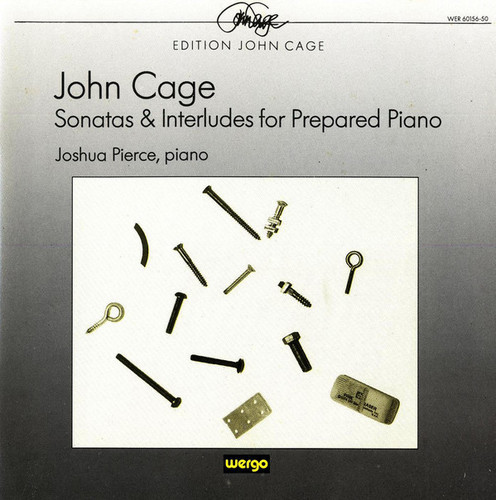
Sonatas & Interludes For Prepared Piano
*2022 stock* Sonatas and Interludes for Prepared Piano, a cycle of 20 short pieces for prepared piano (a piano modified by inserting nuts and bolts and other objects between the piano strings in order to produce percussive and otherworldly sound effects) by American composer John Cage. Created in 1946–48 after the composer had been introduced to Indian visual and performing arts, the cycle was intended to represent the so-called permanent emotions—the heroic, the erotic, the wondrous, the comic,…
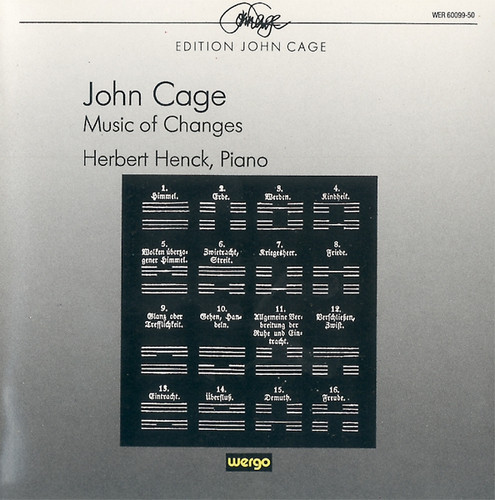
Music Of Changes
*2022 stock* It's over 70 years since John Cage wrote his pivotal Music of Changes, and it's beginning to show its age. It feels very much of its time, with its uncompromising adherence to the 64 hexagrams of I-Ching, the Chinese book of changes, determining the direction of the piece and its use of sudden, percussive attacks on the strings or the body of the instrument. But for all that there is no denying the extreme stamina and concentration required of the performer, and here Herbert Henck e…
Empty Words Part IV
Rare original copies of 1987 double LP with John Cage's performing himself his "Empty Words Part IV". Truly extreme stuff.
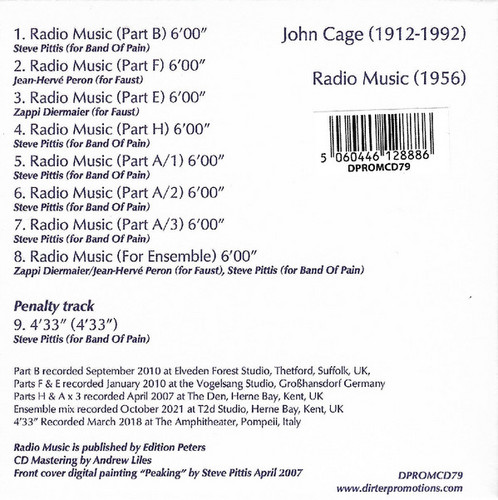
Radio music (1956)
Four different versions of Radio Music (1956) from John Cage performed by Faust’s Jean-Hervé, Zappi and Steve Pittis who recorded their interpretations of Radio Music independently in 2007 and 2010. They all felt it important to keep to the score as much as possible, given the obvious ambiguities of having to adapt it from Cage’s original 1956 score. These recordings were released as a 10” vinyl EP and sold out instantly, so here they are on CD format with some extras. During “lockdown”, it was …
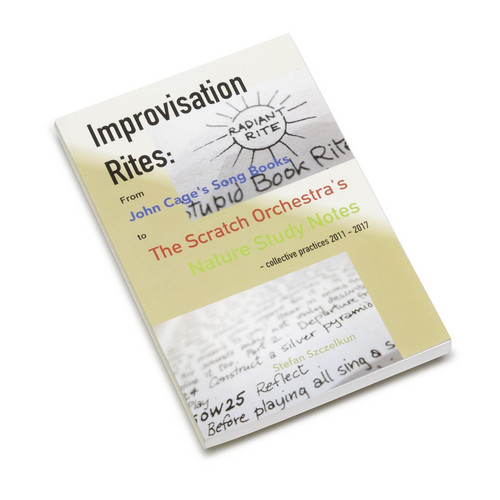
Improvisation Rites (Book)
*2022 stock* "I used my experience of The Scratch Orchestra (1969 - 72) to work with a younger generation of people. We by working with John Cage's magnum opus 'Song Books'. Then we worked with the improvisation rites in Cornelius Cardew's collective work 'Nature Study Notes'. This book documents that process and its assessment, and afterglow in some details"
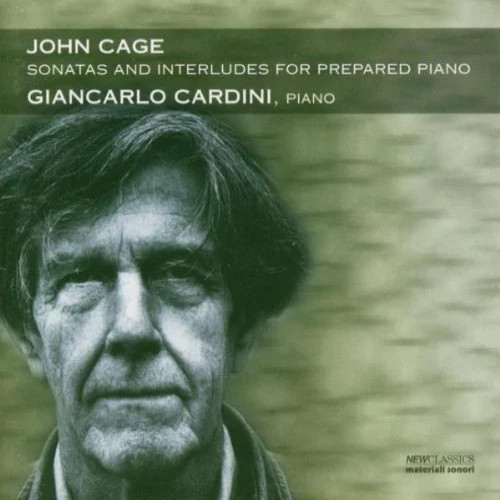
Sonatas And Interludes For Prepared Piano
**2022 stock** Sonatas and Interludes for Prepared Piano, a cycle of 20 short pieces for prepared piano (a piano modified by inserting nuts and bolts and other objects between the piano strings in order to produce percussive and otherworldly sound effects) by American composer John Cage. Created in 1946–48 after the composer had been introduced to Indian visual and performing arts, the cycle was intended to represent the so-called permanent emotions—the heroic, the erotic, the wondrous, the comi…
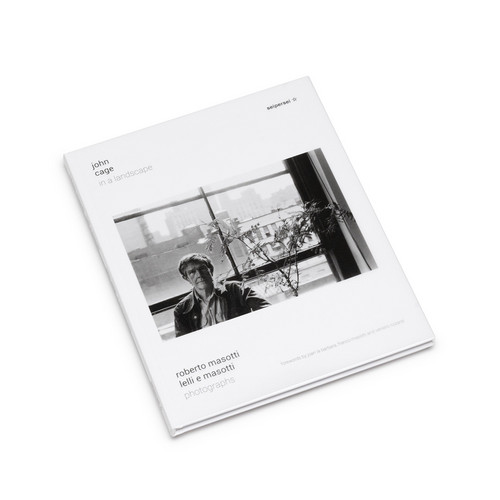
John Cage, In a Landscape (Book)
Photographs by Roberto Masotti, Lelli e Masotti  Forewords by Joan La Barbara, Franco Masotti, Veniero Rizzardi . The book "John Cage, in a landscape" is based on a rich photographic material taken to the American composer and theorist between 1977 and 1991, mainly by Roberto Masotti and in the remaining part by Lelli and Masotti, both during events that took place in Italy and abroad, like in his New York house.   To John Cage correspond such a multiplicity of aspects that it is even difficult …
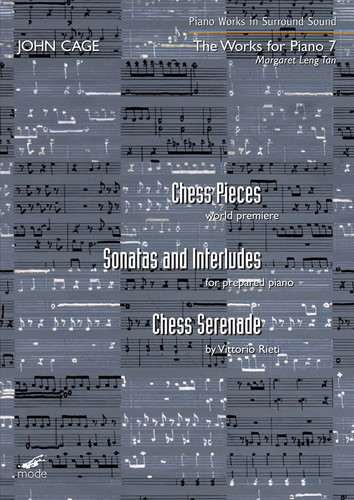
The Piano Works 7 - Chess Serenade
First recording of John Cage's Chess Pieces (1944), rediscovered in a painting and transcribed by Margaret Leng Tan, with her recording of Sonatas and Interludes and the first recording of Vittorio Rieti's Chess Serenade.
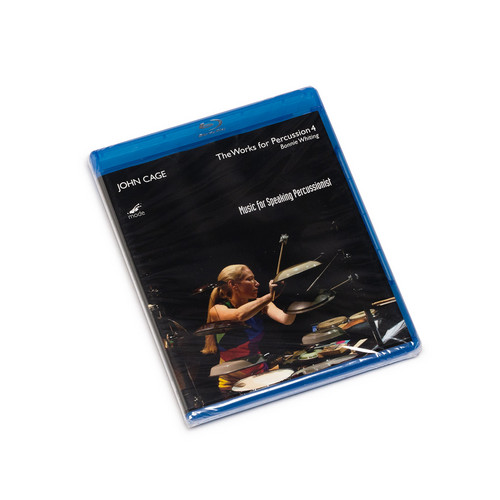
The Works for Percussion 4
John Cage's works for speaking percussionist on Blu-ray, with Bonnie Whiting in 51'15.657" and other pieces and Allen Otte in his own Cage-related piece, plus a 73-minute video interview about Cage and the works.
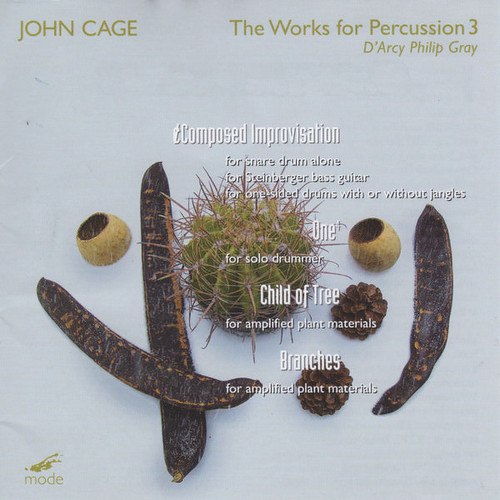
The Works for Percussion 3
John Cage's works for solo percussionist played by D'Arcy Philip Gray: Child of Tree, Branches, One⁴ and three versions of c/Composed Improvisation, volume 3 of the Mode percussion series (Cage Edition 50).
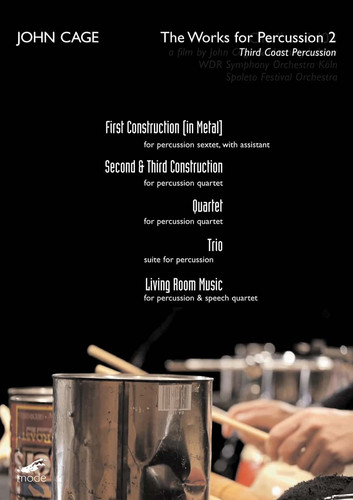
The Works for Percussion 2
John Cage's early percussion chamber works from 1935-1942, including the three Constructions, Trio, Quartet and Living Room Music, played by Third Coast Percussion, with the first movement of Living Room Music recorded in the Ford House.
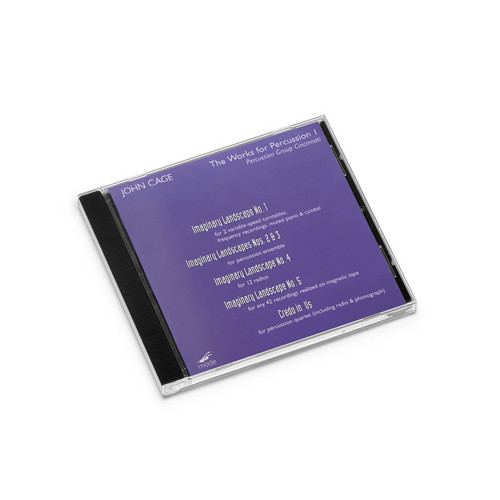
The Works for Percussion I
The complete Imaginary Landscapes 1-5 and Credo in US by John Cage, with radios, phonograph records and percussion, played by Percussion Group Cincinnati in the first volume of the Mode Cage percussion works.
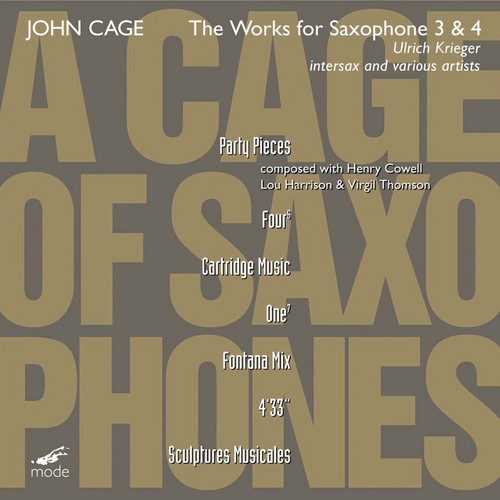
The Works For Saxophone 3 & 4
Two CDs of John Cage works for saxophones and other instruments, played by Ulrich Krieger and Intersax, including the only available recording of Party Pieces, written with Cowell, Harrison and Thomson.
1 2 3 4 5 6 7 8 9 10 11 12 13