We use cookies on our website to provide you with the best experience. Most of these are essential and already present.
We do require your explicit consent to save your cart and browsing history between visits. Read about cookies we use here.
Your cart and preferences will not be saved if you leave the site.

Pharoah Sanders

Pharoah Sanders possesses one of the most distinctive tenor saxophone sounds in jazz. Harmonically rich and heavy with overtones, Sanders’ sound can be as raw and abrasive as it is possible for a saxophonist to produce. Yet, Sanders is highly regarded to the point of reverence by a great many jazz fans. Although he made his name with expressionistic, nearly anarchic free jazz in John Coltrane’s late ensembles of the mid-’60s, Sanders’ later music is guided by more graceful concerns

Pharoah Sanders possesses one of the most distinctive tenor saxophone sounds in jazz. Harmonically rich and heavy with overtones, Sanders’ sound can be as raw and abrasive as it is possible for a saxophonist to produce. Yet, Sanders is highly regarded to the point of reverence by a great many jazz fans. Although he made his name with expressionistic, nearly anarchic free jazz in John Coltrane’s late ensembles of the mid-’60s, Sanders’ later music is guided by more graceful concerns

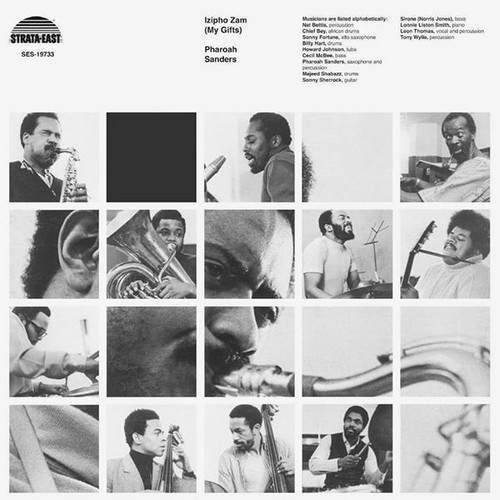
Izipoh Zam (My Gifts)
Two years after the death of his mentor and boss, John Coltrane, and just before signing his own contract with Impulse!, Pharoah Sanders finally got around to releasing an album as a leader apart from the Impulse! family. Enlisting a cast of characters no less than 13 in number, Sanders proved that his time with Coltrane and his Impulse! debut, Tauhid, was not a fluke. Though hated by many of the jazz musicians at the time - and more jazz critics who felt Coltrane had lost his way musically the …
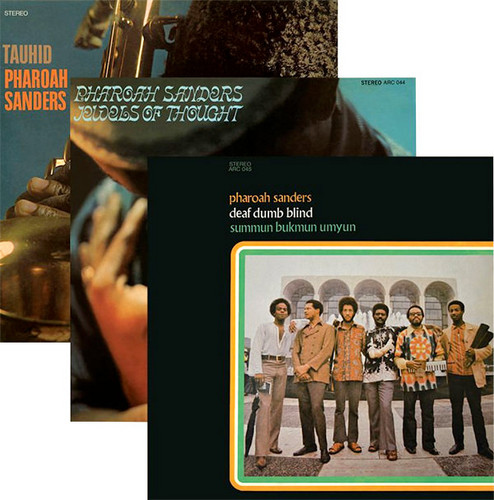
Tauhid / Jewels Of Thought / Summun Bukmun Umyun
**3 LP bundle** Pharoah Sanders is Spiritual Jazz, is Devotional Music, is the greatest living link between John Coltrane, Kamasi Washington, and the next generation of this great lineage. His Tenor Sound, his Singing Voice, his compositions, and his recordings have already stood the test of time, in his time, endured, ever-aged so finely, and have now (in my opinion) surpassed critique. Pharoah Sanders is a giant, an innovator, colorful, prayerful, and worthy of all our attention, celebration, …
Featuring Pharaoh Sanders and Black Harold
"To understand the significance of the word 'featuring' on Featuring Pharoah Sanders And Black Harold, consider how infrequently Sun Ra used it and the exact way it had been used."The October Revolution in Jazz, organized by Bill Dixon in the West Village in 1964, presented a vivid cross section of approaches to the new music, including a sextet led by Ra. For the October Revolution's continuation, titled Four Days in December, held at nearby Judson Hall on the last days of 1964, the Arkestra pe…
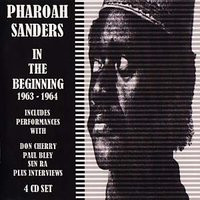
In The Beginning 1963-1964
2012 release. This four-CD set documents the first recordings of the iconic tenor saxophonist, prior to his well-known association with John Coltrane. Beginning with two previously unreleased sessions withOrnette Coleman alumni Don Cherry and Paul Bley, followed byPharoah's debut date as a leader for ESP-Disk', and concluding with the first issue ever of the complete December 30 and 31, 1964, concerts with Sun Ra at Judson Hall, Sanders's only known recordings with the Arkestra. The set also inc…
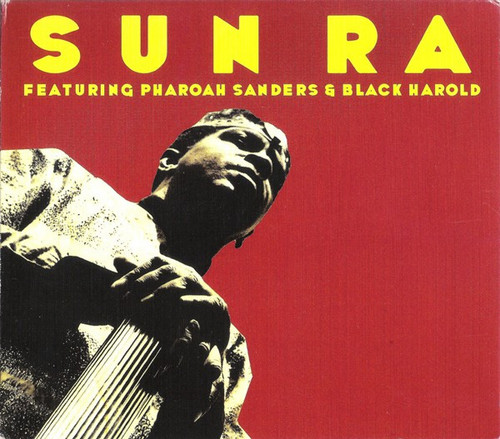
Sun Ra Featuring Pharoah Sanders and Black Harold
In 1964, Sun Ra asked the young tenor saxophonist Pharoah Sanders to join him, while Arkestra mainstay John Gilmore was busy working with Paul Bley, Andrew Hill and Art Blakey. Before the recording's original release in 1976, Sun Ra stated: 'It should be very interesting to the world to show what the pre-Coltrane Pharoah Sanders was like.' Also appearing on Featuring Pharoah Sanders & Black Harold is the little-heard flautist, Black Harold(Harold Murray), who takes the lead on the track “The Voi…
Pharoah's First
Pharoah Sander's classic 1964 session, his first as a leader. Remastered from the original tapes and presented here for the first time with insightful and entertaining interview clips detailing Pharoah's early experiences as a young musician in New York. Includes over thirteen minutes of previously unreleased interviews with Pharoah Sanders and ESP-Disk founder/CEO Bernard Stollman. Pharoah Sanders (tenor saxophone); Stan Foster (trumpet); Jane Getz (piano); William Bennett (bass); Marvin Pattil…
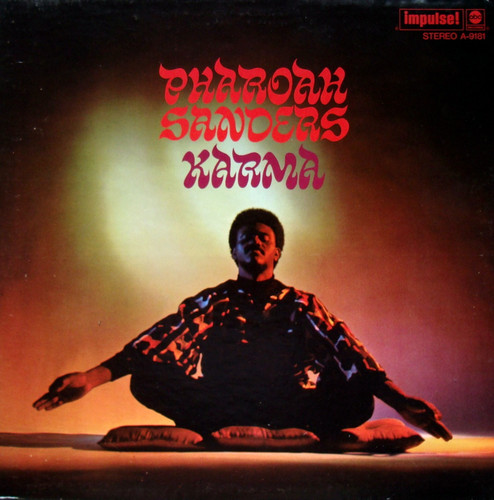
Karma
Although introduced as a protégé of John Coltrane and touted by many as his heir apparent, reedman Pharoah Sanders quickly proved his own man. His shared interest in the "cosmic" music of Coltrane's final period belies the fact that Sanders frequently plays with an unhurried sense of peace and satisfaction rarely found in his mentor's music. His use of space, African and Asian motifs and instruments, and simple, repetitive melodies also pointed the way for jazz, rock, and new age musicians in th…
1 2 3 4