Back in stock
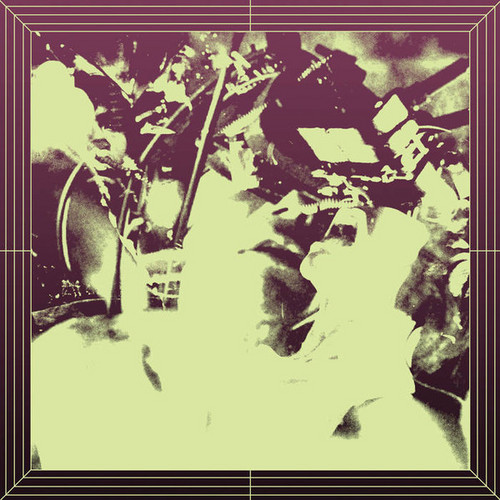
Psychic Stress
After leaving Iran with his family at the age of 6, Emad Dabiri (Sarin) lived in Toronto before moving to Berlin in 2014. Though Toronto provided Dabiri with the foundation to pursue his music, he knew he had to move overseas to explore his art further. “The depth of the underground electronic scene [in Berlin] is vast,” says Dabiri. “There’s also a good sense of community and support among the artists and musicians here.” The current sounds coming out of Berlin, combined with Dabiri’s fixation …
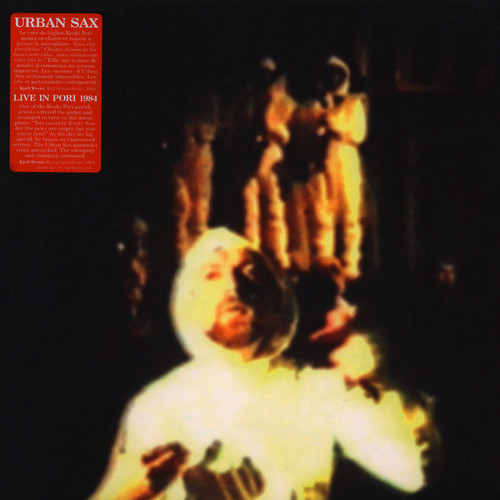
Live In Pori 1984
In July 1984, the otherworldly entourage of over fifty musicians of Urban Sax swarmed across the coastal town of Pori, Finland, to perform a historic concert at the Pori Jazz Festival. The masked musicians, veiled in space suits and fencing masks, arrived at the scene of the concert in the Central Pori Church by fire engines, forklifts and water buses from all over the town, followed by an ecstatic and bewildered crowd of festival-goers and amazed locals alike. For those present, the explosively…
Mosquito/See trough
On the one hand, they seem to be releasing too many CDs - on the other, they are so different and so good you really need to have them. This time they offer two long pieces, both exquisite, of which Mosquito is, in my opinion, destined for greatness. Since the demo arrived in the office it's been on continuously. Minimal, with every sound perfectly imagined and perfectly placed, it achieves almost total timelessness. Essential. (label info)
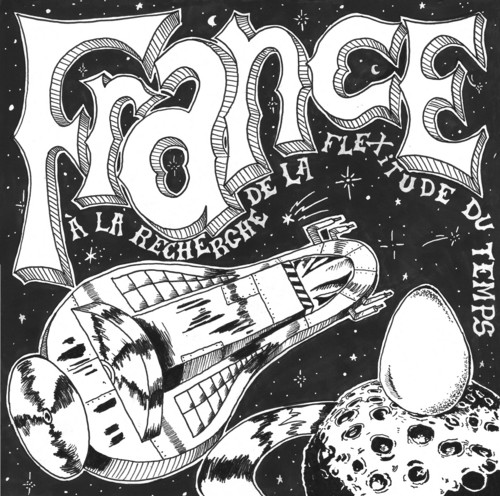
À La Recherche De La Flexitude Du Temps
Fierce 78minutes concert by France, recorded in 2016 released on the French label Fougère. With cartoons by Capony and Sauvage. Think Faust, Tony Conrad, early Can.
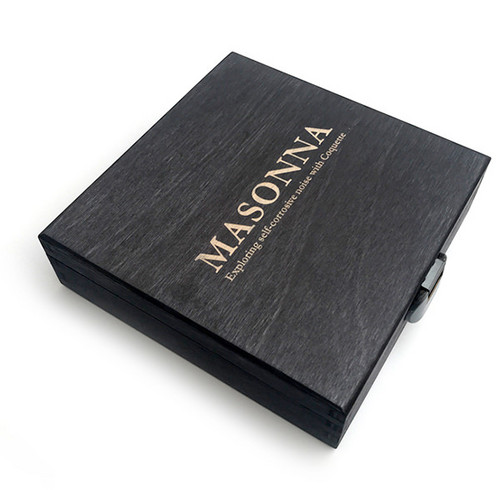
Exploring Self-corrosive Noise With Coquette
**Edition of 250, wooden box edition** Along with Merzbow and Hijokaidan, Masonna is one of the best (known) Japanese noise projects. A psychedelic touch, cascades of electronic noise and vocal belching mixed together constitute the ingredients of Mademoiselle Anne Sanglante Ou Notre Nymphomanie Auréolé, the double-barrelled named for Masonna. Yamazaki “Maso” Takushi created Masonna in 1987. He started recordings on cassette tapes for his own label: Coquette. His plentiful productions were prese…
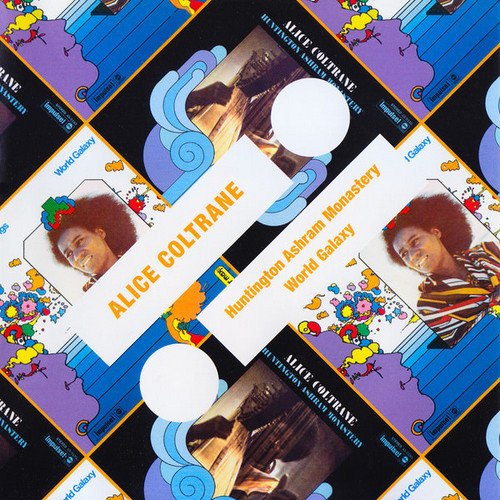
Huntington Ashram Monastery / World Galaxy
Two seminal early Alice Coltrane albums on one CD. "Composer, pianist, keyboard player, harpist and bandleader Alice (McLeod) Coltrane married John Coltrane in 1965. She played in her husband's band until his passing in 1967 but his influence remained strong throughout her music thereafter. Few of her albums reflect this influence more strongly than Huntington Ashram Monastery, recorded in 1969, and World Galaxy, recorded in 1971, here combined as part of the Impulse!/Universal 2-on-1 Impulse! r…
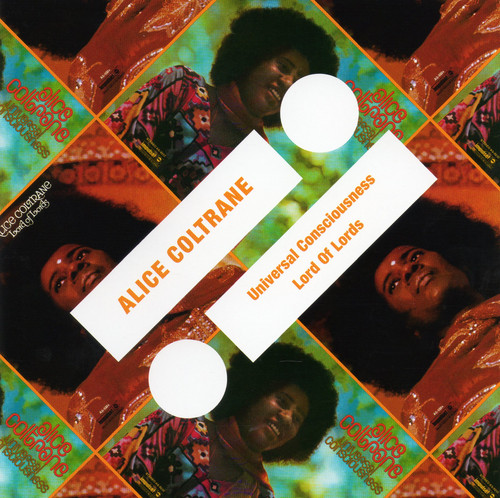
Universal Consciousness / Lord Of Lords
Two seminal early 70s Alice Coltrane albums on one CD. "It may seem unfair at first to mention John Coltrane -- Alice's beyond-famous husband -- when talking about her music, but listening to Alice Coltrane, you get the impression you can't mention her without talking about John. In an interview with Alice Coltrane -- originally from the September 1968 issue of Jazz and Pop magazine, but later reprinted in the liner notes for then 1998 Impulse! reissue of her first solo record, A Monastic Trio -…
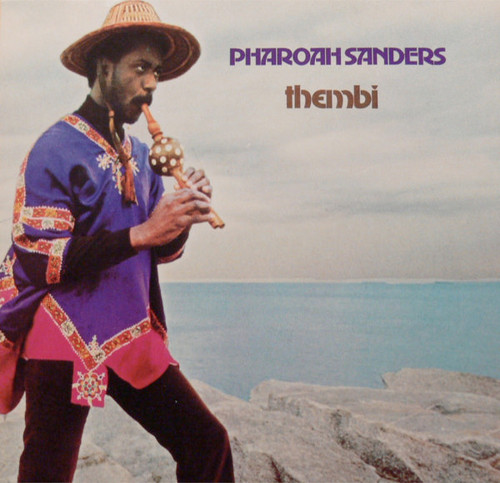
Thembi
Classic spiritual soul jazz from Pharoah Sanders – recorded with an all star
lineup that includes Lonnie Liston Smith, Cecil McBee, Roy Haynes, and
Michael White. The album's got a strong influence from the members on
the set – particularly Lonnie Liston Smith, who seems to bring in a very
nicely soulful approach to a few of the numbers, and Michael White,
whose spiritual consciousness is still a bit rough-hewn and personal at
this point. The record oddly shifts mood from track to track …
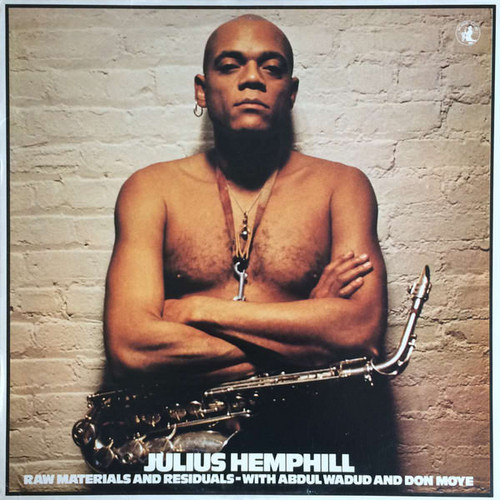
Raw Materials And Residuals
One of the essential albums of 70’s creative jazz, and a landmark recording in the second wave avant-garde movement of that era. The music of the late great saxophonist and composer Julius Hemphill presents a strong combination of Blues roots, free energy and bop complexity. Hemphill's compositions were meaty enough to offer the improvisers plenty of ideas, but they were airy and open, too. They left room for solos, accompanied by the rhythm section and unaccompanied, and for group improvisation…
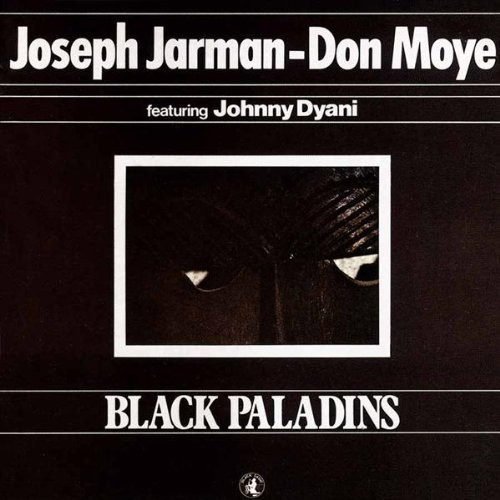
Black Paladins
In December 1979, two Art Ensemble of Chicago members - Joseph Jarman and Don Moye along with the great South African bassist Johnny Dyani gathered together under the name of Black Paladins. Inspired by the words of the great black poet Henry Dumas, the music traces a deep, dense sound path; from ancient Africa through the rural American south to the modern urban contrast. After almost thirty five years, Black Paladins still resounds with grace and power in the history of Great Black Music.
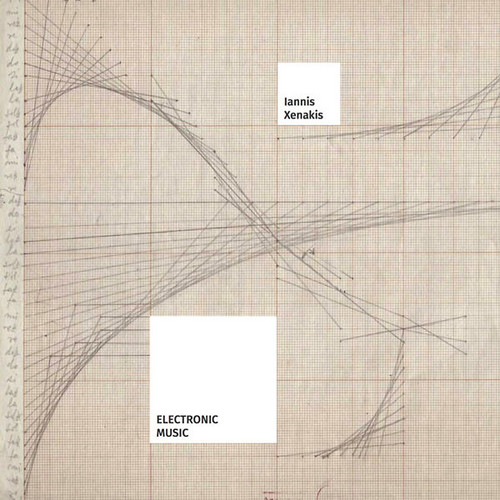
Electronic music
Jeanne Dielman presents a reissue of a collection of Iannis Xenakis's work titled Electronic Music, originally released in 1997. Some of the earliest works from a truly groundbreaking composer in the realms of electronic music, musique concrete, electro-acoustic, 20th century classical, and more. The Romanian-born, Greek-French composer Iannis Xenakis was instrumental in the introduction of mathematical models into composition and helped revolutionize electronic music in the middle 20th century.…
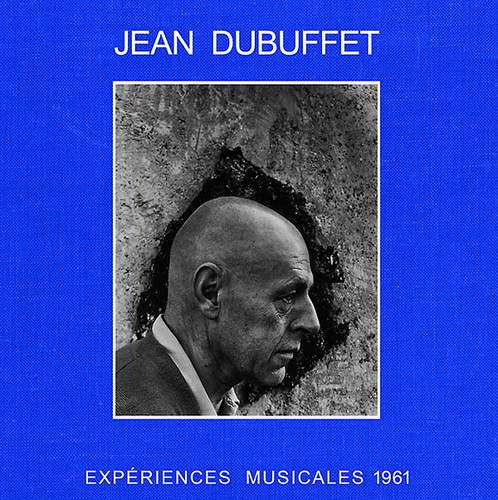
Expériences Musicales 1961
Milestone reissue! Recorded in Venice in 1961 by the French sculptor, painter, and iconoclast Jean Dubuffet, these recordings were originally released in a hyper-limited 10" box set that is all but impossible to acquire. An early progenitor of the avant-garde and musique concrete, Dubuffet's recordings nearly defy category and still sound innovative some 50+ years later. Dubuffet’s music is contained as raw and uncompromising: noisy, pure, crazy, exuberant, yet also focused and inventive. Dubuff…
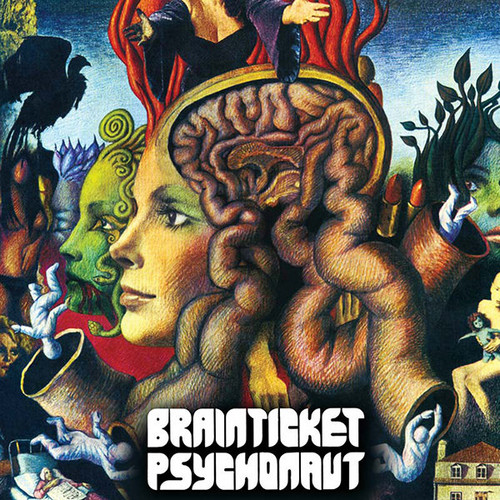
Psychonaut
**Remastered from the original master tapes, 180 gram reissue of the original vinyl release with gatefold cover** 1972s Psychonaut, by the Swiss-based Brainticket, is early seventies space rock at its finest. While the bands debut album, 1971s Cottonwoodhill, was a heavily acid-laden affair dominated by droning organ, disturbing vocals and a collection of cacophonic sound effects (causing it to carry a warning label and be banned in several countries) for their second effort, band-founder Joël V…
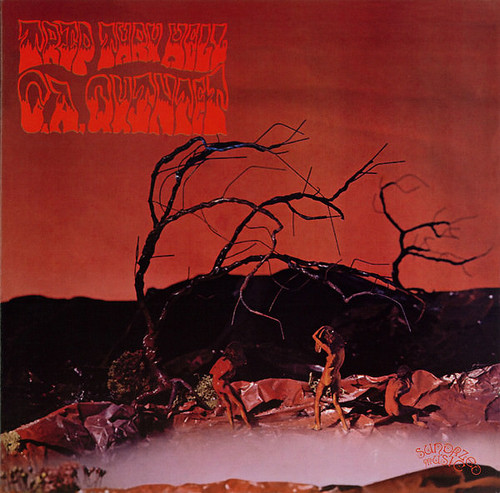
Trip Thru Hell
On translucent gold vinyl. The C.A. Quintet’s journey to Hades burned hot enough to melt the ice in their frigid Minnesota environs. A coveted collectable since the psychedelic record collecting disaster whirl first started over 30 years ago, Trip Thru Hell (1968) is rightly regarded as the epitome of local psych-cum-garage rising above its humble roots into something truly monolithic. Evolving from the local circuit into a hellish beast of keyboards, lysergic lyrics, trippy guitars and even sub…
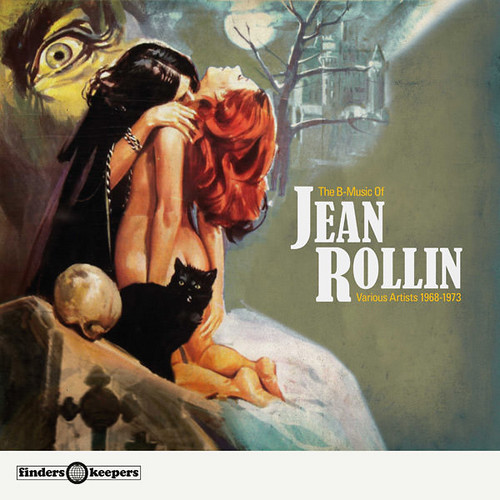
The B-Music of Jean Rollin: Various Artists 1968-1973
Rising out of the smoky Parisian Mai 68 shrapnel and claiming his stake as the first French vampire movie director, the inimitable father of European horrortica, Jean Rollin (1938-2010) has smudged the painted face of surrealist cinema for over five decades. Dragging his roots from beneath the Letterist/Situationist movements, avant-garde theater, and Belgian fine art groups and entwining them around the minds of sexual revolutionaries, the European comic book cognoscenti and the Parisian free j…
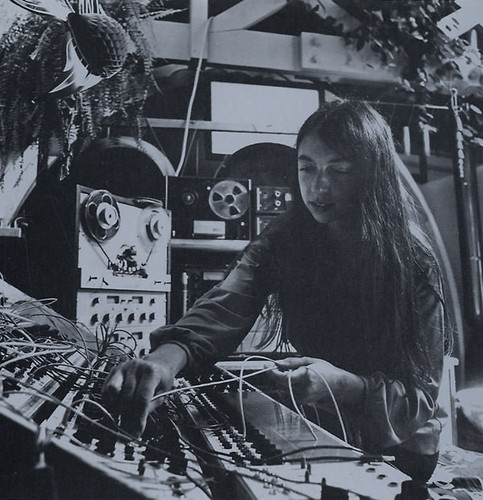
Fish Music
Single-sided "aquatic clear" 7". Includes a copy of the original press release as well as a press cutting from the time. Limited edition of 500 for Uk. As the first and only label dedicated to liberating the private, non-commercial artifacts from Suzanne Ciani's groundbreaking Ciani Musica studio vault, Finders Keepers Records presents the first release of an incredible cryogenically suspended slice of precious, precocious, immersive fledgling synthesis. Ironically well removed from the intentio…
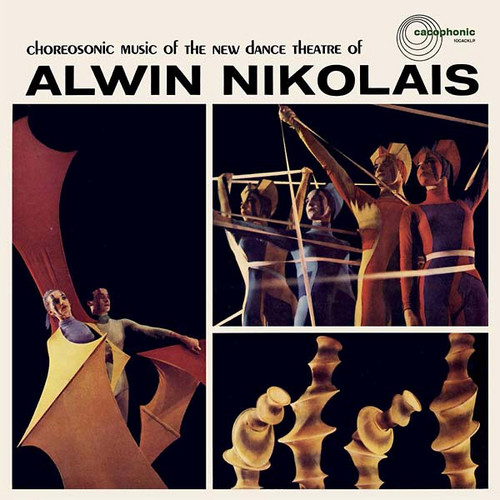
Choreosonic music of the new dance theatre of Alwin Nikolais
"Choreosonics" was what Alwin Nikolais called his musical accompaniments to his choreography -- a unique theater exposition that modern dance scholar Isa Partsch-Bergsohn
describes as "a whole new theater of motion, light and sound." In 1953,
Nikolais began drawing audiences to his dance concerts at the Henry
Street Playhouse in New York City, in which dancers became sources for
sculptural shapes; by moving through changing atmospheres of light and
sound, their relationships to the stage el…
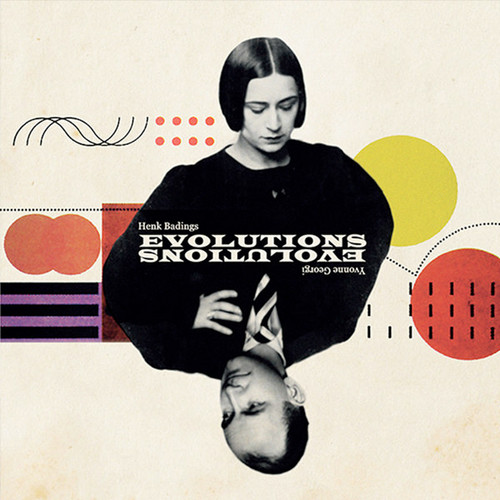
Evolutions
Pioneering electroacoustic and tape music by Henk Badings assisted by Dick Raaijmakers (Kid Baltan) from the Hanover Opera Ballet production of Evolutions choreographed by Yvonne Georgi. Premiering in Hannover in 1958 then in Rome and Vienna in the following year the ballet Evolutions (Evolutionen) by Yvonne Georgi was the second of three groundbreaking collaborations with Henk Badings (bookended by Cain and Able aka Elektronisches Ballet in 1957 and Die Frau Von Andros in 1960) in which electro…
The Little Glass
The ever-enigmatic Akira Rabelais returns! The Little Glass breaks down clearly over two discs; the first containing four plaintive solo piano parts by Harold Budd and Rabelais, followed by a 2nd disc presenting Rabelais’ hour long, inharmonic, electronic transformation of the preceding material. Rabelais has collaborated with Budd before, he provided his own incredible side-long second CD to Budd’s majestic Avalon Sutra album, and while the piano pieces that make up the first CD here are bloody…
A Gift Like A Hollow Vessel
Edition of 250. Melbourne-based artist Arek Gulbenkoglu presents A Gift Like A Hollow Vessel, his second full-length album for Penultimate Press. Following on from the 2017 release Three Days Afterwards (PP 029LP), A Gift Like A Hollow Vessel sees a sharper scalpel at play, resulting in a more nuanced release which unfolds a curious journey of suburban psychedelia. Material source from voice and body sounds, recording of non-musical processes, actions and events, breath, tapes of animal sounds s…