Back in stock
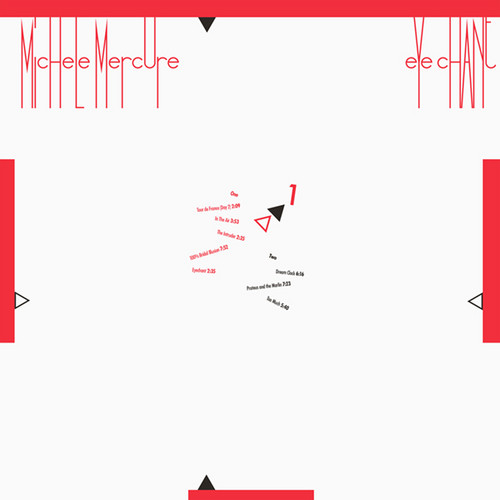
Eye Chant
Originally issued in 1986. You can see the sounds her voice makes. The literal depiction of this, a photograph of Michele Mercure with an eyeball in her mouth, is removed in the updated album art. The original graphic elements are left to suspend, speak, and sing across time. In the absence of the decade-specific portraits, the redesigned edition is dislocated from a particular or linear history. Our initial point of encounter is artifactual; a trace in place of a scar. Accordingly, Michele’…

Suicide
Suicide's landmark self-titled LP was originally released in 1977, seven years after the group's initial conception as part of the performance art scene on the Lower East Side. It is hard to overstate the importance of the seven tracks on Suicide, which paved the way for punk, industrial, hip hop, noise and beyond. "Ghost Rider" accelerates with brutal anguish and desire for everything rock 'n' roll. Martin Rev's utterly singular "instrument" pounds out a synthetic soundscape, while Alan …
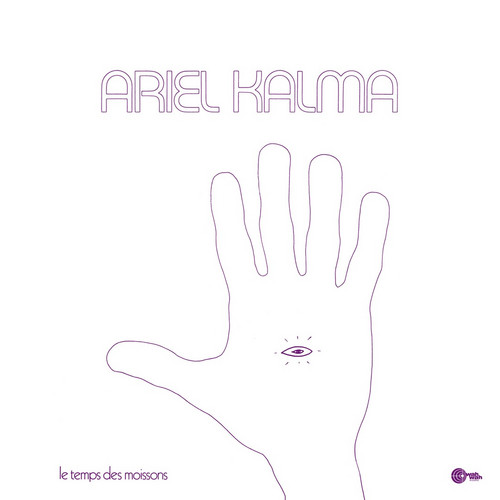
Le Temps Des Moissons
A timeless masterpiece! Finally available on LP, first solo recording album from Ariel Kalma, recorded in 1975. After a long journey to India where he learnt the basics of modal music and singing, Ariel was inspired by the fusion of ancient and modern ways of playing music in the 70s with saxophone, ethnic instruments, effects, electric instruments and electronic filters. Kalma is also known for have played in albums by other French experimental artists like Delired Chameleon Family, Nyl, Heldon…
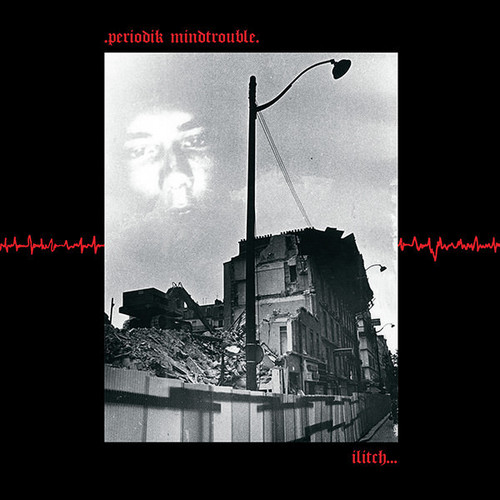
Periodikmindtrouble
Milestone!! Dreamy and cosmic, with long drones, deconstructed guitars and repetitive organ chords that are both bleak and mesmerizing, falling somewhere between Brian Eno, Conrad Schnitzler, and Heldon, with similar pulsing electronic sonic space visions. "In the mid-1970s Parisian composer and multi-instrumentalist Thierry Müller began operating primarily under the Ilitch moniker. Juxtaposing dark, electronic soundscapes and solo guitar improvisations, Ilitch created some of the most enduring …
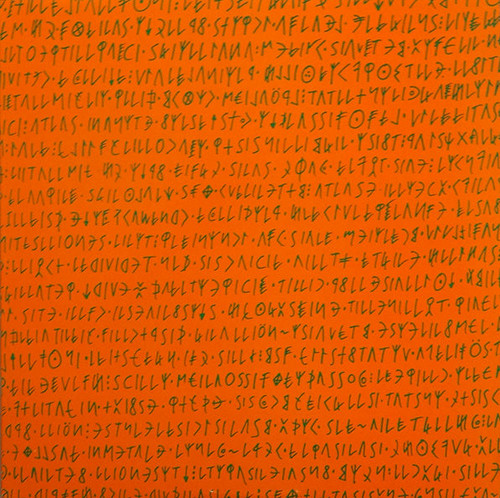
The Wind Collector
*5 very last copies just found by chance - original Divergo LP edition* As we’re becoming steadily aware, Gigi Masin and his mates made some truly beautiful music in the late ‘80s which is only just properly coming to light in recent years. Blessed with an almost ineffable air of sophistication and a sort of Venetian play-of-light, their music had existed quietly on the fringes, minding its own business until Music From Memory illuminated their work with 2014’s gorgeous Talk To The Sea com…
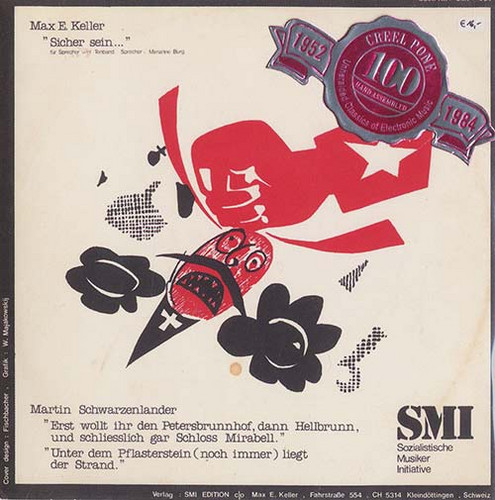
SMI, Sozialistische Musiker Initiative
Creel Pone here resuming the regular one-a-week schedule for the next few weeks / months, starting off here with easily the noisiest entrant since Pierre Henry’s “Mise en Musique” - possibly even moreso! - a split LP of Socialist Text-Sound & Musique Concrète works by composers Max Keller and Martin Schwarzenlander. The A-side piece, Keller’s “Sicher Sein...” interjects continuous, ululated German / Austrian texts with jabs of random, synthesized noise, sample-and-hold bleeping, and piercing hig…
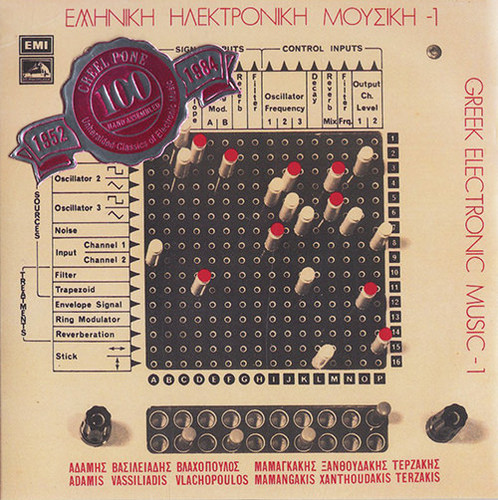
Greek Electronic Music-1
Jeeeezus ... so here’s just about the best record ever, a collection of late 60s pieces from 6 Hellenic composers, only one of which even rates a single listing in the Hugh Davies book, Michael Adamis. See that on the cover? it’s the patch-bay of an EMS VCS3, arguably the most legendary / covetable analogue synthesizer. Here is an exchange that i’ve fabricated as a possible explanation of how this record came to be: Adamis: “I’ve just come back from London and look what i have: it’s an EMS VCS3.…
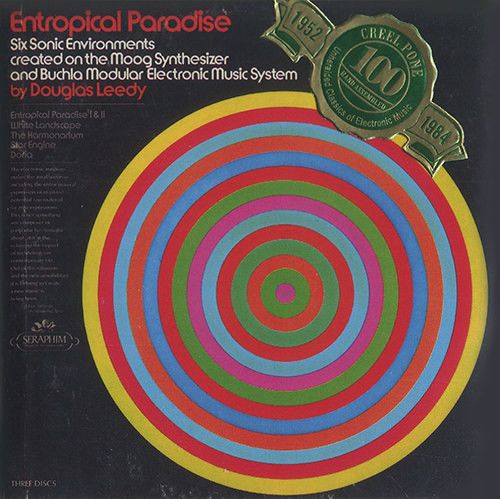
Entropical Paradise
Hope you all had a fine summer off. As something of an “Autumn Welcome” here’s a treat - Mr. P.C. C.P.’s reproduction of Douglas Leedy’s groundbreaking 1972 Seraphim-label triple-LP boxed set “Entropical Paradise” - in my mind, the lodestone of all Moogsplotation LPs in that it consists solely of side-length pieces not played by human hands on keyboards - or in fact any other gestural, real-time interface - but in fact produced “Automatically” using Control Voltages assigned to the various funct…
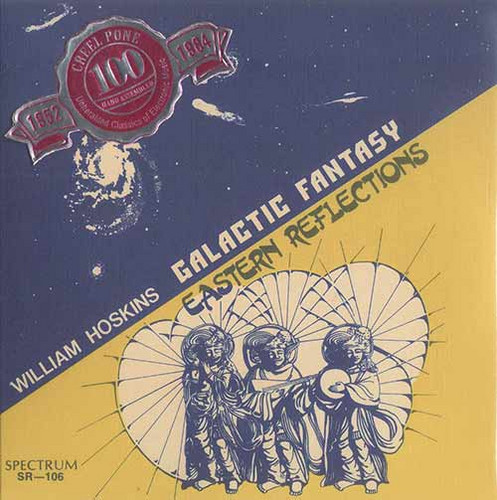
Galactic Fantasy, Eastern Reflections
Criminally under-rated set of Early American Moog Modular Synthesizer Music - the sole release by composer William Hoskins, the "Director of Electronic Music and Composer-in-Residence at Jacksonville University in Florida." Issued in 1979 by the Harriman, NY-based Spectrum - a "Division of UNI-PRO Recordings, Inc." the LP consists of a pair of discrete pieces, with each taking up a side of its own. "Galactic Fantasy" lives up to the premise of its title, its far-reaching narratives are concerned…
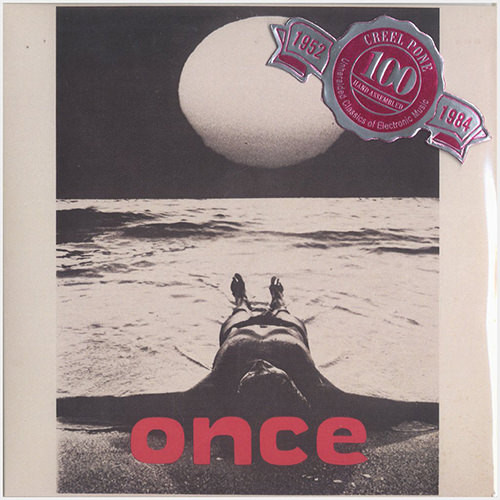
Once
The soundtrack to a seldom-seen 1974 art film by Mort Hellig - featuring a total cast of 3, playing "Creation," "Humanity," and "Destruction," respectively - Israeli Composer Aminadav Aloni's peculiar, minimal Electronic Music cues come from a more compositional bent than much of the era's Synthetic dabblings. Over the course of 8 song-length segments of hand-played melodic refrain, a certain mood is established of laissez-faire, devil-may-care-ish-ness that is, frankly, quite welcome - s…
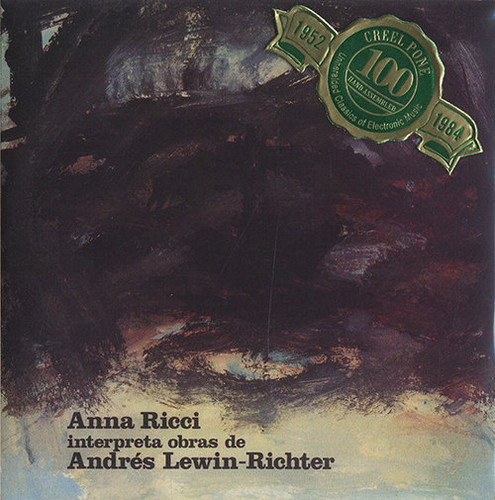
Interpreta Obras • Musica Electroacústica
Issued in 1982 as a pair of separate lp’s by Hemis Ferio, this set covers the bulk of Spanish composer Andrés Lewin Richter’s Electro-Acoustic music (as opposed to his Library work - issued by Cam as a one-two-three punch of masterful mood-pieces under the “Space Electronics” moniker in 1977) segregated by his work with vocalist Anna Ricci (the first LP) and without (the second.)Incorporating a wide range of source materials (aside from Ricci’s operatic & at times psychedelic splendour, we’re tr…
Exercise 15
"Exercise 15" was made out of and invites transformations or transcriptions. It's for piano or ad hoc instrumental arrangement. Its material is from a 1920s song "Union Maid" (as I found it in Edith Fowke and Joe Glazer's collection "Songs of Work and Protest") by Woodie Guthrie using an earlier popular song tune. The tempo of the music is not specified. Sometimes it's played rather fast, as the original tune probably was, sometimes at a deliberate, 'prosaic' tempo. Here it's in a slow motio…
The Mask Of The Imperial Family
Lullabies For Insomniacs is pleased to present Yasuo Sugibayashi and The Mask Of The Imperial Family; a compilation of music from Mimic Records 1980-1982. Yasuo began his musical career playing guitar in a high school band, in 1980 after moving to Tokyo and immersing himself in various musical groups he founded Mimic Records. Inspired heavily by the art movements of the late 1970's, in particular the innovations of Brian Eno and David Cunningham he purchased a Roland System 100M. He was in …
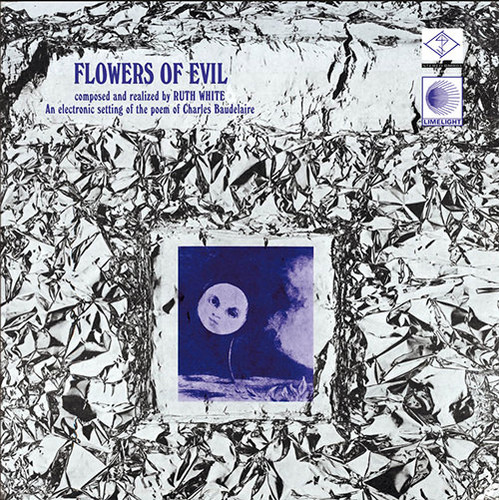
Flowers of Evil
Limited repress in coloured vinyl, 300 copies only...A dark occult masterpiece - originally released in 1969 it makes much contemporary dark electronic music sound like playskool. It is in my opinion one of the finest electronic music records one could ever wish to hear. This LP was sonically advanced at the time and still sounds positively evil. Ruth White was a self taught synth pioneer who's name rarely gets mentioned in the avant-garde electronics history books. Here she assembled her electr…
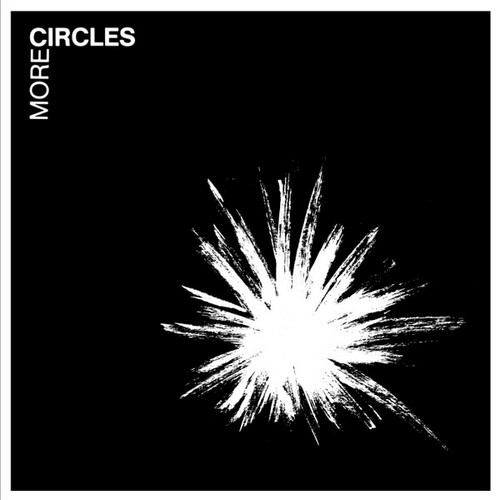
More Circles
Restocked. In the late 1970s and through the 1980s there was a lot happening on the German "post Krautrock underground" that few people knew about, lots of independent artists doing their own thing, either via small labels or doing it themselves. Circles were one of these bands. Based on the Frankfurt suburbs, they consisted of the multi-instrumental duo of Dierk Leitert (synthesizer, sequencer, drums, bass, guitar, voice, saxophone, flute) and Mike Bohrmann (guitars, bass, synthesizer) plus a f…
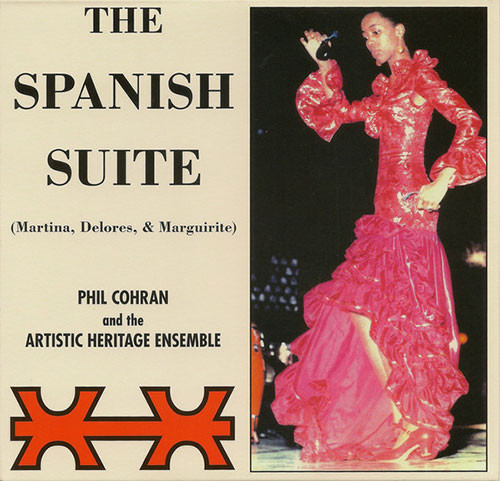
The Spanish Suite
"The Spanish Suite was written to magnify the contribution that Moorish Spain made on the European Renaissance. The relationship of music to cosmic rhythms and harmony was altered from the original state of Spanish music and eventually distorted down to the 12 tone equi-temperment system of tuning. The Artistic Heritage Ensemble was taught to play outside of the 12-tone system and to recognize natural tone relationships. The musicians had to be dedicated to music for life in order to reac…

GPS / GaPS
GPS - Gigantic Paradigm Shift and GaPS - Global Art Participation Systems, traveling in the direction of utopian goals and revisiting a synoptic history of the international underground art networks of the last century, from Pataphysics to Fluxus, from Mail Art to the Luther Blissett Project. The 12" clear vinyl disc is applied to an original circular cover (diameter 35 cm) by Emanuela Biancuzzi, with graphic layout by Elisa Landini and Virna Zampolini. The disc was produced in a limited edition…

Complete Music For Films 1960-1984
Complete Music For Films 1960-1984 is a three-CD set that gathers Luc Ferrari's complete works for films from 1960-1984, including electronic pieces, concrete music made in GRM, and some hybrids including traditional instruments. Very rare pieces, most of which are unpublished (including collaborations with Jean Cocteau and Jean Tinguely), are presented here for the first time, offering a complete scope of the innovative 20th century composer's foray into film music. Complete Music For Films 196…
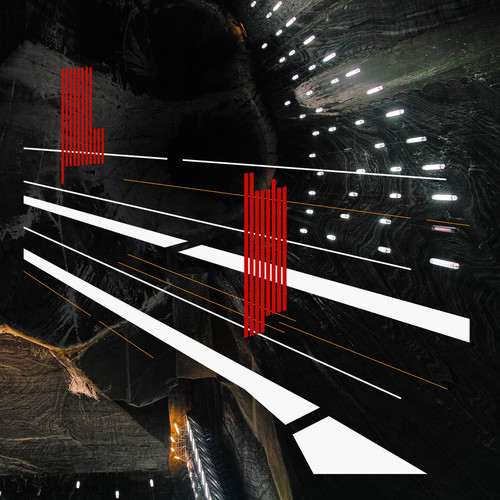
Ore
Andrea Belfi (born 1979) is an international respected electroacoustic musician and composer. He began playing drums at the age of 14. He studied art in Milan, before becoming involved in experimental music and since 2002 he's been in collaboration with a wide range of artists, currently residing in Berlin, Germany. His new album Ore is released on the new UK record label Float which was founded by Sofia Ilyas, who was previously the label manager at Erased Tapes Records. The new label exists pa…
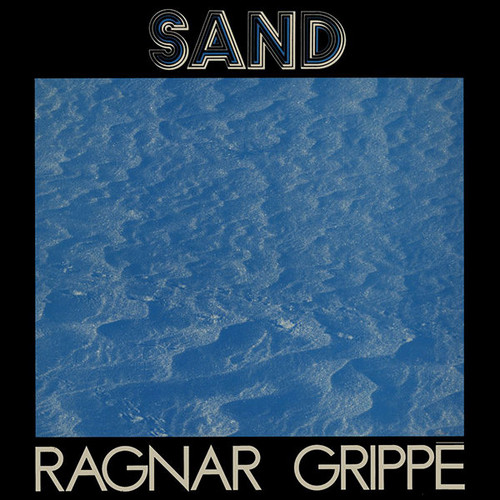
Sand
**In process of restock, very last copies, sold out at source** Since its original release in 1977, Ragnar Grippe’s seminal debut album entitled “Sand” has been adorned with immense praise and influenced a myriad of ambient musicians and minimalist composers. Grippe’s unique approach of bonding post-modern classical composition into the tape techniques of musique concrète allowed him to be one of the leading experimental electronic musicians of the late 20th century. Originally trained as …