Back in stock
Musique Pédagogique
Frédéric Acquaviva, born in 1967, has been since 1990 a sound artist and experimental music composer, creating chronopolyphonic installations and CDs (published by Al Dante) and playing in art galleries (Galeria Peccolo, Incognito, Lara Vincy, Archives and others), in museums (Palais de Tokyo, Centre Pompidou in Paris, Tate Modern in London, Neues Museum in Weserburg, La Fenice in Venezia and others) or in underground venues, such as Les Voûtes, le Donjon de Maîtresse Cindy, Festival Indisciplin…
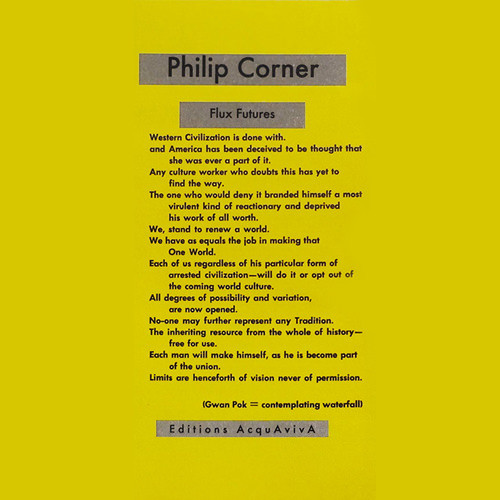
Flux Futures
Limited edition 100 copies. In this book you will find the historical "Manifesto" published by Something Else Press in 1966 printed as the cover, plus its never published revisitation entitled "Manifesto remanifested" of 2006, as well as the last text of Philip Corner "Flux Futures", a 31 pages mix of aphorisms as a new manifesto, printed in a typographic delirium. "Your work will either become a classic or turned into junk".
Collaborations
Collects together the re-mastered Duck and Cover (Tom Cora, Chris Cutler, Fred Frith, Heiner Goebbels, Alfred (23) Harth, Dagmar Krauze, Gerorge Lewis) and Cassix (Chris Cutler, Franco Fabbri, Umberto Fiori, Heiner Goebbels, Pino Martini) recordings, and the Cassiber/Otomo Yoshidide collaboration on one CD, the newly assembled live and out-take The Way it Was, plus a DVD of two concerts, one from the Frankfurt Jazz festival, the other from Brasil, with short documentary, made in the GDR, o…
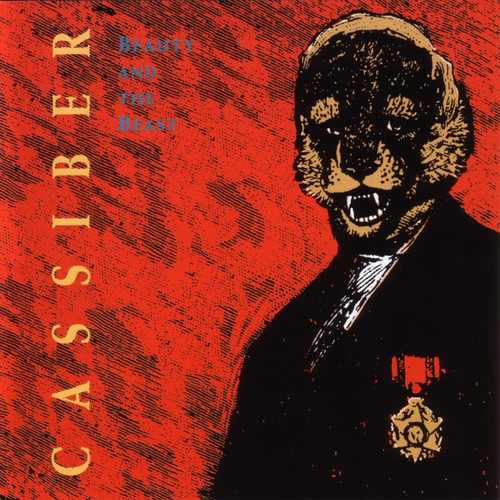
Beauty. And The Beast
Beauty and the Beast, the second LP by Cassiber, was released in 1984 simultaneously on the British label Recommended and the German Riskant with a small difference in contents -- the ReR Megacorp CD reissue includes all tracks from both LP versions. This album represents a giant leap from the group's 1982 debut, Man or Monkey. Yet, the same technique was used: No songs were written in advance. Drummer Chris Cutler had written lyrics to be used when considered suitable by singer Christoph A…
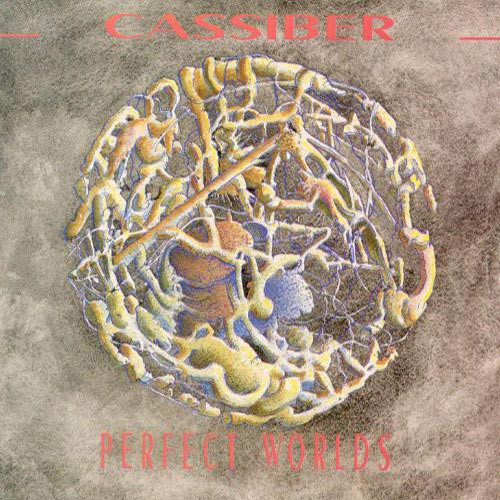
Perfect World
Cassiber's second album moves one step ahead in the refinement of the group's music. From Man or Monkey, the trio (Christoph Anders, Chris Cutler, and Heiner Goebbels; Alfred 23 Harth had bid farewell) retained clashes of noise, a taste for cheap synthesizers, and Anders' declamatory style. But this time the music is much more organized and arranged. Songs are short and focus on atmospheres and the alienating settings of Cutler's words. More political than before, they take their cue from t…
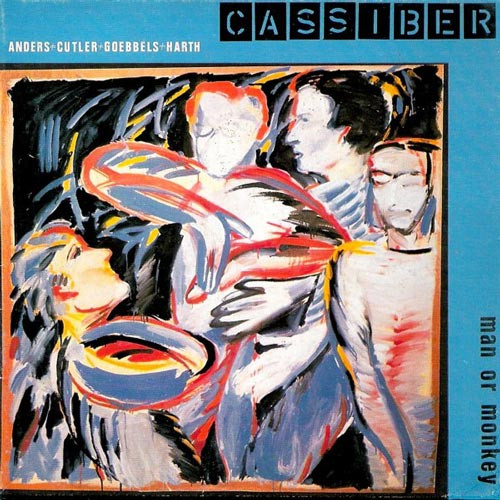
Man or Monkey
Man or Monkey was Cassiber's first album. It was released in 1982 on the German label Riskant as a set of two 45 rpm LPs -- a format that turned it into a pricy collector's item. For this first effort, Christoph Anders, Chris Cutler, Heiner Goebbels, and Alfred 23 Harth entered the studio with only a handful of the drummer's lyrics and a few melodic ideas. They improvised, letting structures and arrangements develop by themselves, so to speak, and singer Anders threw in a text when he fel…
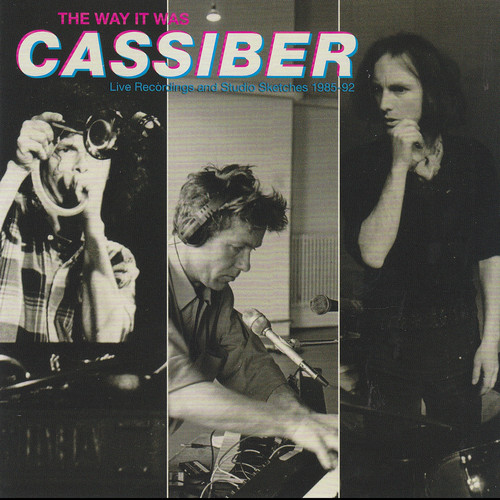
The Way It Was
Cassiber (phonetically: 'a message smuggled out of prison') crashed like a locomotive into the Deutsche Neue Welle. Founded by Heiner Goebbels, Alfred Harth, Christoph Anders and Chris Cutler (his first major project after News From Babel), Cassiber managed to fuse materials and attitudes drawn from experimental rock, fringe jazz, punk, pop, plunderphonics, improvisation, close structure and musique concrete into an energetic and complex form of studio (and then concert) composition uniqu…
All's Well
After This Heat broke up in 1982, Charles Hayward formed Camberwell Now. The new group included Trefor Goronwy, from the short-lived four-piece version of This Heat, on bass and guitar; and Steven Rickard, who is heard on Sub Rosa's Myths 1 compilation, on tape manipulation and field recordings; Charles Bullen from This Heat, who subsequently left to study music in India, is heard as a guest on the first 12" single "Meridian."
The group, recording in This Heat's Cold Storage studio, onl…
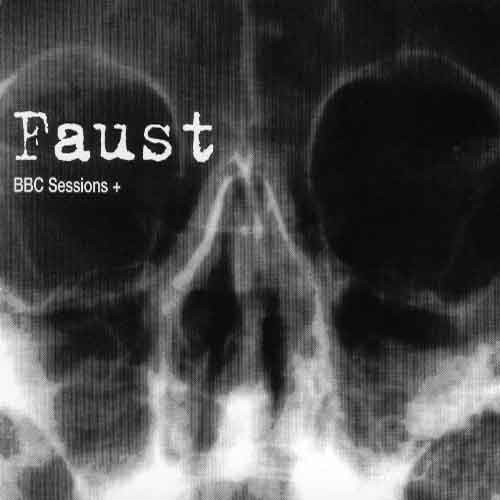
BBC Sessions +
The radio session was first broadcast 1/3/73, and is 20 minutes of pure Faustian hell. The Lurcher is a kind of electric period Miles Davis slouching drum rhythm, augmented by stabs of horn and electric guitar. Krautrock is a 12-minute post Velvet Underground riff, drone and noise-driven meditation, far superior to the version on the Virgin release Faust IV. The session ends with Do So, an outrageously corny slice of sixties pop. The remaining 30 minutes of the CD is prime Faust, culled f…
71 Minutes
Compiled from "lost" and unreleased material released to us on the 10th Anniversary of their disbandment (inc.prophetic pre-dub mixing) as well as most of the unreleased "FAUST PARTY 3" LP.
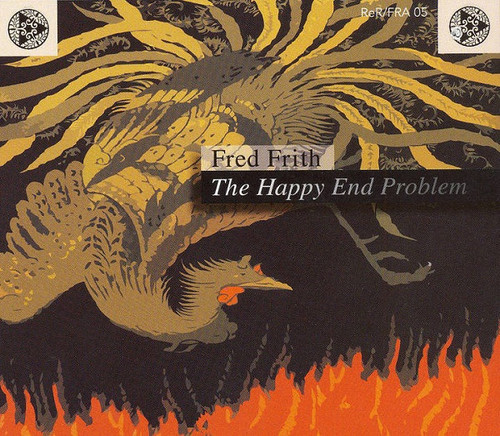
The Happy End Problem (Music for Dance Volume 5)
Frith's Music for Dance Volume 5 - two works for small ensembles, which were performed for each of Amanda Miller's dances created for The Pretty Ugly Dance Company. The first is based on Stravinsky's Firebird Suite, and the other a deliberately Western look at Japanes culture.
According to Chris Cutler:
'Happy End' presents two, related, small-ensemble works for 6 and 7 musicians respectively - mostly strings of one sort or another, with percussion, flute, clarinet and electronics. Fred, v…
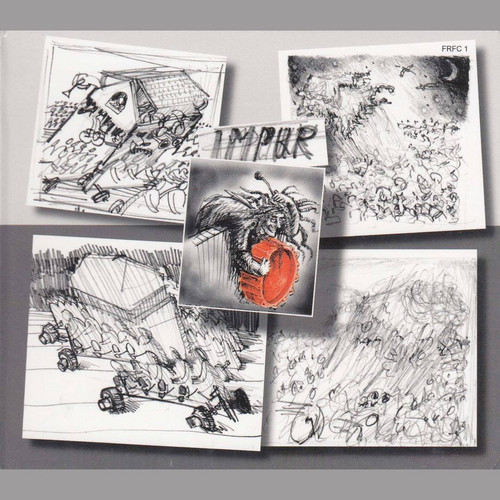
Impur
"In 1996, at the end of a two year residency, Fred organised an event at L'Ecole Nationale de Musique de Villeurbanne in France. He roped in as many of the students as he could, grouped according to their departments (early music, rock, African drumming, classical &c), and set them up in all the rooms in the building. The public wandered around creating their own mix, or sat in the courtyard listening to the sound drifting out through the open windows.
For their part, each group of musici…
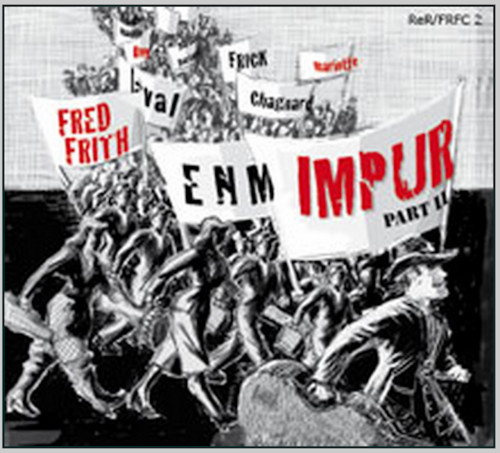
Impur II
Essentially a pretty great concert by a large 19 strong ensemble with Fred conducting as well as playing. Lots of rhythm, harmony, rock noise, exotic instrumentation, power, complexity and melodic writing, with stretches of chaos, eccentricity and theatre. Totally different, then, from Impur Part I which was a deconstructed, spatialised simultaneity of musical events heard through open windows or by wandering through rooms; Impur Part II was an unannounced performance upon which audience …
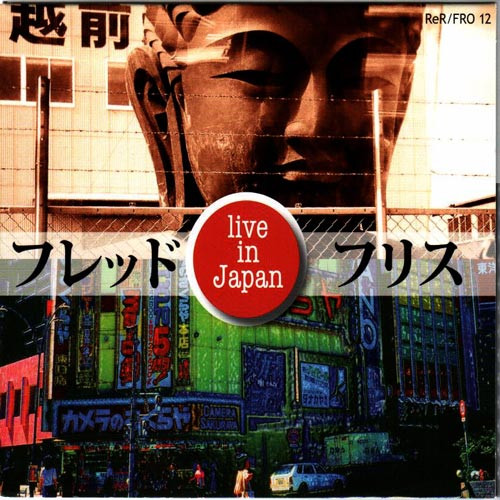
Live In Japan
Concert recordings made at various venues in Japan in 1981 and released by Recommended Records Japan in 1982 in an edition of 1000. Out of print since, though highly sought after, it has now been transferred and remastered by Tom Dimuzio for this official reissue.
Fred was just starting out on his long career as a solo improviser when he made this double LP, and still using the now long retired Charles Fletcher custom double-neck guitar (one fretted, one fretless) and the Burns Black Biso…
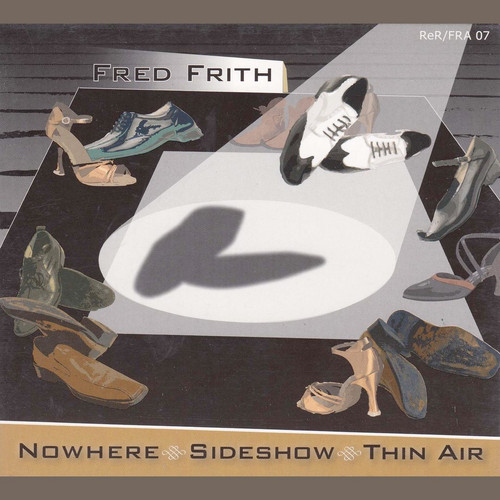
Nowhere Sideshow Thin Air
This is Frith's sixth CD of music for dance, featuring three commissions by three different choreographers each sharing, as Fred says ' a certain obsession with melodic deconstruction.' Two of them feature - and were especially written for - the remarkable violinist Carla Kihlstedt.
Fred and Carla perform one of them (Fred playing a huge array of instruments here as on all pieces), are joined by Fred Guiliano, (samples) and Gail Brand (trombone) on another, while the third features Fred, …
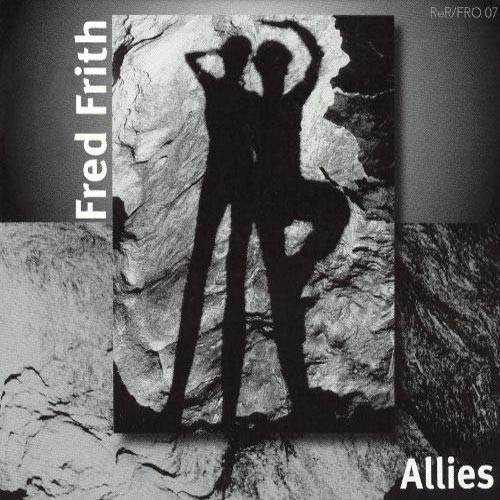
Allies
For an artist known for incredible prolificacy and the seeming instantaneousness of his work, Fred Frith's ballet score Allies has managed to acquire a long and checkered history. Created in 1989 for the post-modernist Bebe Miller Dance Company, Allies appears near the start of a period where Frith began to separate his efforts in multi-movement works designed for dance, theater productions, and film from the short, improvised guitar pieces and work within rock styled ensembles that he had…

Guitar Solos
Although it was originally recorded in 1974, there are pieces on Fred Frith's landmark Guitar Solos album that are probably still making guitar players scratch their heads wondering "How did he do that?" Don't expect any kind of Yngwie Malmsteen-style wankage; Frith instead uses a volume pedal, tapping, and other extended techniques to produce everything from chiming, bell-like notes to unearthly howls. It almost never sounds like standard guitar-with-plectrum playing, but the pieces have a …
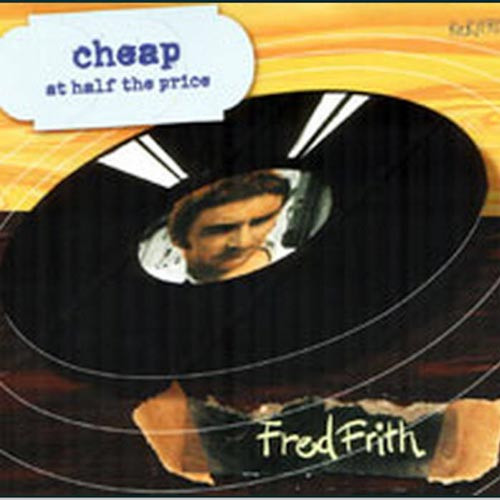
Cheap at Half the Price
Frith's last album for Ralph Records stepped back from the progressions of Speechless to a concoction of pop-like ditties and instrumentals recorded at home on a four track. And for the first time, Frith sings, in a strange high-pitched tone. A little more production and sound manipulation and this could almost be a Residents album, circa 1978. As a pop-song writer, Frith is okay; he shrouds socialist discussion in lyrics about dogs and insects while keeping the song structure simple and r…
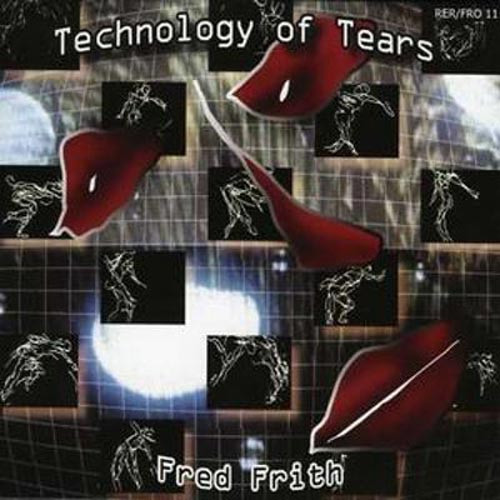
Technology of Tears (And Other Music for Dance)
"Sadness, Its Bleached Bones Behind Us," and "You Are What You Eat" are unrelenting slices of hard-edged sounds over a pulse. "The Palace of Laughter, The Technology of Tears" is an imaginative, intense, varied suite comparing music which represents the past "frozen tears" of sadness -- displayed as images before us by the media, etc. -- with the "hot tears" of the moment that cannot be absorbed by technology. "Jigsaw" and "Jigsaw Coda" (1986) creates patterns with constantly shifting acc…
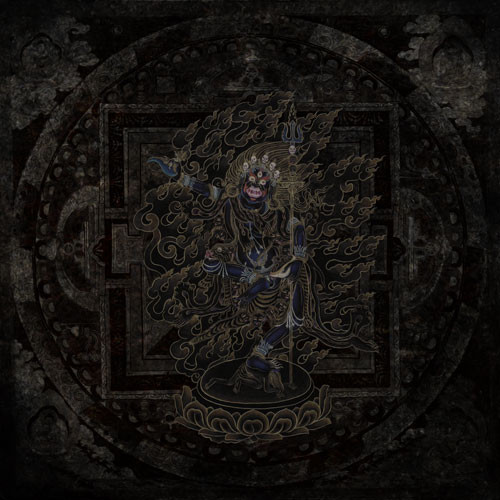
Teachings of Eastern Traditions
The alignment of two esoteric/ritual dark ambient minds. The woven threads of the lunar goddesses manifold thrice around the solar temples of Samadhi. The lodge of Shibalba and the circle of Phurpa have stepped beyond the crimson shores of Malkuth to unite the mysteries of Vama Marga with the unique tradition of Bon. Limited to 300 copies with download code.