Back in stock
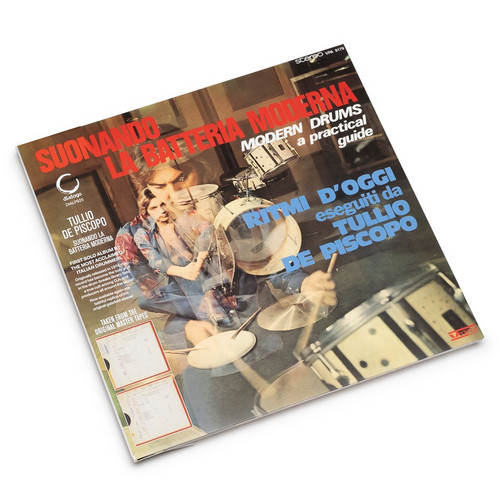
Suonando La Batteria Moderna
The holy grail of all the drum-breaks library LP, a true "cult" among DJ and producers, is available again in a faithful replica of the original gatefold sleeve and remastered from the original master tapes. Tullio De Piscopo is a drummer extraordinaire, a constant in Italian music, moving effortlessly between pop, jazz, rock and progressive modes. This record from 1974 could be thought of as the ultimate promulgation of his talent and versatility as a musician, though maybe not quite the ‘Pract…
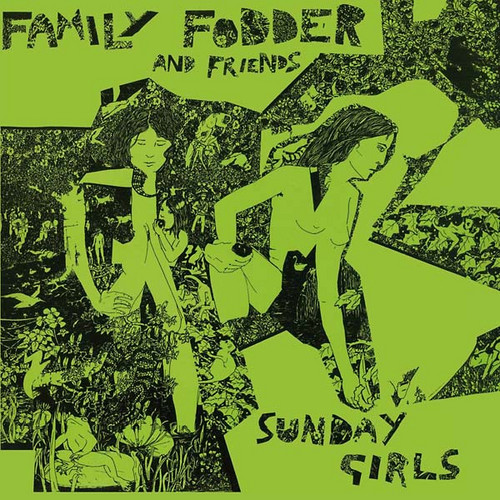
Sunday Girls (Directors Cut)
The legendary first 12" EP by UK underground heroes Family Fodder, originally released in 1979, is now reissued for the first time. Sunday Girls (Director's Cut) is a lovingly assembled full-length album compilation featuring the complete Sunday GirlsEP, the debut Family Fodder 7" Playing Golf (With My Flesh Crawling)/My Baby Takes Valium (1979), the Debbie Harrry/A 'Version' 7" from 1980, the 7" A-side "Warm" (1980), and two tracks from the rare Te Deum 12" (1979) by Alig Fodder's pre-Fodder pr…
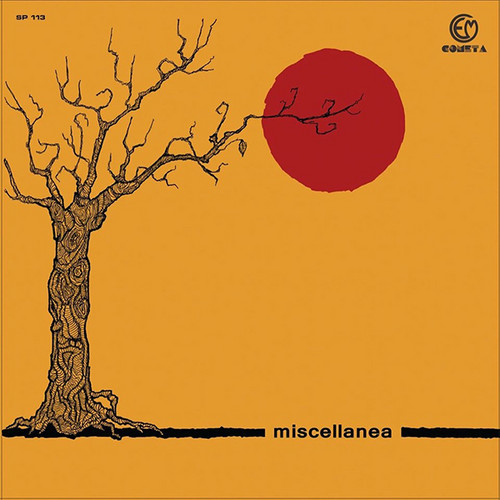
Miscellanea
**150 copies, black vinyl** Miscellanea – originally released in 1969 on cult italian label Sermi SR Records (home of famous composer such as Bruno Nicolai, Francesco De Masi, I Marc 4 and more) – is the debut of composer Luigi Zito, an in-demand session player and music director throughout all the seventies. An extremely brilliant music library with lots of jazz licks, descriptive and improvisational themes composed with a multitude of instruments, including the famous whistle by the one and on…
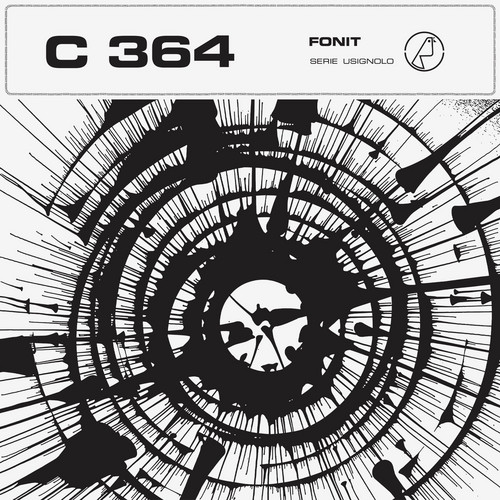
C 364 - Antico E Moderno
Following our reissue of Silvano Chimenti's classic "Disco Music", we're happy to delve back into the Usignolo catalog with the reissue of C 364, one of the most iconic releases of the series, the incredible "Antico E Moderno" by Mario Molino. Bringing some of the most eccentric, chaotic and spaced out vibes you could hear in the mid 70's, Molino's mind bending arrangements are timeless classics, still standing the test of time and showing how he was way ahead of his time. Literally translating …
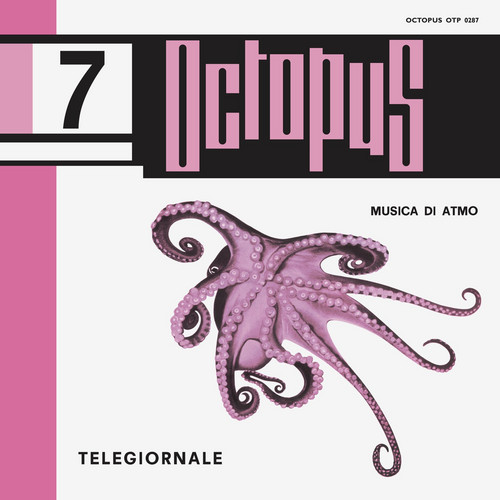
Telegiornale
We're back digging through Flipper's legendary catalog, more precisely in the Octopus Records section, and after bringing back Alessandroni's "Storie Di Guerra" here is the return of Amedeo Tommasi's Telegiornale", released under his Atmo alias. The album opens with a cinematic and suspenseful overture that immediately draws the listener into its world. Tommasi's virtuosic piano playing takes center stage throughout the album, with his nimble fingers crafting intricate melodies that are both ev…
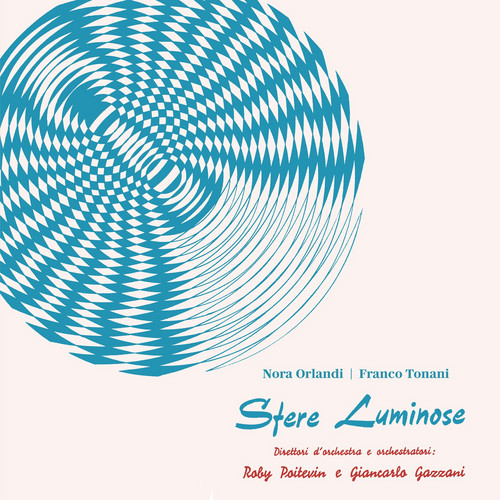
Sfere Luminose
Huge Tip! Sfere Luminose is a rare and breathtaking masterpiece that stands as a pinnacle of Italian Library music. Featuring the mesmerizing vocals of Nora Orlandi and the legendary jazz drumming of Franco Tonani, this album is an essential gem from the cult label Record TV - Firmamento, a name revered for iconic releases from the late 1960s to early 1970s. The album is produced by maestros Giancarlo Gazzani and Roby Poitevin, with contributions from the acclaimed studio group I Marc 4 and Ales…
Inchiesta Sul Mondo
Inchiesta Sul Mondo is a double experimental concept album, mainly electronic, on topical problems of the period in which it was released, the middle 1970’s. The two records have two different arguments: Stati d'animo and Diagnosei Ecologica. Maestro Luciani is a well-known artist in the library music scene. His very personal style is the result of musical studies from childhood that allowed him to achieve a diploma in composition, choral music, choral conducting, and more. The avant-garde and c…
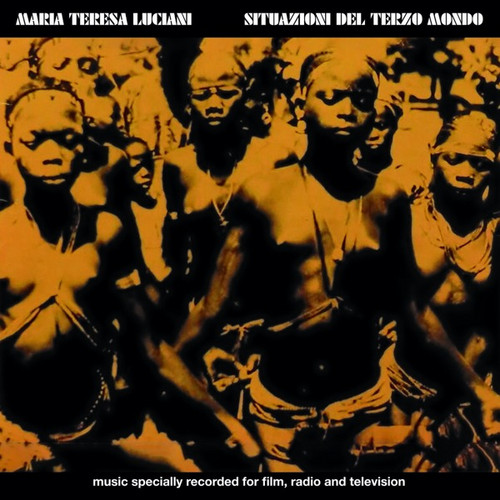
Situazioni del Terzo Mondo
** Edition of 100 Colored LP ** The world of Italian Library music surprises us again with an extremely evocative record. Released in 1972 with the name of Maria Teresa Luciani but really produced and composed by her brother Maestro Antonino Riccardo Luciani, Situazioni del Terzo Mondo ranks among the most important abstract soundscape records. Spontaneous tribalisms tainted with concrete sounds support the looming psychedelic vein, with different solutions from track to track.
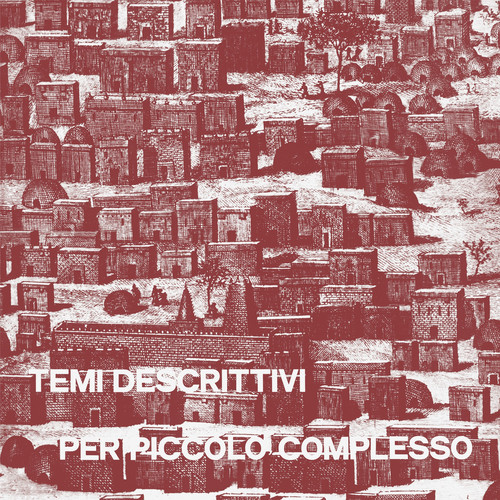
Temi Descrittivi Per Piccolo Complesso
Originally released in 1976 as part of the "Background Music" series on Piero Umiliani's own Liuto Records, "Temi Descrittivi Per Piccolo Complesso" is a real gem in the maestro's vast and and intricate catalogue. Flutes and horns alternate with pianofender to create some magical, sweet and intimate atmospheres, crafting an abstract and mysterious soundscape that could reminisce of medieval times as much as some distant galaxies. We are happy to bring back "Temi Descrittivi Per Piccolo Complesso…

To-day's Sound
**2026 Remastered Repress** Gatefold edition with OBI and poster! Recorded in the summer of 1973 on an 8-track Ampex at Sound Work-Shop, the studio Piero Umiliani had built in his own building on Via S. Tommaso d'Aquino in Rome, To-Day's Sound documents a moment when Umiliani had concentrated, in a single eighty-square-metre room, an arsenal of electronic instruments still uncommon in Italian recording at the time: Minimoog, ARP 2600, EMS VCS3, Fender Rhodes, Clavinet, Lowrey organ, Space Echo, …
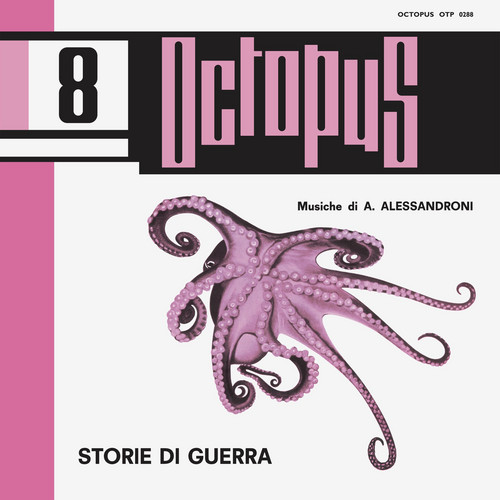
Storie Di Guerra
Ominous drums, obscure cellos, fuzzy and distorted guitars, psychedelic piano sequences: legendary Italian composer Alessandro Alessandroni creates a somber and gritty war atmosphere on this classic library album "Storie Di Guerra". Originally released on the Octopus Records imprint by Flipper Music in 1972, this obscure and spooky library has been long out of print — 50 years past its release we are happy to bring this back on vinyl in collaboration with Flipper Music as a limited edition of 50…
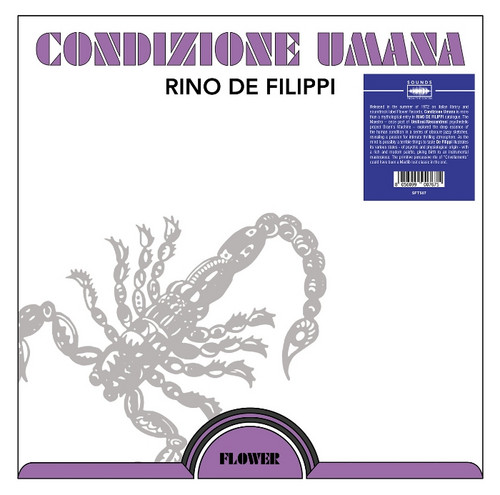
Condizione Umana
A long-lost gem of Italian library music, Condizione Umana by Rino De Filippi is a hypnotic journey through jazzy sketches, intimate atmospheres, and avant-garde experimentation. Reissued on vinyl after decades in obscurity, this visionary 1972 album invites listeners to explore deep grooves, primal percussion, and the boundless creativity of Italy’s golden age of soundtracks.
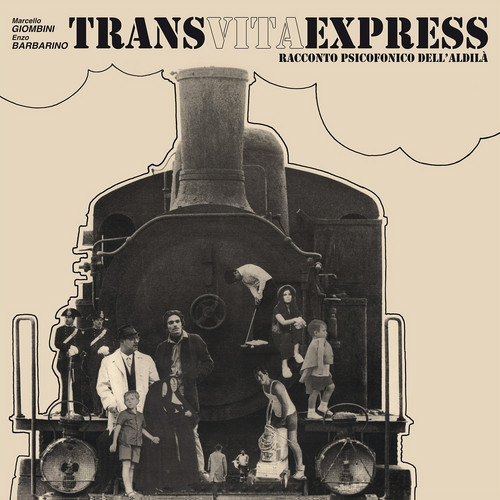
Transvitaexpress - Racconto Psicofonico dell'Aldilà
** Multi-Colored Vinyl, white / grey / black marbled (Locomotive Marbled Smoke). Edition of 400 copies on marbled vinyl, includes OBI.** Soave presents Transvitaexpress - Racconto psicologico dell'aldilà by Marcello Giombini. One of the weirdest italian album ever released. "Transvitaexpress is the sonorous realization of an idea that had been developing in me for some time and to which the encounter with the poet Barbarino gave the decisive push. I used the "tape-sound" technique, that is the …
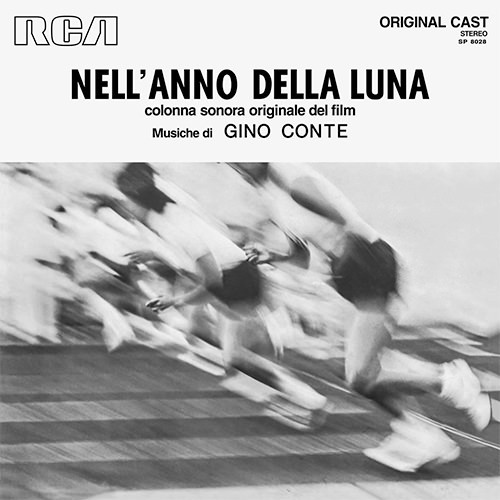
Nell'Anno della Luna
A deep mystery surrounds both the film Nell'anno della Luna and its beguiling 1970 soundtrack, a work that hovers somewhere between the elegant swing orchestrations of an earlier era and the more adventurous sonic territories being charted by Italian composers at the close of the 1960s. Even in our current age of instant information and exhaustive online databases, almost nothing is known about the movie itself. What remains is the music: ten tracks of remarkable sophistication and inventiveness…
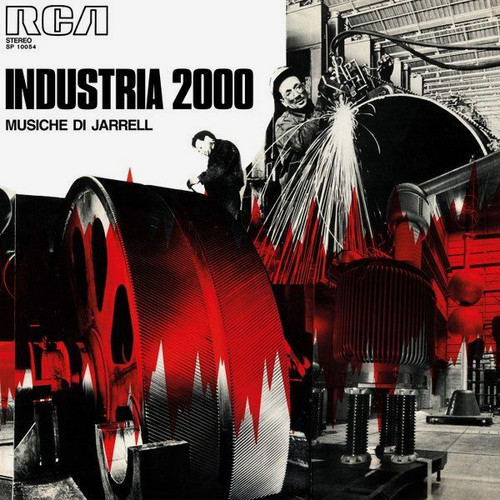
Industria 2000
Marking what will inevitably be a holy grail moment for fans of Italian library music, and an inevitale revelation for anyone approaching it for the first time, the venerable Dialogo returns to their broader initiative dedicated to the Italian arm of RCA’s legendary “Original Cast” series with the first ever vinyl reissue of “Industria 2000”, an astounding 1974 LP created by the legendary Italian pianist and composer, Amedeo Tommasi, under the moniker Jarrell. Regarded by many as one of the grea…
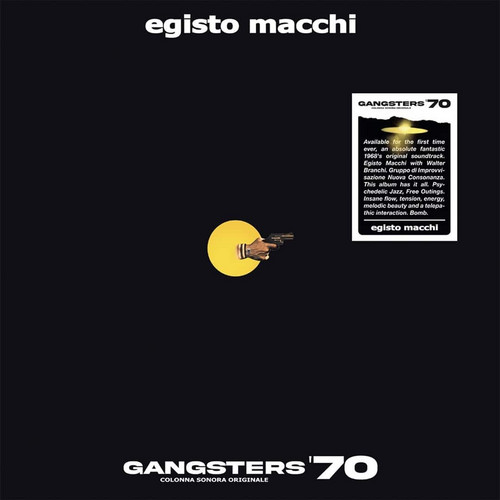
Gangsters '70
Cinedelic returns on the back of some pretty incredible releases over the last year with one of their most exciting and unexpected records to date, the first ever release of the legendary composer Egisto Macchi's soundtrack for Mino Guerrini’s 1968 film, “Gangsters '70”. Created in collaboration with his Gruppo di Improvvisazione Nuova Consonanza associate, Walter Branchi, it's among the most strikingly experimental of all his soundtrack work and remains startlingly urgent more than half a centu…
Dichte
This is the recording corresponding to a radio broadcast produced for the program Perspective contemporaine (France Culture) on April 17, 2007. In it could be heard “Dichte”, an extensive sound poem that the author Charles Pennequin created with the musicians Jean-François Pauvros (electric guitar) and Yvan Etienne (electronics). A sound poem made up of several poems that are, to a large extent, love poems. Pennequin said them in French. His vocal realization, effusive, repetitive, and even tran…
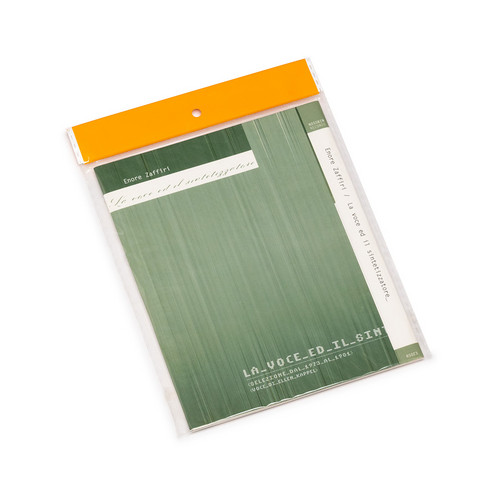
La Voce Ed Il Sintetizzatore
After almost forty years of creative activity, the name Enore Zaffiri still sounds "new", as his extraordinary artistic output has remained to a great extent unreleased. Pioneer of multimedia, electronic and ambient music (he founded the Turin Studio of Electronic Music in 1964) Zaffiri used the electronic instrument to find a new musical perspective based on a structuralist principle derived from Euclidean geometrics. In this works, dated between 1973 and 1988 he approche the combination of the…
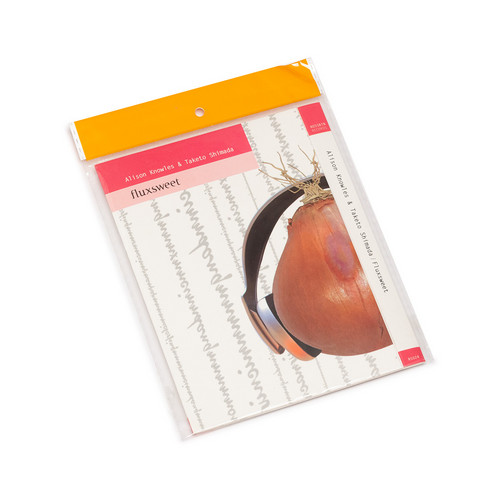
Fluxsweet
CD audio with the 6 pieces. DVD video with the 5 first pieces. 1. PLAY PAPER by Alison Knowles (2003). 'Consider fragments of onion skins as musical notations. Perform with handmade musical instruments and toys.' Performed by Alison Knowles, Larry Miller and Taketo Shimada. 2. MUSIC BOX (homage to FLUX MUSIC BOX by Joe Jones) by Taketo Shimada (2004). 'Modify two or more music boxes and play them simultaneously with the recording of Joe Jones FLUX MUSIC BOX, if possible use children to play the …
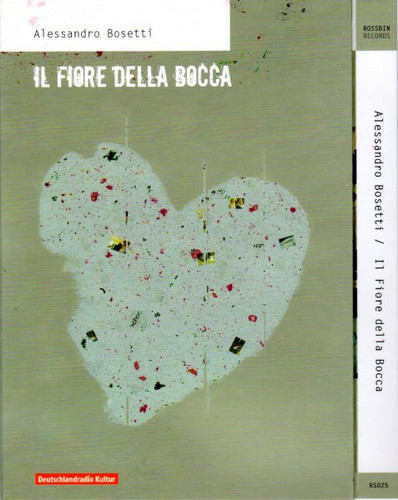
Il Fiore Della Bocca
Produced in 2003 for the sound art department of a german radio station, "Il Fiore della Bocca" is one of the most controversial text sound compositions by Alessandro Bosetti. Composed exclusively with the voices of physically and mentally handicapped people, the piece displays an impressive richness, depth and variety of sound, covering the full range of musical possibilities of the spoken voice; from heavily processed to completely unprocessed, naked and direct. The piece has an ambiguous natu…