Back in stock
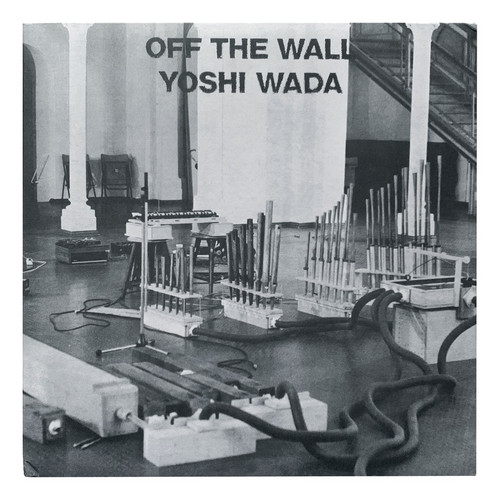
Off the wall
The long-awaited and reissue of Wada's 1985 LP "Off The Wall", recorded in Berlin and originally released on the esteemed FMP label. A minimalist yet majestic monsterpiece ("massive", as Tom Johnson declares in his perceptive liner notes), "Off The Wall" features Wada and Wayne Hankin on bagpipes, Marilyn Bogerd on adapted organ, and percussionist Andreas Schmidt-Neri.
The original album consisted of two side-long pieces recorded on successive days by Jost Geber, who captured the power and dynam…
Sold Out
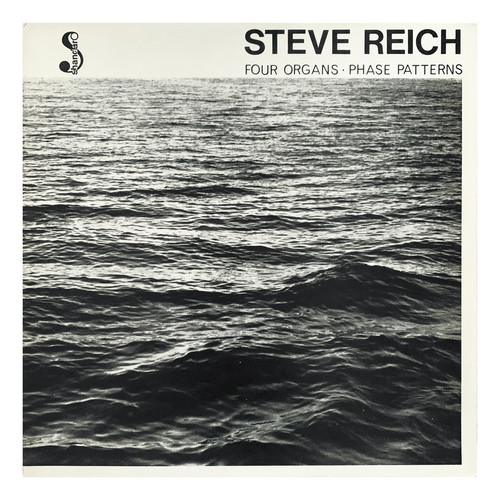
Four Organs/Phase Patterns
** 2024 Repress ** Steve Reich remains one of the most important figures in 20th century music. Though he studied at the prestigious arts institutions Julliard and Mills College, by the mid-1960s Reich set about dismantling the very orthodoxy that he had been trained in. Forming a new musical language based on repetitive processes, Reich became established as part of the so-called "Big Four" of New York minimalists (along with La Monte Young, Terry Riley and Philip Glass). Reich's influence can …
Sold Out
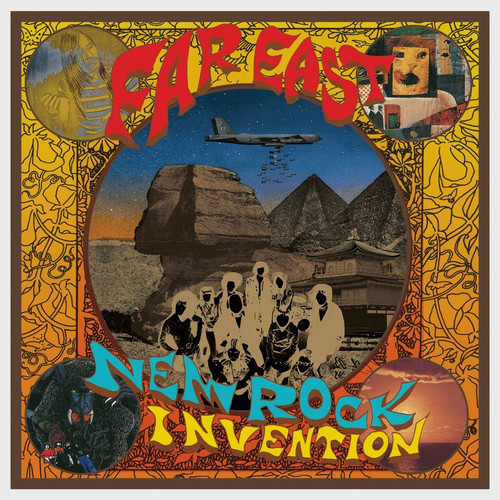
Far East New Rock Invention 1969-1975
"What strikes me again, even now, is that rock from the late '60s through the early '70s remains the most compelling — whether Western or Japanese. In the mid-1960s, British groups like The Beatles and The Rolling Stones swept across the globe, while in the United States Bob Dylan famously swapped his folk guitar for an electric one, igniting the folk-rock movement. From the surge of new energy among young people in Britain and America — entwined with hippie culture, drugs, and the radical momen…
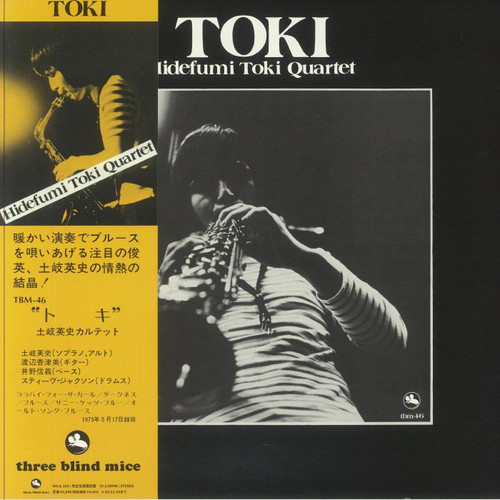
Toki
Hidefumi Toki's 1975 album Toki offers a deeply personal journey into the realms of jazz, showcasing his expressive prowess on alto and soprano saxophones. Backed by a stellar quartet including Kazumi Watanabe on guitar, Nobuyoshi Ino on bass, and Steve Jackson on drums, Toki creates a stunning sonic landscape filled with gentle, raspy tones. The album's ambiance is laidback and mellow, yet infused with a profound sense of spiritual depth reminiscent of Coltrane's work. Original compositions lik…
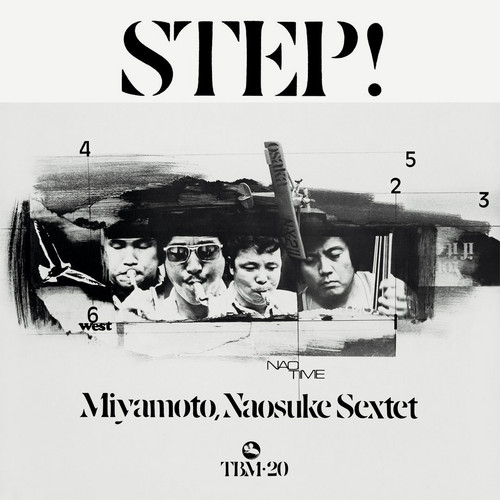
Step!
A memorable first album by the very accomplished yet restrained artist, Naosuke Miyamoto. Thrilling straight-ahead jazz with Takashi Furuya and other Kansai-based members!
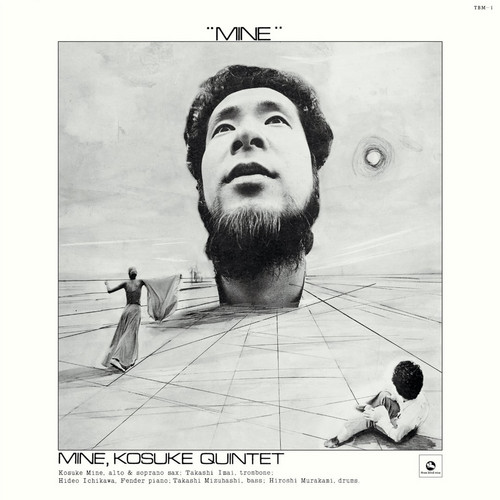
Mine
Original release completely reproduced as faithfully as possible. Pressed and printed in Japan. Mind-blowing reissue of Kosuke Mine Quintet's first release, Mine, originally released on Three Blind Mice in 1970. This is the terrifying debut album from saxophonist Kosuke Mine, with a sense of tension that seems to burst throughout, and is a monumental work that marked the historic beginning of the prestigious three blind mice label
Completely original reproduction specification (reproduced as f…
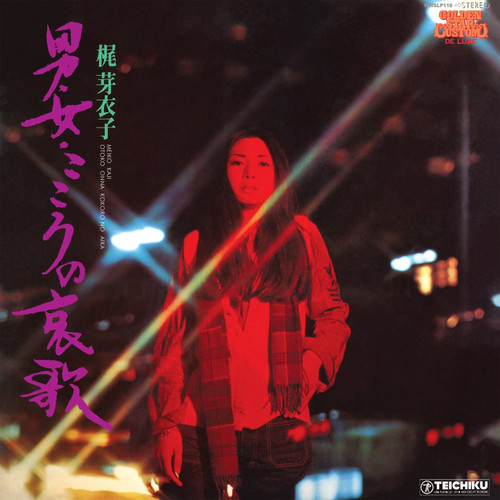
Otoko Onna Kokoro No Aika
Wewantsounds is delighted to continue its extensive reissue program of Meiko Kaji's early discography, originally released by Teichiku Records in Japan between 1972 and 1974. The Quentin Tarantino muse—famous for her starring roles in Lady Snowblood and Stray Cat Rock—was also a gifted singer. Otoko Onna Kokoro No Aika is another collection of superb cinematic songs featuring Kaji's signature mix of Japanese Pop and Groove, backed by lush, atmospheric orchestrations. This includes her rendition …
Tractus
Tractus emphasizes Arvo Pärt compositions that blend the timbres of choir and string orchestra. New versions predominate, with focused performances from the Tallinn Chamber Orchestra and the Estonian Philharmonic Chamber Choir under Tõnu Kaljuste’s direction that invite alert and concentrated listening. From the opening composition Littlemore Tractus, which takes as its starting point consoling reflections from a sermon by John Henry Newman, the idea of change, transfiguration and renewal resona…
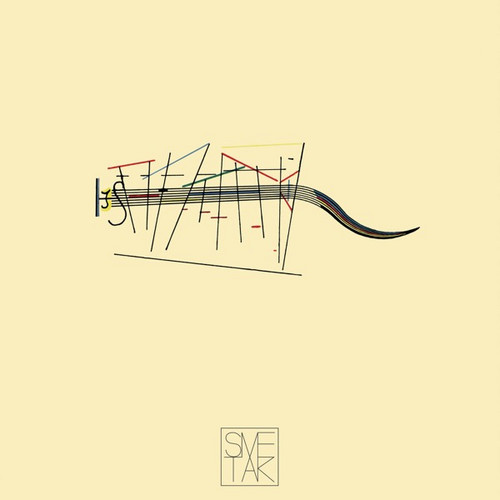
Smetak
**Edition of 500. Gatefold Edition. Includes booklet with photos and texts in Portuguese and English ** Walter Smetak was a Swiss cellist, composer, inventor of musical instruments, sculptor and writer who developed his career in Salvador, Brazil, and became an emblematic figure of the Bahian avant-garde and a key part of the cultural climate that made the rise of tropicália possible. Since 1969, he has carried out various workshops of experimental music at University of Bahia. His music was mat…
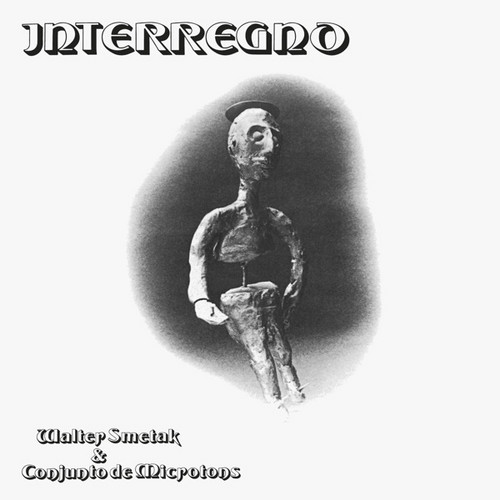
Interregno
** Edition of 500. Includes booklet with photos and texts in Portugues and Spanish ** The second album by the legendary Swiss artist and composer, based in Brazil, Walter Smetak, opened a new field of exploration within his own musical horizon. With the publication of “Smetak” (1974), a musical universe had been defined where Afro-Brazilian ritual traditions, studies of microtonality and open processes of collective improvisation converged, always under the influence of theosophy, which allowed …
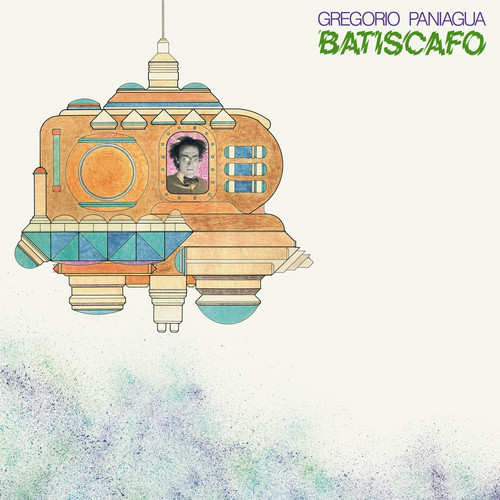
Batiscafo
**2026 Repress, includes facsimile artwork and extensive liner notes. Remastered from the original tapes and pressed on 180g vinyl. **Munster Records presents a reissue of Batiscafo by Gregorio Paniagua. Immersed in an age of re-releases and the pursuit of rarities, hidden gems and marvels, record labels are constantly rediscovering musical jewels, which previously only collectors have had the chance to own. Batiscafo is one of these elusive treasures. First released in 1980 on the label Hispavo…

Now Wait For Last Year
Mannequin Records is proud to present the official reissue of Caroline K's outstanding 1985 album, "Now Wait For Last Year." This haunting, wistful work of post-industrial synthesizer music sees the late Nocturnal Emissions co-founder only solo record, which has accrued a fervent cult following over the past 40 years, and copies of the original pressing are today extremely rare and sought-after. The music on "Now Wait For Last Year" seems to exist firmly outside of it. Tags like industrial, mini…
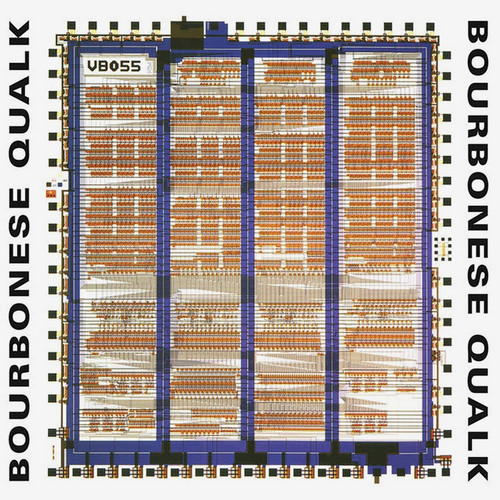
My Government Is My Soul
Mannequin Records reissues "My Government Is My Soul", a searing 1989 statement from Bourbonese Qualk, one of the UK’s most defiant and politically engaged experimental acts. Originally released on the group’s own label, this LP captures the uncompromising spirit of a band deeply embedded in the resistance movements of 1980s Britain. Recorded during a turbulent period of social unrest, "My Government Is My Soul" stands as a fierce response to authoritarianism, surveillance, and the neoliberal de…
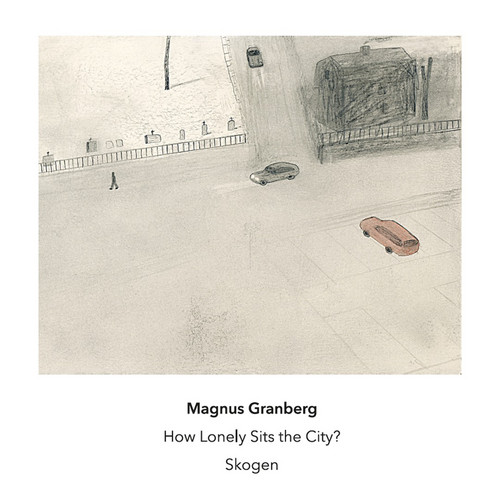
How Lonely Sits The City?
How Lonely Sits the City? by Magnus Granberg stands as a meditation on absence, fragility, and the slow unfolding of collective musical thought. Rather than foregrounding overt drama or sharp contrast, Granberg distills his process into an album-length work where every gesture feels both deliberate and spare, each silence thick with meaning. The piece finds an ensemble poised between composition and improvisation, where timbral detail, suspended harmonies, and gradual variation take precedence o…

Es Schwindelt Mir, Es Brennt Mein Eingeweide
Es Schwindelt Mir, Es Brennt Mein Eingeweide ("I’m Dizzy, My Viscera Burns") finds Swedish composer Magnus Granberg refining his art of meditative ensemble writing in a single long-form work. Drawing inspiration from Schubert’s "Die Winterreise," Granberg selects and processes melodic fragments, filtering them through his unique syntax of open-form composition and collective improvisation. Rather than direct quotation, the references to Schubert are spectral: shuffled and stretched, turned into …
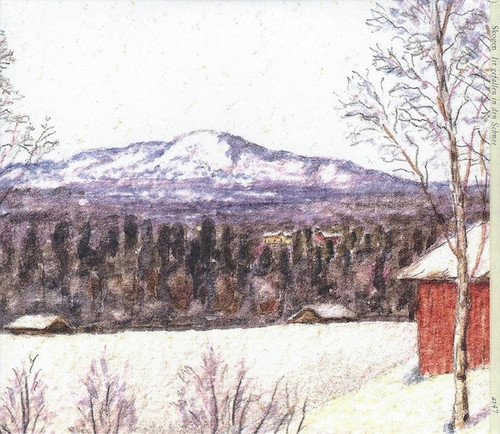
Ist Gefallen In Den Schnee
Ist Gefallen In Den Schnee documents a landmark collaboration between Swedish composer Magnus Granberg and his ensemble Skogen. Recorded in November 2010, this nonet features an expanded lineup including Angharad Davies (violin), Toshimaru Nakamura (no-input mixing board), and Granberg himself on piano. The title, borrowed from Schubert’s “Winterreise” (“Wasserflut”), signals the work’s reflective engagement with song cycles and memory. Granberg structures the piece using rhythmic and formal mod…
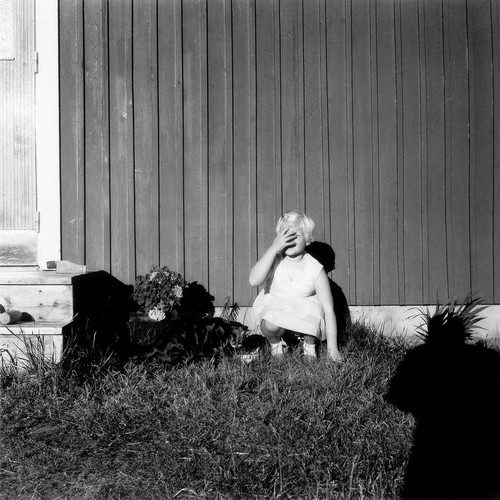
Would Fall From The Sky, Would Wither And Die
Skuggorna och ljuset is a quintet featuring Magnus Granberg (clarinet, composition), Anna Lindal (violin), Leo Svensson Sander (cello), Kristine Scholz (prepared piano), and Erik Carlsson (percussion). Their sole album, Would Fall from the Sky, Would Wither and Die, departs from Granberg’s larger ensemble Skogen. Without electronics, the sound is more chamber-like, each gesture and note given time to settle, bloom, and fade in a gently hypnotic field.
The work transforms the harmonic material o…
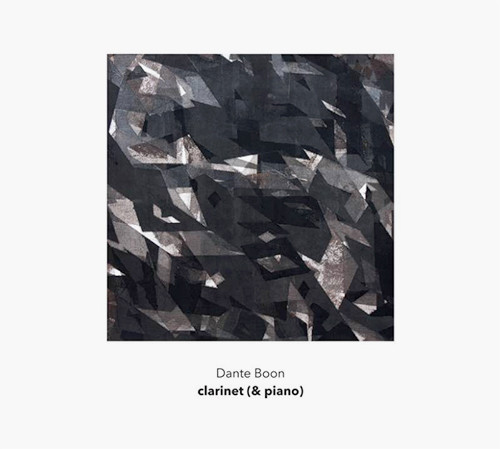
For Clarinet (And Piano)
Clarinet (and Piano) brings together Amsterdam composer Dante Boon and Swiss clarinetist Jürg Frey for three works at the porous boundary of composition and improvisation. In the long opening duo “O’Hare,” Boon’s gentle piano arpeggios glow beside Frey’s quietly expressive clarinet, combining spiraling lyricism with stately stillness across nearly twenty-five minutes. The piece unfolds in a gradual arc, eschewing conventional development for the slow revelation of timbre and intervallic resonanc…

Ricercar nell’Ombra
Ricercar nell’Ombra grew out of a collaboration between French composer Emmanuel Holterbach and the seven-member Florence-based ensemble Blutwurst, both devoted to the acoustic investigation of slowly transforming sonic patterns. Conceived during residencies at Villa Strozzi and other venues across Florence, the project sets out to pay homage to Italian music history while inventing new forms through a deeply collaborative method. Holterbach’s admiration for Italian music across centuries led hi…

Rows
Rows marks a unique entry in the Skogen ensemble’s catalog: instead of ensemble founder Magnus Granberg, the composer’s role is assumed by Anders Dahl. The album’s nine movements - each titled as a numbered row - are written out on paper using a systematic twelve-tone approach, but with a radical twist: the focus is on simplicity and the avoidance of expressive gesture. Instead, each musician is asked to plan their individual material before recording, striving to stay within their own predesign…