Best sellers
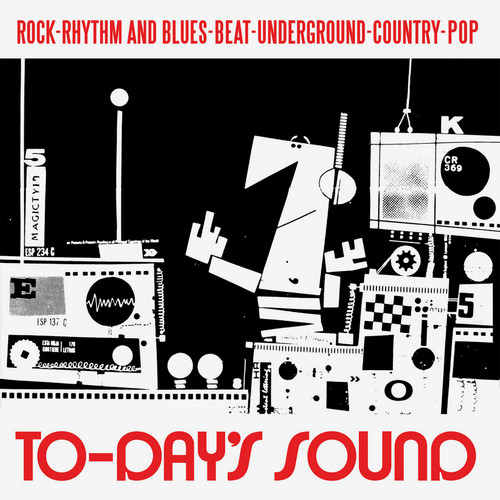
To-day's Sound
**2026 Remastered Repress** Gatefold edition with OBI and poster! Recorded in the summer of 1973 on an 8-track Ampex at Sound Work-Shop, the studio Piero Umiliani had built in his own building on Via S. Tommaso d'Aquino in Rome, To-Day's Sound documents a moment when Umiliani had concentrated, in a single eighty-square-metre room, an arsenal of electronic instruments still uncommon in Italian recording at the time: Minimoog, ARP 2600, EMS VCS3, Fender Rhodes, Clavinet, Lowrey organ, Space Echo, …
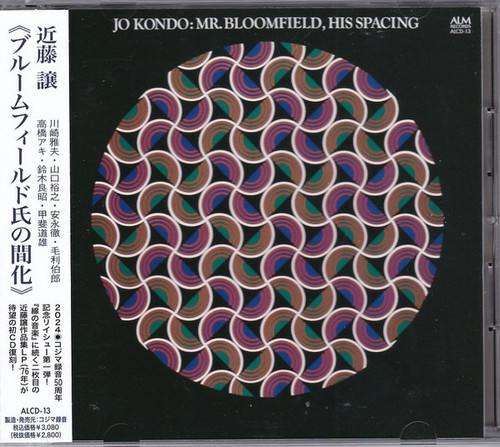
Mr. Bloomfield, His Spacing = ブルームフィールド氏の間化
A masterpiece album released in 1976 by the Japanese contemporary musician Yuzuru Kondo, whose main contributions to the sombre labyrinths of post-1960s musical modernism is something that the composer conceptualised as 'linear music' (or line and shadow as "Sen no ongaku' is sometimes translated). Then there's beautiful piano solo puzzle "Sight Rhythmics" that's a bit like Messiaen's total serialist one-off “Mode de valeurs et d'intensités". Plus semi-concrète essay "Summer Days" where muffled…
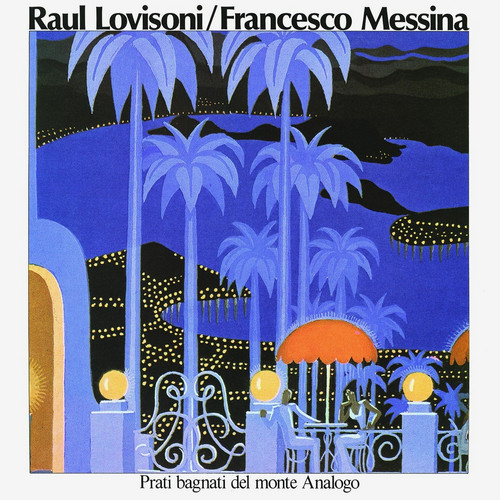
Prati Bagnati del Monte Analogo
Raul Lovisoni and Francesco Messina's 1979 album for Cramps, produced by Franco Battiato: Italian minimalism with synthesizer, Michele Fedrigotti's piano and a title piece inspired by René Daumal's novel Mount Analogue.
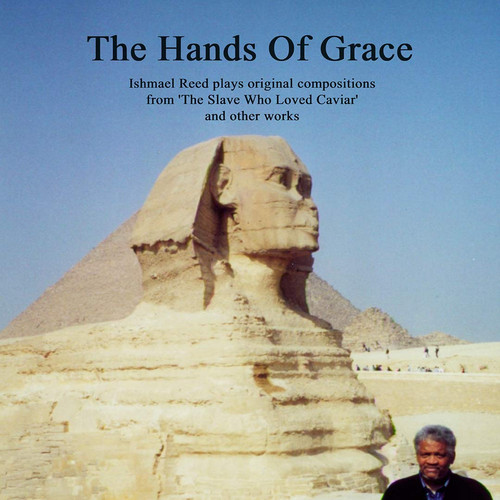
The Hands of Grace
Touching homebuilt compositions from celebrated American novelist, playwright and poet Ishmael Reed, channelling a long life immersed in jazz culture. A joint in-house production from ANF and NYC-based label Reading Group.
You’re never too old to learn something new. Reed credits bebop with keeping him and his friends out of reform school because they were too busy listening to records at each other’s houses to get into trouble. Finding fame as a distinguished writer, he found his way back to…
A Fleeting Glance
2026 stock One of the most astonishing British private pressing rarities. The music runs the gamut from heavy space-rock jamming (including a snatch of ‘Interstellar Overdrive’) to folk/rock (an acoustic cover of ‘Light My Fire’ and a stunning version of ‘Watch The Stars’), avant-garde choirs krautrock-styled interludes and even trad jazz. The result is among the trippiest albums I have ever heard. Comparable only to Jumble Lane in terms of eccentricity
Day for night
This CD represents a 25-year collaboration between renowned British avant-garde improviser Peter Cusack and instrument builder and sculptor Max Eastley. Cusack and Eastley have made these short episodes together between busy careers recording experimental music alongside artists such as Nicolas Collins, Steve Beresford, and David Toop). With numerous releases on ReR and Incus, the two musicians are mainstays of the British improvised music world, and Eastley is particularly prominent for his wor…
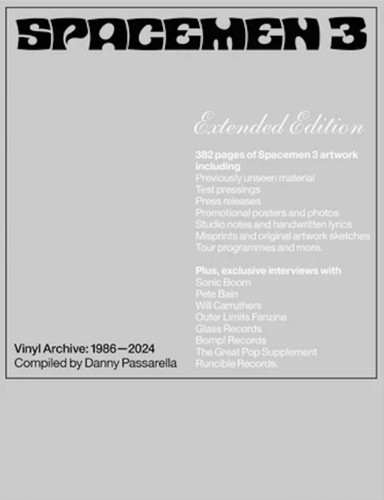
Spacemen 3 Vinyl - (Extended Edition) (Book)
In Spacemen 3 Vinyl – Extended Edition, Danny Passarella assembles the definitive visual chronicle of Sonic Boom and J Spaceman’s recorded universe: a lavish, full‑colour archive of global pressings, ephemera and new interviews that turns their vinyl trail into a tactile, time‑spanning narrative.

Universal Beings
The 2018 release of Universal Beings, in many ways, feels like the moment that the gates swung open for both Makaya McCraven and International Anthem. On one hand, it's a four-sided communal showcase of the inter-city exchange that had started to develop in the “new jazz” hubs, collecting group improvisations from New York, London, Chicago, and Los Angeles. On the other, it is an editing and post-production masterclass – the MVP of McCraven’s “organic beat music” concept – and a landmark moment …
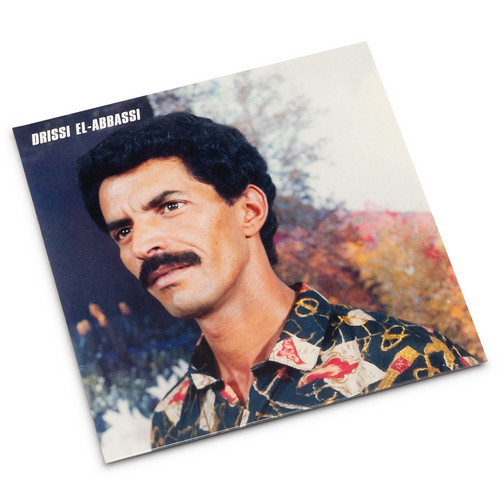
Rai Sidi Bel Abbes - Volume 2
A captivating compilation of eight tracks by Drissi El-Abbassi, Rai Sidi Bel Abbes – Volume 2 explores the fusion of traditional Raï music with modern electronic elements, highlighting El-Abbassi's soft vocal style and innovative approach to the genre's evolution
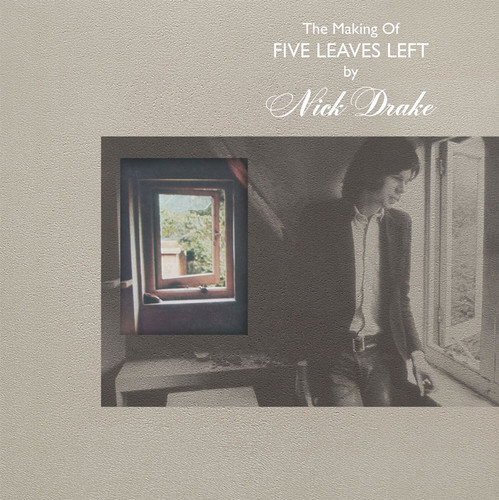
The Making of Five Leaves Left
Last year, we commemorated the 50th anniversary of Nick Drake’s untimely passing—yet his music remains as vital as ever. His influence stretches far and wide, inspiring artists across generations, from Liz Phair and Radiohead’s Philip Selway to Let’s Eat Grandma and Fontaines D.C., all of whom paid tribute on 2023’s The Endless Coloured Ways: The Songs of Nick Drake. But while covers keep his spirit alive, nothing compares to hearing the man himself. And now, for the first time, we’re getting a …
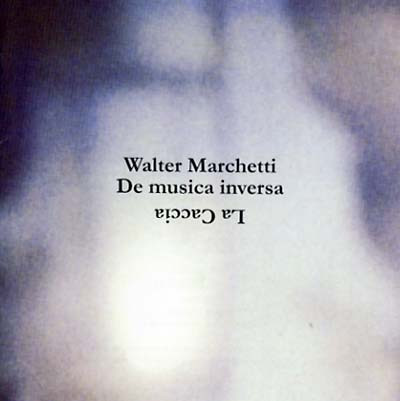
La Caccia
One Walter Marchetti compositions and two ZAJ pieces from 1965, '66, and '73, a work for hunting calls and whistles and two extreme electronic works; with a 16 page booklet of photos and text. Alga marghen very proudly presents the only authorized reissue of all Walter Marchetti original recordings previously released by Cramps Records. The recording of La Caccia, one of the most radical in the neo-avantgarde panorama for 35 years, is divided in two tracks: 'Versione All'aria Aperta' and 'Versio…
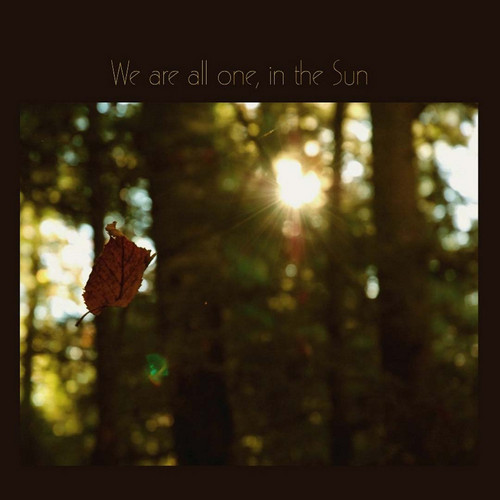
We Are All One, In the Sun: A Tribute To Robbie Basho
In Robbie Basho's lifetime he set out to champion the steel string guitar as an expressive and dignified concert instrument. His guitar playing was first brought to light in 1965, when John Fahey released Basho's debut The Seal Of The Blue Lotus on Fahey's own Takoma Records. Armed with a unique and powerful singing voice, his 6 & 12 string guitar and a collection of special guitar tunings that he created (even originating a unique chart titled 'The Esoteric Doctrine of Color and Mood,' denoting…
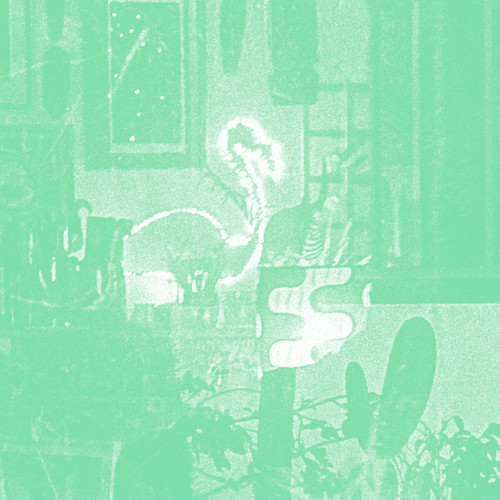
Stochastic Parrot
In the past some reviewers and critics of my series of Ambient / Electronic / Exotic releases mentioned Jon Hassell and even suggested that we should make an album together.
That never happened of course and probably never would have. An influence of his music on my exotica music is in some ways true but initially to be honest it was the cover art by Mati Klarwein for Aka/ Darbari/ Java and Dream Theory in Malaya that I would sometimes turn to look at for inspiration. They reminded me of places t…
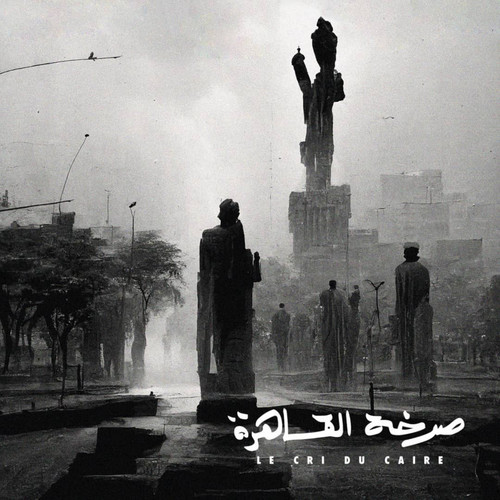
Le Cri Du Caire
Le Cri du Caire is a striking mosaic of Sufi poetry, jazz, and spoken word, led by the magnetic presence of Abdullah Miniawy alongside Peter Corser, Karsten Hochapfel, and Erik Truffaz. Fusing hypnotic loops with visceral strings and evocative brass, the album channels the hopes and struggles of Cairo’s youth into a transcendent musical ritual - challenging, inventive, and brimming with emotional intensity.
Book Covers 1930-2000 (Book)
A collection of 400+ minimal book covers compiled by Charles Deroyan (1930-2000).
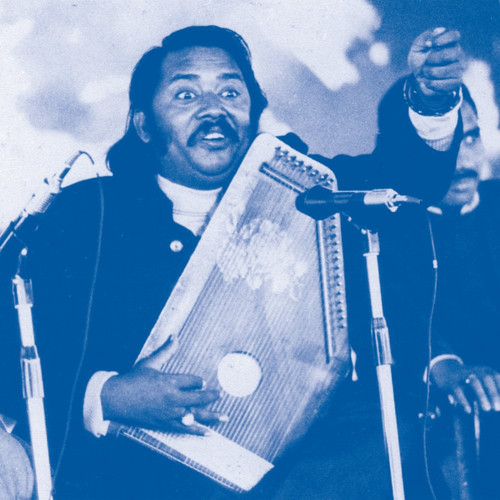
Metamusik Festival Berlin ‘74 Vol.II
Black Truffle is thrilled to announce a second volume of unheard concert performances from legendary Pakistani kyhal singer Salamat Ali Khan, recorded at Berlin’s Neue Nationalgalerie as part of the MetaMusik festival in 1974. Like the first volume, the immaculate recording by Michael Hönig (of krautrock legends Agitation Free) captures Khan performing a single extended raag in the company of Shaukat Hussein Khan on tabla and Hussein Bux Khan on harmonium. In addition to his stunningly inventive…
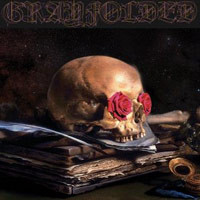
Grayfolded: Transitive Axis
Here it is, Deadheads, the ultimate Dark Star is now on vinyl. Deluxe audiophile pressing cut in Toronto under the watchful ears of John Oswald. Elaborately printed packaging in a heavy duty triple gatefold jacket includes liner notes by musicologist Rob Bowman featuring exclusive interviews with Jerry Garcia, Phil Lesh, and Robert Hunter plus six 'time maps' which chart the source concerts of Dark Star. Music performed by The Grateful Dead (c) Grateful Dead Productions Inc. & Ice Nine Publishin…
Inchiesta Sul Mondo
Inchiesta Sul Mondo is a double experimental concept album, mainly electronic, on topical problems of the period in which it was released, the middle 1970’s. The two records have two different arguments: Stati d'animo and Diagnosei Ecologica. Maestro Luciani is a well-known artist in the library music scene. His very personal style is the result of musical studies from childhood that allowed him to achieve a diploma in composition, choral music, choral conducting, and more. The avant-garde and c…