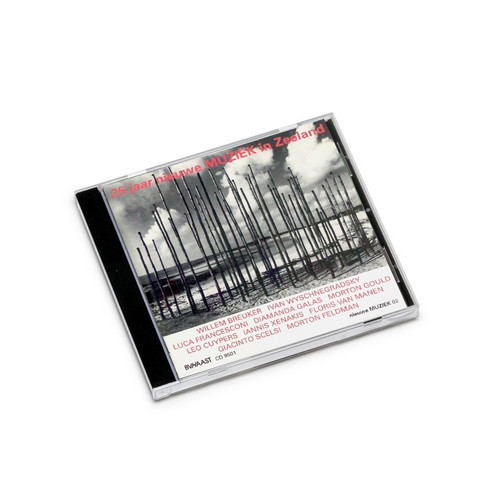
25 Jaar Nieuwe Muziek In Zeeland
Nice compilation featuring Willem Breuker, Leo Cuypers, Bob Driessen, Willem van Manen, Hary Miller, Arjen Gorter, Martin van Duynhoven, John Faber, Frances-Marie Uitti, Morton Feldman
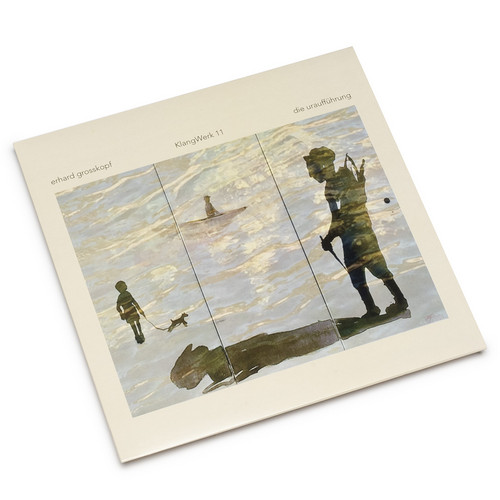
KlangWerk 11
Erhard Grosskopf (b. 1934) is a Berlin-based composer of contemporary music who has been active since 1963. His works include chamber and orchestral as well as electronic music, and have been performed in the West German pavilion at Expo '70, by various radio orchestras, renowned string quartets, and avant-garde groups such as Gentle Fire or Agitation Free.
A thread that runs through all of Grosskopf's works is the idea of composing not on a timescale but in a space. Grosskopf views himself as a…
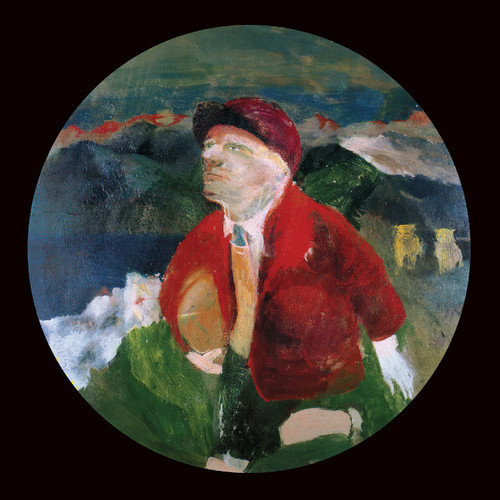
Skullbase Fracture
Issued by Leo Fegin's visionary record label in 1993, this refreshed and revised reissue collection of Hungarian composer Tibor Szemző's chamber pieces with spoken text – composed at 1980s for the legendary GROUP 180 – is unlike anything else of its kind.
Solastalgia
*In process of stocking. Limited edition of 400 copies.* We haven’t found them yet, the words to talk to each other about the worrying signs of climate change. Feeling worried when walking on autumn leaves in the beginning of August should be completely normal. But how do we communicate about it? We don’t want to be just the next hysterical doomer. With this music I try to focus on the climate pain itself, gently inviting the listener to investigate their latent feelings of unease and growing co…
Te Deum Per Un Amico
*Includes a 40-page booklet with full text of the work, introductory texts and photos.* Giovanna Marini is an almost unique figure in Italy: a classically trained musician (graduated from the Conservatory of Santa Cecilia in Rome, perfected as a guitarist with Maestro Andres Segovia, then a lutenist with Maestro Quaranta's "Concentus Antiqui" ensemble), from the early 1960s she began a work of studying and transcribing songs from the Italian folk oral tradition. Beginning with "Bella Ciao" in 19…
Hypothetical Moments
Other Minds is excited to present Hypothetical Moments, a DVD of the collaborative works of Carol Law and Charles Amirkhanian, available on video for the first time. Some of the work included within will be familiar to followers of Amirkhanian’s work (Dog of Stravinsky, Mahogany Ballpark), but the vast majority of Hypothetical Moments has been entirely unavailable until now. Both video and audio have been lovingly restored and remastered, opening up a new pathway into the densely layered and ref…
Apophany
If you were to connect seemingly unrelated things – Heavy Metal and the symphony orchestra, for example – you might be guilty of apophenia. That friction between opposites has never been a problem for Nick Vasallo, though – his music is equally at home in both worlds. Melding Xenakis, Varese, Extreme Metal, and Dark Ambient with gothic charm, Vasallo conjures up a muscular sonic battle that leads you on an inexorable musical journey to a conclusion where surrender is your best option. Catharsis …

Orchard
*2022 Stock.* “I was born and raised in Kentucky, and for many generations my direct ancestors and extended family have been farmers. So, creating music that is ‘about’ soil, plant life, and the natural world, is my way of honoring that legacy.” Composer Tyler Kline’s tools, though, are not the plow – and vegetables are not the crop – in this collection of brief piano pieces commissioned by and for over a dozen pianists. Instead, Orchard is a celebration of fruit. Each sketch draws on a specific…
Transmutation of Things
There is a venerable history of popular songs used as the starting point for elaborate classical compositions, but 500 years ago Josquin and Dufay never imagined using a gargantuan digital orchestra with up to 300 layered tracks pushing architectural proportion and human perception to the max. And yet, that is exactly what composer, MC Maguire, does in his Toronto studio. It’s daunting, it’s overwhelming, and it has to be heard (preferably loud) to be believed. Dubbed “the most irritating and sp…
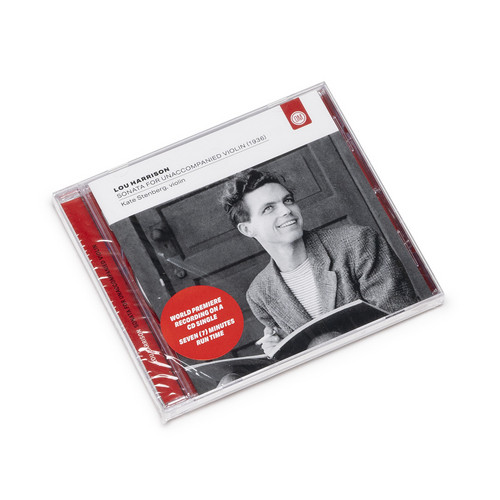
Sonata for Unaccompanied Violin
Other Minds is excited and proud to bring you a near-unheard early composition by legendary American Maverick composer Lou Harrison, Sonata for Unaccompanied Violin (1936), performed by our friend Kate Stenberg. This short piece was written by the precocious composer when he was barely out of high school, still a teenager, but already a year deep into studies under Henry Cowell, studies that occurred during Cowell's stint in San Quentin State Prison.
The piece was entirely unheard from its comp…
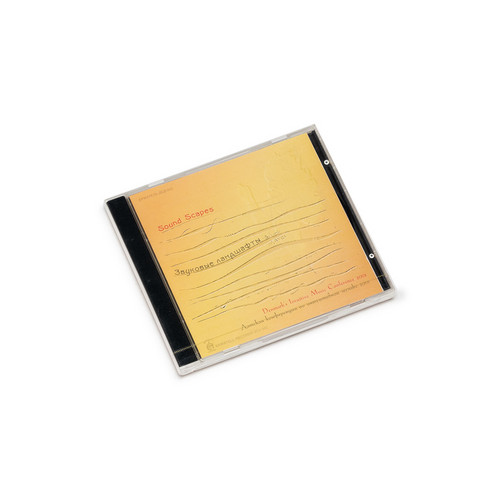
Sound Scapes - Denmark's Intuitive Music Conference 2001
*In process of stocking. 2022 stock* "...the music you can listen here on this CD is result of collaboration of musicians from five countries gathered for participating in DIMC held in Rudme in summer 2001. Some compositions are examples of collective improvisation notated graphically, by different ways. Thus, graphical score can look like a sort of "verbal instruction" for performers, with a prescription how selected musical models interact. It is this way by which pieces by Henrik Rasmussen an…
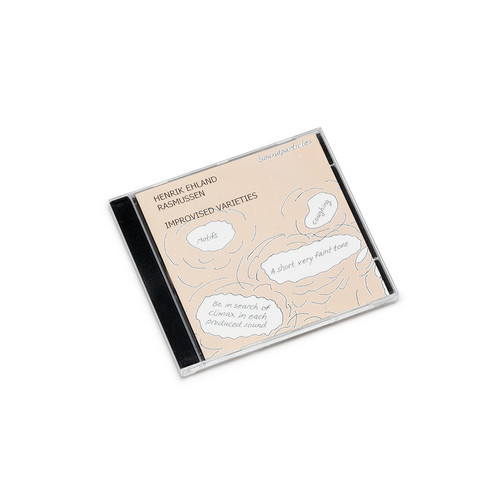
Improvised Varieties
*In process of stocking. 2022 stock* "This CD features music from concerts with Intuitive Music Group (founded 1990) and from some of its members' touring activities in Poland and Russia. It centers around composer and pianist Henrik Ehland Rasmussen. There are three long solo pieces, including one based on a formula given by his countryman Niels Viggo Bentzon, in which countless varied statings of the formula produces an astounding number of ever-developing pianistic phenomena. The other pieces…
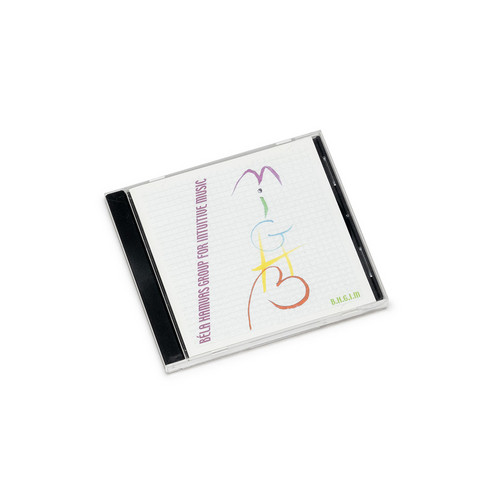
Béla Hamvas Group For Intuitive Music
*In process of stocking. 2022 stock* "This is pure intuitive music, full of improvisation and spontaneity. here we have amazing musicians that interact between them in an amazing way creating pasages that despite using heavily experimentation and improvisation are really coherent and also they explore without falling into chaotic musical pieces. I am really amazed by this musicians that are constantly exploring new sounds with their instruments yet retaining a "group spirit" that allows them to …
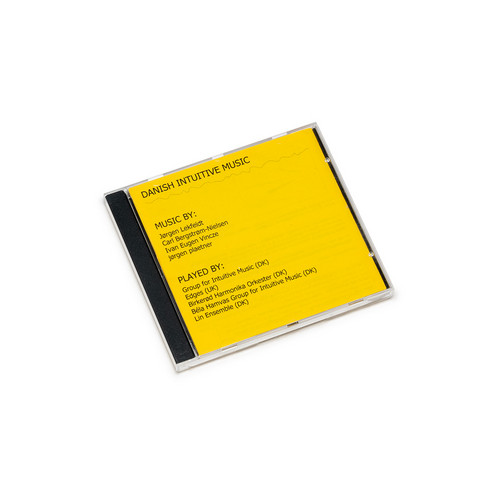
Danish Intuitive Music
*In process of stocking. 2022 stock* "The Group for Intuitive Music originated in 1974 around the Copenhagen University Institute of Music with Jørgen Lekfeldt and his piano teacher, Elisabeth Klein, as the founder members. Carl Bergstrøm-Nielsen, Anders Keiding and Niels Rosing-Schow, also students at the same place, joined the group. Pieces from Stockhausen's verbally notated collections From the Seven Days and For Times to Come constituted the group's first repertoire. Soon, however, it devel…
Love Songs
"The most striking sound in improvised music in years..." Love Songs by gabby fluke-mogul is a record of seventeen violin compositions for improvisation devoted to the multitudinous hues of intimacy.
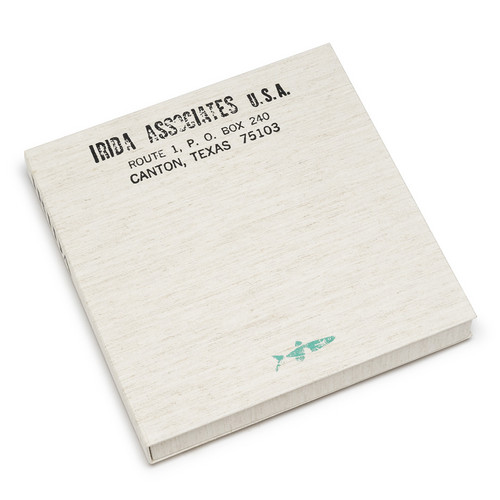
Irida Records: Hybrid Musics from Texas and Beyond, 1979–1986
An incredible set of vinyl reissues explores the unfolding sonic fiction of Texan composer Jerry Hunt and others affiliated with his Irida label.
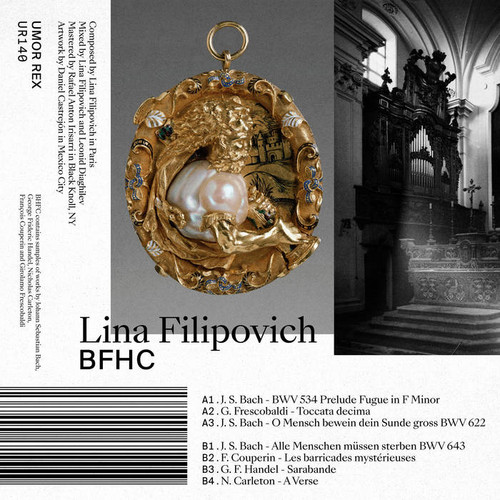
BFHC
Limited edition of 100 copies. On her second album (first one on Umor Rex), the Minsk born / Paris based artist Lina Filipovich continues her experiments on deconstruction and re-appropriation of classical pieces. BFHC includes seven electronic interpretations of the works of Baroque composers such as Bach, Handel, Frescobaldi, Carleton and Couperin. Inspired by memories of her experience of interpreting Bach's pieces in early childhood, Filipovich explores the desire to push the limits of perfo…
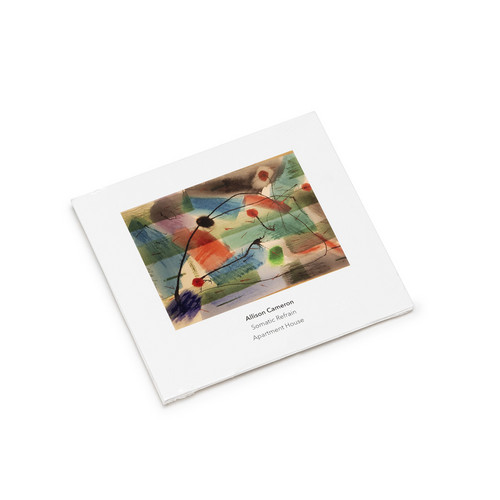
Somatic Refrain
Somatic Refrain is a collection by Allison Cameron for varied chamber forces and ensemble, performed by Apartment House and the Allison Cameron Band. Her music combines delicate sound textures, unpredictable motifs, and hints of folk and experimental methods, rewarding attentive listeners with gentle surprises and new perspectives on instrumental color.
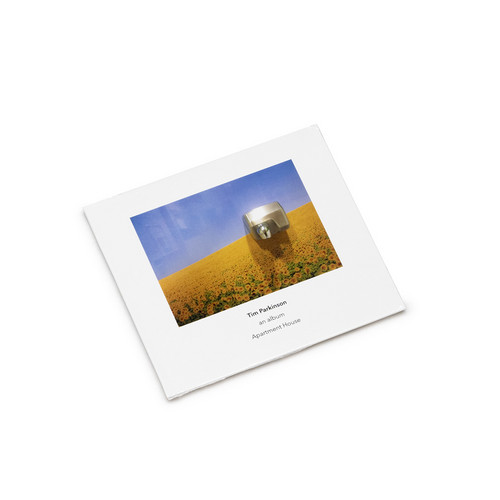
An Album
An Album by Tim Parkinson and Apartment House includes five works covering two decades of the composer’s creative evolution. From uncoordinated solo and ensemble pieces to re-imagined septets and violin-piano duos, the music is marked by matter-of-fact presentation, rhythmic independence, and a celebration of the mundane as fertile compositional ground.
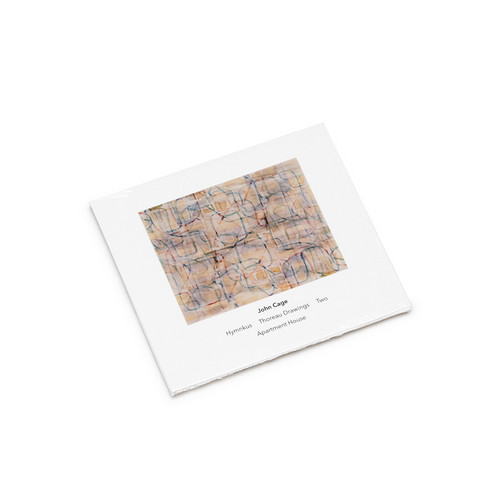
Hymnkus Thoreau Drawings Two
Hymnkus Thoreau Drawings Two features three rarely encountered works by John Cage, interpreted by Apartment House. The album brings together the sparse, spatial interplay of “Two”, the poised transformations of “Thoreau Drawings”, and the hypnotic, layered repetitions of “Hymnkus” in performances marked by clarity, restraint, and ensemble sensitivity.