★Moving Furniture Records
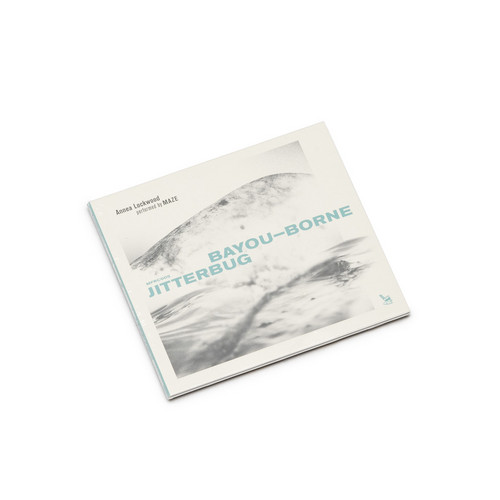
Bayou-Borne / Jitterbug
Fifth release in the MFR Contemporary Series. The Amsterdam-based ensemble MAZE (La Berge, Calderone, Davis, Kyriakides, Hijmans, van Houdt) realises two works by Annea Lockwood, both built around graphic scores derived from photographs of natural systems. Bayou-borne, for Pauline (2016) is dedicated to Pauline Oliveros and uses a map of Houston's bayous; Jitterbug (2007) interprets rocks from the Continental Divide with Lockwood's pre-recorded aquatic and terrestrial insect sounds.
The Sprawl
Distorted Nude is Glenn Dick's new project after Find Hope In Darkness, marking a decisive shift from a wholly computer-based practice to one centred on electric guitar. The Sprawl is a single composed track built from improvised sessions with guitar, effect pedals and laptop, drawing on the Belgian underground's long tradition of droning post-rock. The piece flows between dark melancholic drone and more transcendental zones, holding the listener through patient, slow-burning architecture.
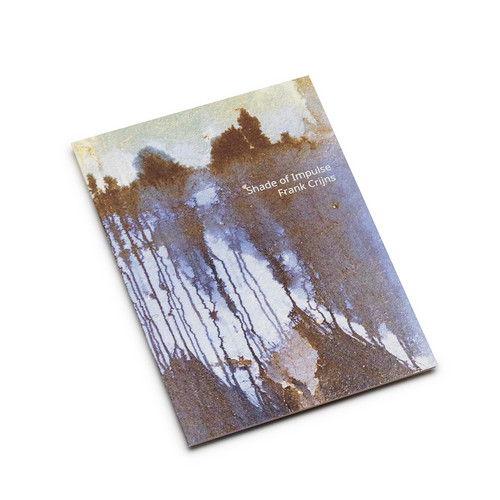
Shade Of Impulse
Crijns's first album for the label, in which he coins the term 'N-bient': ambient understood as the meeting point of nature (here, water) and acoustic instrumental writing (passages by classical ensembles). Several classes of material collide and combine - mechanical sound-fields, natural ambient, electronic textures, ensemble passages - folded into surreal, layered textures. An electro-acoustic music whose abstract elements pull the listener inward while the surface holds quiet.
![dp[a] + hsh](https://cdn.soundohm.com/data/products/2022-03/Petrovic_DpaHsh_CD_01-jpg.jpg.500.jpg)
dp[a] + hsh
Petrovic's debut album bringing together two previously separate projects. dp[a] takes dysprosody - a rare speech disorder marked by unconventional shifts of pitch, volume and rhythm - as a model for an alternative grammar of expression. hsh, commissioned for a Dansmakers Amsterdam dance duet, takes its title from the Moroccan haschoema and addresses social control and the silencing of women. Glitch-inflected computer music as ethical and linguistic inquiry.
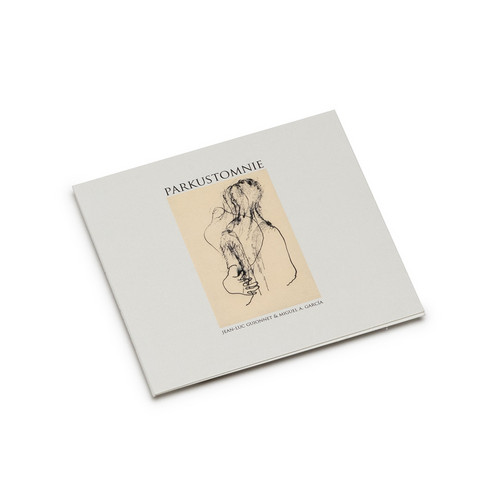
Parkustomnie
First documentation of an improvised session by Jean-Luc Guionnet (church organ) and Miguel A. García (electronics) recorded at the Conservatorio Jesús Guridi in Vitoria-Gasteiz in 2016. Across two pieces, the duo plays the dynamics of the electroacoustic field itself: the work is calibrated so that playing it at different volumes produces materially different listening experiences, with the threshold of audibility used as a compositional parameter. Particularly quiet, post-reductionist.
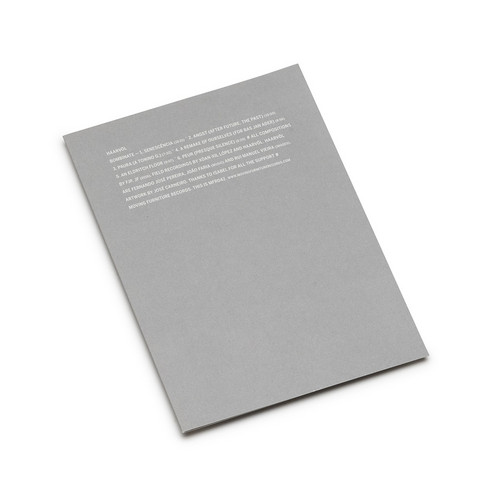
Bombinate
*2022 stock. 200 copies limited edition* After releasing Indite at Moving Furniture Records (April of 2015), the first one with MFR but the band’s second album, Haarvöl began a series of conceptual, somehow interconnected projects, restricting the boundaries of the sonic ambience to a very concise one. This long process gave birth to three albums, each one having a very particular sonic approach but knitted in a personal Haarvöl sound idiosyncrasy, which gives the trilogy a thread that intertwi…
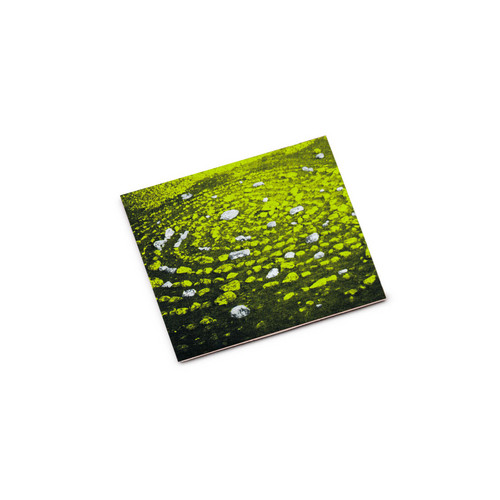
ABC 1-6
Score for indeterminate ensemble by Swiss composer Stefan Thut (2012), here realised by Cristián Alvear, Cyril Bondi and D'Incise. The piece is governed by three categories of sonic material - 0 for faintly coloured noise, 1 for amalgam of noise and pitch, 2 for pure pitch - circulated across six pages and as many rounds in an ever-shifting structure of repetition and turn. A rigorous taxonomy of sound material in the lineage of Wandelweiser and post-Cage indeterminacy.
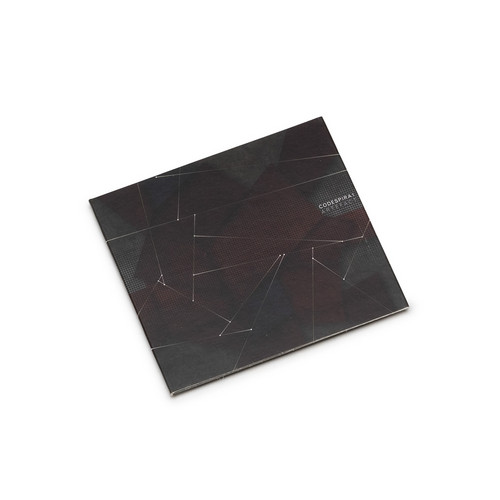
Artefact
First album under the Codespira1 alias by Stockholm-based composer Mattias Petersson, trained in electroacoustic composition at the Royal College of Music. The project began as a vehicle for one-take electronic performances built around SuperCollider patches and a modular system, here extended into longer structures. Artefact unfolds as an articulated drone modelling the subconscious cycle of memory and resonance: a continuous tonal field where small events trigger gradual reconfigurations.
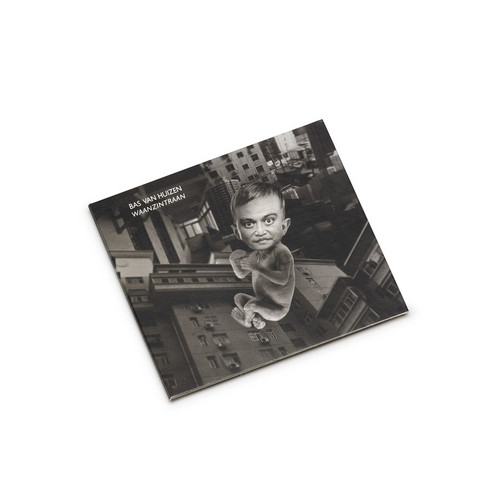
Waanzintraan
Second album for the label, composed in China where van Huizen was based. Waanzintraan extends his investigation into what he calls 'the harmony of noise': not noise as genre signal but as aesthetic and visceral material, deployed within often consonant frames. The piece weaves processed field recordings from Shanghai and Xi'an into a sustained electronic discourse of contrasts, where harsh and resonant matter coexist within a unified compositional logic, on the ambient-noise threshold.
Indite
Composed during 2014, Haarvöl's second album consolidates the Portuguese trio's writing practice: a non-hierarchical compositional grammar where analogue, digital and electronic sources sit on equal footing, threaded with field recordings as structural rather than illustrative material. The trio favours density over experimentation for its own sake, building rigorously detailed cinematic textures whose internal consistency works through resonant correspondences rather than repetition.
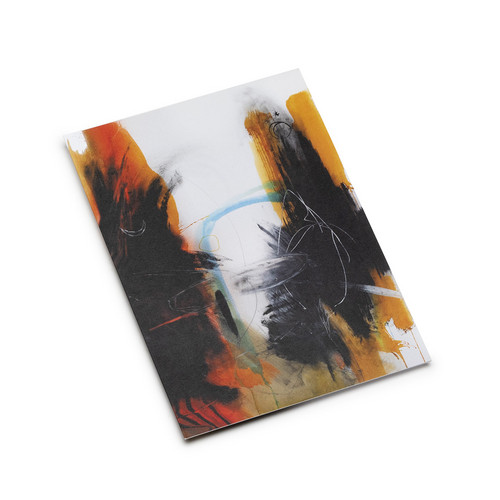
Locked So Tightly In Our Dreams
On his first physical release, Glenn Dick steers Find Hope In Darkness away from the broken-beat and post-rock textures of his earlier digital work, redirecting it toward sustained drone form and the darker reaches of ambient music. The writing favours long, slowly modulating tonal masses over event-based gesture, working with low-register density, harmonic ambiguity and the gradual erosion of timbral edges. Dark ambient and isolationist drone treated as immersive interior.
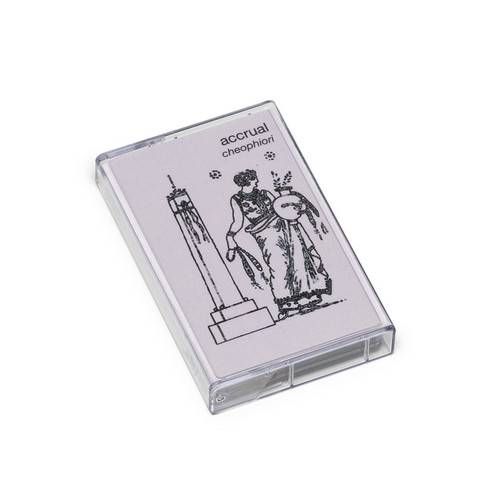
Cheophiori
Recorded in a single late-night session in 2005 - electric guitar by Alasdair Satchel processed live by Ruaridh Law (TVO) through AudioMulch - and first issued as an elusively limited CD-R on Diesel Combustible. Here remastered to cassette with an added Orphax remix. The music sits on the threshold between drone and live processing: feedback and slow textural beds opened up through computer-assisted transformation, weighing organic warmth against an abstract, unstable foreground.
De Tragedie Van Een Liedjesschrijver Zonder Woorden
Drawn from material composed between 2005 and 2007 and revised through 2010, the first standard CD under the Orphax name. Sietse van Erve's writing rests on minute compositional detail: slow-shifting drone fields that drift between long-tone minimalism, isolationist soundscape and lo-fi experimental ambient. A deepening of Orphax's investigation into psychedelic, mind-altering atmosphere through reduced means, where harmonic stillness and slow textural accretion carry the structural weight.
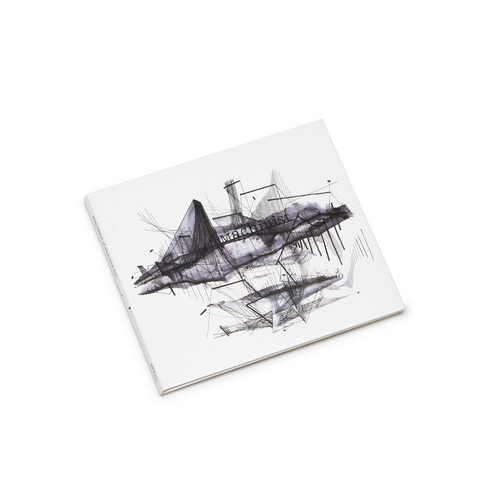
Of What Once Was
A fifty-five-minute diptych. The opening piece transposes Yves Klein's Monotone Symphony (1949) onto solo electric guitar: a sustained drone on the pitch D, where variation arises only from durational shape and the changing morphology of resonance. The closing piece, live-improvised, marks Machinist's move beyond guitar-drone toward wider sonic terrain. Across both runs the same inquiry: spatial field recording against non-spatial computer tone, mediated by guitar amplifier as resonating body.
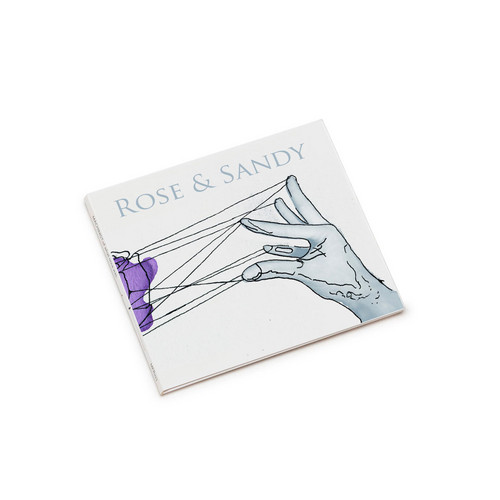
Play Cat's Cradle
Built entirely from a single acoustic source - a rare zither-family instrument of 114 strings, with eleven chromatic chord banks switchable between major, minor and suspended-fourth voicings via semitone levers, plus three octaves of plucked melody strings. Across two impromptu sessions, Sandy's playing is processed live by Rose: long sympathetic resonances, prepared techniques and varied attack points open a suspended landscape between minimalism, drone and modern classical.
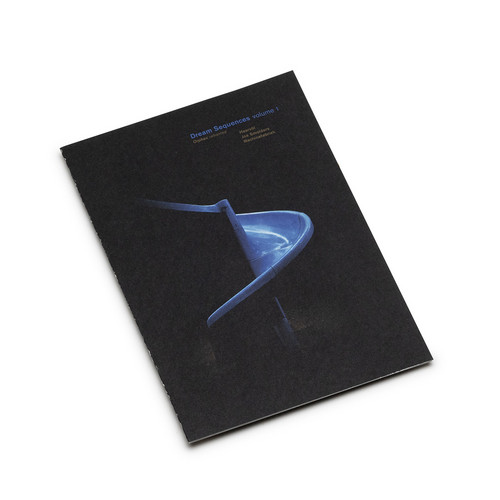
Dream Sequences Volume 1 Orphax Reframed
First compilation in a series where other musicians reframe pieces from Orphax's ongoing Dream Sequence cycle, an open-ended sequence of experimental ambient and drone works. Haarvöl, Jos Smolders and Rutger Zuydervelt (Machinefabriek) each take a different Dream Sequence as point of departure, returning quiet contemplative re-readings that fold their own languages into the source. A study in remix-as-translation across the Dutch and Portuguese electronic-experimental axes.
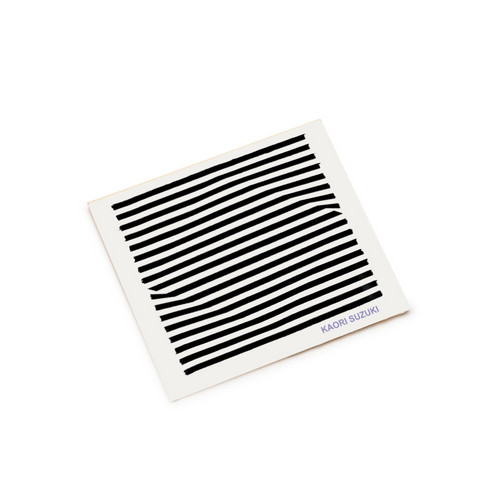
Music For Modified Melodica
Suzuki's third solo album, framed by a single instrument she modified herself: a melodica re-engineered to play via foot bellows, so that high-pressure airflow overblows the small reeds into a sustained, loud excitation. The pumped breaths are amplified through time delays, layered with oscillators and manipulated highs to develop the combination tones that emerge at extreme volumes. A durational, psychoacoustic drone work that 'rewards endurance with transcendence', performed live.
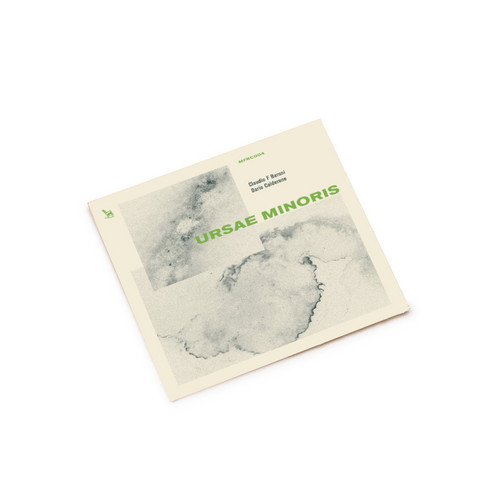
Ursae Minoris
Seventh entry in Claudio F. Baroni's SoLo series, scored for double bass and loopstation and performed by Dario Calderone. Three movements derive their pitch material from a transcription of the celestial map of Ursa Minor, a method indebted to Cage's Atlas Eclipticalis but permitting performer freedom: pitches notated as loop sequences whose entry, exit and length the bassist controls, each tied to a specific extended technique. Acoustic drone of starfield variety.
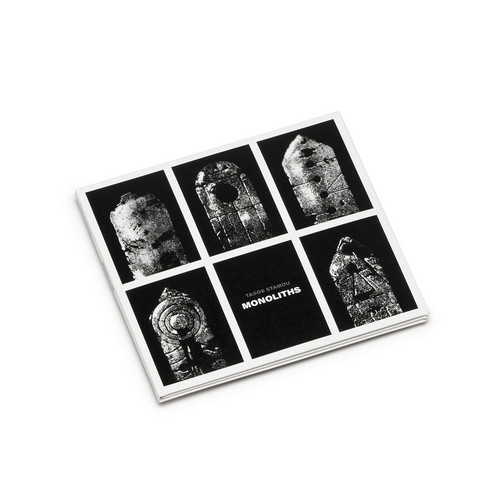
Monoliths
**200 copies limited edition** "The occasion of this double album is to present the two different practices in my music, live performance and studio work. Although phenomenally coming from a different place, it is a result of years of experimentations to bring a simple yet complete electroacoustic set up both on stage and in studio. The original idea was to compose or perform with acoustic instruments generating sustained sounds in a way that, although electronically manipulated, would retain al…
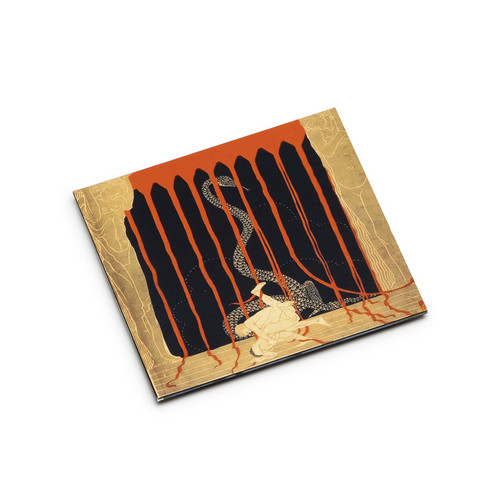
John Duncan / T.R. Kirstein
First collaboration between Tobias R. Kirstein and John Duncan, prompted by a dream Kirstein had on 31 May 2019 - the day Roky Erickson died - in which Duncan repeated 'You Are Safe' against a backdrop of sine waves. Two long pieces result: Duncan voices texts (You Are Safe, the second 'Come To Me') sustained by Kirstein's slowly morphing electronic backgrounds, computer-generated drones that thicken into something close to insect resonance before settling. Process-led voice and electronics.