Moving Furniture Records super sale
Albumin
Tip! Jim O'Rourke and Jos Smolders teamed up again after their first collaboration, Additive Inverse from 2021. Over a period of three years, both artists worked in sessions of a day, each in their own studio.The result is sometimes like a warm cloud of sounds, suddenly breaking up into a rhythmic, irregular pattern, after which it dives into introverted mindsets. The music is in constant flux. The project followed the same workflow, but this time Jim took the lead and kicked off with a salvo of…
Broken Landscapes
Follow-up to Atsusaku (2016) by Gareth Davis (bass clarinet) and Merzbow. The earlier theme of mechanical compression is here extended into a meditation on the fears of mechanisation in the natural environment: North Sea wind farms, Southern Californian industry, the survival of animals in overrun habitats. Three tracks of impenetrable manipulated field recordings against saturated bass clarinet midrange and Merzbow's analogue/digital crossfire, with brief recognisable voices flashing through.
Cuspa Llullu
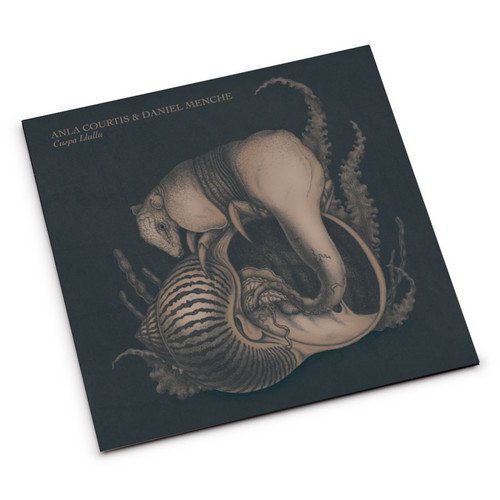
Second collaboration between Anla Courtis and Daniel Menche, recorded across Portland and Buenos Aires. Two side-long pieces traverse a kaleidoscopic sound labyrinth: Side A moves through metallic, multi-layered corridors in constant mutation, Side B opens outdoors and gradually visits a sequence of interior regions toward a final climax. The sound material is treated as living, vibrating matter rather than inert sample, a study in frequency-as-organism on the drone-noise threshold.
States
States grew from a live-electronics setup developed by Tijs Ham (Tapage) in 2016: analogue feedback routed through digital manipulation to form a self-balancing, self-generating chaotic system, capable of producing its own deep melodic and textured material once the performer steps back. The 2017 sessions at Steim with bass clarinetist Gareth Davis insert a reed voice into this recursive system, opening it to spacious interplay between acoustic gesture and the autonomy of the patch.
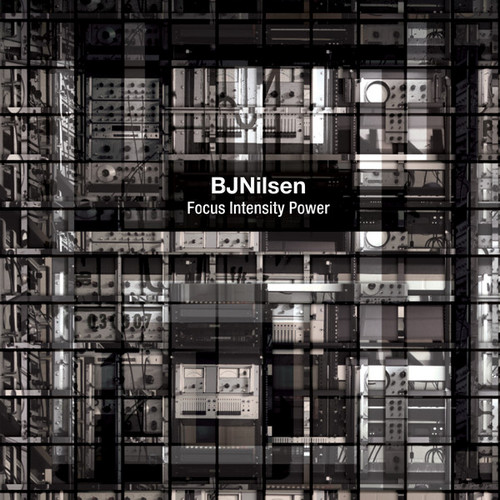
Focus Intensity Power
BJ Nilsen's first LP for the label, departing from his field-recording practice. Recorded during a Fall 2017 residency at Willem Twee Electronic Music Studio in Den Bosch, the five pieces document improvised sessions on modular synthesizers, tone generators and laboratory test instruments. The flâneur's ear, normally trained on wind or city traffic, is here turned on machine-generated material: analogue pulse, droning waves and subtle noise arranged with the same patient sense of texture.
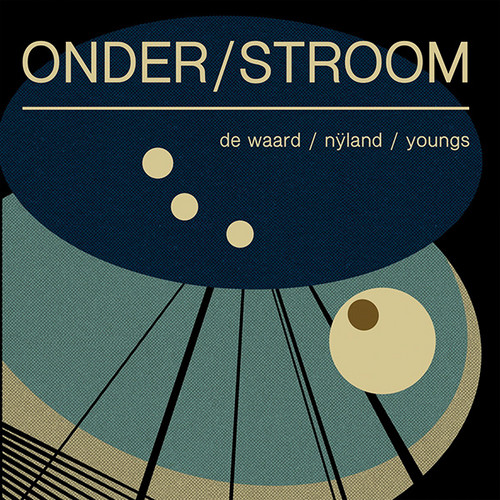
Onder/Stroom
Title and concept play against Extrapool's short-lived Zonder Stroom programme (performances entirely without electricity). One bleak winter afternoon the trio decided to do the inverse, using every keyboard, synthesizer and piece of electronics they could lay hands on. The album collects mixes and remixes of that single session: a joyful, dense electroacoustic improvisation with Richard Youngs's experimental folk instincts threading through de Waard's and Nÿland's electronic vocabulary.
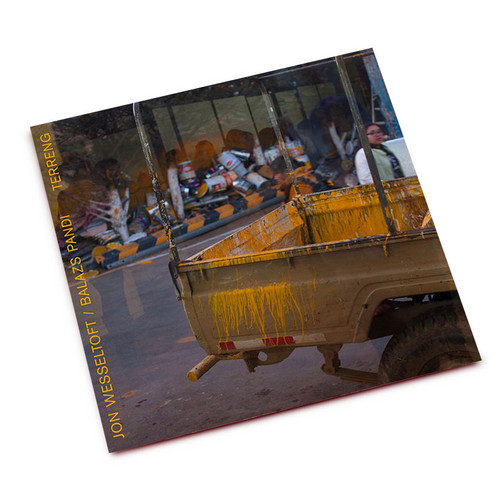
Terreng
Long-form duo work between Balázs Pándi (percussion) and Jon Wesseltoft (electronics), shaped as an open landscape of contrasts articulating space in both time and depth. The two players alternately trade and merge their instrumental identities, generating zones of improvised openness alongside densely constructed electroacoustic narrative. The vocabulary moves between quiet, ritually framed rhythmic space and saturated information, held as deliberate counterweights.
Saxophone Studies
Two long drone pieces built around recordings of improvised saxophone. The first is a seventeen-minute work derived from material James Fella sent Orphax in 2006: multi-layered and roughly cut, with non-harmonic multitones colliding in the room and ear to produce a piercing psychedelic effect. The second, recorded with his father in late 2017, is bass-heavy and centred on baritone, working through multi-layering and phasing into a slow form from which melodic fragments quietly emerge.
2
Second half of a two-part album by Mens and Kouw, recorded live in studio in December 2014 and following directly from the first volume. The two long-form pieces extend the duo's pursuit of precisely tuned analogue synthesis: deep, warm drone fields that gradually disclose, to patient listening, a rich substructure of resonances, artefacts and slowly shifting collages of texture. Material that resists time as event-based articulation and proposes it instead as immersive sonic sculpture.
1
Mens and Kouw have worked together since 2001, when their first album emerged from the clicks 'n cuts vocabulary via raw mixer feedback recorded to minidisc and broadcast live on Amsterdam's Radio 100. The duo has since migrated into tonal and timbral long-form, combining software, recorded acoustic instruments and modular synthesizer into electro-acoustic drone with audible debts to the American minimalist canon. First half of a two-part album, recorded live in December 2014.
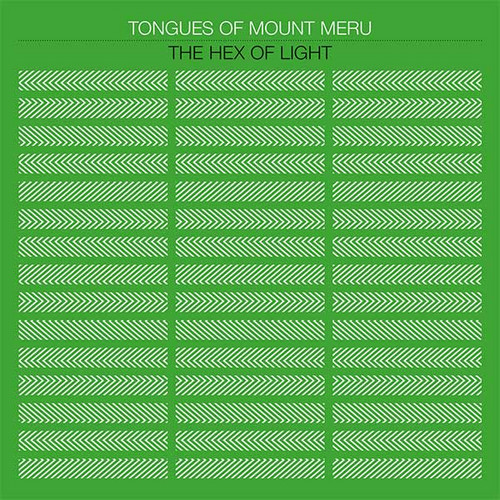
The Hex of Light
Long-form duo work by Jon Wesseltoft and Lasse Marhaug, ongoing since 2008 as an investigation into psycho-acoustics and the phenomenology of sustained sound. The Hex of Light, recorded in 2013, consists of two stringently close-knitted pieces built around microtonal frequency interaction and slowly unsettling shifts; each gradually blooms within its own sonic time, exposing binaural beats, ghost overtones and microscopic tonal motion. Trance-inducing drone in the most rigorous sense.
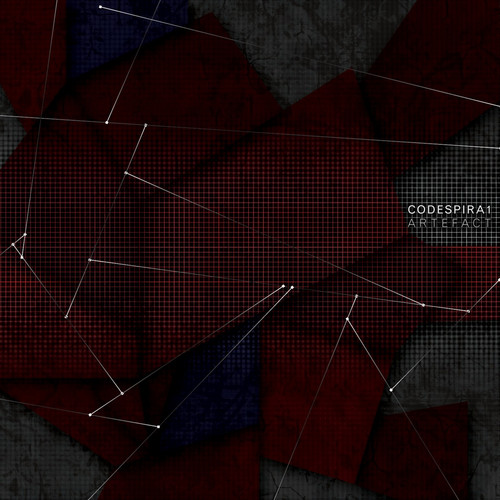
Artefact
First album under the Codespira1 alias by Stockholm-based composer Mattias Petersson, trained in electroacoustic composition at the Royal College of Music. The project began as a vehicle for one-take electronic performances built around SuperCollider patches and a modular system, here extended into longer structures. Artefact unfolds as an articulated drone modelling the subconscious cycle of memory and resonance: a continuous tonal field where small events trigger gradual reconfigurations.
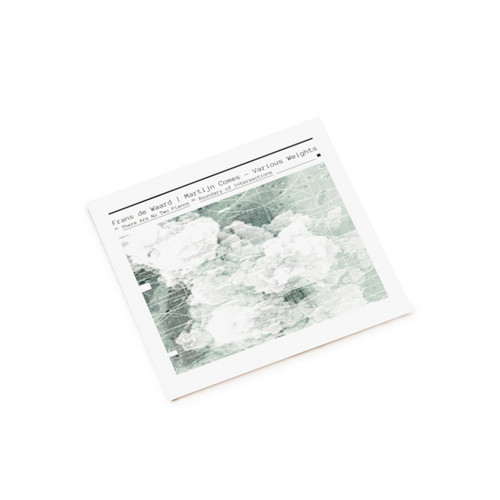
Various Weights
First collaboration between Frans de Waard and Martijn Comes, deliberately built without an underlying concept. Each artist supplied the other with a pool of source sounds: de Waard sent Comes Korg MS20 and Koma Field FX recordings and field material; Comes sent de Waard a processed stylophone, a loop and recordings from the University of Twente's web Software-Defined Radio. Two epic pieces result: Comes's harmonic deep-sonority drone, de Waard's quieter acousmatic-minimalist hover.
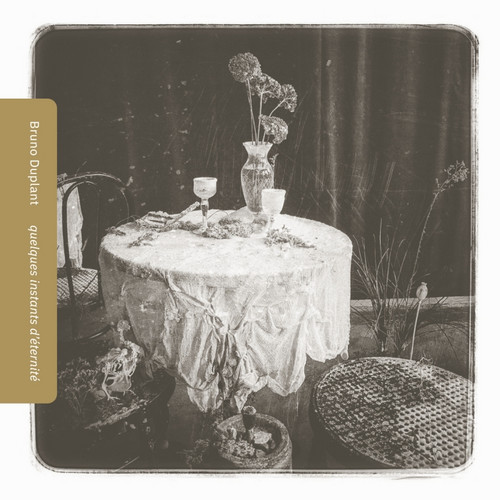
Quelques Instants D'éternité
First part of a new Duplant trilogy, after the pessimistic Élégie du temps présent / Sombres Miroirs / Insondables Humeurs cycle. The music remains imbued with mysticism and deep melancholy but turns toward a more luminous, hopeful register. The organ remains omnipresent, structuring the long tonal arcs, while electronic and natural sounds are admitted in a discreet but important counterpoint - a meditation in Duplant's Cage-Bachelard-Radigue lineage on memory and slow contemplation.
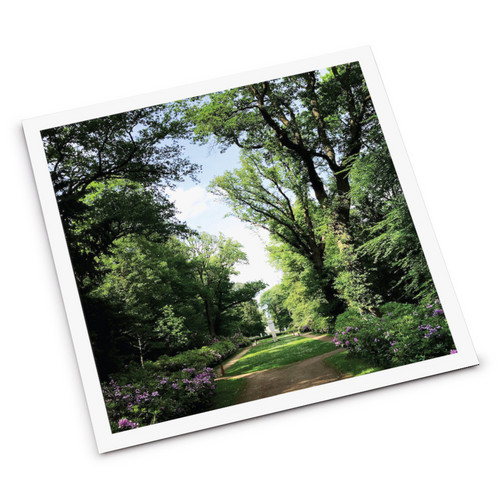
Haarlemmerhout
Polack returns to the park in south Haarlem made famous by Nicolaas Beets's Romantic 1839 novel Camera Obscura, and uses it as the field for an exercise in urban escapism. Local recordings (pigs from the petting zoo, birds migrating north from Africa) are torn apart and rebuilt with layers of synthesis and electronics, blurring the line between unprocessed source and synthetic counterpart. Field-recording ambient in the lineage of Chris Watson, but tilted toward romantic synthesis.
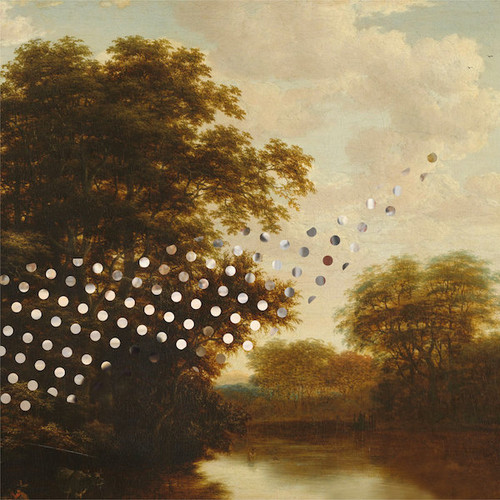
Paintings
Final work in a trilogy (Sketches, Drawings, Paintings) marking Philipp Bückle's return to music after closing his Teamforest project. Recorded in 2014 across Copenhagen and Dortmund, the album combines a visually organic sensibility with experimental composition, the titles functioning as discrete sound paintings spanning warm September evenings, rainy days, a seascape, a wedding. Mastered for vinyl by Stephan Mathieu. Ambient drone abstraction grounded in figurative diaristic detail.
Worn Tape
Imanishi's first album for the label, presenting eleven miniatures built from small sounds drawn from his immediate environment: paper, objects, radio, field recording, microphone. The work is abstract in vocabulary but warm and slow in effect, a deliberate counter-position to bombast. Its strength lies in the precision with which discrete, unspectacular materials are placed within reduced frames, locating the music in the lineage of Japanese onkyō and post-Schaefferian micro-concrete.
It Deel I
First album in IT DEEL, a multi-year project by the Kleefstra Bros (Jan Kleefstra on poetry, Romke Kleefstra on guitar) with Popfabryk, addressing the ecological degradation of Frisian nature. Each volume is composed in residency at the Thomaskerk in Katlijk and presented live before pressing. Volume I is built with Polish composer Michał Jacaszek, whose electro-acoustic vocabulary surrounds Jan Kleefstra's Frisian-language spoken word with ambient and drone landscapes.
It Deel II
Second volume in the IT DEEL project. The Kleefstra Bros invited Norwegian duo Streifenjunko (Eivind Lønning on trumpet/electronics, Espen Reinertsen on sax/electronics) into the Thomaskerk in Katlijk, composing between improv, jazz and sound art. Streifenjunko brought field recordings from the forests around Oslo, brought into dialogue with the Frisian forests around the church and Jan Kleefstra's Frisian-language spoken word. A meditation on how we treat our local forests.
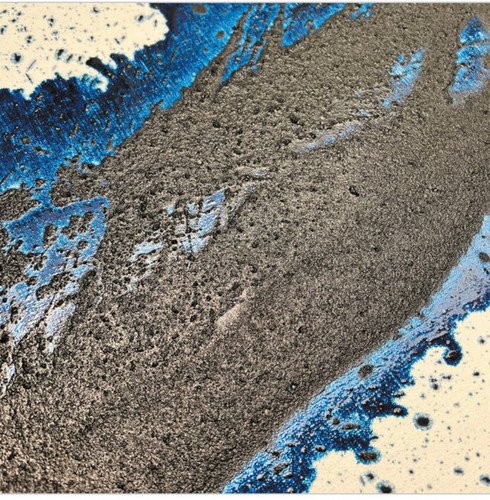
Smolders / Delaere / Nijs
Composition trio between Jos Smolders (electronics), Guido Nijs (saxophone) and painter Koen Delaere, whose abstract pigment surfaces serve as compositional model. Five tracks named after pigments (Aureolin, Barium, Diarylide, Bianco di Titanio, Indigofera Suffruticosa) translate Delaere's clashing, superimposed colour material into sonic canvases. The work grew out of two years of free improvisation; on Diarylide, the duo is extended with Eric Van Der Westen on bass and Aron Raams on guitar.