Jerry Kranitz
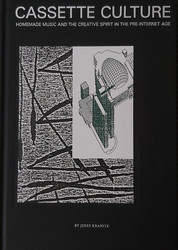
Cassette Culture - Homemade Music and the Creative Spirit in the Pre-Internet-Age (Book, Expanded Edition)
Before the algorithm, before the cloud, before streaming platforms reduced music to weightless data, there existed a network held together by stamps, international reply coupons, and magnetic tape. Jerry Kranitz's *Cassette Culture* is the definitive chronicle of this forgotten republic of sound - a meticulously researched social history of the global hometaper movement that flourished from the ashes of punk through the early 1990s.
The compact cassette was nothing less than a revolutionary technology. For the price of a few blank tapes and a portable recorder, anyone could become a producer, a label owner, a distributor. The means of musical production, so long monopolized by corporations and their gatekeepers, had been placed into the hands of the many.
Kranitz traces the lineage with scholarly precision: from the science fiction fanzines of the 1930s through Sun Ra's radically self-sufficient Saturn label, from Dada's assault on bourgeois art to Fluxus's postal networks and mail art's gift economy. Through small-press zines like *Op*, *Sound Choice*, *ND*, *Unsound* and *Factsheet Five*, through college radio programs and mail art networks, thousands of individuals across the United States, Britain, Germany, Belgium, Australia, Japan and beyond found each other. They traded tapes, collaborated across oceans, built cottage industries from kitchen tables and bedroom studios.
The book profiles key figures who shaped this underground: Alain Neffe, acknowledged as one of the godfathers of the 1980s network, who launched the influential Belgian label Insane Music and its legendary compilation series *Insane Music for Insane People*. Al Margolis, who released over 300 cassettes on his Sound of Pig label while recording as If, Bwana. Hal McGee, who ran the Cause And Effect label from Florida. Lord Litter in Berlin, broadcasting his Tape Department radio program and bridging East and West German underground scenes. Don Campau in California, creating intricately constructed pop and experimental works while facilitating countless mail collaborations.
The cast extends further: R. Stevie Moore, the godfather of home recording; Eugene Chadbourne, documenting anarchic improvisations on self-released tapes; Martin Newell and his Cleaners From Venus, crafting exquisite pop masterpieces in a dining room; Frans de Waard, The New Blockaders**, Merzbow, **Big City Orchestra**, **Amy Denio**, **Charles Rice Goff III** with his Taped Rugs Productions - a constellation of creators united not by genre but by ethos.
Originally published in hardcover by Vinyl-on-Demand in 2020, this expanded second edition incorporates new interviews, an updated introduction situating the work within the growing literature on cassette history, and a comprehensive index. Drawing on ten years of research (2007-2017), original interviews with dozens of participants, and extensive quotation from period publications, Kranitz reconstructs the lived experience of this community: the anticipation of checking the mailbox, the hours spent dubbing tapes one by one, the creative packaging that transformed each cassette into an art object.
In an era when streaming platforms have made all music instantly available yet somehow more disposable than ever, *Cassette Culture* reminds us of a time when sharing music required commitment, when discovery demanded effort, and when a package arriving from a stranger on another continent could feel like a small miracle.
---
KEY FEATURES:
- Expanded second edition (first edition: Vinyl-on-Demand, 2020)
- New interviews and updated introduction
- Comprehensive index
- Ten years of research and original interviews
- Profiles of major figures: Alain Neffe, Al Margolis, Hal McGee, Lord Litter, Don Campau, R. Stevie Moore, Eugene Chadbourne, Martin Newell, Frans de Waard, Merzbow, and many others
- Coverage of key publications: Op, Sound Choice, ND, Unsound, Factsheet Five
- Historical context from 1930s fanzines through punk DIY to early 1990s
Released as part of a 320 page book "Cassette Culture".