Conlon Nancarrow
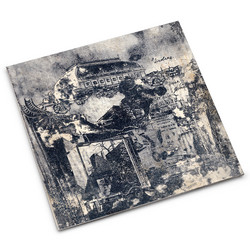
Complete Studies For Player Piano Volume One (LP)
condition (record/cover): NM / EX- (minimal sticker removal residue on front) Insert included
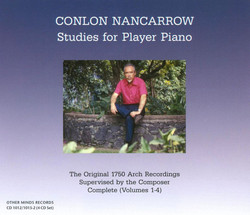
One of the great documents in the history of recorded music. Conlon Nancarrow - born in Arkansas in 1912, veteran of the Abraham Lincoln Brigade in Spain, self-exiled to Mexico City in 1940 to escape American political persecution, largely unknown to the wider musical world until his seventies - spent the middle decades of his life alone in his studio punching rolls for the player piano by hand, composing works of rhythmic complexity and polyphonic density that no human performer could approach. His Studies for Player Piano, of which this is the first volume, explore the possibilities of simultaneous independent tempos - two voices moving at a ratio of 3:2, or 4:3, or the irrational ratio of the square root of 2 to 1 - producing music of extraordinary intricacy and, paradoxically, visceral energy. The 1750 Arch Records recordings, produced by Charles Amirkhanian in Nancarrow's Mexico City studio in April 1977 on the composer's own modified Ampico player pianos, are the definitive documentation: the only recordings made on Nancarrow's own instruments, with their distinct timbres - one piano with metal-covered felt hammers, the other with leather - supervised by the composer himself. When György Ligeti heard this music in the early 1980s, he described Nancarrow as "the most important discovery since Webern." The LP pressing of volume one is one of the rarest artifacts in the series.