Arriving like the final flare from a year-long supernova, Hungry Vortex finds Polypores - the ever-restless alias of Stephen James Buckley - stepping decisively beyond familiar kosmische comforts into something stranger, knottier and more exuberantly psychedelic. Four extended pieces stretch his modular vocabulary into a loose-limbed organism of polyrhythmic pulses, woozy jazz-prog filigree and hallucinatory ambience, as if a classic synth suite had been left to ferment in the back room of a free-improv squat. The result is an album that treats the “vortex” of the title not as a threat but as a playground, inviting the listener to be joyfully swallowed whole.
Opener “The Body Is The Spaceship” lays out the mission statement with a heady mix of propulsion and drift. Percussion is foregrounded, not as rigid metronome but as living, shifting topography: hand-drum patterns, splintered rolls and off-kilter hits piling into rolling polyrhythms that never quite resolve the way the ear expects. Around this, slewed synth blips and curdled arpeggios rise like phosphorescent plankton, gradually mutating into slantwise melodies and lopsided grooves. Rather than building to a conventional “peak”, the track grows the way mycelium spreads - branching, doubling back, sending signals in several directions at once until the listener realises the landscape has changed beneath their feet.
“Wizards!” taps fully into Buckley’s inner prog trickster, yet sidesteps the genre’s usual grandiosity. Anchored by his playful obsession with time-signature shifts, the piece keeps you constantly off balance: phrases flip from limber 5s to swaggering 7s, rhythmic accents lurch sideways, and yet the whole thing flows with an ease that feels almost conversational. There’s a sly joke embedded in the fact that the track never changes key; all that emotional movement, all those stylistic feints, are achieved purely through rhythm, timbre and arrangement. It’s easy to picture the “mushroom-trip wizard march” the music suggests, but these aren’t stock fantasy figures so much as oddball guides, dancing you through a landscape where every bar-line opens a slightly different portal.
Flip the record and the title track, “Hungry Vortex,” changes the scale of the trip without dulling its intensity. Here the palette thins out, letting air rush between the elements. Flute-like tones coil through the stereo field, tracing delicate filigrees over a bed of minimalist clicks, soft pulses and gently detuned pads. Repetition does the heavy lifting: small gestures recur with microscopic variation, spiralling in fractal patterns that feel less like a sequencer and more like some rare species of sonic coral growing in real time. Ostensibly electronic, the music seems to shrug off the grid, behaving like a swarm or a tide rather than a programmed pattern. The sense of an “inviting sonic oblivion” is key - this is immersive not because it overwhelms, but because it quietly erases the distinction between foreground and background until you’re simply inside it.
“Void High” closes the album with something more overtly contemplative, yet no less vivid. Washes of warm noise move like illuminated fog, flickering with tiny points of light from wobbly delay trails and glassy overtones. Where the first side revels in rhythmic sleight of hand, this finale leans into sustained tone and slow, harmonic bloom, the emotional centre of gravity shifting toward a kind of gentle cosmic reassurance. The classicism here lies not in pastiche but in the sense of proportion: each swell of sound arrives exactly when needed, each moment of near-silence feels earned, and the piece settles into a quietly luminous resonance rather than a grand finale. It’s spiritual without sermonising, suggestive rather than declarative - a reminder that the void can be radiant as well as terrifying.
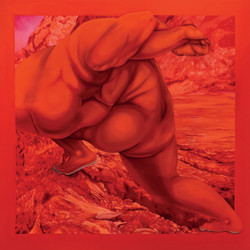
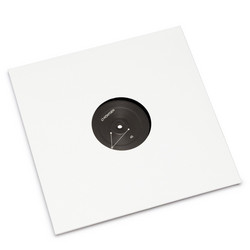
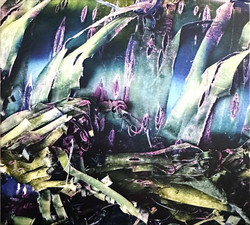
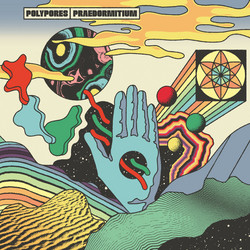
Framed in a luxuriant, spot-varnished sleeve by Jake Blanchard and issued as a one-time vinyl pressing, Hungry Vortex operates as both culmination and provocation. It gathers up strands of polyrhythmic experiment, vintage synth mysticism, library-music colour and offbeat prog into a coherent whole, yet hints that Buckley’s appetite for further mutation is far from sated. As a way to close out a prolific run, it feels just right: not a full stop, but a portal swinging wide open, humming invitingly, ready to swallow whatever comes next.