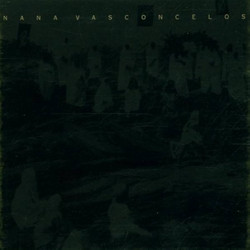
Naná Vasconcelos, Mára
Ntsano (LP)
LabelRed RecordsGenreJazz & Improvisation
Out of stock
Tracked express shipping from Italy, no customs or import VAT in the EU. Shipping costs
Recorded in Québec City in the summer of 1983, Ntsano captures an encounter that feels both improbable and utterly natural: Brazilian percussion visionary Naná Vasconcelos joining forces with the Québécois ensemble Mara. The group had been formed by pianist and organist Denis Hébert, a musician steeped in jazz but equally marked by American minimalism and contemporary composition. Around him gathered saxophonist, flautist and bass clarinetist Maurice Bouchard, whose horn lines folded African rhythmic hypnosis into Eastern‑tinged spiritual inflections, and drummer/percussionist Pierre Tanguay, an eclectic figure whose work stretched from avant‑garde experiments to early music, theater and ballet. When Vasconcelos crossed paths with this circle of younger musicians in Canada, their shared love of Africa, the Far East and the outer edges of jazz quickly coalesced into the Mara project.
On Ntsano, that shared ground is audible from the first notes. Vasconcelos brings his signature arsenal - berimbau, talking drum, a wide array of percussion and voice - using them not as exotic colour but as structural elements. His playing often sets the ritual frame: a berimbau figure pulsing like a heartbeat, whispered vocalisations, a talking drum pattern that suggests call‑and‑response. Against this, Hébert’s valve trombone (a striking shift from his more familiar keyboard work) threads long, burnished tones and quietly lyrical phrases, sometimes shadowing the percussion, sometimes cutting across it with slow, cantorial lines. Bouchard moves restlessly between flute, soprano sax and bass clarinet, switching timbres as if shifting masks: reedy spirals that evoke desert winds, low woody drones, sudden cries that pierce the texture before folding back into ensemble breath.
If the frontline supplies the voices, the album’s sense of propulsion comes from the constantly morphing percussion landscape. Tanguay’s drums and additional percussion do not lock into standard jazz time so much as orbit Vasconcelos’s patterns, creating overlapping cycles that expand and contract. At moments, the music hints at grooves - a loping, almost Afro‑beat undercurrent, a sway that suggests distant samba, a march that never quite settles - only to dissolve again into free, textural interplay. Throughout, there is a strong feeling of listening and restraint: silences, decays and the resonance of the room become as important as any single strike or phrase. The musicians’ diverse backgrounds are never paraded; instead, they’re subsumed into a collective language where jazz phrasing, minimal repetition and ancestral pulse coexist without hierarchy.
What unifies Ntsano is the pervasive sense of spirituality and mystery. Themes do not announce themselves so much as emerge from long arcs, like chants remembered rather than composed. The music often hovers on the edge of song, with Vasconcelos’s voice and Bouchard’s winds sketching melodies that feel older than the session that produced them. Yet there is nothing vague about the interaction: each track bears the imprint of specific ears, histories and decisions. You can hear Hébert’s minimalist leanings in the patient use of repetition, Bouchard’s future as a major jazz voice in the clarity of his lines, Tanguay’s theatrical sensibility in the way dynamics and timbres are staged, and Vasconcelos’s lifelong commitment to making percussion speak in complete sentences.
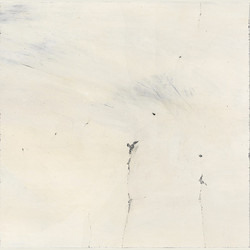
Originally produced in 1983 by Sergio Veschi and recorded by Bruce Edwards at Psm Studio in Québec City on July 14, the album has now been carefully restored from the original analogue tapes by Alessandro Cutolo at Elettroformati in Milan, then remastered by Rinaldo Donati at Maxine Studio. Under the executive production of Marco Pennisi, with his art direction and an evocative cover photograph by Ira Berger, Ntsano returns in renewed form without sacrificing its grain and warmth. The new edition reveals details that might have been blurred on earlier pressings - the overtones of berimbau strings, the breath in the reeds, the subtle decay of drumheads in the studio air. Four musicians, one brief summer meeting: the result is a recording that still feels like a ceremony half‑remembered from a dream, now available again for listeners ready to enter its circle.
Format
Reissue 2025. Limited and numbered edition, 2000 copies. 180 gr. Red Records 50 Years.
Recorded by Bruce Edwards and mixed at Psm Studio, Québec City, Canada, July 14, 1983
First edition produced by Sergio Veschi.
Release notes
Reissue 2025. Limited and numbered edition, 2000 copies. 180 gr. Red Records 50 Years. Recorded by Bruce Edwards and mixed at Psm Studio, Québec City, Canada, July 14, 1983 First edition produced by Sergio Veschi.
| A1 | Gong | 6:13 | |
| A2 | Gagaku | 10:38 | |
| A3 | Argile | 4:42 | |
| B1 | Ntsano | 9:14 | |
| B2 | Credo | 8:58 | |
| B3 | Desormais | 3:43 |
- Mára
- Berimbau, Talking Drum, Percussion, Vocals
- Pierre Tanguay
- Drums, Percussion, Written-By (A3)
- Bruce Edwards
- Engineer
- Sergio Veschi
- Executive-Producer
- Maurice Bouchard
- Flute, Soprano Saxophone, Bass Clarinet
- Denis Hébert
- Piano, Other [Organo], Written-By (A1, A2, B1 to B3)