
Reissues
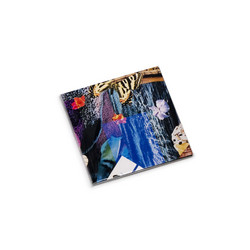
Insect 801
Three tracks from the production of Konchuuki (Essence Music, 2015). The 28-minute centerpiece employs oscillator-modulated rhythms from a vintage Mach Rhythm Box RB-801, creating distinctive rhythmic patterns throughout—the album title references this equipment.
New oscillator synths and drone machines create uneven noise acoustics and drones with shifting graininess, introducing fresh sonic colors to the Merzbow palette. The first track title "Fuyumushi" (winter insect) connects to the insect …
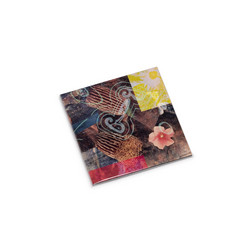
Pi-Eggplant
The Merzbow Archive series by Slowdown Records, which has released ten editions so far, enters its twelveth edition. This edition consists of recordings made between 2008 and 2009, when Merzbow developed a style that incorporated drumming. Although Masami Akita was originally a drummer heavily influenced by psychedelic rock, progressive rock, and other free music of the 70s, he avoided using drums in Merzbow (except in the duo with Kiyoshi Mizutani in the late 70s and in Merzbow Null in the earl…
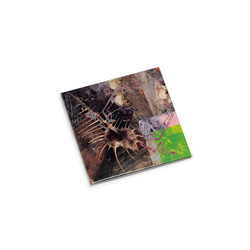
Groon Lesson
Recorded during the height of the 13 Japanese Birds series production, these three performances capture Merzbow at peak drumming-era intensity. The centerpiece - a commanding 32-minute second track - demonstrates the extended improvisational structures characteristic of this period. The encounter with Balázs Pándi, a drummer sharing similar musical background (not only metal and grindcore, but also Sun Ra and free jazz), led to Merzbow's desire to pursue drumming as duo collaboration. After this…
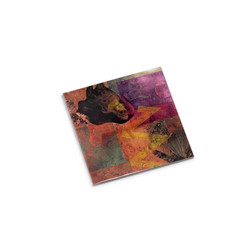
Red Brick
Test mixes for Arijigoku (Vivo, 2008)—Merzbow's first full-fledged combination of live drums with improvised noise performance. Drums were recorded separately in a rented studio, then mixed with noise at a later date. This preliminary version offers vivid documentation of the trial-and-error process underlying a landmark release.
The progression across three tracks demonstrates the range achievable through drum-noise synthesis: from the opening track's carefully balanced spatial composition to t…
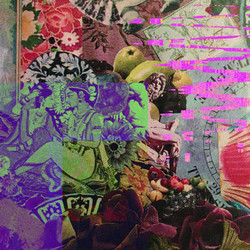
Ensemble Drums
Alternate mixes from two essential albums: Protean World (Noiseville, 2008) and Microkosmos (Blossoming Noise, 2009). Drumming was recorded separately in rented studio space, capturing Akita's return to the instrument after decades.
The first track fuses drumming with improvisational noise - drums rampage at high velocity without steady beat, pure kinetic energy. The second and third tracks reveal different performance flavors: gradually intensifying roughness merging with noise, interwoven with…
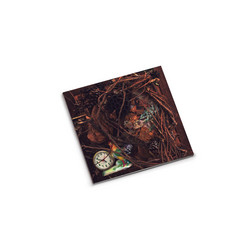
Drumorph
Primarily computer-based but incorporating sampled drums, this album documents the earliest experiments leading to the full drum integration that would define this period. Finely cut drum sounds ricochet through space in the first two tracks, with fierce original drum performances unexpectedly emerging between the processed fragments—allowing listeners to experience drums in multiple transformed states.
Recorded just one month before the Anicca sessions, Drumorph captures the pivotal moment when…
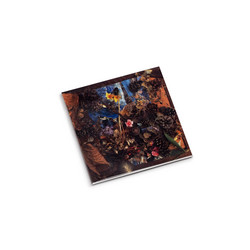
Coma Test
Coma Test pushes toward sensory overload approaching coma-like disconnection, testing how much the nervous system can absorb. The title suggests medical experimentation, perhaps referencing animal testing practices that Akita opposes, or simply the extreme states his music induces.
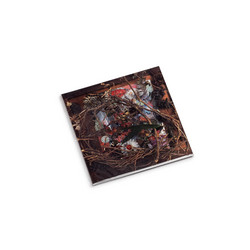
Bloodour
Bloodour's visceral title ("blood" + "our") suggests shared complicity - the blood is ours, we are responsible. These recordings emerge from the Minazo/F.I.D./Merzbear period, when Merzbow explicitly addressed animal cruelty with unflinching directness.
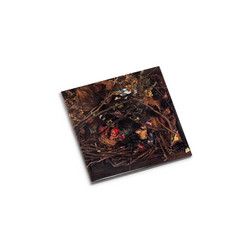
27 August 2006
Another precisely dated document from the animal rights period, continuing intensive summer 2006 documentation. Together with the August 15 companion, it provides comprehensive insight into Merzbow's live approach during this activist phase - translating ideological commitments into sonic form.
The twelve-day gap between recordings allows comparison of performances, revealing both consistency and variation in Akita's live practice.
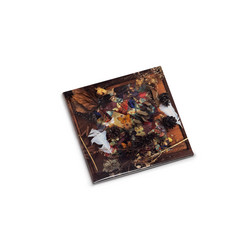
15 August 2006
This live recording from Metro in Kyoto captures Merzbow in confrontational performance mode. August 15 holds significance in Japan as the World War II end anniversary - whether intentional or not, this historical resonance adds layers of meaning. The date marks both defeat and liberation, ending and beginning.
Significantly, 2006 marked Akita's return to performing with analog equipment and live drums alongside laptop - a hybrid approach combining digital precision with physical immediacy.
Cred…
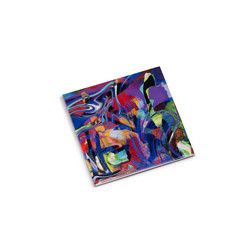
Pig AY
Pig AY extends animal-themed titles becoming prominent following Akita's veganism adoption in 2003. The pig - intelligent, social, routinely abused by industrial agriculture - would become a recurring figure in later work. This early reference suggests themes gestating before full ideological commitment.
Pigs possess intelligence comparable to dogs and young children, yet endure conditions unthinkable for companion animals. Akita's interest in pigs reflects both their abuse by human systems and …
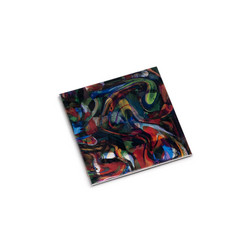
Material For Structure I
Recorded in September 2002, Material for Structure I unfolds across 50 minutes as a continuously evolving sonic organism. The first half emphasizes repetition, gradually building toward chaotic avalanches of sound. Throughout, electronically randomized frequencies color the space, demonstrating mature command of computer-generated textures.
Remarkably, despite the digital tool shift, performances retain the freakish intensity of 1990s analog sessions - proof that expression transcends equipment.…
SCSI Duck 2
The title playfully merges computer technology (SCSI interfaces dominating 90s computing) with animal imagery - collision typical of Akita's conceptual approach. The "Duck" suggests both the animal and evasive movement - ducking, dodging. These recordings demonstrate characteristic humor often overlooked by commentators emphasizing intensity.
SCSI (Small Computer System Interface) represents an era when connecting devices required specialized knowledge and cable; the "duck" perhaps navigates the…
3rd Of May Vol.1
Precisely dated to May 3, 2003, these recordings document Merzbow during the exceptionally productive period yielding Cycle, Merzbird, and Tamago. Listeners familiar with Tamago will recognize kindred elements - particularly drum-like samples erupting from multiple directions in midsections, creating quasi-rhythmic structures amid textural chaos.
The date perhaps references Goya's famous painting "The Third of May 1808," depicting war's brutality - a connection that resonates with Merzbow's own …
3rd Of May Vol.2
Volume 2 features extended development of repetitive elements, with beat-like samples undergoing extreme abstraction through effects processing - documenting Akita's ongoing stylistic experimentation even within established methodology. The continuation from Vol.1 allows deeper immersion in that single day's creative output.
Necro 2000
As the millennium turned, Necro 2000 marked both ending and beginning - death imagery presiding over Merzbow's laptop era birth. The "Necro" prefix invokes death and decay; the year "2000" signals apocalyptic transition. Y2K anxieties, millennial dread, end-of-history discourse - all contributed to the moment's charged atmosphere.
These morbid associations belie the forward-looking nature of recordings demonstrating that digital transition maintained continuity with Merzbow's essential character…
Process 9611
The clinical title emphasizes methodology over mysticism - appropriate for this period of technological transition when Akita was systematically exploring new tools' capabilities. "Process" suggests procedure, algorithm, step-by-step transformation. The numbered designation reflects systematic investigation as he developed fluency in his new digital language.
Unlike more poetically titled works, Process 9611 announces its interest in how sounds are made rather than what they mean. This transpare…
Tentacle (1st Mix)
Tentacle suggests oceanic creatures, reaching appendages, multiple simultaneous touches - apt imagery for Merzbow's newly expanded digital toolkit. Where analog equipment imposed physical limits on simultaneous operations, computers enabled unprecedented complexity. Tentacles reach in all directions at once, grasping multiple objects simultaneously.
This "1st Mix" preserves initial instincts before subsequent revision, documenting Akita's first responses to new capabilities. The cephalopod image…
Mighty Ace
Mighty Ace is a large-scale work spanning 50 minutes in a single track, showcasing remarkable sonic variety within unified form. According to Akita's notes, it shares characteristics with companion piece Tenshinkaku. The mix of digitally generated electronic sounds and highly inorganic looping reminiscent of machine operation - sounds not previously heard in Merzbow's work - creates impressions so diverse it's hard to believe this represents just the beginning of computer use.
The treatment of l…

Tenshinkaku
Tenshinkaku was originally recorded with the intention of releasing an album under the same title, but it never materialized. Some tracks were excerpted and edited into one track as "Tenshinkaku 01" on the bonus CD "Early Computer Works" accompanying the special edition of Scene (Waystyx, 2005). This Archive Series release presents the material in its original, complete form for the first time.
The title suggests "celestial tower" - an elevated metaphor for recordings from Merzbow's digital dawn…

Wa
These recordings represent the very beginning of Merzbow's laptop style - the birth of a new methodology that would reshape the project's sound and process. The album references "Wa 30.25" from Collapse 12 Floors (Ohm, 2000), including the extended mix alongside previously unreleased re-edited material.
"Wa" carries multiple Japanese associations: harmony, circle, Japan itself - suggesting meditation on identity and continuity at a moment of technological rupture. As Akita traded physical equipm…

Spring Harp-O
The evocative title conjures resonant strings and seasonal renewal - unexpected associations for harsh noise, yet characteristic of Akita's poetic sensibility. The harp represents ethereal beauty and delicate tones; by invoking it in a noise context, Merzbow performs characteristic subversion, finding harshness in beauty and beauty in harshness.
The "Spring" element suggests rebirth, new beginnings - perhaps reflecting Akita's sense that the late 90s represented a transitional moment, the end of…

Medamaya-O
Medamaya-O extends late-90s documentation with 1997-1998 recordings. "Medamaya" evokes eye imagery (目玉屋) - the eye shop or eye house. Akita's engagement with visual perception themes runs throughout his work; despite creating purely sonic art, he frequently invokes seeing and looking. The eye watches, judges, reflects - and can be overwhelmed by excessive input.
These recordings capture Merzbow at the end of the analog era, before digital tools transformed everything. There's a tactile quality t…

Tauro-O2
The "Tauro" albums contain outtakes from the 1998 masterpiece Tauromachine (Relapse/Release) and unused material from the same period - the "O" in the title standing for "Outtakes." While the 10CD box Merzmorphosis (Youth Inc., 2012) previously compiled much unreleased 1996-97 material, it excluded recordings related to 1930 and Tauromachine. This "Tauro" material appears here for the first time.
The equipment list reveals Akita's expanding palette: Moog Rogue, Theremin, Novation Bass Station, T…
Tauro-O1
The "Tauro" albums contain outtakes from the 1998 masterpiece Tauromachine (Relapse/Release) and unused material from the same period - the "O" in the title standing for "Outtakes." While the 10CD box Merzmorphosis (Youth Inc., 2012) previously compiled much unreleased 1996-97 material, it excluded recordings related to 1930 and Tauromachine. This "Tauro" material appears here for the first time.
The equipment list reveals Akita's expanding palette: Moog Rogue, Theremin, Novation Bass Station, T…
Cat Of Shell Vol.2
Volume 2. Cat Of Shell was recorded in 1996 and originally intended for release under the same title, but remained unreleased until now. According to Akita's notes, the DAT master index lists both "Cat Of Shell" and "1930" - indicating these recordings relate to the celebrated 1930 album (Tzadik). The repetitive sounds playing in clever, ear-catching balance suggest techno influences, while cracked sounds reminiscent of metal pronunciation and tremendous sonic depth characterize the sessions.
At…
Cat Of Shell Vol.1
Cat Of Shell was recorded in 1996 and originally intended for release under the same title, but remained unreleased until now. According to Akita's notes, the DAT master index lists both "Cat Of Shell" and "1930" - indicating these recordings relate to the celebrated 1930 album (Tzadik). The repetitive sounds playing in clever, ear-catching balance suggest techno influences, while cracked sounds reminiscent of metal pronunciation and tremendous sonic depth characterize the sessions.
At the time,…
Untitled 1991 Vol. 3
Volume 3. The fifth chapter focuses intensively on 1991 - a transformative year for Merzbow. New sampling delay effects from Next and Digitech enabled more rhythmic, cut-up approaches, marking decisive evolution from previous decade's collage techniques. These sessions were originally produced by mixing multiple 4-channel cassettes, but for this release appear largely unedited - raw material preserved without typical layering and processing.
New mixes were created using a TASCAM MFP-01 to replac…

Untitled 1991 Vol. 2
Volume 2. The fifth chapter focuses intensively on 1991 - a transformative year for Merzbow. New sampling delay effects from Next and Digitech enabled more rhythmic, cut-up approaches, marking decisive evolution from previous decade's collage techniques. These sessions were originally produced by mixing multiple 4-channel cassettes, but for this release appear largely unedited - raw material preserved without typical layering and processing.
New mixes were created using a TASCAM MFP-01 to replac…
Phillo Jazz
Phillo Jazz winks at improvisational traditions Akita has always both honored and subverted. Jazz's spontaneity finds its noise equivalent - though the relationship is more conceptual than sonic. Where jazz improvisation operates within harmonic frameworks, Merzbow improvisation occurs in texture and density, shape and duration.
The "Phillo" prefix remains mysterious - perhaps referencing philosophy, philology, or simply playing with sounds. These recordings demonstrate fluidity at its best: not…

Bluedelic+
The playful title suggests psychedelic blue - chromatic synesthesia rendered in noise. Akita has always been interested in the intersection of sound and color, titles throughout his catalog evoking visual qualities. These 1992 sessions capture Merzbow in experimental mode, the psychedelic reference connecting to traditions of consciousness expansion through intense sensory experience.
Blue carries particular associations: melancholy, depth, the infinite sky and sea. "Bluedelic" suggests psychede…
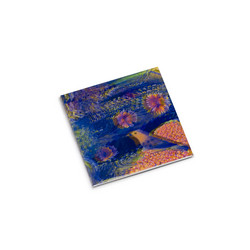
Untitled 1991 Vol. 1
The fifth chapter focuses intensively on 1991 - a transformative year for Merzbow. New sampling delay effects from Next and Digitech enabled more rhythmic, cut-up approaches, marking decisive evolution from previous decade's collage techniques. These sessions were originally produced by mixing multiple 4-channel cassettes, but for this release appear largely unedited - raw material preserved without typical layering and processing.
New mixes were created using a TASCAM MFP-01 to replace the unav…

Travelling
Travelling suggests movement through sonic landscapes - each passage a journey into unknown territory. The title invites traveler's mindset: openness to unfamiliar sounds, acceptance of discomfort, willingness to be transformed by the journey. This 1990 recording captures Merzbow testing new configurations in preparation for the decade's major works.
The traveler enters foreign territories without expectation of comfort or comprehension. Similarly, listeners approaching Travelling should abandon…

Crash For Hi-Fi Tapes
A wry commentary on audiophile culture, Crash For Hi-Fi Tapes revels in deliberate destruction of fidelity. While enthusiasts pursue ever-more-transparent reproduction, Merzbow embraces distortion, clipping, and overload as expressive tools. The title suggests violence directed at the medium itself - tapes crashed, pushed beyond design parameters.
High-fidelity recording promised perfect reproduction; Akita responds by demonstrating that imperfection and degradation carry their own aesthetic val…
Cloud Cock OO Grand (Another Mix)
This alternate version of legendary Cloud Cock OO Grand material offers fresh perspective on one of Merzbow's most celebrated early-90s works. The title's surrealist absurdity reflects Akita's Dadaist engagement - language pushed beyond sense into pure sonic evocation. "Cloud," "Cock," "Grand" - the words resist logical combination, instead creating irrational poetry.
The existence of multiple mixes raises questions about identity and authenticity in experimental music. If noise is supposed to b…
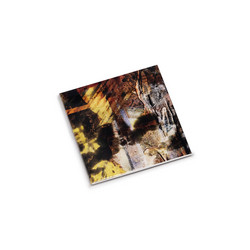
Ecobondage (Another Mix)
The provocative title merges ecological and fetishistic imagery - characteristic Merzbow juxtaposition refusing easy interpretation. "Ecobondage" suggests nature constrained by human activity while carrying erotic connotations connecting to Akita's longtime engagement with transgressive sexuality through his Pornoise label and BDSM-influenced imagery.
Ecological themes would become increasingly central following his veganism adoption, but even here, years earlier, Akita demonstrates awareness of…

Material H2
Material H2 strips Merzbow's sound to elemental components - pure sonic matter awaiting transformation. The "H2" designation evokes hydrogen, the simplest element, suggesting return to first principles. Just as hydrogen combines to form more complex molecules, these basic sonic elements combine to create Merzbow's elaborate constructions.
Akita works with sonic substance like a sculptor with clay - shaping, texturing, building structures from raw matter. The "Material" series title acknowledges …
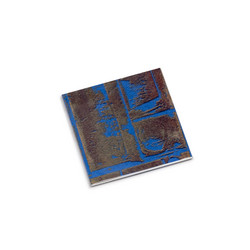
Crocidura Dsi Nezumi
The title references the Japanese white-toothed shrew (Crocidura dsinezumi) - an early indication of animal themes that would become prominent following Akita's veganism adoption in 2003. The shrew exists in perpetual urgency, eating constantly or dying - a quality resonating with Merzbow's relentless intensity. These tiny creatures live at the edge of metabolic possibility, their hearts beating impossibly fast.
This prescient animal reference - predating Akita's formal commitment to animal righ…
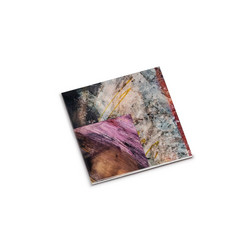
Environmental Percussion Vol. 2
Continuing the percussive investigations begun in Volume 1, this installment pushes further into the liminal space between rhythm and chaos. Where the first volume established the conceptual framework, Environmental Percussion Vol. 2 explores its implications more deeply, finding increasingly complex rhythmic patterns within seemingly formless noise.
Together, the Environmental Percussion volumes document Merzbow's engagement with rhythm and pulse - dimensions often overlooked in discussions of …
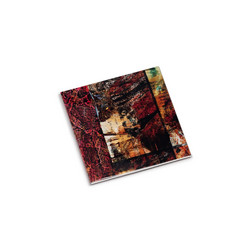
Environmental Percussion Vol. 1
The "Environmental Percussion" series finds Akita exploring the rhythmic potential of non-traditional sound sources - objects, spaces, and acoustic phenomena pressed into service as percussion instruments. These experiments anticipate the more overtly beat-driven work of later periods while connecting to musique concrète traditions of treating all sounds as potential musical material.
Akita transforms everyday acoustic phenomena into percussion, finding rhythm where conventional listeners percei…