
Reissues
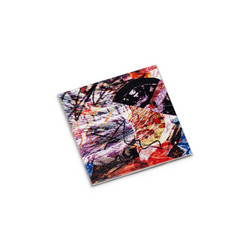
De-Soundtrack
De-Soundtrack inverts conventional film music logic - rather than supporting images, these sounds demand visualization, compelling listeners to construct hallucinatory cinema in their minds. The "De-" prefix suggests removal, negation, reversal: this is soundtrack stripped of its images, music freed from visual servitude. Akita's late-80s work often evokes dramatic scenarios: chase sequences, explosions, moments of suspended tension.
The listener becomes director, editor, and audience simultaneo…
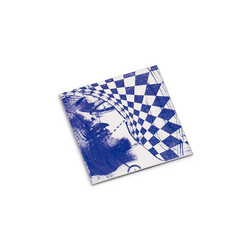
Jinrinkinmouzui
Jinrinkinmouzui exemplifies the dense, layered constructions that defined Merzbow's late-80s output - recordings so thick with information they seem to exceed human perception. Each listen reveals new details buried within the sonic sediment: textures, events, and micro-structures rewarding patient engagement. The title itself resists easy translation, its syllables suggesting bodily processes and material transformations.
The recordings operate on multiple temporal scales simultaneously - micro…
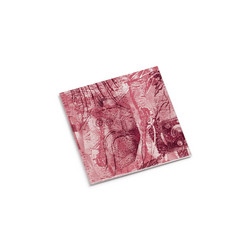
Batztoutai Mix
The "Batztoutai" period represents a significant evolution in Merzbow's methodology - a turning point that would influence countless subsequent artists. Moving beyond the collage-heavy approach of earlier years, Akita began incorporating record scratching and sampling in more rhythmic, cut-up configurations. This shift was partly technological: new sampling equipment enabled unprecedented manipulation precision.
The late 1980s saw Akita acquiring increasingly sophisticated tools - samplers, effe…

Antimony
Named for the toxic metallic element with a long history in alchemy and medicine, Antimony embodies the corrosive, transformative power of Merzbow's mid-80s work. Throughout history, antimony has occupied a liminal position: useful in small doses, deadly in excess, capable of both healing and harm. Medieval alchemists prized it for its ability to purify gold, while Renaissance physicians employed it despite knowing its dangers.
Akita's noise operates similarly - like alchemists seeking to transf…

Agni Hotra (2nd Mix)
Agni Hotra" references the ancient Vedic fire ritual - one of Hinduism's oldest ceremonies, performed at sunrise and sunset to purify the environment and establish cosmic harmony. By invoking this concept, Akita suggests that Merzbow's harsh frequencies might serve purifying rather than merely destructive functions. The fire ritual burns away impurities, leaving clarity and renewal in its wake.
This alternate mix reveals how studio decisions shape ostensibly "raw" noise - the fire ritual metapho…

Age Of 369
By the mid-1980s, Merzbow had established itself as a defining voice in the emerging global noise underground. International cassette-trading networks carried Akita's recordings across borders, connecting Tokyo's experimental scene with kindred spirits worldwide. Age Of 369 documents this confident period - the numerological title invites esoteric interpretation, as 369 appears in various mystical traditions, most notably Nikola Tesla's theories about universal patterns.
The number 369 held part…
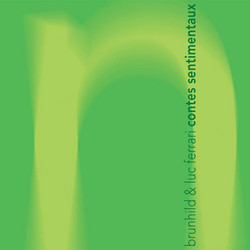
Contes Sentimentaux
Eleven radio tales made by Brunhild and Luc Ferrari for Südwestfunk in 1990-1994: the couple talk in French and German around Luc's pieces, turning memories, anecdotes and music into new radiophonic works. 4CD box.

Le Sang Et La Rose
The French subtitle - "Blood and Rose" - evokes the surrealist and decadent literary traditions that have long influenced Masami Akita's aesthetic sensibility. From its inception, Merzbow has drawn on European avant-garde movements: Dadaism, Surrealism, Fluxus, and the transgressive literature of Georges Bataille and the Marquis de Sade. The lotus flower itself carries rich symbolic weight across Asian traditions - representing purity emerging from muddy waters, spiritual enlightenment rising fr…

Musick For Screen
The evocative title hints at Merzbow's engagement with visual media- Masami Akita has consistently maintained interests in film, photography, and visual art alongside his sonic practice. Musick For Screen suggests soundtracks for films that may never have existed - or perhaps for films of the mind. The archaic spelling "Musick" connects this work to pre-modern musical traditions, when sound, magic, and spiritual practice remained intertwined.
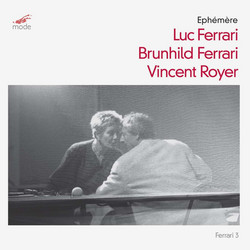
Éphémère (CD)
Vincent Royer plays viola with tape and electronics in three Ferrari-related works: Luc Ferrari's Ephémère (1974) in a 2012 version by Brunhild Ferrari, her Le piano englouti, and Royer's improvisation on Ferrari's Ce qu'a vu le Cers.

Expanded Musik 2
Expanded Musik (2) reflects the duo's growing ambition to push beyond conventional noise parameters into territories where sound becomes sculptural, architectural, almost tactile. The title references Gene Youngblood's concept of "Expanded Cinema"—the idea that film could transcend traditional constraints to become a total sensory experience. By extension, Akita's "Expanded Musik" suggests sound freed from musical conventions, operating on purely phenomenological terms.

Yantra Material Action
Yantra Material Action stands among the most significant documents of early Merzbow. Recorded during 1981—a watershed year that also produced Collection 010—this album captures the project at a moment of intense creative ferment. The "Yantra" concept, drawn from Hindu and Buddhist traditions, refers to geometric diagrams used as meditation aids. By invoking this concept, Akita signals his early interest in spiritual and philosophical frameworks as organizing principles for sonic chaos.
This reco…

Collection: 010
The "Collection" series holds legendary status in Merzbow historiography—a cornerstone of the project's early catalog that established methodologies Akita would refine for decades. Between 1981 and 1982, he released ten volumes on his own Lowest Music & Arts label, each created by mixing multiple tapes into dense sonic collages. Collection 010 represents the culmination of this early methodology.
Originally recorded on October 26, 1981—the same fertile year that produced Yantra Material Action—t…

Telecom Live
Another excavation from Merzbow's formative period, Telecom Live preserves the raw energy and experimental spirit that characterized the duo's earliest explorations. The "Telecom" title suggests communication systems—appropriate for recordings that document Akita and Mizutani developing their own sonic language, transmitting signals across the boundaries of conventional music.
The recordings crackle with the excitement of artists discovering a new sonic language in real-time. Unlike later Merzbo…
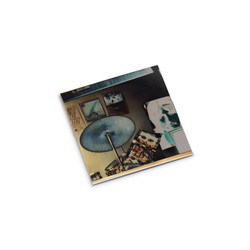
Cretin Merz
Cretin Merz emerges from the earliest Merzbow sessions, when the project existed as an improvisational duo exploring the boundaries between music, noise, and performance art. The provocative title—merging "cretin" with "Merz" (the Dadaist concept developed by Kurt Schwitters)—announces the irreverent spirit that has characterized Akita's work from its inception.
These recordings, previously recycled as raw material for other releases, appear here in their original unedited form for the first tim…
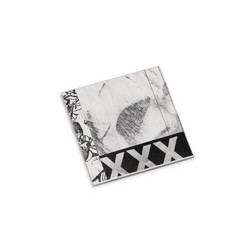
Por#1&2 Vol. 2
The second chapter documents Merzbow's genesis—the formative years when Masami Akita and Kiyoshi Mizutani were developing the sonic language that would reshape global underground music.
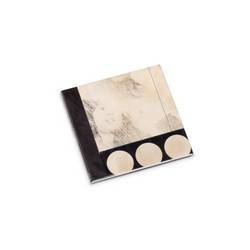
Por#1&2 Vol. 1
The first chapter documents Merzbow's genesis—the formative years when Masami Akita and Kiyoshi Mizutani were developing the sonic language that would reshape global underground music.
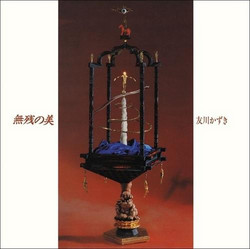
Muzan No Bi (Beauty Without Mercy)
40th Anniversary Release!! Recorded in 1985 and released by Polydor in 1986, Kazuki Tomokawa's seminal 1980s album “Beauty Without Mercy”. To mark its 40th anniversary, this long-awaited reissue arrives on vinyl! This defining album of the 80s features tracks including “He Was There” about his friend Takohachirō, “Beauty in Tragedy” about his brother's death, “God Was Crying in the Well”, and his signature song “Waltz”. Nakahara Chūya penned the lyrics for “A Fairy Tale” and “Boy”. Numerous dist…
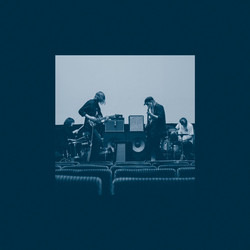
Eternal Music Society
*300 copies limited edition* Eternal Music Society is a Swedish supergroup emerging from the fertile experimental scene of Göteborg and Malmö, centered around the visionary Discreet label. The band unites members from some of the most distinctive underground projects of the past decade, Enhet För Fri Musik (Discreet), Skeppet, Frihet, Neutral, Leda (Knotwilg), and Kröppskanedom (Morc) to name a few. Each known for pushing the boundaries of free music, drone, and avant-rock.
Together, they form a…
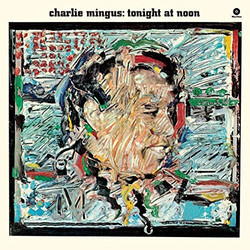
Tonight At Noon
"Tonight At Noon" compiles tracks from two earlier recordings sessions: one session from 1957 with Jimmy Knepper on the trombone, the drummer Dannie Richmond, Saxophone player Shafi Hadi and the pianist Wade Legge, which were released on the album "The Clown" (Atlantic 1260). The second session took place in 1961 with Booker Ervin and Roland Kirk on the saxophone, Knepper, the bassist Doug Watkins, Mingus at the piano and Richmond on the drums, and was released on "Oh Yeah" (Atlantic SD 1377).
T…
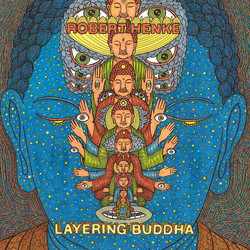
Layering Buddha
For AI-41 Astral Industries presents a vinyl reissue of Robert Henke’s multifaceted concept album ‘Layering Buddha’. An erudite masterclass on sampling and composition, ‘Layering Buddha’ encapsulates the material process of metamorphosis and a well of nascent, ever-present potentialities. This new edition comes remastered by Henke himself.
Originally released in 2006, ‘Layering Buddha’ began with a curious encounter with the ‘Buddha Machine’ - a pocket-sized, battery powered playback device tha…
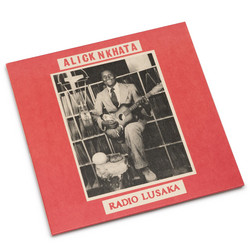
Radio Lusaka
Includes deluxe 12-page booklet with unpublished photos, lyrics, translations, and liner notes written by NTS radio host Jamal Khadar. Before there was a Zambia, there was Alick Nkhata. Born in Kasama in 1922 to a Tonga father and Bemba mother, Nkhata would become the voice of a nation that did not yet exist - and help sing it into being. Vocalist, guitarist, bandleader, broadcaster, archivist, freedom fighter: he moved between these roles as effortlessly as he moved between lonesome country sli…
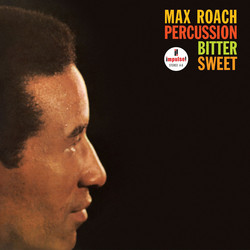
Percussion Bitter Sweet
August 1961. Van Gelder Studio, Englewood Cliffs, New Jersey. Max Roach - the man who reinvented jazz drumming alongside Charlie Parker and Dizzy Gillespie in the 1940s, the co-leader with Clifford Brown of the definitive hard bop quintet until tragedy struck in 1956 - enters the studio with something to say. Something that cannot wait. Something that demands a new language.
The year before, Roach had recorded We Insist! Freedom Now Suite for Candid Records, a searing response to the Civil Right…
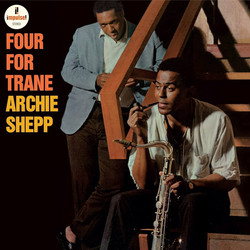
Four For Trane
August 10, 1964. Van Gelder Studio, Englewood Cliffs, New Jersey. A young saxophonist from Philadelphia enters the studio to record his first album as a leader for Impulse! Records. At his side, as co-producer, stands the man to whom he owes everything: John Coltrane. Archie Shepp was twenty-seven years old when Four For Trane was recorded - an age that in 1964 jazz still meant being an emerging voice. Born in Fort Lauderdale but raised in Philadelphia - the same Philadelphia as Coltrane, eleven…
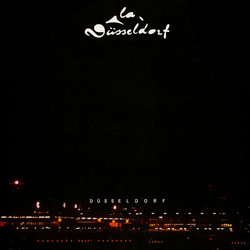
LA Dusseldorf
Gatefold cover, blue vinyl. Düsseldorf. Düsseldorf. Düsseldorf. Düsseldorf. The mantra repeats for thirteen minutes, hypnotic as a highway journey, ecstatic as a stadium anthem. It's 1976 and Klaus Dinger - the drummer who invented the motorik beat, the man who alongside Michael Rother created Neu! and redefined the very concept of rhythm in rock - has a new machine to drive. He's christened it with the name of his hometown on the Rhine. And the first record he makes with this new formation is c…

The Second Coming
180 Gram Vinyl - Limited Edition Lenticular Cover. Silver-Tongued Colored Viny. California, 1972. While Anton LaVey held court at his Black House in San Francisco, issuing pronouncements and recording The Satanic Mass for a growing cult of devotees, a more obscure ceremony was being committed to tape somewhere in Los Angeles. No press releases. No magazine profiles. No celebrity weddings or baptisms for the cameras. Just a man named Robert Jamra, an unknown organist, and a series of rituals so b…
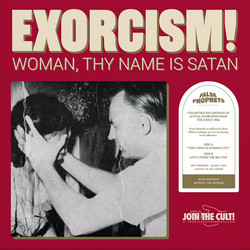
Exorcism! Woman, Thy Name Is Satan
2nd Edition. Black vinyl. Somewhere in America, early 1960s. A tape recorder captures what no congregation was meant to hear. The voices of women possessed - or believed to be possessed - struggling against demons real or imagined while priests perform the ancient rite of exorcism. Screams. Prayers. Commands in Latin. The grinding friction between the sacred and the profane, committed to magnetic tape and then buried for decades.
Before The Exorcist made demonic possession a cultural phenomenon,…
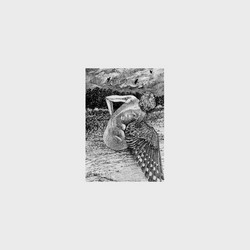
For the Birds
Edition of 250. Deluxe edition + insert. For eighteen months, between 1984 and 1985, Patrick Lysaght played flute, strings, and percussion inside the Rainforest Birdhouse at the Rio Grande Zoo in Albuquerque, New Mexico. His audience and collaborators: 150 birds of 42 species.
The result is one of the earliest and most radical documents of interspecies improvisation. Predating the current wave of sound ecology by decades, For The Birds sits comfortably alongside the biophonic research of Bernie …
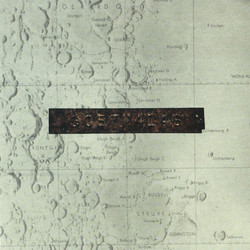
Things We Lost In The Fire
On Things We Lost in the Fire, Low stretch slowcore until it glows, binding hushed harmonies, sudden noise and fragile lullabies into one prolonged reckoning with love, faith and mortality. What began as an “anti-rock” trio here becomes a devastatingly direct pop group, without sacrificing an inch of quiet intensity.
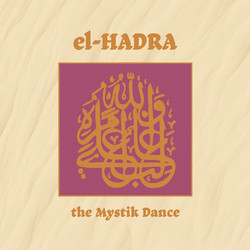
El-Hadra - The Mystik Dance
*100 copies limited edition* El-Hadra is more than ambient music - it’s a sonic ritual that leaves a permanent mark on the soul. This album has transformed the way many perceive sound, becoming a personal landmark for countless listeners. Originally recorded in the late 1980s, it fuses elements of Sufi trance with hypnotic tabla rhythms, meditative zither, and deep ambient drone to form a truly transcendent experience. Listening to El-Hadra is like entering a space beyond time - a journey one ca…
Sold Out
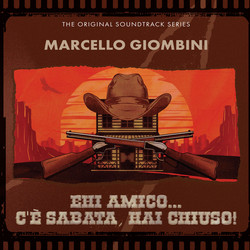
Sabata - Ehi amico... c'è Sabata, Hai Chiuso! (LP, Transparent Red + CD)
Limited edition numbered to 500 copies. Transparent red vinyl format / 180 grams + CD. Lee Van Cleef had already defined the archetype twice over: once as the cold-eyed Angel Eyes in The Good, the Bad and the Ugly, once as the elegant Colonel Mortimer in For a Few Dollars More. But Gianfranco Parolini saw something else in that gaunt, reptilian face. Not a villain. Not a gentleman bounty hunter. Something slipperier. A con man with a rifle. A blackmailer in black. A gunfighter who'd rather outsm…
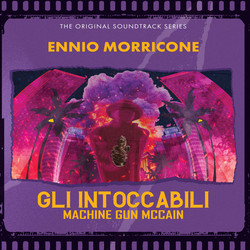
Gli Intoccabili
2xLP Transparent Magenta 180gr + CD | Limited Numbered Edition of 500 copies. April 1969. On screens across Europe, a film opens that looks like an American crime picture but feels like something else entirely. Giuliano Montaldo, the Italian director who would later give us Sacco e Vanzetti and Giordano Bruno, has crossed the Atlantic to shoot a heist thriller in San Francisco and Las Vegas. The cast reads like an inventory of New Hollywood royalty: John Cassavetes, fresh from Rosemary's Baby, a…
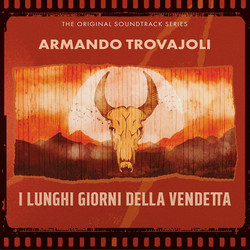
I Lunghi Giorni Della Vendetta
Armando Trovajoli was not a western man. By 1967 he had two decades of work behind him - jazz, sophisticated comedies, orchestral scores for Vittorio De Sica. He knew how to make audiences laugh, how to make them cry, how to write for big bands and strings alike. But dust, horses, guns? That was Morricone territory, Bacalov, Nicolai. Yet when Florestano Vancini called him to score his only foray into the genre, Trovajoli responded with something no one expected.
I Lunghi Giorni Della Vendetta do…
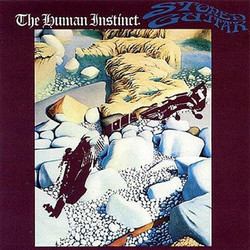
Stoned Guitar
Recorded in the spring of 1970, this legendary album shows why many consider The Human Instinct to be the finest psychedelic rock band ever to emerge from New Zealand. Led by drummer-vocalist Maurice Greer and featuring the guitar pyrotechnics of the legendary Billy Te Kahika, Stoned Guitar has long been established as a classic hard psychedelic rock album.
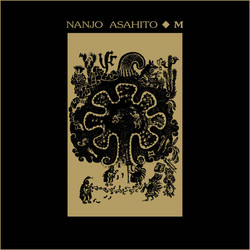
M
A collection of intimate songs traced from the spectral darkness by Asahito Nanjo, the notorious leader of some of Japan’s key underground psychedelic units (High Rise, Mainliner, Musica Transonic, Toho Sara, etc) Recorded between 1980 and 1988 and previously only available in a cassette micro-edition released by his La Musica Records label in the mid-1990’s. Remastered and available for the first time on vinyl and digital. “A compilation of secret projects recorded over a period of twenty years…

Selections from the Mozaik Archive
*250 copies limited edition* Mozaik began its journey under the oppressive aura of the 1980 coup in Turkey, singing songs of freedom from all around the world, eventually stepping into the more controversial areas of jazz, progressive rock and fusion with their own compositions. Whilst the post-coup music scene was dominated by apolitical pop music, Mozaik produced sophisticated lyrics and composed songs in unusual structures.
With a dynamic crew and a rotating list of songwriters in the band, M…
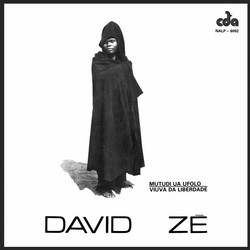
Mutudi Ua Ufolo/Viuva Da Liberdade
"Mutudi Ua Ufolo/Viuva Da Liberdade" is one of the most important records ever made in Angola. An hypnotic masterpiece that blends Central African rhythms and Semba with soulful guitar and percussion. Originally released on CDA with Conjunto Merengue, it captured Zé at his creative peak. Sung in Portuguese and local dialects, the songs balance rhythmic elegance with deep political weight, tracing ties to Afro-Brazilian and Latin American musical traditions.
After Zé’s assassination in 1977, the …
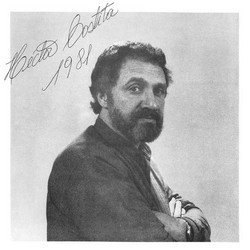
1981
Superb and underrated early '80s jazz fusion album showcasing authentic Brazilian grooves by one of the country's most famous flutists and saxophonists. Originally released by Som Da Gente, 1981 is a grooving fusion of baião rhythms, jazz funk, and Brazilian soul. Featuring his Gallery club band, Costita soars on sax, flute, and clarone, backed by Roberto Bomilcar and Dirceu. Recorded with full creative freedom, this rare LP captures the free spirit of Brazil's '70s & '80s jazz scene. Hector Cos…
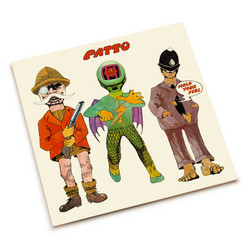
Hold Your Fire
Rising from the ashes of Timebox, Patto delivered a bold fusion of progressive rock, jazz, and blues powered by Mike Patto's soulful vocals and Ollie Halsall's stunning guitar work. Their second album, Hold Your Fire (1971), originally on Vertigo, is a true gem of early '70s progressive rock. Comes with original artwork in gimmix gatefold sleeve. Remastered by Prof. Stoned. Includes insert with detailed liner notes by Ralph Heibutzki and rare photos/memorabilia.

Patto
Formed in London in 1970, Patto evolved from the legendary Timebox and were known for their unique mix of progressive rock, jazz, blues, and their exceptional musicianship. Featuring Mike Patto, Ollie Halsall (one of rock's great "guitarist's guitarists"), Clive Griffiths, and John Halsey, this is their 1970 debut for Vertigo. Comes in original gatefold artwork in textured sleeve. Features stereo mixes and mastering by Prof. Stoned. Includes insert with detailed liner notes by Ralph Heibutzki an…