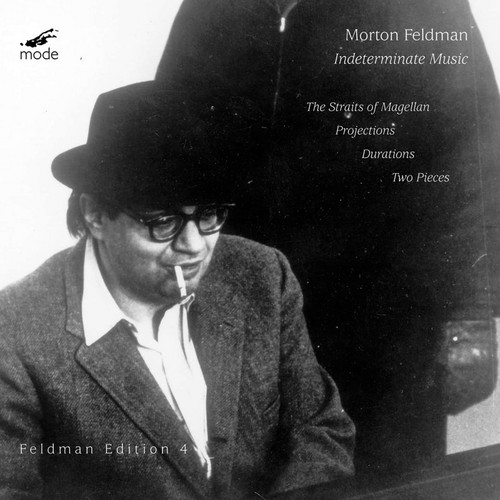
Indeterminate music
A unique collection of Feldman's 'indeterminate' works; incorporating new types of notation (including graph scores) and involving a considerable degree of indeterminacy in regard to pitch, dynamics, etc. This is the first time the complete Durations and Projections series have appeared on a single disc. It is a rewarding experience to hear the Durations and Projections played together, imparting a sense of Feldman's mastery of instrumentation and timbre while savoring the metamorphosis of its s…
Michael von Biel
An astonishing CD with the usual RZ deluxe touch by the well-known fluxus related cellist. Michael von Biel (born 30 June 1939 in Hamburg) a German composer, cellist, and graphic artist. Von Biel studied piano, theory, and composition in Toronto (1956–57), Vienna (1958–60), New York (1960, with Morton Feldman, amongst others), London (1960, with Cornelius Cardew), and Cologne (with Karlheinz Stockhausen). From 1961 to 1963 he attended the Darmstadt Vacation Courses for New Music. In 1964 he rec…
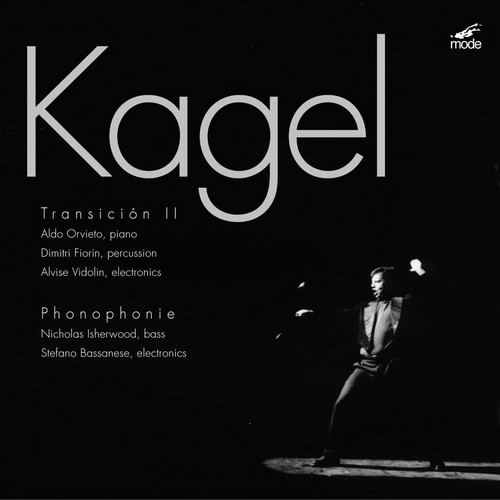
Transición II. Phonophonie
This disc collects two early, forward looking works by Argentine born Mauricio Kagel, now living in Germany. Both works are constructed in such a way so that no two performances can ever be alike. Transición II was an early exploration of what "live electronics" are now being used to achieve. The score is in individual pages which can be placed in any order by the performers. It works on three levels. LIVE: The pianist performs on the keyboard while a percussionist performs inside the pian…
Pianopera I & II
2004 release **
"Another joint production by Edition Wandelweiser and Radio Bremen testifies to the originality of the Japanese composer Makiko Nishikaze. Her idiosyncratic diptych pianopera l & II (2002), with its unpredictably alternating sound structures, follows no discernible logic, yet its musical structure never seems arbitrary, so that the music, despite the great aesthetic distance, certainly seems related to Luigi Archetti's CD discussed at the beginning. It is the varied penetration i…
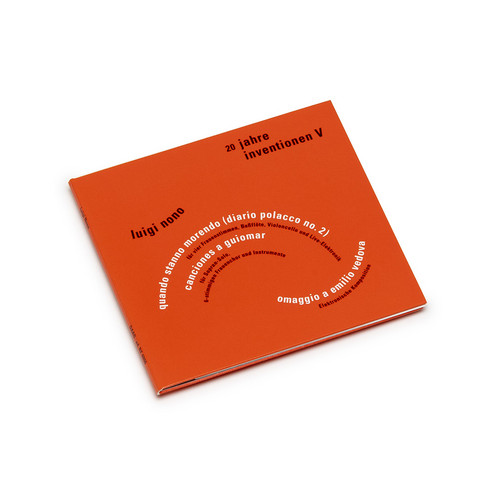
20 Jahre Inventionen V - live electronic
The live electronics that Nono worked with for the first time in the early 1980?s at the Freiburg Experimental Studio also serves the musical displacement: the music moves away from clear spatial and timbral assignations. Due to electronic processing, the sonic characteristics of both instruments, bass flute and cello, can hardly be recognized. Tones and gestures are lengthened into seeming infinity and move in space
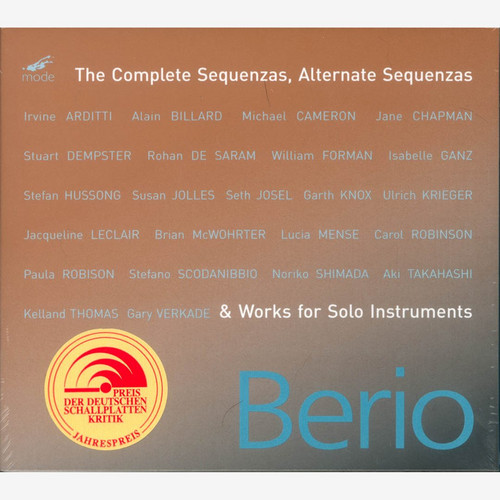
The Complete Sequenzas, Alternate Sequenzas
As a body of works for solo instruments, the series of Sequenzas written by Luciano Berio between 1958 and 2002 is without equal in the literature of late 20th century music. Though not the first recording of the complete Sequenzas - others have appeared on Deutsche Grammophone and Naxos - this four CD set, over ten years in the making, presents for the first time the final Sequenza XIV performed by its dedicatee, cellist Rohan De Saram, and the arrangement bassist Stefano Scodanibbio made…
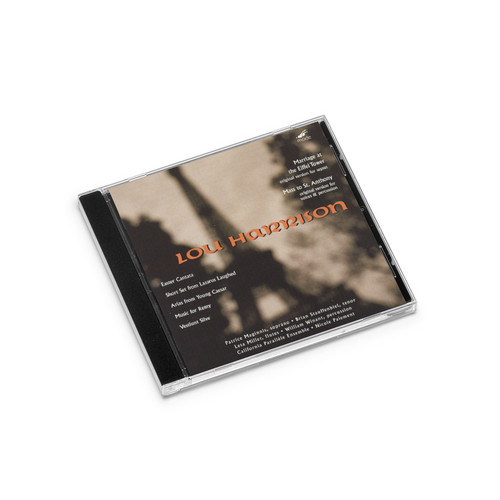
Works 1939 - 2000
We were saddened to learn of the passing of Lou Harrison as this disc just entered production. It is perhaps fitting that it provides an overview of Harrison's work, from 2 movements of a mass composed in 1939 to 3 vocal arias composed in 2000. Mass to St. Anthony was begun when Hitler invaded Poland; a mass for voices and percussion expressing both outrage and hope. Harrison completed the Gregorian-like chant for the entire 5 movements of the work, but only finished the percussion accomp…
Einfalt. stille.
Austrian composer in a work for flute, viola, percussion, and voice aboout the inner state and flow we perceive when listening and concentrating on a piece of music.
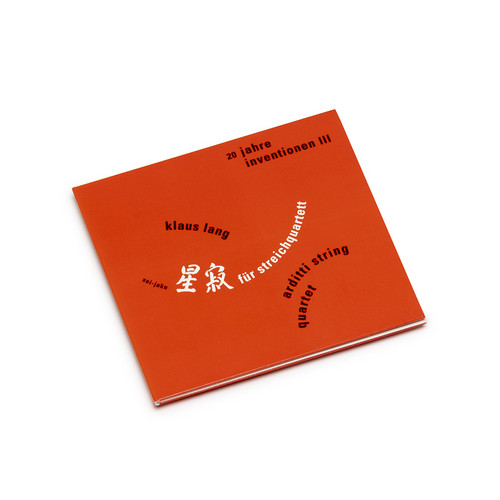
Sei-jaku für Streichquartett
Documentation '20 Years Inventionen', CD III. The string quartet 'sei-jaku' by German composer Klaus Lang, documented on this CD, was performed on 6/30/2002 in the Großer Sendesaal of the SFB Berlin by the Arditti String Quartet during the festival Inventionen 2002.
Trauermusiken
Two compositions by the young Austrian composer/organist Klaus Lang who currently lives in Berlin/Germany. Der Wind und das Meer for viola (Barbara Konrad, viola) The Sea of Despair for String Quartet (Amras Streichquartett)
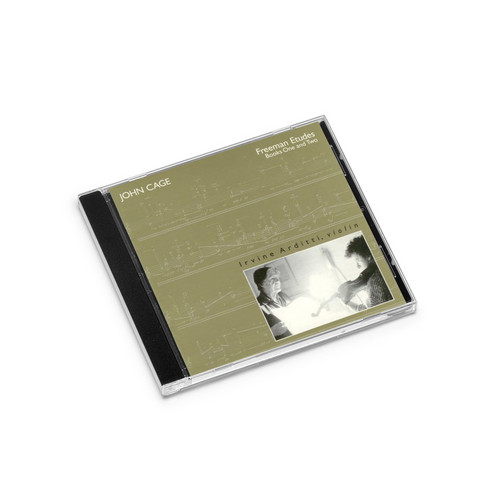
Freeman Etudes, Books One and Two
John Cage's Freeman Etudes are the modern equivalent of Paganini's virtuoso solo violin etudes. Each etude is completely notated down to the smallest detail, and the composer states "...are as intentionally as difficult as I can make them...So I think that this music, which is almost impossible, gives an instance of the practicality of the impossible." The detail and complexity of these etudes give them a unique and unusual spot in Cage's oeuvre.
These first two books (there are 8 etudes p…
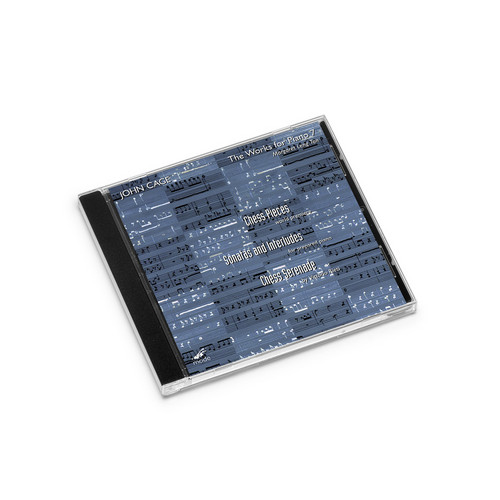
The Piano Works 7 - Chess Serenade
A major discovery and first recording of an important Cage piece from 1944. In 1944, John Cage was invited to participate in “The Imagery of Chess” exhibition at the Julien Levy Gallery in New York City. The artists included Calder, Noguchi, Motherwell, Breton, Duchamp, Ernst, Man Ray, Tanning and other leading surrealists.Cage contributed a painting entitled “Chess Pieces”. It was purchased at the show and went into a private collection. For decades it was deemed lost and was (almost) forgotten…
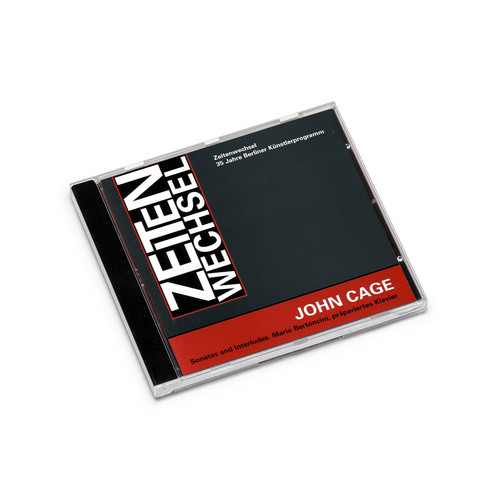
Sonatas and Interludes
This landmark recording of John Cage’s prepared piano works performed by Mario Bertoncini was recorded back in December 1991. The sonatas are divided into four groups, each divided by the less overtly structured, rhapsodic interlude pieces. Bertoncini sensitivity to the displaced sonic characteristics of the piano is remarkable and suggests a rigorous dedication to Cage’s work.
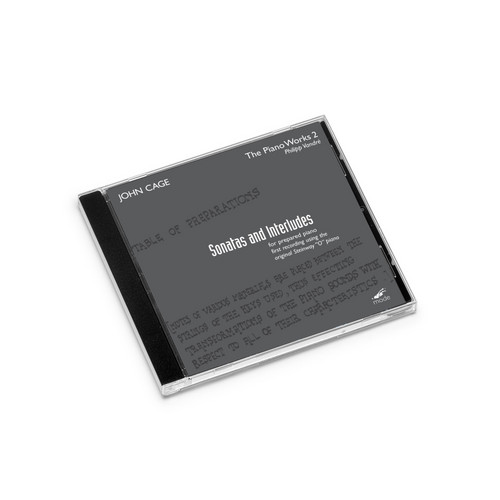
The Piano Works 2 - Sonatas And Interludes For Prepared Piano
The Sonatas and Interludes enjoy a well deserved reputation as a masterwork and as a repertoire piece. But this is not a masterwork in the sense of other keyboard masterworks: Bach's Goldbergs, Beethoven's Diabelli Variations, Ives' Concord Sonata.
John Cage's masterwork is quite different -- a big piece with a quiet voice. The prepared piano operates entirely by muting: by attaching objects to the strings of the piano. Cage alters their sounds in various ways, turning the piano into a percussio…
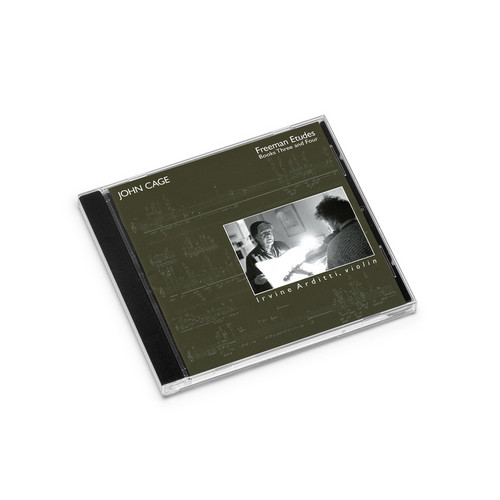
Freeman Etudes, Books Three And Four
This CD presents the first recording of the second half of John Cage's Freeman Etudes for violin. Those familiar with the previously-released volume of this work will already know what to expect: the bewildering complexity of the Etudes and the astonishing virtuosity of Irvine Arditti's performance.
Convinced that the later, more complex etudes were unplayable, Cage abandoned work on the Freeman Etudes in 1980, after completing the first sixteen and beginning the eighteenth Etude. It wasn't…
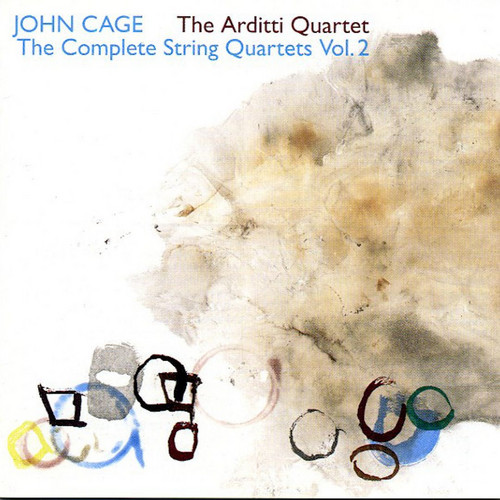
Complete string quartets, volume 2
The Complete String Quartets Vol. 2. “String Quartet in Four Parts” (1949-50). “Four” (1989). The Arditti Quartet. The second volume of Cage's String Quartets features his first and last works in this repertoire. The well known and exquisitely beautiful, serenely Zen-like early quartet receives its first new recording in 16 years. It is a pivotal work in Cage's oeuvre, showing the composer's transition between the rhytmically complex percussion works before it and the chance works of the 1950s. …
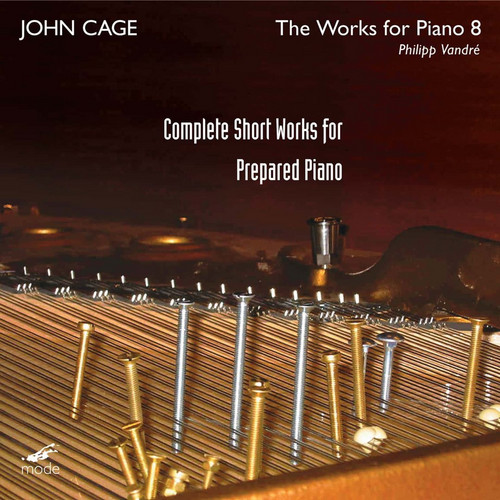
Complete Short Works for Prepared Piano
The complete short prepared piano works collected on 2-CDs. John Cage's works for prepared piano expose his earliest experimentations in finding new and exotic sounds.Brief and attractive, they are among his most accessible work. This release marks the first time all of his short works for prepared piano have been made available in one set. All the prepared piano works are included aside from the magnum opus, Sonatas and Interludes. Pianist Philipp Vandr´e has recorded Sonatas and Interludes for…
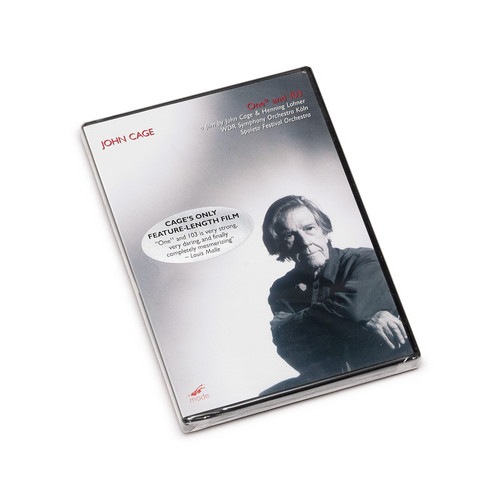
One11 And 103
A performance for camera person and light, One11 is a film without subject. There is light but no persons, no things, no ideas about repetition and variation? Chance operations where used with respect to the shots, in black and white. The light environment was designed and programmed by John Cage and Andrew Culver, as was the editing of the film.The orchestral work 103 musically accompanies One11. Like the film, 103 is 90-minutes long, divided into seventeen parts - its density varies from solos…
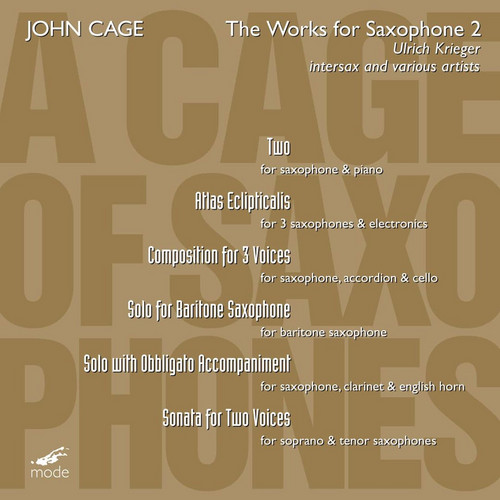
A Cage of Saxophones 2
The 35th volume in Mode's Complete John Cage Edition is also the second release in Ulrich Krieger's series of interpretations for solo saxophone and saxophones with other instruments. Ensemble pieces of comparatively large dimensions were gathered on A Cage of Saxophones: Vol. 1, so this follow-up disc presents pieces for smaller combinations and solos, though with no less originality or charm. Even though most of these works were composed for open instrumentation, saxophones suit Cage's …
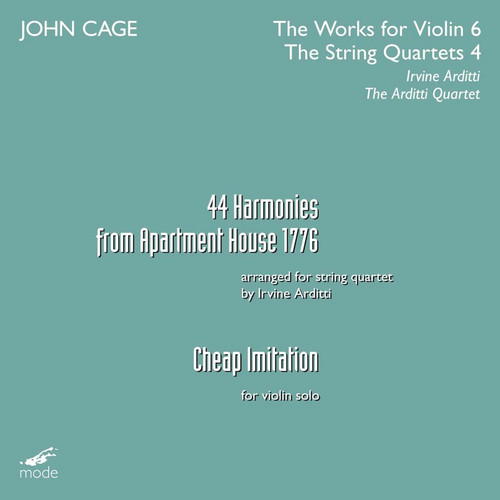
44 Harmonies from Apartment House 1776
Cage's "44 Harmonies" were originally written to form part of the sprawling bicentennial commission "Apartment House 1776", and take as their starting point late 18th century anthems and hymn tunes by William Billings, Jacob French, Andrew Law, James Lyon and the wonderfully-named Supply Belcher. Cage's compositional - or rather decompositional - method was to remove certain tones and extend others, and as James Pritchett points out in the (excellent as always for Mode) liners, he was delighted …