We use cookies on our website to provide you with the best experience. Most of these are essential and already present.
We do require your explicit consent to save your cart and browsing history between visits. Read about cookies we use here.
Your cart and preferences will not be saved if you leave the site.

Alvin Lucier

Alvin Lucier (1931 to 2021) was an American composer of experimental music and sound installations, born in Nashua, New Hampshire. His work explores acoustic phenomena and the way we hear them: the resonance of rooms, the beating between closely tuned pitches, the passage of sound through wire, water and brass. A member of the Sonic Arts Union with Robert Ashley, David Behrman and Gordon Mumma, he taught at Wesleyan University for four decades. Two pieces made him known far beyond new music circles.
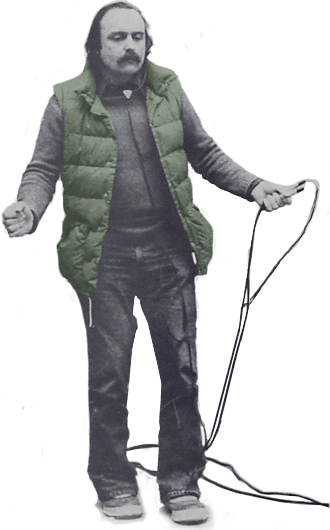
Alvin Lucier (1931 to 2021) was an American composer of experimental music and sound installations, born in Nashua, New Hampshire. His work explores acoustic phenomena and the way we hear them: the resonance of rooms, the beating between closely tuned pitches, the passage of sound through wire, water and brass. A member of the Sonic Arts Union with Robert Ashley, David Behrman and Gordon Mumma, he taught at Wesleyan University for four decades. Two pieces made him known far beyond new music circles.
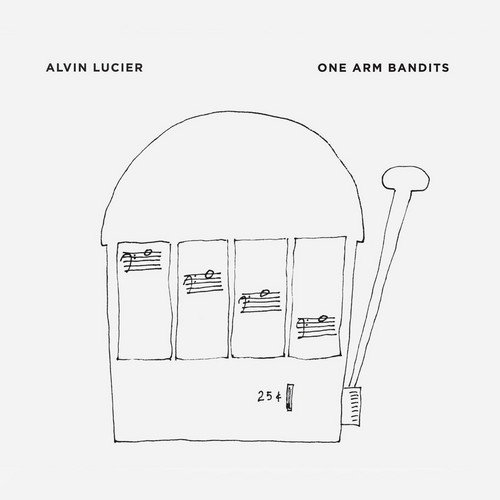
One Arm Bandits
"One Arm Bandits is an hour-long piece in four parts, scored for four cellists. The cellists play only open strings, thus using only their right arms, never fingering the strings with the left hand. Recorded in Alvin Lucier's dining room, this work features cellists Tyler J. Borden, Laura Cetilia, Charles Curtis and Judith Hamann. Lucier oversaw and produced the recording, and approved the final takes. One Arm Bandits was an important project for Alvin Lucier. The idea for the piece goes back to…
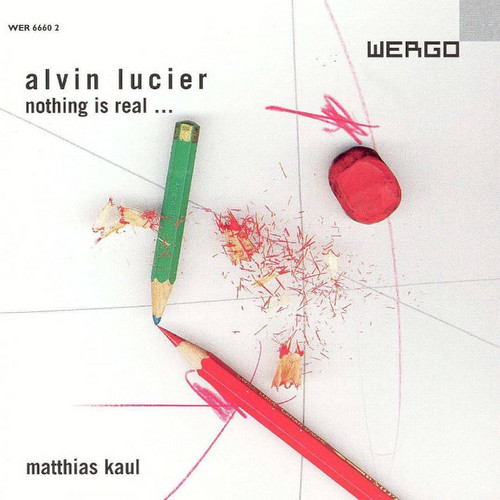
Nothing Is Real ...
CD with 20-page booklet. Recorded March 2001, Hessischer Rundfunk, Frankfurt. "Time and again I find myself having to pare away any musical gestures in a work in order to uncover the true idea in a piece." Alvin Lucier said this about his own practice of stripping composition back to its acoustic logic - removing the performer's ego, the expressive gesture, the narrative arc, until only the phenomenon remains. What is left, in each of the five works gathered here, is resonance: sympathetic vibra…
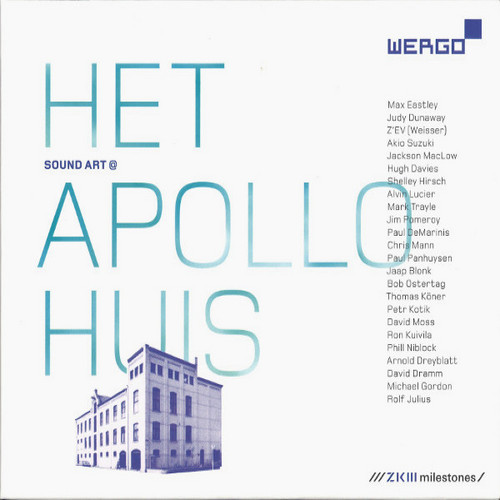
Sound Art at Het Apollohuis
*2022 stock* This amazing double CD Box presents excerpts from previously unpublished concert and performance recordings of important artists who appeared during the lifespan of Het Apollohuis - between 1980 and 1997, artists presented a panoply of exhibitions, installations, performances, and concerts, and engaged in lively debate on art theory, at Het Apollohuis in Eindhoven, the Netherlands. Under the direction of founders Paul and Hélène Panhuysen, the building became an important center for…
Earle Brown Contemporary Sound Series Vol. 5
Three discs, three distinct worlds - each one a landmark. Vol. 5 of Earle Brown's Contemporary Sound Series may be the most dramatically varied installment in the entire programme, arcing from the handmade electronic circuitry of four American mavericks to one of the great piano sonatas of the 20th century, and closing with the golden tone of the most celebrated flutist of the post-war avant-garde. The first disc is Electric Sound, the only album the Sonic Arts Union ever released as a group. Or…
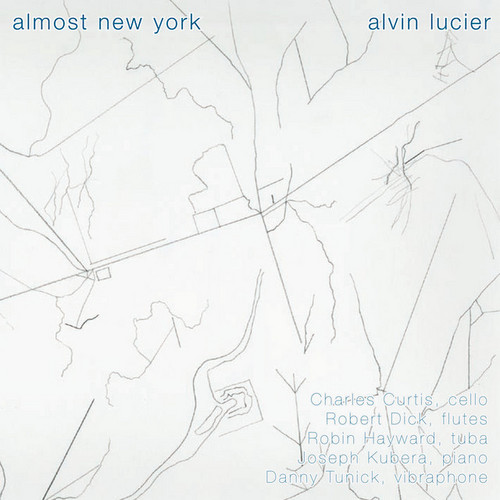
Almost New York
"Twonings" with Charles Curtis, cello and Joseph Kubera, piano. "Almost New York" with Robert Dick, flutes. "Broken Line" with Robert Dick, flute, Danny Tunick, vibraphone, and Joseph Kubera, piano. "Coda Variations" with Robin Hayward, tuba. Pogus is extremely delighted to release this 2 CD set of recordings of works by Alvin Lucier. He is one of the key experimental artists of the 20th and 21st centuries, and is one of my favorite composers. A unique and individual artist: No one sounds quite …
Vespers and Other Early Works
Alvin Lucier is best known for his pioneering work in the mid-sixties in the exploration of sonic environments, particularly sounds that we would never perceive under ordinary circumstances. Vespers and Other Early Works restores to the catalog several of his key works from that time. In Vespers (1969) performers with Sondols (sonar-dolphin), hand-held pulse wave oscillators, explore the acoustic characteristics of given indoor or outdoor spaces by monitoring the echoes of the pulse waves off th…
Apollo And Marsyas: Het Apollohuis 1980-1997 An Anthology Of New
A lucky restock of one of the most important archival releases in experimental music: "Apollo and Marsyas: Het Apollohuis 1980-1997, an Anthology of New Music Concepts" - a stunning double CD documenting nearly two decades of radical sound art and experimental performance. Het Apollohuis in Eindhoven was one of Europe's most vital centers for avant-garde music, and this anthology captures the extraordinary scope of programming curated by Paul Panhuysen from 1980 through 1997. From over 500 perfo…
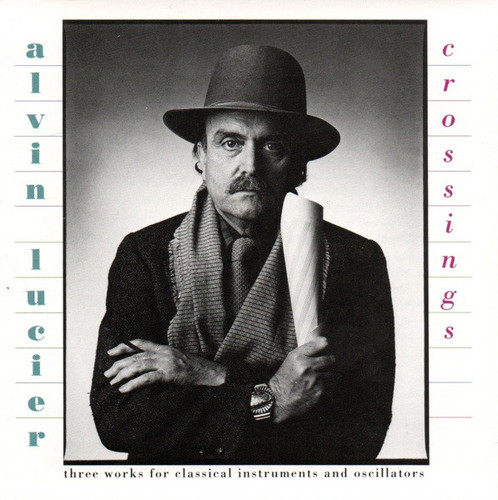
Crossings
Three works investigating interference between instruments and oscillators. When closely tuned tones sound together, their oscillations create audible beats that spin through space. Lucier reveals acoustic phenomena through minimal means
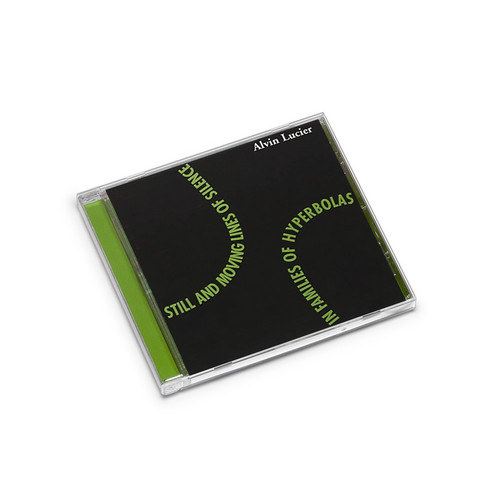
Still and moving lines of silence in families of hyperbolas
Monumental reissue of Lucier's four-part investigation into acoustic interference. Musicians sustain tones against fixed sine waves, creating audible beat patterns that reveal the hidden architecture of sound itself
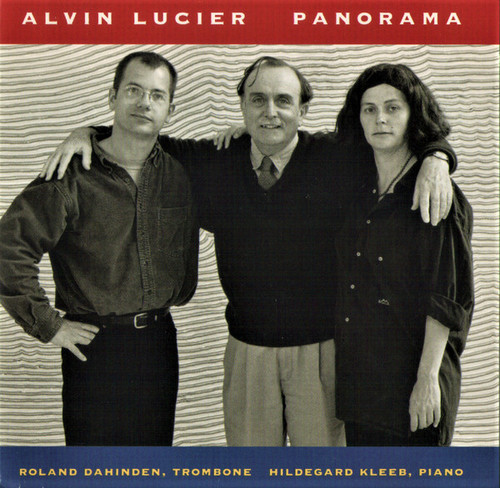
Panorama
A gorgeous recording of works for trombone and piano, transformed by Lucier's electronics and oscillators. Wind Shadows (1994), Music for Piano with One or More Snare Drums (1990), and Panorama (1993)--were written for the Swiss musicians Roland Dahinden and Hildegard Kleeb, who play them on this CD. Also included: Music for Piano with Amplified Sonorous Vessels (1990), which was originally written for Margaret Leng Tan."Wind Shadows" (1994)Two pure wave oscillators are tuned a tenth of a cycle …
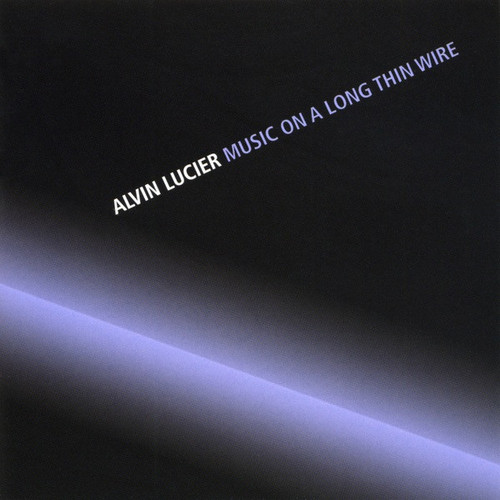
Music on a long thin wire
A fifty-foot wire runs through the poles of a large magnet and is driven by an oscillator, with microphones at either end. Set going at four different frequencies, it produces not the low drone you would expect but a shifting set of chords.
1