Merzbow
Masami Akita has been the name most people reach for when they say "Japanese noise". He started Merzbow in Tokyo in 1979, taking the name from Kurt Schwitters's Merzbau, the collage that slowly filled his house, and treated sound the same way: layers of feedback, tape, junk metal and later laptops piled up until only density is left. Since then he has released well over four hundred records, including the fifty CD Merzbox of 2000.


Untitled 1991 Vol. 2
Volume 2. The fifth chapter focuses intensively on 1991 - a transformative year for Merzbow. New sampling delay effects from Next and Digitech enabled more rhythmic, cut-up approaches, marking decisive evolution from previous decade's collage techniq…

Phillo Jazz
Phillo Jazz winks at improvisational traditions Akita has always both honored and subverted. Jazz's spontaneity finds its noise equivalent - though the relationship is more conceptual than sonic. Where jazz improvisation operates within harmonic fram…

Bluedelic+
The playful title suggests psychedelic blue - chromatic synesthesia rendered in noise. Akita has always been interested in the intersection of sound and color, titles throughout his catalog evoking visual qualities. These 1992 sessions capture Merzbo…

Untitled 1991 Vol. 1
The fifth chapter focuses intensively on 1991 - a transformative year for Merzbow. New sampling delay effects from Next and Digitech enabled more rhythmic, cut-up approaches, marking decisive evolution from previous decade's collage techniques. These…

Travelling
Travelling suggests movement through sonic landscapes - each passage a journey into unknown territory. The title invites traveler's mindset: openness to unfamiliar sounds, acceptance of discomfort, willingness to be transformed by the journey. This 1…

Crash For Hi-Fi Tapes
A wry commentary on audiophile culture, Crash For Hi-Fi Tapes revels in deliberate destruction of fidelity. While enthusiasts pursue ever-more-transparent reproduction, Merzbow embraces distortion, clipping, and overload as expressive tools. The titl…
Cloud Cock OO Grand (Another Mix)
This alternate version of legendary Cloud Cock OO Grand material offers fresh perspective on one of Merzbow's most celebrated early-90s works. The title's surrealist absurdity reflects Akita's Dadaist engagement - language pushed beyond sense into pu…

Ecobondage (Another Mix)
The provocative title merges ecological and fetishistic imagery - characteristic Merzbow juxtaposition refusing easy interpretation. "Ecobondage" suggests nature constrained by human activity while carrying erotic connotations connecting to Akita's l…

Material H2
Material H2 strips Merzbow's sound to elemental components - pure sonic matter awaiting transformation. The "H2" designation evokes hydrogen, the simplest element, suggesting return to first principles. Just as hydrogen combines to form more complex …

Crocidura Dsi Nezumi
The title references the Japanese white-toothed shrew (Crocidura dsinezumi) - an early indication of animal themes that would become prominent following Akita's veganism adoption in 2003. The shrew exists in perpetual urgency, eating constantly or dy…

Environmental Percussion Vol. 2
Continuing the percussive investigations begun in Volume 1, this installment pushes further into the liminal space between rhythm and chaos. Where the first volume established the conceptual framework, Environmental Percussion Vol. 2 explores its imp…

Environmental Percussion Vol. 1
The "Environmental Percussion" series finds Akita exploring the rhythmic potential of non-traditional sound sources - objects, spaces, and acoustic phenomena pressed into service as percussion instruments. These experiments anticipate the more overtl…

De-Soundtrack
De-Soundtrack inverts conventional film music logic - rather than supporting images, these sounds demand visualization, compelling listeners to construct hallucinatory cinema in their minds. The "De-" prefix suggests removal, negation, reversal: this…

Jinrinkinmouzui
Jinrinkinmouzui exemplifies the dense, layered constructions that defined Merzbow's late-80s output - recordings so thick with information they seem to exceed human perception. Each listen reveals new details buried within the sonic sediment: texture…

Batztoutai Mix
The "Batztoutai" period represents a significant evolution in Merzbow's methodology - a turning point that would influence countless subsequent artists. Moving beyond the collage-heavy approach of earlier years, Akita began incorporating record scrat…

Antimony
Named for the toxic metallic element with a long history in alchemy and medicine, Antimony embodies the corrosive, transformative power of Merzbow's mid-80s work. Throughout history, antimony has occupied a liminal position: useful in small doses, de…

Agni Hotra (2nd Mix)
Agni Hotra" references the ancient Vedic fire ritual - one of Hinduism's oldest ceremonies, performed at sunrise and sunset to purify the environment and establish cosmic harmony. By invoking this concept, Akita suggests that Merzbow's harsh frequenc…

Age Of 369
By the mid-1980s, Merzbow had established itself as a defining voice in the emerging global noise underground. International cassette-trading networks carried Akita's recordings across borders, connecting Tokyo's experimental scene with kindred spiri…

Le Sang Et La Rose
The French subtitle - "Blood and Rose" - evokes the surrealist and decadent literary traditions that have long influenced Masami Akita's aesthetic sensibility. From its inception, Merzbow has drawn on European avant-garde movements: Dadaism, Surreali…

Musick For Screen
The evocative title hints at Merzbow's engagement with visual media- Masami Akita has consistently maintained interests in film, photography, and visual art alongside his sonic practice. Musick For Screen suggests soundtracks for films that may never…

Expanded Musik 2
Expanded Musik (2) reflects the duo's growing ambition to push beyond conventional noise parameters into territories where sound becomes sculptural, architectural, almost tactile. The title references Gene Youngblood's concept of "Expanded Cinema"—th…

Yantra Material Action
Yantra Material Action stands among the most significant documents of early Merzbow. Recorded during 1981—a watershed year that also produced Collection 010—this album captures the project at a moment of intense creative ferment. The "Yantra" concept…

Collection: 010
The "Collection" series holds legendary status in Merzbow historiography—a cornerstone of the project's early catalog that established methodologies Akita would refine for decades. Between 1981 and 1982, he released ten volumes on his own Lowest Musi…

Telecom Live
Another excavation from Merzbow's formative period, Telecom Live preserves the raw energy and experimental spirit that characterized the duo's earliest explorations. The "Telecom" title suggests communication systems—appropriate for recordings that d…

Cretin Merz
Cretin Merz emerges from the earliest Merzbow sessions, when the project existed as an improvisational duo exploring the boundaries between music, noise, and performance art. The provocative title—merging "cretin" with "Merz" (the Dadaist concept dev…

Por#1&2 Vol. 2
The second chapter documents Merzbow's genesis—the formative years when Masami Akita and Kiyoshi Mizutani were developing the sonic language that would reshape global underground music.

Por#1&2 Vol. 1
The first chapter documents Merzbow's genesis—the formative years when Masami Akita and Kiyoshi Mizutani were developing the sonic language that would reshape global underground music.

雀色 2 Sparrow Color 2
The companion volume to Sparrow Color 1 continues Merzbow's exploration of keyboard-driven synthesis, pushing the methodology established in its predecessor into bolder territory. Where the first installment introduced the parameters of this unusual …

Kaerutope
The title Kaerutope fuses "kaeru" (frog) with "biotope," creating a neologism meaning "frog habitat"—a characteristically poetic gesture from an artist whose veganism and animal rights advocacy have profoundly shaped his work since 2003. For Masami A…

雀色 1 Sparrow Color 1
Sparrow Color 1 marks a significant departure in Merzbow's methodology - a rare instance of Masami Akita returning to keyboard-controlled synthesis after decades of predominantly laptop-based and analog noise production. Here, he employs a carefully …

Indigo Dada
Celebrating four decades of uncompromising sonic exploration, Merzbow marks the 40th anniversary of his artistic journey with Indigo Dada—released simultaneously with its companion piece Kaerutope in 2019. This twin release strategy itself constitute…

Kaoscitron
Masami Akita, the relentless force behind Merzbow, delivers a crystalline distillation of his sonic universe with Kaoscitron. This album represents a remarkable synthesis—a deliberate reset that channels decades of noise experimentation into somethin…

Nocturnal Rainforest
The first collaboration between Japanese noise titan Masami Akita, aka Merzbow, iconic Brazilian drummer and producer Iggor Cavalera and forward-thinking Italian guitarist and sound designer Eraldo Bernocchi, 'Nocturnal Rainforest' terraforms a sonic…

Akashaplexia
Akashaplexia is the culmination of Merzbow and John Wiese’s decades-long partnership, offering over three hours of new music across four CDs. Recorded together in Tokyo, the album balances Merzbow’s psychedelic intensity and Wiese’s meticulous sonic …

Paulownia
Paulownia by Merzbow is a 2025 full-length statement comprising two lengthy compositions that fuse intense electronic manipulation with Merzbow’s enduring fascination for natural phenomena. Across both pieces, the album merges organic inspiration and…

Ideal Secret Circle (11CD Bundle)
Mega tip! *80 copies limited edition bundle.* Ideal Secret Circle It's an 11 CD limited-edition set of albums packaged in digi packs designed by Philip Marshall. The series is curated by Joachim Nordwall.1. Sins For Beginners - We Don’T Need No Music…

Animal Magnetism
*Limited Edition of 299 copies. Black vinyl * Masami Akita has been making noise since before most people understood noise could be made on purpose, and Animal Magnetism is what happens when forty years of sonic terrorism suddenly decides to sit you …
Live At Knitting Factory
*2025 stock* The live recording from New York’s Knitting Factory captures noise guru Merzbow in transcendent form, serving the audience with subtle hypnotic pulses to go with rich textures of raw to low frequencies. The immersive baths of sonic clust…
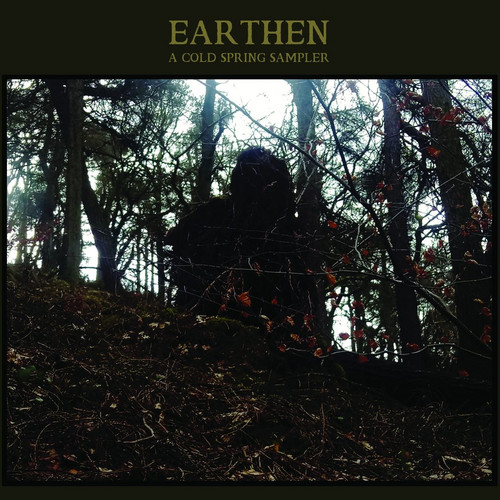
Earthen - A Cold Spring Sampler
With two exclusive tracks by Coil and Psychic TV.
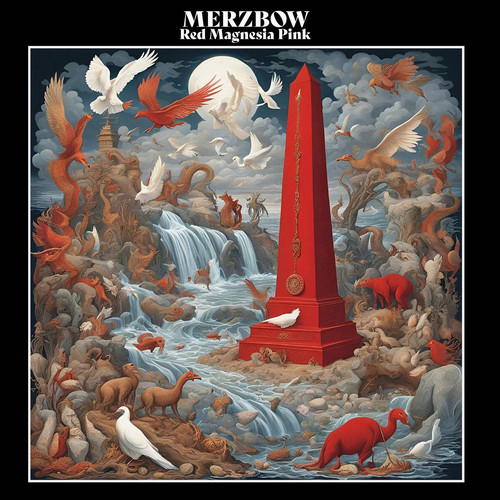
Red Magnesia Pink
First released by Extreme in the massive, infamous 'Merzbox,' "Red Magnesia Pink" is extracted and recontextualized as a standalone release for the first time. Recorded in 1995, "Red Magnesia Pink" sees Merzbow in peak form. A psychedelic whirlwind o…