Merzbow
Masami Akita has been the name most people reach for when they say "Japanese noise". He started Merzbow in Tokyo in 1979, taking the name from Kurt Schwitters's Merzbau, the collage that slowly filled his house, and treated sound the same way: layers of feedback, tape, junk metal and later laptops piled up until only density is left. Since then he has released well over four hundred records, including the fifty CD Merzbox of 2000.


Untitled 1991 Vol. 2
Volume 2. The fifth chapter focuses intensively on 1991 - a transformative year for Merzbow. New sampling delay effects from Next and Digitech enabled more rhythmic, cut-up approaches, marking decisive evolution from previous decade's collage techniques. These sessions were originally produced by mixing multiple 4-channel cassettes, but for this release appear largely unedited - raw material preserved without typical layering and processing.
New mixes were created using a TASCAM MFP-01 to replac…

Phillo Jazz
Phillo Jazz winks at improvisational traditions Akita has always both honored and subverted. Jazz's spontaneity finds its noise equivalent - though the relationship is more conceptual than sonic. Where jazz improvisation operates within harmonic frameworks, Merzbow improvisation occurs in texture and density, shape and duration.
The "Phillo" prefix remains mysterious - perhaps referencing philosophy, philology, or simply playing with sounds. These recordings demonstrate fluidity at its best: not…

Bluedelic+
The playful title suggests psychedelic blue - chromatic synesthesia rendered in noise. Akita has always been interested in the intersection of sound and color, titles throughout his catalog evoking visual qualities. These 1992 sessions capture Merzbow in experimental mode, the psychedelic reference connecting to traditions of consciousness expansion through intense sensory experience.
Blue carries particular associations: melancholy, depth, the infinite sky and sea. "Bluedelic" suggests psychede…

Untitled 1991 Vol. 1
The fifth chapter focuses intensively on 1991 - a transformative year for Merzbow. New sampling delay effects from Next and Digitech enabled more rhythmic, cut-up approaches, marking decisive evolution from previous decade's collage techniques. These sessions were originally produced by mixing multiple 4-channel cassettes, but for this release appear largely unedited - raw material preserved without typical layering and processing.
New mixes were created using a TASCAM MFP-01 to replace the unav…

Travelling
Travelling suggests movement through sonic landscapes - each passage a journey into unknown territory. The title invites traveler's mindset: openness to unfamiliar sounds, acceptance of discomfort, willingness to be transformed by the journey. This 1990 recording captures Merzbow testing new configurations in preparation for the decade's major works.
The traveler enters foreign territories without expectation of comfort or comprehension. Similarly, listeners approaching Travelling should abandon…

Crash For Hi-Fi Tapes
A wry commentary on audiophile culture, Crash For Hi-Fi Tapes revels in deliberate destruction of fidelity. While enthusiasts pursue ever-more-transparent reproduction, Merzbow embraces distortion, clipping, and overload as expressive tools. The title suggests violence directed at the medium itself - tapes crashed, pushed beyond design parameters.
High-fidelity recording promised perfect reproduction; Akita responds by demonstrating that imperfection and degradation carry their own aesthetic val…
Cloud Cock OO Grand (Another Mix)
This alternate version of legendary Cloud Cock OO Grand material offers fresh perspective on one of Merzbow's most celebrated early-90s works. The title's surrealist absurdity reflects Akita's Dadaist engagement - language pushed beyond sense into pure sonic evocation. "Cloud," "Cock," "Grand" - the words resist logical combination, instead creating irrational poetry.
The existence of multiple mixes raises questions about identity and authenticity in experimental music. If noise is supposed to b…

Ecobondage (Another Mix)
The provocative title merges ecological and fetishistic imagery - characteristic Merzbow juxtaposition refusing easy interpretation. "Ecobondage" suggests nature constrained by human activity while carrying erotic connotations connecting to Akita's longtime engagement with transgressive sexuality through his Pornoise label and BDSM-influenced imagery.
Ecological themes would become increasingly central following his veganism adoption, but even here, years earlier, Akita demonstrates awareness of…

Material H2
Material H2 strips Merzbow's sound to elemental components - pure sonic matter awaiting transformation. The "H2" designation evokes hydrogen, the simplest element, suggesting return to first principles. Just as hydrogen combines to form more complex molecules, these basic sonic elements combine to create Merzbow's elaborate constructions.
Akita works with sonic substance like a sculptor with clay - shaping, texturing, building structures from raw matter. The "Material" series title acknowledges …

Crocidura Dsi Nezumi
The title references the Japanese white-toothed shrew (Crocidura dsinezumi) - an early indication of animal themes that would become prominent following Akita's veganism adoption in 2003. The shrew exists in perpetual urgency, eating constantly or dying - a quality resonating with Merzbow's relentless intensity. These tiny creatures live at the edge of metabolic possibility, their hearts beating impossibly fast.
This prescient animal reference - predating Akita's formal commitment to animal righ…

Environmental Percussion Vol. 2
Continuing the percussive investigations begun in Volume 1, this installment pushes further into the liminal space between rhythm and chaos. Where the first volume established the conceptual framework, Environmental Percussion Vol. 2 explores its implications more deeply, finding increasingly complex rhythmic patterns within seemingly formless noise.
Together, the Environmental Percussion volumes document Merzbow's engagement with rhythm and pulse - dimensions often overlooked in discussions of …

Environmental Percussion Vol. 1
The "Environmental Percussion" series finds Akita exploring the rhythmic potential of non-traditional sound sources - objects, spaces, and acoustic phenomena pressed into service as percussion instruments. These experiments anticipate the more overtly beat-driven work of later periods while connecting to musique concrète traditions of treating all sounds as potential musical material.
Akita transforms everyday acoustic phenomena into percussion, finding rhythm where conventional listeners percei…

De-Soundtrack
De-Soundtrack inverts conventional film music logic - rather than supporting images, these sounds demand visualization, compelling listeners to construct hallucinatory cinema in their minds. The "De-" prefix suggests removal, negation, reversal: this is soundtrack stripped of its images, music freed from visual servitude. Akita's late-80s work often evokes dramatic scenarios: chase sequences, explosions, moments of suspended tension.
The listener becomes director, editor, and audience simultaneo…

Jinrinkinmouzui
Jinrinkinmouzui exemplifies the dense, layered constructions that defined Merzbow's late-80s output - recordings so thick with information they seem to exceed human perception. Each listen reveals new details buried within the sonic sediment: textures, events, and micro-structures rewarding patient engagement. The title itself resists easy translation, its syllables suggesting bodily processes and material transformations.
The recordings operate on multiple temporal scales simultaneously - micro…

Batztoutai Mix
The "Batztoutai" period represents a significant evolution in Merzbow's methodology - a turning point that would influence countless subsequent artists. Moving beyond the collage-heavy approach of earlier years, Akita began incorporating record scratching and sampling in more rhythmic, cut-up configurations. This shift was partly technological: new sampling equipment enabled unprecedented manipulation precision.
The late 1980s saw Akita acquiring increasingly sophisticated tools - samplers, effe…

Antimony
Named for the toxic metallic element with a long history in alchemy and medicine, Antimony embodies the corrosive, transformative power of Merzbow's mid-80s work. Throughout history, antimony has occupied a liminal position: useful in small doses, deadly in excess, capable of both healing and harm. Medieval alchemists prized it for its ability to purify gold, while Renaissance physicians employed it despite knowing its dangers.
Akita's noise operates similarly - like alchemists seeking to transf…

Agni Hotra (2nd Mix)
Agni Hotra" references the ancient Vedic fire ritual - one of Hinduism's oldest ceremonies, performed at sunrise and sunset to purify the environment and establish cosmic harmony. By invoking this concept, Akita suggests that Merzbow's harsh frequencies might serve purifying rather than merely destructive functions. The fire ritual burns away impurities, leaving clarity and renewal in its wake.
This alternate mix reveals how studio decisions shape ostensibly "raw" noise - the fire ritual metapho…

Age Of 369
By the mid-1980s, Merzbow had established itself as a defining voice in the emerging global noise underground. International cassette-trading networks carried Akita's recordings across borders, connecting Tokyo's experimental scene with kindred spirits worldwide. Age Of 369 documents this confident period - the numerological title invites esoteric interpretation, as 369 appears in various mystical traditions, most notably Nikola Tesla's theories about universal patterns.
The number 369 held part…

Le Sang Et La Rose
The French subtitle - "Blood and Rose" - evokes the surrealist and decadent literary traditions that have long influenced Masami Akita's aesthetic sensibility. From its inception, Merzbow has drawn on European avant-garde movements: Dadaism, Surrealism, Fluxus, and the transgressive literature of Georges Bataille and the Marquis de Sade. The lotus flower itself carries rich symbolic weight across Asian traditions - representing purity emerging from muddy waters, spiritual enlightenment rising fr…

Musick For Screen
The evocative title hints at Merzbow's engagement with visual media- Masami Akita has consistently maintained interests in film, photography, and visual art alongside his sonic practice. Musick For Screen suggests soundtracks for films that may never have existed - or perhaps for films of the mind. The archaic spelling "Musick" connects this work to pre-modern musical traditions, when sound, magic, and spiritual practice remained intertwined.

Expanded Musik 2
Expanded Musik (2) reflects the duo's growing ambition to push beyond conventional noise parameters into territories where sound becomes sculptural, architectural, almost tactile. The title references Gene Youngblood's concept of "Expanded Cinema"—the idea that film could transcend traditional constraints to become a total sensory experience. By extension, Akita's "Expanded Musik" suggests sound freed from musical conventions, operating on purely phenomenological terms.

Yantra Material Action
Yantra Material Action stands among the most significant documents of early Merzbow. Recorded during 1981—a watershed year that also produced Collection 010—this album captures the project at a moment of intense creative ferment. The "Yantra" concept, drawn from Hindu and Buddhist traditions, refers to geometric diagrams used as meditation aids. By invoking this concept, Akita signals his early interest in spiritual and philosophical frameworks as organizing principles for sonic chaos.
This reco…

Collection: 010
The "Collection" series holds legendary status in Merzbow historiography—a cornerstone of the project's early catalog that established methodologies Akita would refine for decades. Between 1981 and 1982, he released ten volumes on his own Lowest Music & Arts label, each created by mixing multiple tapes into dense sonic collages. Collection 010 represents the culmination of this early methodology.
Originally recorded on October 26, 1981—the same fertile year that produced Yantra Material Action—t…

Telecom Live
Another excavation from Merzbow's formative period, Telecom Live preserves the raw energy and experimental spirit that characterized the duo's earliest explorations. The "Telecom" title suggests communication systems—appropriate for recordings that document Akita and Mizutani developing their own sonic language, transmitting signals across the boundaries of conventional music.
The recordings crackle with the excitement of artists discovering a new sonic language in real-time. Unlike later Merzbo…

Cretin Merz
Cretin Merz emerges from the earliest Merzbow sessions, when the project existed as an improvisational duo exploring the boundaries between music, noise, and performance art. The provocative title—merging "cretin" with "Merz" (the Dadaist concept developed by Kurt Schwitters)—announces the irreverent spirit that has characterized Akita's work from its inception.
These recordings, previously recycled as raw material for other releases, appear here in their original unedited form for the first tim…

Por#1&2 Vol. 2
The second chapter documents Merzbow's genesis—the formative years when Masami Akita and Kiyoshi Mizutani were developing the sonic language that would reshape global underground music.

Por#1&2 Vol. 1
The first chapter documents Merzbow's genesis—the formative years when Masami Akita and Kiyoshi Mizutani were developing the sonic language that would reshape global underground music.

雀色 2 Sparrow Color 2
The companion volume to Sparrow Color 1 continues Merzbow's exploration of keyboard-driven synthesis, pushing the methodology established in its predecessor into bolder territory. Where the first installment introduced the parameters of this unusual approach, Sparrow Color 2 expands upon them with increased confidence and complexity, demonstrating that Masami Akita's creative restlessness knows no bounds.
The continued use of the EMS SYNTHI 'A', Moog Mother 32, and Behringer Model D creates a so…

Kaerutope
The title Kaerutope fuses "kaeru" (frog) with "biotope," creating a neologism meaning "frog habitat"—a characteristically poetic gesture from an artist whose veganism and animal rights advocacy have profoundly shaped his work since 2003. For Masami Akita, sound itself becomes ecosystem, a living environment where listeners immerse themselves in complex, interacting sonic organisms.
This album showcases Merzbow at his most texturally adventurous. Bit-crushed noise collides with sampled instrument…

雀色 1 Sparrow Color 1
Sparrow Color 1 marks a significant departure in Merzbow's methodology - a rare instance of Masami Akita returning to keyboard-controlled synthesis after decades of predominantly laptop-based and analog noise production. Here, he employs a carefully curated arsenal of classic instruments: the legendary EMS SYNTHI 'A' (beloved by everyone from Brian Eno to Pink Floyd), the Moog Mother 32, and Behringer Model D, all manipulated via a Korg Monologue keyboard controller.
This configuration yields re…

Indigo Dada
Celebrating four decades of uncompromising sonic exploration, Merzbow marks the 40th anniversary of his artistic journey with Indigo Dada—released simultaneously with its companion piece Kaerutope in 2019. This twin release strategy itself constitutes a statement: even at this career milestone, Masami Akita refuses to rest on a single achievement, instead offering parallel visions that illuminate different facets of his current practice.
The album pays homage to the centennial of Dadaism with "D…

Kaoscitron
Masami Akita, the relentless force behind Merzbow, delivers a crystalline distillation of his sonic universe with Kaoscitron. This album represents a remarkable synthesis—a deliberate reset that channels decades of noise experimentation into something startlingly fresh yet unmistakably essential. After more than four decades of relentless sonic exploration, Akita proves that reinvention remains not just possible but inevitable.
The album unfolds as a triptych of sonic approaches. Opening track "…
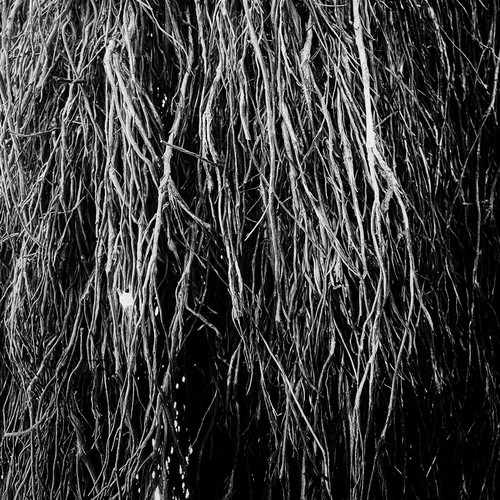
Nocturnal Rainforest
The first collaboration between Japanese noise titan Masami Akita, aka Merzbow, iconic Brazilian drummer and producer Iggor Cavalera and forward-thinking Italian guitarist and sound designer Eraldo Bernocchi, 'Nocturnal Rainforest' terraforms a sonic landscape that's almost overpoweringly dense and disorienting, but never aggressive or chaotic. It's a fully immersive experience that re-contextualizes the trio's years of work in extreme experimental music by concentrating on texture, atmosphere a…

Akashaplexia
Akashaplexia is the culmination of Merzbow and John Wiese’s decades-long partnership, offering over three hours of new music across four CDs. Recorded together in Tokyo, the album balances Merzbow’s psychedelic intensity and Wiese’s meticulous sonic architecture, presenting a vast and intricately detailed landscape of noise, improvisation, and unpredictable dynamic shifts.

Paulownia
Paulownia by Merzbow is a 2025 full-length statement comprising two lengthy compositions that fuse intense electronic manipulation with Merzbow’s enduring fascination for natural phenomena. Across both pieces, the album merges organic inspiration and harsh digital process, producing a hypnotic yet confrontational experience.

Ideal Secret Circle (11CD Bundle)
Mega tip! *80 copies limited edition bundle.* Ideal Secret Circle It's an 11 CD limited-edition set of albums packaged in digi packs designed by Philip Marshall. The series is curated by Joachim Nordwall.1. Sins For Beginners - We Don’T Need No Music (For Pita)2. Susana Santos Silva - The Fabrication Of Time 3. Merzbow - Gareki No Niwa4. Jim O’Rourke - Subtracted5. Spykes - Memoirs Of Pogonophores Vol. 2.6. A. Bolus - Evil Moisture Plays Music In The Style Of Organ Of Corti7. Eternities - Foreve…

Animal Magnetism
*Limited Edition of 299 copies. Black vinyl * Masami Akita has been making noise since before most people understood noise could be made on purpose, and Animal Magnetism is what happens when forty years of sonic terrorism suddenly decides to sit you down and explain itself without raising its voice. Originally released on CD in 2003, this double LP reissue—remastered by Lasse Marhaug and pressed on black or purple vinyl in a gatefold sleeve featuring Akita's own photographs—adds a previously unr…
Live At Knitting Factory
*2025 stock* The live recording from New York’s Knitting Factory captures noise guru Merzbow in transcendent form, serving the audience with subtle hypnotic pulses to go with rich textures of raw to low frequencies. The immersive baths of sonic clusters, sine wave swoops, rumbling low mids and glissandos jumping off of rooftops diving down to dervish dance of bit fragments offer the listener a rare glimpse of what it means to find soothing charm and calm in the chaos.
Sharing the bill and the st…
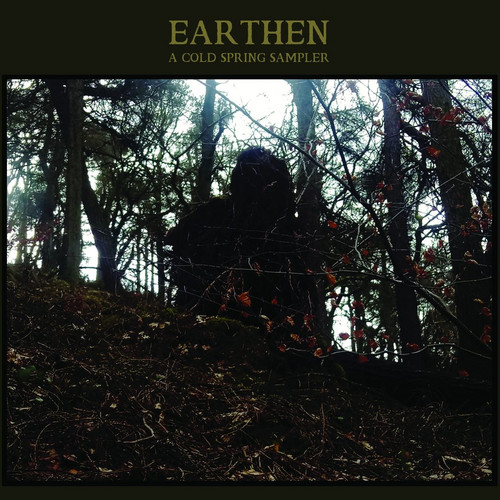
Earthen - A Cold Spring Sampler
With two exclusive tracks by Coil and Psychic TV.
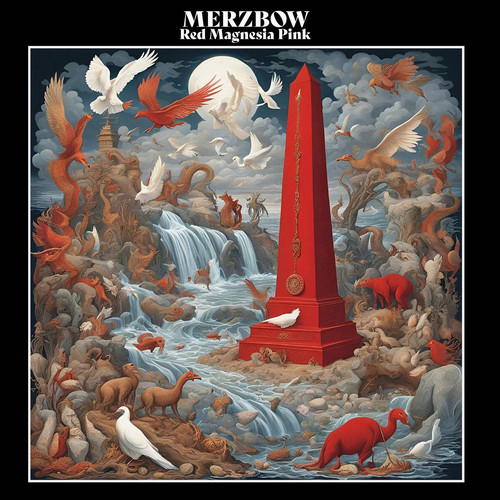
Red Magnesia Pink
First released by Extreme in the massive, infamous 'Merzbox,' "Red Magnesia Pink" is extracted and recontextualized as a standalone release for the first time. Recorded in 1995, "Red Magnesia Pink" sees Merzbow in peak form. A psychedelic whirlwind of synthetic transmissions; harsh, wet, screeching sounds that could only be produced by Masami Akita. Featuring two previously unreleased bonus tracks from the same era.