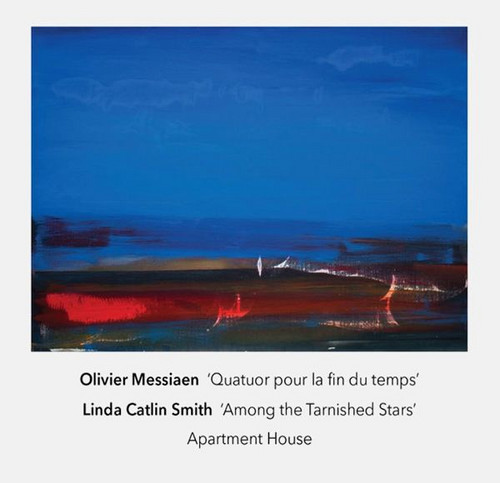
Olivier Messiaen
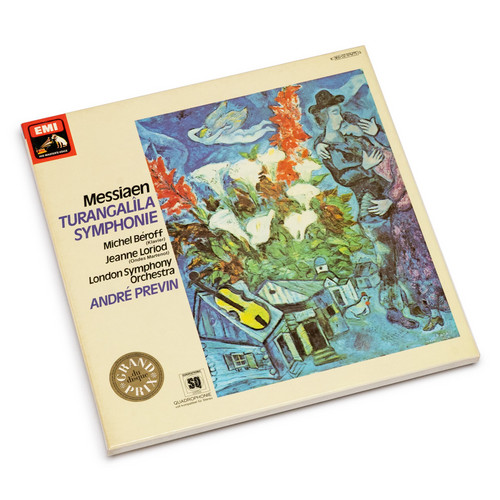
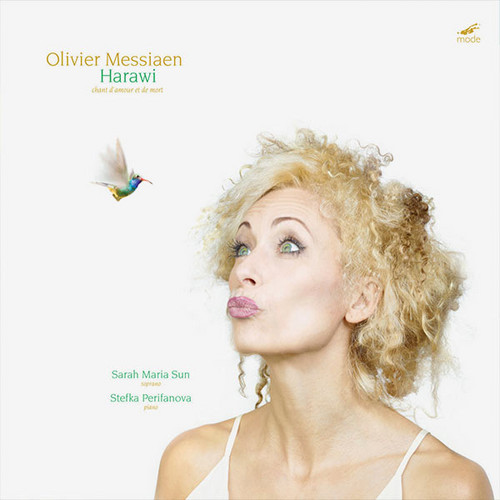
Olivier Messiaen (1908-1992) was born in Avignon and died in Clichy. He entered the Paris Conservatoire at eleven, studied with Paul Dukas, Maurice Emmanuel, Charles-Marie Widor and Marcel Dupré, and took first prize in composition in 1930. He was organist of La Trinité in Paris from 1931 until his death. He wrote the Quatuor pour la fin du temps in 1940 while a prisoner at Stalag VIII-A, and the Turangalîla-Symphonie. His pupils included Pierre Boulez and Karlheinz Stockhausen. Harawi (1945), a song cycle, is the first of his three works on the Tristan and Isolde legend.
Olivier Messiaen (1908-1992) was born in Avignon and died in Clichy. He entered the Paris Conservatoire at eleven, studied with Paul Dukas, Maurice Emmanuel, Charles-Marie Widor and Marcel Dupré, and took first prize in composition in 1930. He was organist of La Trinité in Paris from 1931 until his death. He wrote the Quatuor pour la fin du temps in 1940 while a prisoner at Stalag VIII-A, and the Turangalîla-Symphonie. His pupils included Pierre Boulez and Karlheinz Stockhausen. Harawi (1945), a song cycle, is the first of his three works on the Tristan and Isolde legend.