Back in stock
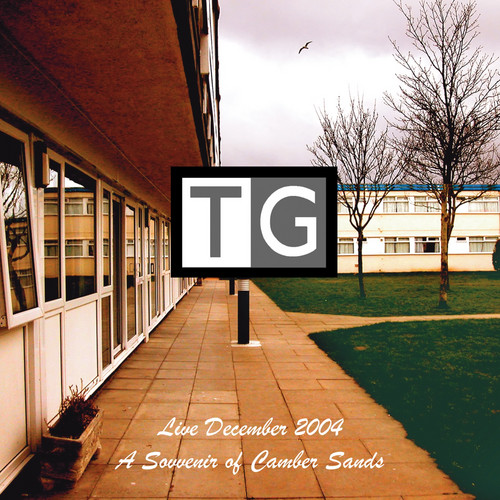
A Souvenir Of Camber Sands
Throbbing Gristle announce the next phase of their reissues series with the release of ‘Part Two: The Endless Not’ / ‘TG Now’ and ‘A Souvenir Of Camber Sands’. In 2004 Chris Carter, Peter Christopherson, Genesis P- Orridge and Cosey Fanni Tutti reformed - 23 years after their mission was originally terminated - and between 2004 and 2007 the band released 14 new studio tracks and a live album of their appearance at ATP’s Nightmare Before Christmas in Camber Sands.‘A Souvenir Of Camber Sands’ is …
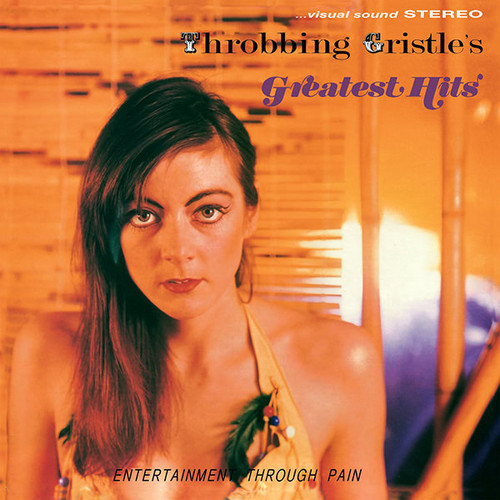
Throbbing Gristle’s Greatest Hits
2025 stock **Transparent orange vinyl + 8 page 12” booklet + download with 9 bonus tracks.** First released by Rough Trade in 1980 with the apt subtitle Entertainment Through Pain, it's an unbeatable summary of crucial material from Gen, Chris, Cosey and Sleazy's first three albums (Second Annual Report, DoA: The Third and Final Report and 20 Jazz Funk Greats), taking in the robo-fetish disco of 'Hot On The Heels of Love', the piss-streaked paranoia of 'Subhuman', the deadpan synth-pop pretensio…
Telmegiddo
Telmegiddo, recorded in February 1983 at the Mectpyo Studio, was Maurizio Bianchi's last tape decomposition before his long hiatus. Mercium reissues it on CD, remastered: two parts of about 25 minutes.
Moho Abyss
Maurizio Bianchi with P.U.M.A. (Luca Valisi and Monica Calanni Rindina): ten pieces of drones, synths, field recordings and voice titled after THX 1138, Eraserhead, Stalker and other dystopian films. CDr, 100 copies.
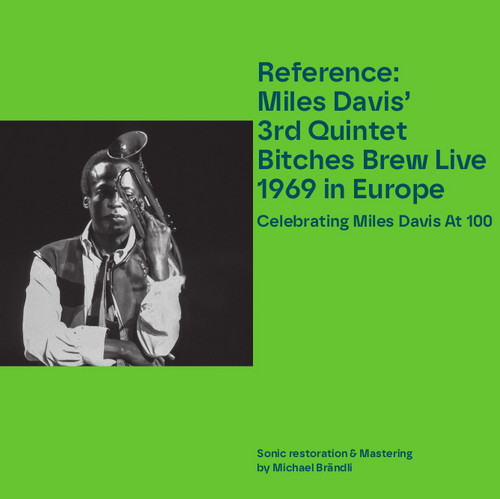
Reference: Miles Davis’ 3rd Quintet Bitches Brew Live 1969 in Europe
"The shock and awe that Bitches Brew produced within and without the jazz world on its release in March 1970 was largely unexpected, the result of the music’s uncompromising power and what many felt to be its perplexing, eccentric sound and structure. In retrospect, we know how Miles’ unconventional studio methodology and Teo Macero’s subsequent compositional editing of the voluminous taped material innovated the remarkable finished product. But what has only marginally been discussed is the ext…
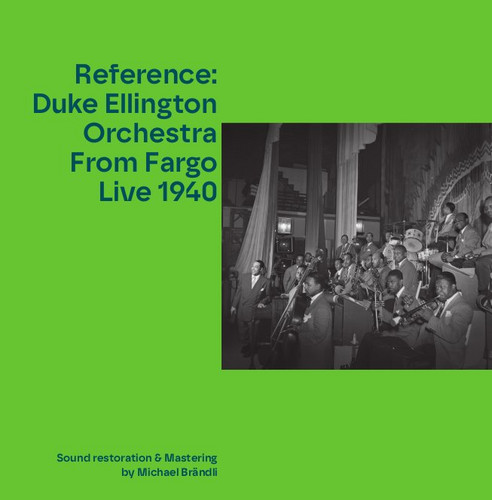
From Fargo Live 1940
"It was, all things considered, just an unexceptional whistle stop on a wearying circuit of dance halls and theaters – the night before they had played in Winnipeg, Manitoba and, conveyed by train the 200 miles to this evening’s North Dakota gig, would immediately afterwards find themselves en route to Duluth, Minnesota for their next show. There was certainly no expectation that the on-site recording, made by two South Dakota fans, Jack H. Towers and Dick Burris, on a single acetate disc recor…
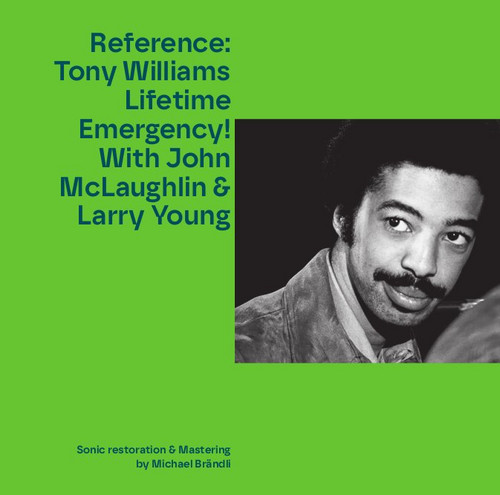
Emergency
"In the beginning, the legend goes, it was Miles Davis’ electrifying jazz on In A Silent Way and Bitches Brew – modernizing the ensemble sound as well as reconfiguring compositional flow with repetition and variation – that begat what was to become known as fusion, exemplified by the subsequent spinoffs Weather Report (Wayne Shorter and Joe Zawinul), Mahavishnu Orchestra (John McLaughlin), Headhunters (Herbie Hancock), and Return to Forever (Chick Corea), all of which emerged after 1970 and con…
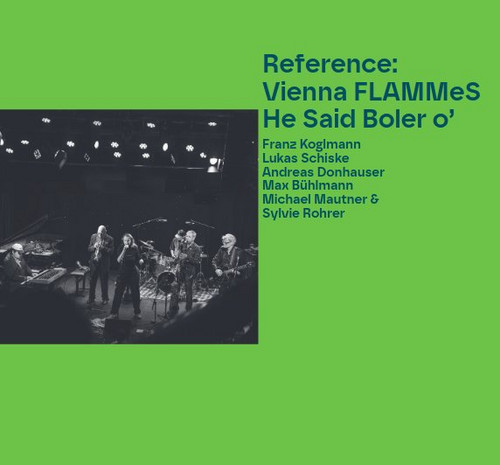
He Said Boler o'
Vienna FLAMMeS, or: The noise of these post-jazz improvisers resounds from paradise. According to a widespread cliché, improvisation in jazz is supposed to help promote the free play of the imagination. It was the Viennese flugelhorn player Franz Koglmann who vehemently contradicted the image of the naively self-actualizing jazz musician. As a composer of cerebral “cool” pieces, whose melancholy sprang from a razor-sharp analysis of his own means of expression, Koglmann was the most qualified pe…
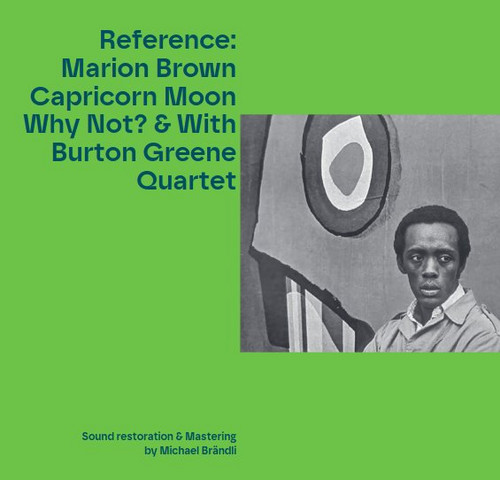
Reference: Marion Brown Capricorn Moon Why Not? & With Burton Greene Quartet
The rhythm team by Rashied Ali and Reggie Johnson (with former Sun Ra member Ronnie Boykins adding texture on "Capricorn Moon") establishes a solid foundation, complemented by Alan Shorter's sharp trumpet, while Benny Maupin's close expressions in monophonic form also support it. The fact that pianist Burt Green recorded an almost unnoticed ESP album (just a month later) with Brown as a sideman illustrates how fluid and negotiable musical activities were within this nascent community.
Although R…
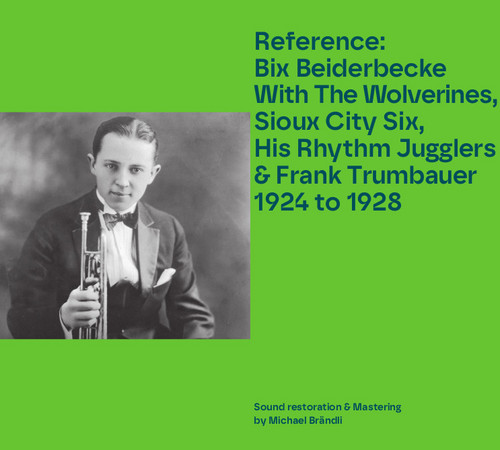
Reference: Bix Beiderbecke With The Wolverines, Sioux City Six, His Rhythm Jugglers & Frank Trumbauer 1924 to 1928
Books have been written, recordings analyzed, colleagues questioned, and nevertheless Bix Beiderbecke remains as much an enigma today, ninety-five years after his death, as he was to friends and fellow musicians during his all-too-brief, personally and professionally erratic odyssey through the 1920s. The body of work he left behind both reveals and conceals crucial aspects of his creative reality and unfulfilled potential, while innovating a subtle, eloquent manner of expression that would sugg…
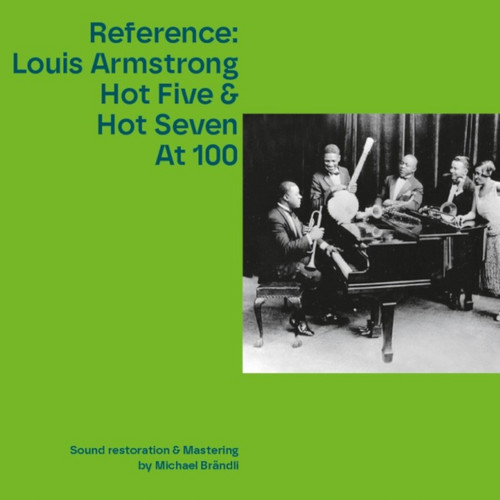
Hot Five & Hot Seven at 100
On Hot Five & Hot Seven at 100, Louis Armstrong’s seminal Chicago sides are reborn in vivid new mastering, letting his trumpet solos, daring rhythms and easy charisma speak afresh as the very moment jazz pivots into a true soloist’s art.
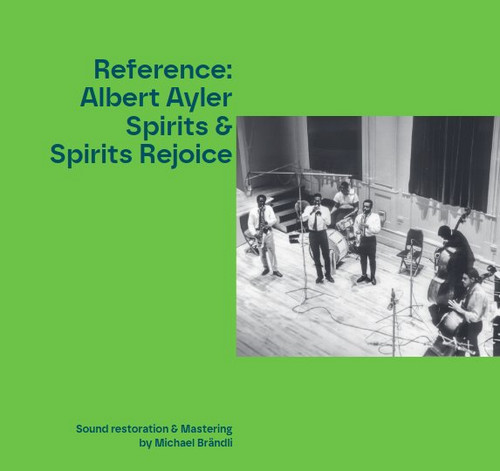
Reference: Albert Ayler Spirits & Spirits Rejoice
The album "Spirits," released by a debut label based in Copenhagen, marked the first opportunity for Ayler to record his "free music" in February 1964 in New York. The musicians selected by him included notable figures such as Cecil Taylor (with drummer Sunny Murray), members from Sonny Rollins' band (bassist Henry Grimes), and musicians from his Cleveland period (trumpeter Norman Howard, bassist Earl Henderson). This work also represents his first focus on his own compositions, which includes H…
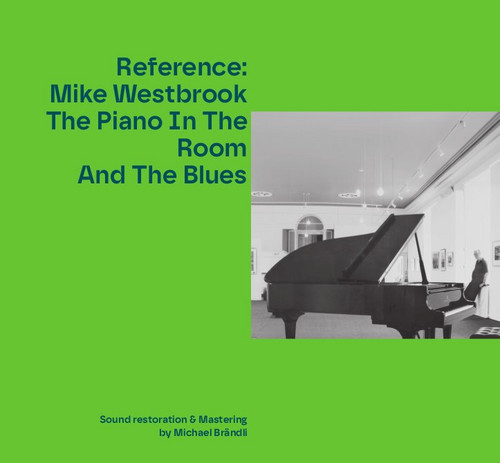
The Piano In The Room And The Blues
“I didn’t realise it at the time, but this recording, made in 2006, marked a change in my musical thinking. All the elements came together – my roots, the use of blues structures and the lifelong search for expression in music. I had unlimited time to think, to return again and again to a subject, to dig deeper into the blues.Falmouth is a large town by the sea in Cornwall. This recording was made at Falmouth Arts Centre on the Steinway grand in the main gallery where my wife Kate had a show. Th…
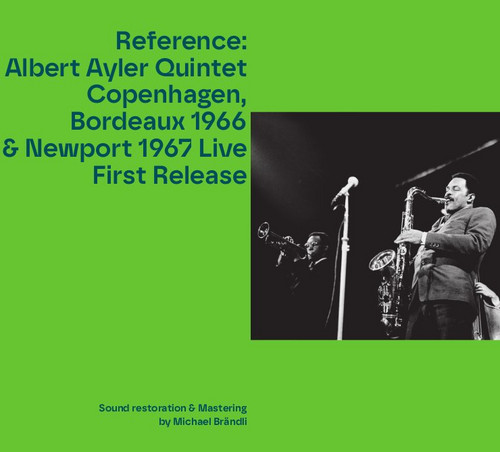
Copenhagen, Bordeaux 1966 & Newport 1967 Live First Release
"These powerful performances from Copenhagen and Bordeaux, released officially here for the first time, and the Newport Festival in the U.S., provide further evidence of the music’s collective necessity – the true ensemble coordination which Ayler adopted, elaborated and romanticized, from his awareness of historic New Orleans precedents." - Art Lange
Selected Ambient Works 85-92
Richard D James' classic album from 1992, re-pressed countless times but still sounding as vital as it did way back when. Still probably the most uplifting and nostalgic thing in the AFX catalogue...Best electronic music album of the late 20th century. A proper gateway drug to the myriad microcosms of Richard D. James a.k.a. Aphex Twin. 100% essential in any collection. Selected Ambient Works 85-92 is a desperately sparse album: thin percussion and several haunted-synth lines are the only compon…
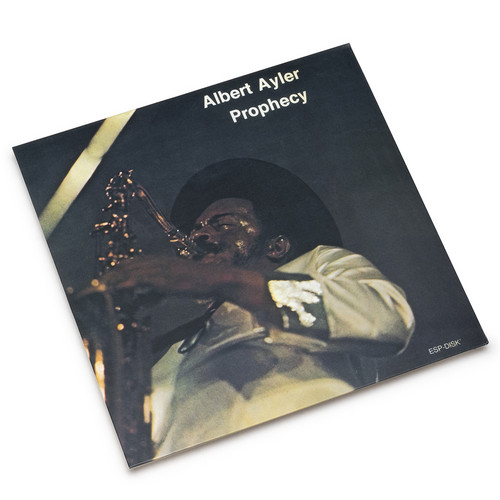
Prophecy
ESP-Disk present a reissue of Albert Ayler's Prophecy, originally released in 1975. Recorded in concert at the Cellar Cafe, NYC, June 14, 1964. Three weeks before this trio recorded ESP-Disk's first jazz album, the epochal Spiritual Unity (ESPDISK 1002CD/LP), it was captured "live" by Canadian poet Paul Haines, who also recorded the New York Eye and Ear Control soundtrack (ESPDISK 1016CD/LP). This is one of the most influential groups in jazz history, a coming together of like-minded innovators …
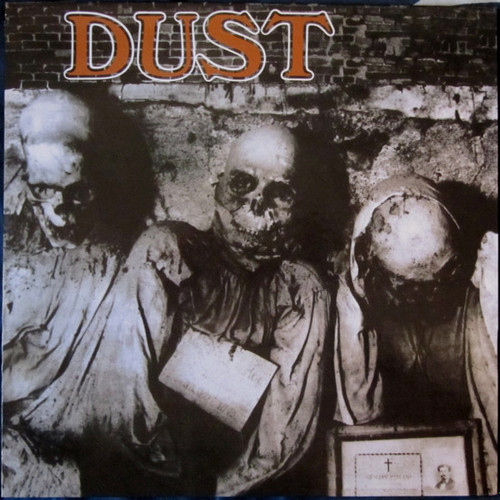
Dust
Three piece U.S. hard rock outfit formed in 1969 that released two albums. At the time of their release, the albums were not successful but have grown to have cult status over the years.
Guitarist and vocalist Richie Wise went on to write songs and produce records for Kama Sutra with Dust producer Kenny Kerner.
The pair went on to produce the first two Kiss albums.
Bassist Kenny Aaronson is a notable touring and sessions bass player having worked with Bob Dylan, Rick Derringer, Billy Idol and ma…
The Farm Band
*Warehouse find! In process of stocking* The Farm Band was unbelievably not the only band that sprung from a hippie farm community in the 70s. Between 1972 and 1977 the band released four albums including this self titled double LP featuring 8 tracks highly influenced by the Grateful Dead-esque psychedelic trips, like in the 17 minute "I Believe It".
A Fleeting Glance
2026 stock One of the most astonishing British private pressing rarities. The music runs the gamut from heavy space-rock jamming (including a snatch of ‘Interstellar Overdrive’) to folk/rock (an acoustic cover of ‘Light My Fire’ and a stunning version of ‘Watch The Stars’), avant-garde choirs krautrock-styled interludes and even trad jazz. The result is among the trippiest albums I have ever heard. Comparable only to Jumble Lane in terms of eccentricity
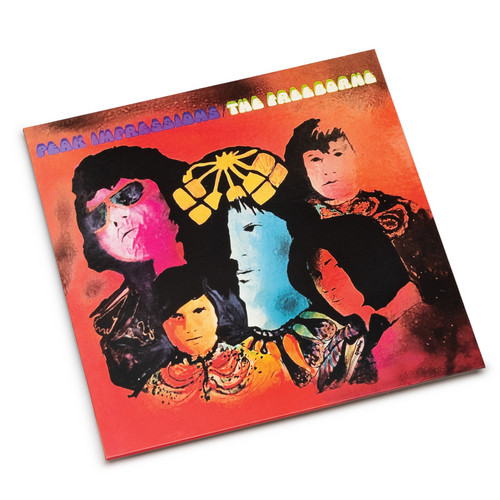
Peak Impressions
One of the strangest and most ambitious artifacts of American psychedelia. Originally issued by Monitor in 1967, Peak Impressions is the lone album by The Freeborne, a band of Boston teenagers - their ages ranged from seventeen to nineteen, three of them still in high school - who produced a record so overloaded with ideas that it has confounded easy classification ever since. Long a target of bootleggers, counterfeited repeatedly across the decades, it stands among the great cult objects of the…