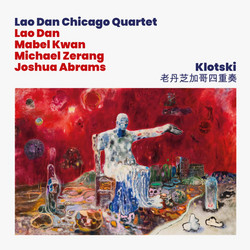
Klotski documents a charged night at Elastic Arts on April 4, 2024, when Chinese multi‑instrumentalist Lao Dan stepped into the heart of the Chicago improvised‑music ecosystem and made it feel like home turf. A rising figure in free jazz with a deep grounding in the traditional music of his homeland, Lao fronts a quartet with three of Chicago’s most trusted navigators: pianist Mabel Kwan, bassist Joshua Abrams and drummer/percussionist Michael Zerang. The album, recorded live by Nick Broste and mixed and mastered by David Zuchowski, catches the band mid‑flight, with the audience close enough that you can feel decisions being made in the moment rather than in post‑production.
Lao’s arsenal - tenor saxophone, Chinese flute and suona - sets the tone for the record’s constant friction between idioms. On tenor he draws from classic free‑jazz vocabulary, issuing raw cries, stacked overtones and sinuous lines, but his phrasing often arcs back toward folk‑derived contours and pentatonic shapes that speak to years spent with Chinese bamboo flute and other traditional instruments. When he switches to flute, the music thins to high, breathy filaments, cutting through the quartet’s texture with a distinctly East Asian lyricism; on suona, the sound hardens into a piercing, nasal wail more commonly heard in street processions than in jazz clubs. Rather than treating these timbres as exotic colour, the group absorbs them into a shared language, letting their particular inflections tug the harmony and rhythm into new alignments.
The Chicago contingent responds with a collective flexibility honed over decades. Abrams, a key presence in projects from the Majestic Gaitonde Ensemble to Natural Information Society, grounds the music with double‑bass lines that can move from deep, earthy ostinati to agile counter‑melodies and thick, droning arco. Kwan’s piano alternates between tightly clustered harmonies, crisp single‑note runs and an almost percussive attack on the instrument’s frame and strings, at times locking into repetitive figures that give the music a gravitational centre, at others splintering into pointillist commentary. Zerang, a long‑standing pillar of Chicago’s improvising community, shapes the flow with a drummer’s sense of drama and a percussionist’s ear for detail: rolling toms, tuned drums, cymbal washes and small objects all appear as structural elements rather than mere decoration.
True to its title, Klotski moves like a sliding‑block puzzle: motifs and textures shift positions, opening and closing pathways for the four players to explore. A piece might begin with a knot of tenor and drums, Abrams and Kwan circling cautiously beneath, before suddenly reconfiguring into a hushed exchange of flute and pizzicato bass; another might ride a jagged piano riff and marching‑band snare figure right up to the brink of chaos, then snap into a unexpectedly spacious coda. The recording preserves the sense of risk that comes from working without a safety net: you hear moments of friction and overload, but also stretches where the quartet locks into a shared pulse or contour so precisely that they seem to be moving as a single organism.
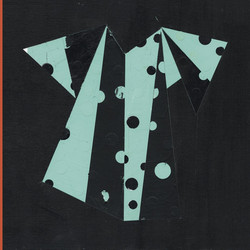
Visually, Qiu Xiao Fei’s cover artwork mirrors the music’s abstract but tactile quality, suggesting interlocking shapes, erased lines and overlapping planes - a graphic analogue to the quartet’s constantly re‑shuffled blocks of sound. As a debut for this configuration, Klotskifunctions as both a standalone statement and a promise. It situates Lao Dan not as a guest soloist dropped into Chicago’s tradition, but as an equal partner in a four‑way dialogue between Chinese folk materials, classic free jazz, AACM‑shaped Chicago improvisation and the restless curiosity of all four musicians. The result is an album that feels like a new corridor in an already complex maze - one that listeners will want to walk through, and get lost in, again and again.