Back in stock
Zero Talk
Two of experimental music's most uncompromising minds, together at last, and never once in direct contact. Kevin Drumm and Taku Unami made Zero Talk without ever speaking to each other. It started in late 2024, when producer Jon Abbey asked Unami to master Drumm's Sheer Hellish Miasma II. Unami was thrilled: Drumm is his favorite musician. Drumm loved the result. Even then, the two never really talked, Abbey spoke to each of them separately. In mid 2025 Abbey proposed a collaborative Erst. Both …
Prisma Interius VII & VIII
* Edition of 500 * In Catherine Lamb's Prisma Interius series the unpredictability of the outside articulates the field of perception through precise bandpass filters, while acoustic instruments and musicians guide the unfolding of its harmonic space. A series of nine pieces exploring the potential of the Secondary Rainbow synthesizer, an instrument developed in 2016-2017 with Bryan Eubanks, that uses the live environment outside the performance space as a noise generator for basic subtractive s…
vari/ations - Ode to Oram
The pioneering electronic sounds of Daphne Oram reimagined by Taahliah, Cosey Fanni Tutti, Marta Salogni, Arushi Jain and others using tapes from Oram's archive. To mark the centenary of overlooked electronic pioneer Daphne Oram, Nonclassical - together with Oram Trust and Oram Awards - have commissioned new music by a set of contemporary visionary minority-gender electronic artists celebrating the next generation of trailblazers.
This group of artists span early-career to high-profile DJs and m…
FRKWYS Vol. 18: Extended Field
FRKWYS Vol. 18: Extended Field witnesses Horse Lords and Arnold Dreyblatt in deep collaboration, melting minimal composition and polyrhythmic invention into a sprawling sound experiment. The album pulses and stretches, dissolving genre boundaries and conjuring a space where tradition is not static, but ever-evolving.
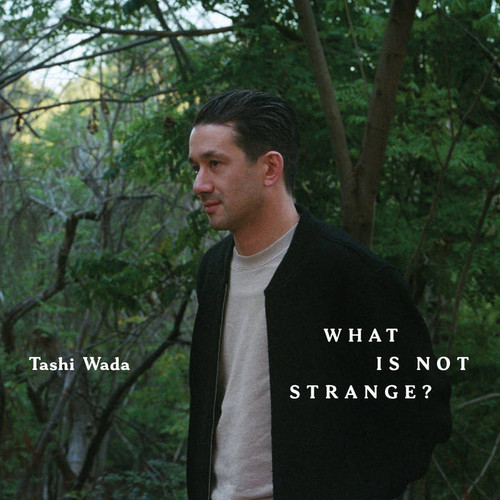
What Is Not Strange?
Eleven pieces built on Prophet and Oberheim synthesizers tuned to an eighteenth century temperament of Rameau's, with Julia Holter singing. Wada grew up in the Fluxus co-op building in Soho, with Simone Forti next door and Nam June Paik one floor up, and studied with James Tenney.
Muto Infinitas
2026 Repress. In Muto Infinitas, Catherine Lamb extends her distinctive approach to microtonality and just intonation, crafting a forty-minute dialogue for quartertone bass flute and double bass performed by Rebecca Lane and Jon Heilbron. The recording, realized without electronic alteration, invites deep listening, unspooling at an unhurried pace in a luminous acoustic field. Lamb’s music here is uncompromising in its patience: the two musicians linger in the borderlands of pitch and timbre, ca…
Elemental View
Few contemporary composers have created instruments as singular as Ellen Fullman's Long String Instrument, and fewer still have explored its possibilities with the depth and invention documented on Elemental View. This six-movement work, performed in collaboration with The Living Earth Show, transforms an industrial-sized space into a resonating chamber where 136 precisely tuned strings create what can only be described as environmental music in its most literal sense. Fullman has spent decades …
Tkać
Two pieces from 2015, both made for light as much as for sound. In the first, Forsberg leaves the violin hanging on stage listening to itself while she plays only electronics, and the audience stays audible: bodies shifting, someone dropping something on the floor.
Magnetism
Recorded in a single day in 2022 at McDowall's Brooklyn studio, then mixed and remixed across three years and three cities. There is no organ anywhere on it: the sound is Karplus-Strong synthesis, a filtered delay line modelling a plucked string, tuned in just intonation and pushed through distortion.
In The Mist
Harold Budd is a one of a kind modern neo-classical artist creating high-callibre and complex music with unique and subtle tension and abstraction, and simultaneous almost-pastoral but as-often otherworldly mood.
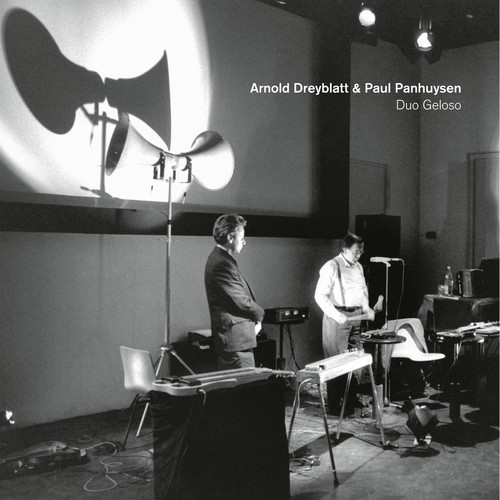
Duo Geloso
Six pieces from a concert at Het Apollohuis in December 1987, unearthed by Black Truffle. Guitars and bass tuned by Dreyblatt and played with E-Bows and Panhuysen's motorised plectrums, plus a Mattel toy drum machine, pedal steel harmonics and a bird whistle.
anabasis (1)
anabasis (1) is a composition in 72 parts for five musicians, based on four kinds of materials: Sand, Wind, Tone and Wave; these materials are arranged and intertwined with a fifth ‘Interludes’ strand that interacts with the four materials. All of these are then ‘unbound’ over the course of the piece by changing continuity in a variety of ways outlined in the score. This interpretation of the score is a live performance that features prepared reed organ, electromagnetic pick-ups, sand, pedals, D…
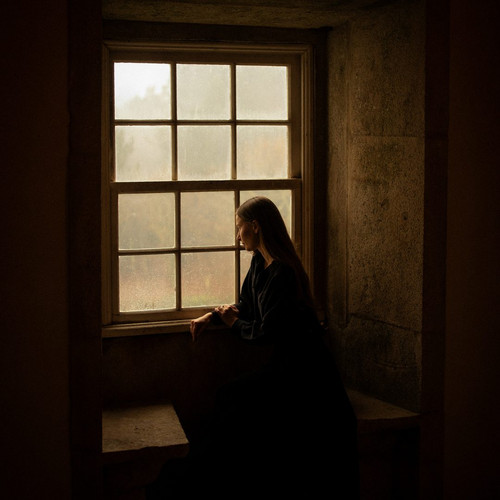
Changes in Air
In May, composer, musician, and producer Kara-Lis Coverdale released her first new album in eight years, From Where You Came. It was followed by her second album of 2025, A Series of Actions in a Sphere of Forever, in September. Today, Coverdale details her third full-length release of the year, Changes In Air, out 21 November via Smalltown Supersound, and unveils its lead single ‘Curve Traces of Held Space’. Changes In Air is a work for electric organ, modular synthesis, and piano in five secti…
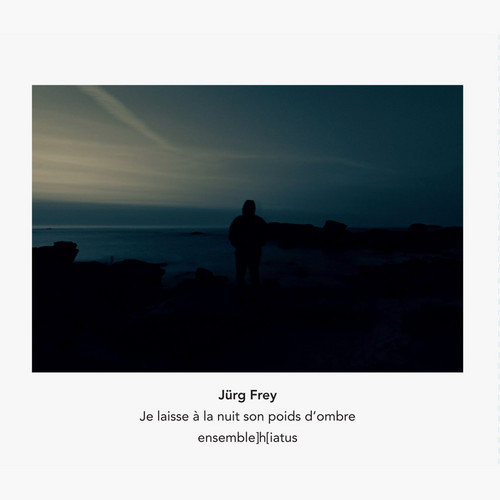
Je Laisse à la Nuit son Poids D'Ombre
How does music inhabit the space between two worlds? Jürg Frey confronts this question directly in Je laisse à la nuit son poids d'ombre, a composition for ten musicians that exists in deliberate suspension, refusing the security of solid ground. Commissioned by ensemble]h[iatus, the piece emerged from extended collaboration between composer and performers, particularly in navigating two specific challenges: the distinctive voice of Thomas Lehn's analogue synthesiser and the relationship between…
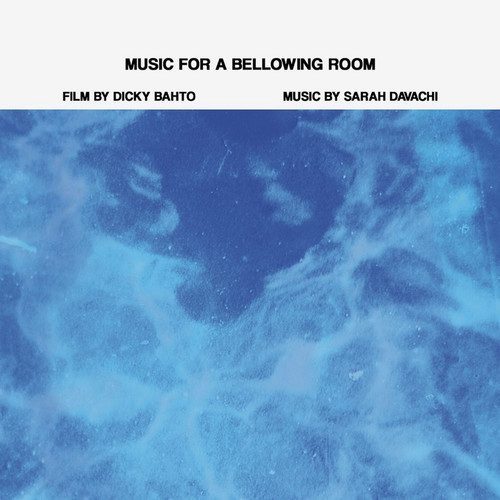
Music for a Bellowing Room
Big tip! Sarah Davachi returns with “Music for a Bellowing Room”, the first ever release of her audio / visual collaboration with the artists and filmmaker Dicky Bahto, originally commissioned by the Museum of Modern Art in New York. Sprawling to an incredible three hours of sublime, minimalist drone - composed for tape loops, synth and delay - that draws the ear toward microscopic shifts and details, we've adored every second of this truly monumental work.
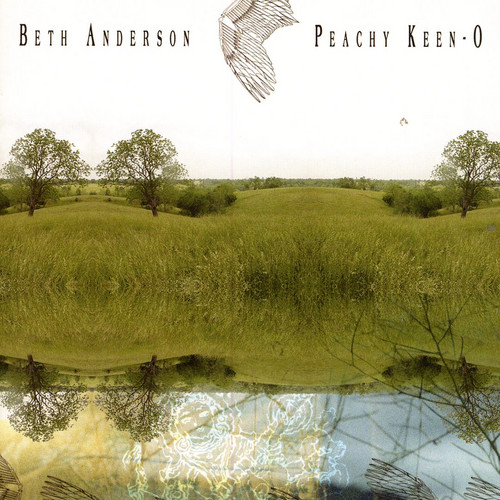
Peachy Keen-O
This CD has pieces with an auctioneer, a Kentucky farm with birds & clover, a jazz dancer, a quivering, vibrating, sexually tinged piece full of women saying supplication, a saint dying in flames, a drum piece about frustration, mother/daughter miscommunication, a pipe organ, and punk rap with overtones of yoga. Many of Beth Anderson's compositions from 1973-1979 use words or parts of words to make either all or part of the music. Sometimes the music is derived from the words. Some of it is cons…
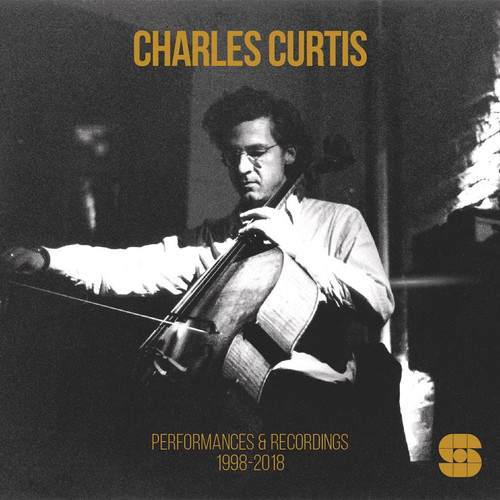
Performances and Recordings 1998-2018
New double-LP edition of a selection from Saltern's acclaimed collection of recordings surveying the career of renowned, American cellist, Charles Curtis. Features the music of Guillaume de Machaut, Tobias Hume, Silvestro di Ganassi, Terry Jennings, Morton Feldman, Anton Webern, Olivier Messiaen, Richard Maxfield, and Curtis himself. Includes liner notes by La Monte Young and Tashi Wada, as well as a new text by Curtis, and a download of the full original album. Mastered by Stephan Mathieu, and …
Sold Out
Simoom
On Simoom we hear three of Lois V. Vierk's works for "big instruments," that is, multiples of the same instrument, treated more like single entities than like groups of voices: Go Guitars for five electric guitars tuned microtonally around "E," Cirrus for six trumpets, and Simoom for eight cellos. All three works employ what Vierk describes as "Exponential Structure," which utilizes exponential relationships to control time, pitch movement and rates of change. Within this system, Vierk creates v…
Air - works for flutes and organ
2015 release **
"Even if the disc's title wasn't known, the attentive listener would be very conscious of air, both as a surrounding factor and with regard to its passage through wooden tubes and pipes. The "flutes" in question are recorders, played by Ruth Walser and tuned to various pitches, their "windways" (a wonderful word which I don't think I've ever before encountered) custom made by Geri Bollinger. Houben presents three works on this recording, two for flutes/recorders and organ, one fo…
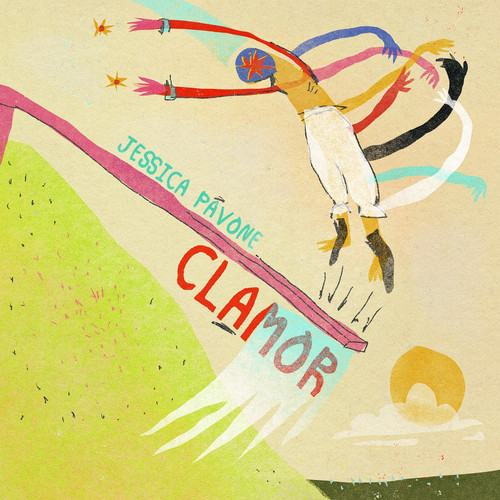
Clamor
*2024 stock* Clamor rethinks the notion of 'women's work' as a space for both collaboration and singular voice. Just as our ensemble is limited and enabled by the written score, so might be individual enunciations of how gender norms limit agency. Clamor utilizes a collective, improvisational vision that prioritizes an intentionally fluid style by employing indeterminacy, navigated by the performers via time-based scores. These principles are balanced with metered notation to shape the overall f…