Origami Arktika
Absolut Gehör (LP)
LabelKillerGenreExperimental
In stock (ships within 1-2 working days)
Tracked express shipping from Italy, no customs or import VAT in the EU. Shipping costs
*321 copies limited edition. In process of stocking. 2023 stock* Origami Arktika is one of Norway’s best kept secrets. They serve a mutated folk music, rooted in the county of Telemark, interspaced with drones, noise, electronica and undefinable elements. They mix the archaic with the modern. Paper folding with frozen fingers.
"People forget that noise music is just as much grounded in subtlety and elusive sophistications as in deafening roars and colliding atonalities. I cite Morphogenesis' first release (the cassette-only impossible-to-find eponymous relic) as a brilliant example of the former and Merzbow as perhaps ne plus ultras of the latter. Depending on what your preferences are—to be captivated and pulled into new windows on old mysteries (Morphogenesis) or to be deafened and go insane (Merzbow)—you choose your music accordingly. Origami Arktika has released Absolut Gehör as an exercise in discretion, subtlety, and broad atmospherics, thus following on the Morph tradition, so, should Merz come hotrodding down your country lane, I advise you bar the door, retreat to the back of the house with a bottle of absinthe, light a few candles, and settle in for an immersive experience instead. Let him caterwaul out in the cold and dark, he likes it like that, while you submerge into a spooky realm of tintinnabula, coruscations, echoes, buzzlines, ghosting presences, and arcane whatnots smiling uneasily out at you from pagan alcoves.
Gehör is mostly spare and eerie, belying the presence of eight musicians, but the degree of restraint in the instrumentation is masterful, creating huge ringing spaces misted, befogged, and flowing. At first, the intrusion of vocalist Rune Flaten is a bit jarring, somewhat distimbrally sitting atop everything, transposing the forbidding instrumental scenario into a sonic version of an old Bergman flick meditating upon medievality and ritualistics. The ensemble's Norwegian origins have much to do with this, not to mention that the progressive musics of upper Europe are oft achingly austere, and the juxtaposition first of the spacey with the terrene, next interposing what stands between them (man), flattens out the foreground sonic field, forcing attention to verite vocals that are at first stark, later subtle, while layering up the music behind." - Mark S. Tucker
Format
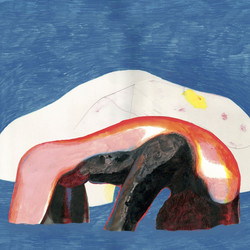
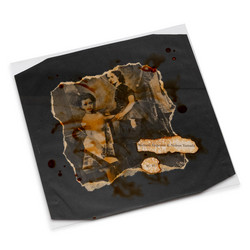
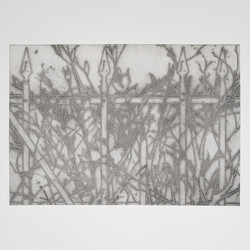
Litograph print cover by Guttorm Nordø, 3 different motives each in an edition of 107
Release notes
Litograph print cover by Guttorm Nordø, 3 different motives each in an edition of 107
| A1 | Ro og hamle | ||
| A2 | Bryggja te jol | ||
| A3 | Háttalykill | ||
| A4 | Folkestadvisa | ||
| B1 | Tora liti | ||
| B2 | Det syng for Storegut | ||
| B3 | Skonde deg du jente - lurlokk |
- Audun Strype
- Mastered By
- Tore Ylvisaker
- Mixed By
- Bjarne Larsen
- Music By
- Kai Mikalsen
- Music By
- Kjell Olav Jørgensen
- Music By
- Kjell Runar Jenssen
- Music By
- Kjell Braaten
- Music By
- Per Gisle Galåen
- Music By
- Rune Flaten
- Music By
- Tore Honoré Bøe
- Music By
- Marco Pasche
- Recorded By