condition (record/cover): EX- / EX
Portfolio included.
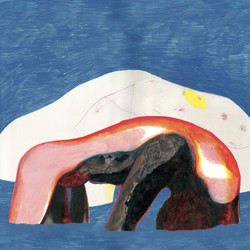
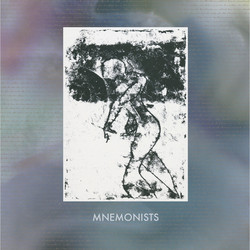
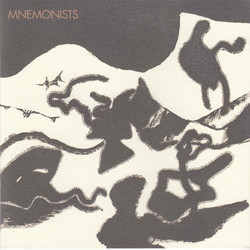
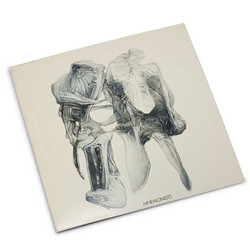
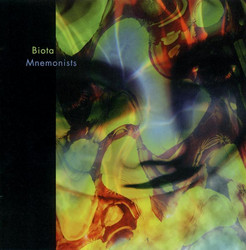
Mnemonists are part of long-standing and somewhat mysterious artistic collective based in Ft. Collins, CO. In the late '80s, the Mnenomist name was permanently attached to the visual artists in the collective, with the name Biota assigned to the musical element. In 1984, however, it seems that this distinction had yet to be made. Five musicians are in this early version of the group, supported by two occasional vocalists who also happen to be responsible for some of the visuals. Conventional instrument -- such as saxophone, clarinet, double bass, viola, and piano -- are employed, as well as shawm and crumhorn, two ancient horns used in Renaissance music. But the specialty of William Sharp, the person probably most responsible for the Mnemonist (and later Biota) sound, is processing and tape work. Almost everything recorded by the two groups is disorienting to one degree or another, with heavy use of unidentified and/or treated sounds, and quite often a muffled quality, as if coming at the listener from a great distance, or perhaps underwater. With titles like "Digesting War," "Crucible," and "Torpor," the music is fascinating but generally rather bleak, often with a strong industrial element, suggesting field recordings inside a large steel foundry or a '30s automobile assembly plant. However, surprises are a given on any Mnemonist/Biota recordings, and the last piece on the program, "Triptych," is actually based (very loosely) upon a piece by early music composer Carlo Gesualdo, featuring what sounds like a wheezy pump organ, even though no such instrument is listed in the credits. Some of the sounds on Horde are truly horrific, particularly on "Crucible" and the later parts of "Triptych," but the album is by no means a relentless assault on the senses, as the group has an excellent sense of dynamics, and many pieces and segments have an aura of quiet mystery.