Magma
Kobaia (2CD)
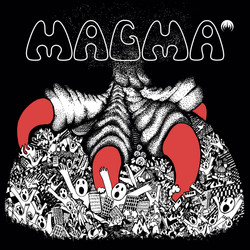
CD Digipack. In early 1967, John Coltrane died. Christian Vander was twenty years old, living in something close to poverty in Paris, and Coltrane's death pulled the ground from under him. He went to Italy, to Milan and Turin, and spent nearly two years in a state of deliberate self-destruction. One morning in Turin he woke up and decided to stop. He returned to Paris, met bassist Laurent Thibault, and began working on something that had no name yet.
By 1969 Magma existed as a group. By 1970 they had a contract with Philips, financed by manager Lee Halliday who had heard them play original material and committed ten thousand dollars on the spot. The album was recorded in April 1970 at Europa Sonor in Paris, after the band had spent three months in a house in the Vallée de Chevreuse rehearsing all day, Vander composing at the piano in Kobaïan, the language he had invented because French lacked the expressiveness he needed, a phonetic construction drawing on Slavic and Germanic sounds, designed to be felt before it is understood. The lineup: Vander on drums and vocals, Klaus Blasquiz on vocals, Claude Engel on guitar and flute, François Faton Cahen on piano, Francis Moze on electric bass and contrabass, Teddy Lasry on saxophone, flute and winds, Richard Raux on saxophone and flute, Paco Charlery on trumpet and percussion. A double LP as a debut, eighty-two minutes of music, a complete cosmological narrative told in a fabricated language over four sides of vinyl: Philips had no category for it and were largely baffled. The album did not chart. Reviews ranged from enthusiastic confusion to outright bewilderment.
The story told across the four sides follows a group of people leaving a dying Earth to found a colony on the planet Kobaïa. The music that carries this narrative moves between late-sixties jazz fusion and something that has no precedent: the percussion of Elvin Jones absorbed and transformed, the harmonic daring of Stravinsky and Bartók present but bent into a different shape, the spiritual intensity of Coltrane's late period transmuted into choral structures that sound genuinely alien. There is no electric keyboard on the record, unusual for a rock album of 1970. There is no concession to accessibility. Naü Ektila, twelve minutes closing the third side, reaches a tenderness that the band would rarely permit themselves again. Stöah and Mûh on the fourth side move into a darkness that points directly at everything that would follow. At no point does the music sound like it belongs to 1970, or to any other year.
Mëkanïk Dëstruktïẁ Kömmandöh (1973) is where zeuhl arrives fully formed and fully named. Kobaïa is where it begins, before the name existed, before Vander had found all the instruments he needed, while the band was still partly inside jazz-rock and partly somewhere no one had been before. The tension of that position is exactly what makes the record irreplaceable: it documents the moment of invention, not its consolidation. After this, Engel would leave, the guitar would disappear from the Magma sound entirely, and the path toward MDK would become direct and irreversible.
The GM Records reissue returns Kobaïa to double vinyl. For those already inside the Magma catalogue it is the origin point; for those arriving for the first time, it is where the question the whole catalogue poses is first asked.