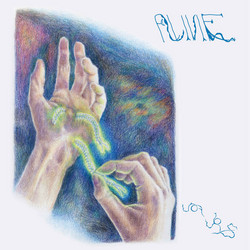
Clarity, more often than not, is a lie, a red herring. Truer, it seems, are blurred images and misty conceptions. Music history as a whole is undecipherable. Zooming in may bring some sense of understanding but many lineages lie far beneath the surface, made of obscure stories and oblique connections, like the ones that tie Joan La Barbara, Meredith Monk, Robert Ashley & Jacqueline Humbert - a scrawny branch in the genealogical tree on which now sits Thelma Cappello. Its motto reads: “voice is an instrument”.
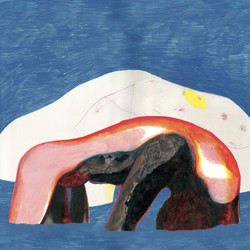
In the case of Thelma Cappello’s Midnight: a musical tragedy written for the fairies - one of the two pieces that make up her debut album on Fondation Petya Sasser Rike - her voice is the sole instrument. Recorded with a cheap microphone, it is the raw material she would then chop and sculpt in Ableton, strictly using in-built presets. Just like the singing of Josephine, the mouse singer in Kafka’s testamentary short story of the same name, Thelma Cappello’s singing may seem to us little more than a mundane squeak, but it nonetheless imposes a profound silence upon us. Midnight is not the music of Kafka’s mice folk, but of another people, the fairies that inhabits the whimsical world of William Shakespeare’s A Midsummer Night’s Dream - the main source of inspiration for the composition. Though the tone between the two literary works is different, the comparison between these fictional folks is certainly not farfetched. And that’s what Midnight tells us.
Rather than lightheartedness, the emotion that rises in ourselves, as we sit in silence, listening to the seven movements of this model-sized opera, is that caused by faint hope breaking through a veil of dread:
a game of chiaroscuros, that - as Art never stopped teaching us - is ceaselessly won by Light. The second piece, City Piece, is of another nature (a sequence shot of field recordings preluding intertwined voices, and, finally, in a striking sonic climax, perfectly intelligible words from Thelma Cappello) and of another format, evoking chamber music rather than opera. Recorded at a very different time and place, it nonetheless works as a revealing companion for Midnight, not exactly unveiling its dense mystery, but giving us an unexpected clue instead, and by doing so, shedding a softer light on the whole album.