Music for the Process of Dying presents Homo working at the edge of audibility and affect, composing what is described as “a work of non-verbal poetry.” Instead of lyrics or narrative, the album leans on a dense but finely balanced weave of human utterances, electronic textures, birds, insects, weather, heavily processed instruments and field recordings. Across five extended pieces, these elements are braided into a continuum aimed less at the rational mind than at the subconscious, like a sequence of dreams you only realise you’ve had when fragments resurface hours later. The focus is not on dramatizing death as event, but on tracing the inner atmospheres around it - fear, surrender, memory, a strange lucidity - through shifts in timbre, space and proximity.
The record’s “poetry” resides in its attention to how sounds rub up against and re-colour each other. A cracked exhalation might blur into the rustle of leaves; a distant organ chord might suddenly seem indistinguishable from low thunder; insect stridulation might start to feel like granular synthesis and then back again. By stripping away words, Homo opens a space where these equivalences can be felt rather than explained, where the listener’s own associations do as much work as the composer’s structures. The pieces feel carefully paced: moments of almost clinical stillness give way to passages where overlapping sources form a dense, near-hallucinatory fog, only to thin once more into something like clarity. It is music that seems to breathe with you, tightening and releasing in slow, tidal arcs.
Instrumentally, the palette is deceptively simple: organ, acoustic guitar, reed flute and samples form the core, all written, performed and produced by Homo. The organ provides a kind of low, glowing backbone, its long tones evoking both the church and the cinema, ritual and reverie. Acoustic guitar appears as a fragile, human-scale presence - single notes, small clusters, soft harmonics - often submerged under processing until it feels more like memory than object. The reed flute threads a more bodily, breath-marked line through the mix, sometimes foregrounded as a voice-like cry, sometimes smeared into texture. Around and between these, samples and on-site recordings pull the outside world into the frame: weather systems, birds, insects, environmental hums that make the album feel less like an interior monologue and more like a negotiation between body and surroundings.
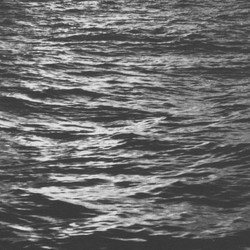
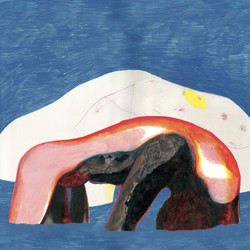
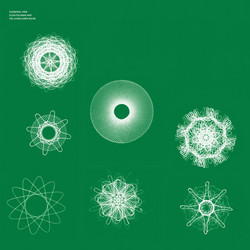
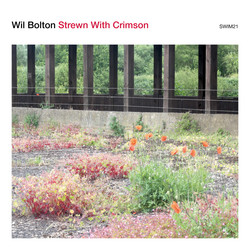
The production approach heightens this liminal quality. Sounds are often heavily treated, but the processing draws attention to material rather than disguising it: you hear the grain of the recording, the decay of a room, the slight saturation of a hot signal. Layers are stacked with a collagist’s ear, yet the joins rarely feel abrupt; instead, transitions tend to occur like shifts in light or temperature. Mastering by J. Aernus preserves a wide dynamic range, allowing for both near-silence and engulfing density, inviting the listener to lean in rather than simply ride a constant plateau of loudness. The cover photograph by Mónica Baptista, paired with Homo’s own design work, reinforces the sense of suspended, ambiguous time: an image that could be dawn or dusk, emergence or withdrawal, depending on how you tilt your head.