Officine Schwartz
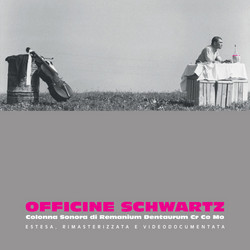
Remanium Dentaurun (poster+booklet)
condition (poster/program): VG+ / VG+ (signs of yellowing and aging)
20"x14" one-color poster plus A5, 8-page zeroxed booklet.
A lot of printed and photographic material from one of the most durable and multidisciplinary industrial projects in Italian music history. Officine Schwartz were founded in Bergamo in 1983 by Osvaldo Arioldi (later Osvaldo Schwartz) as an investigation into the sonic and visual aesthetics of industrial civilisation. Their performances have never been only concerts: Officine Schwartz combine music, theatre, dance, video projection, and direct action in a single multidisciplinary practice that has continued for more than four decades.
The group's sonic signature rests on self-built metal instruments (tubicordo, forged and tuned oil drums, tubes, springs, chains, bicycle frames) played alongside conventional electronics, layered with traditional Italian folk song and recorded workers' choruses. The political framing is specific: unlike most early industrial projects, which treated the machine as an alienating figure, Officine Schwartz understand the factory as a site of worker-machine interaction in which the human remains central. Their 1986 theatre piece Remanium Dentaurum addressed the 1944 Allied bombing of the Dalmine-Tenaris factory (which was producing V2 rocket parts for the Nazis) and the owners' decision not to sound the alarm in order to maintain production.
Given the performance-centred character of the project, ephemera items (show programmes, posters, photographs by stage collaborators, Kom-Fut Manifesto inserts, printed text pieces) frequently carry as much of the project's meaning as the recordings themselves. A good ephemera lot from the Eighties or early Nineties is effectively a multimedia fragment of one of the most politically articulate industrial projects ever to come out of Italy.