Reissues
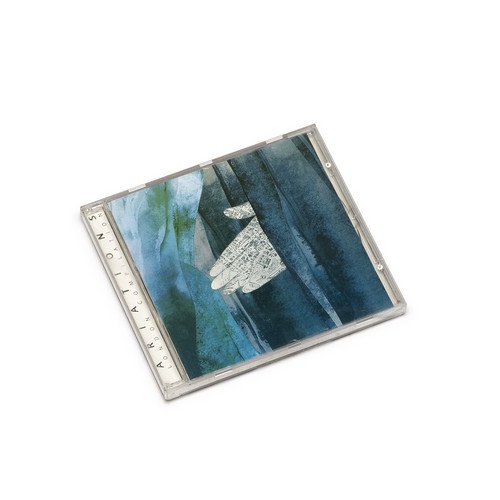
Variations: A London Compilation
Released in 1995, this debut compilation is a showcase of seven London-based experimental artists. Features John Wall (sonic sampling collage wizard), Andrew Jacques (Put Put member using a microphone and guitar amplifier for disruptive sound sources, sampled by Wall), Crow (great, futuristic fragments of experimental sound/text recordings by a UK installation artist), Alquimia (dream-state mutterings and aura, from an experimental artist from Mexico City), John Grieve (powerful electronic-like …

The Sound Of Nature ~ The Nature Of Sound
Compilation CD with Francisco Lopez, Giancarlo Toniutti, Jeph Jerman, Seth Nehil & toy.bizarre, Kiyoshi Mizutani, MNortham, Eric La Casa. A confrontation of different ideas, views, about nature … and sound… From the electroacoustic deep soundscape of Eric La Casa to the droney stones of Giancarlo Toniutti, from the rough fresh stream field recordings of Kiyoshi Mizutani to the heavy processed insects, wood and grass sounds of Seth Nehil & toy.bizarre… from the silent nature of Francisco Lopez to…
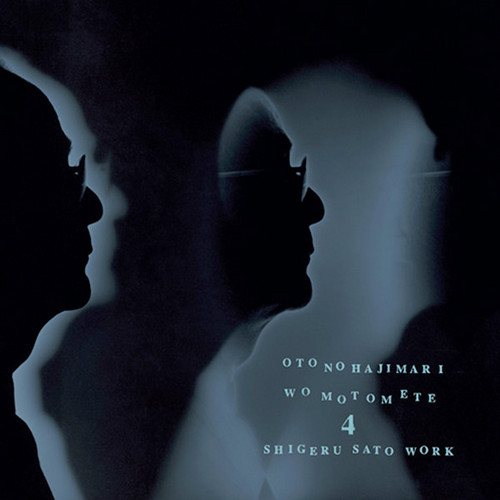
Oto No Hajimari Wo Motomete 4: Shigeru Sato Work
These pieces were recorded between 1963 and 1973 at the NHK electronic music studio, Tokyo. Includes 12-page booklet with liner notes in Japanese. This version was withdrawn from sale due to objections from Takeisha Kosugi. His track was then replaced by one by Michael Ranta, and the album was re-released under a different catalog number.
1. “Divertimento” Keitaro Miho This is a live performance of live percussion instruments and electronically produced percussion instruments. Until then, …
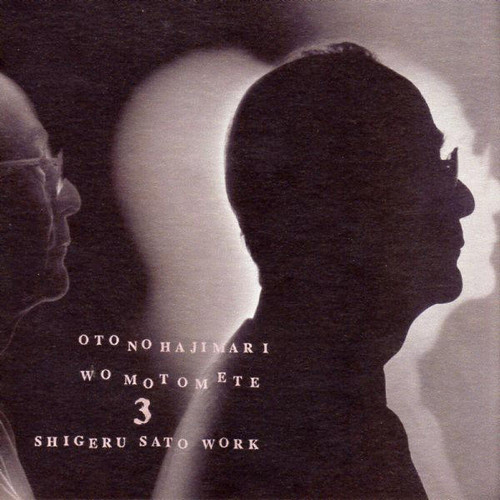
Oto No Hajimari Wo Motomete 3: Shigeru Sato Work
The 3rd issue of early Japanese electronic music made by NHK (Nippon Housou Kyoukai : National Broadcasting association) electronic music studio. Engineer Satou assisted many electronic works of avant-garde composers. Contents : Makoto Moroi 'Shosange' (1967), Minao Shibata 'Display '70' (1969), Toshiro Mayuzumi 'Mandara with source of Voice and Electric sound' (1969), Joji Yuasa 'Voices Coming' (1969), Makoto Shinohara 'Broadcasting' (1973)
1. “Small Confession” Makoto Moroi The works ar…
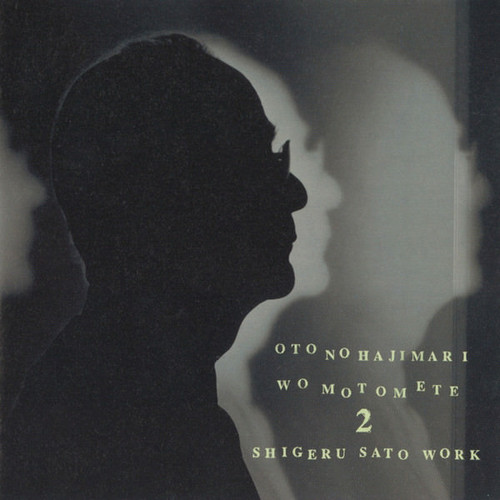
Oto No Hajimari Wo Motomete 2: Shigeru Sato Work
Early Japanese electronic music made by NHK electronic music studio. Engineer Satou assisted many electronic works of avant-garde composers. The following works (except Yuji Takahashi) had released in 1967 and 1969 on LP (Victor VX-52, VX-99), and they are very rare now.' Contents : Yuji Takahashi "Phonogene" (1961), "Yori-Aki MatsudairaTrangent '64" (1964), Minao Shibata "Improvisation for the electronic sound" (1966), Joji Yuasa "IKON on the source of White Noise" (1965), Toshiro Mayuzumi "Cam…
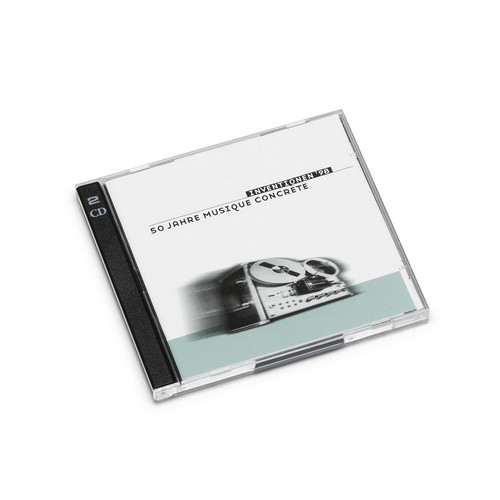
Inventionen 98
A documentary of pieces performed at the Inventionen Festival in Berlin, 1998. Features: Unsuk Chin, Patrick Kosk, Werner Cee, Francois Donato, Robin Minard, Wolfgang Mitterer, Francis Dhomont, Erik Mikael Karlsson, Trevor Wishart. "Not as much as a bringer-up to speed (or yet another history lesson at that) as a fine cache of current keepers of the crop. New ('93-98), complete pieces from Trevor Wishart (northern-UK composer/programmer known and loved these days for his mid-70's works such as M…
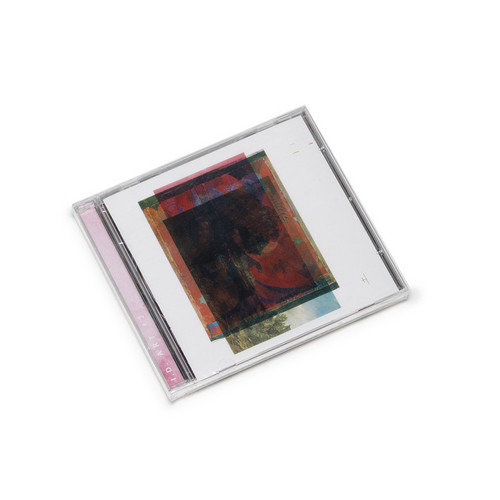
I.D. Art #2
When the Los Angeles Free Music Society 10 CD set came out I eagerly flipped through the contents to see what treasures had finally been made available again. Much to my surprise the early compilation I.D. Art #2 was not included in this otherwise major overview of the LAFMS. I.D. Art #2 was the second LP release on their label, coming after Le Forte Four’s ‘Bikini tennis shoes’ LP, and before the 2LP ‘Live at the Brand’, a split album between Le 44 and The Doo-Dooettes. It dates from 1976. It i…
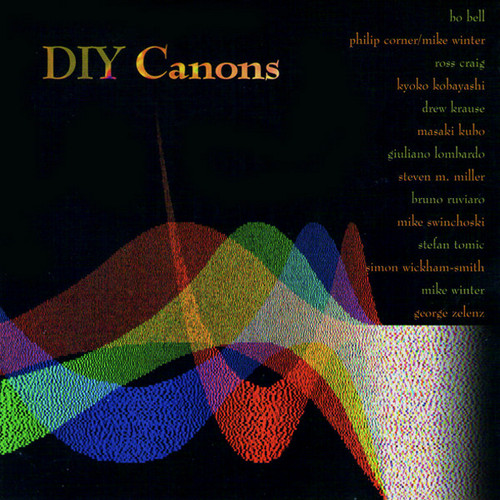
DIY Canons
"The pieces on this CD are all based on the ideas in Larry Polansky's four voice canons, a series of pieces he began in 1975. These canons are usually "mensuration canons," which means that the tempi of successive voices is proportional to their start times, so that the voices end together. They also use simple ideas of moving through a list of permutations, and applying the elements of those permutations to various musical parameters. A set of Polansky's canons was produced on Cold Blue Records…
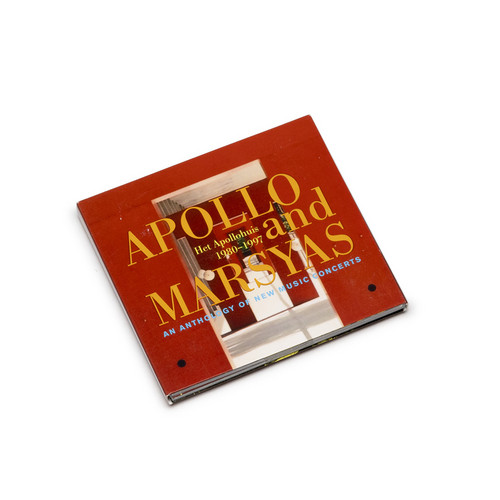
Apollo And Marsyas: Het Apollohuis 1980-1997 An Anthology Of New
A lucky restock of one of the most important archival releases in experimental music: "Apollo and Marsyas: Het Apollohuis 1980-1997, an Anthology of New Music Concepts" - a stunning double CD documenting nearly two decades of radical sound art and experimental performance. Het Apollohuis in Eindhoven was one of Europe's most vital centers for avant-garde music, and this anthology captures the extraordinary scope of programming curated by Paul Panhuysen from 1980 through 1997. From over 500 perfo…
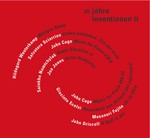
20 JAHRE INVENTIONEN II
Volume 2 of the CD documentation of the Berlin festival "Inventionen" (volume 1 containing Horatiu Radulescu's string quartet no. 4)a various artists retrospective sampler including recordings of works by the following composers: Hildegard Westerkamp, Salvatore Sciarrino, John Cage, Sainkho Namtchylak, Joe Jones, Giacinto Scelsi, Masanori Fujita, John Driscoll.Hildegard Westerkamp: Whisper Study (1975-79, Tape work, Inventionen 1986)Salvatore Sciarrino: Codex purpureus, Trio per archi (1968-1983…
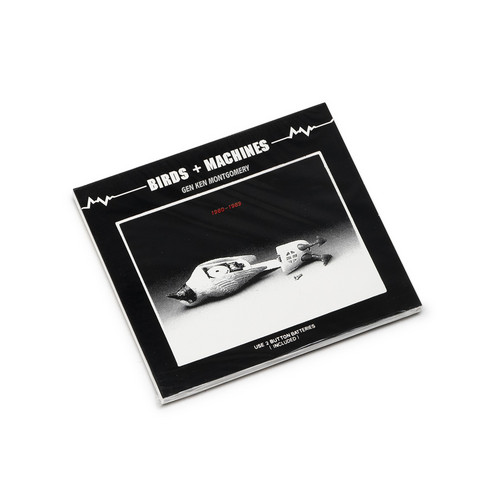
Birds + Machines
Co-founder of Pogus with Al Margolis, Gen Ken Montgomery is often unfairly disregarded when assessing the history of radical music in the last half-century. This collection – another clarification of a unendingly probing creativity – examines works from the decade in which the American composer’s terminology was first met by yours truly, at that time seriously hooked in the unearthing of entrancing materials of post-industrial derivation. But don’t let this piece of news mislead you: Montgomery’…
Triangles
"Triangles offers you more of the powerbook electronics sounds we're all digging on so much, and from speaking comparatively from the field as it stands today, Triangles sounds quite good, really amazing, in fact. Despite falling into the, dammit, start saying it -- 'melancholy electronics,' hole that you clearly need filled, Triangles stands on it's own. Need more? Try this -- Triangles occupies the space between powerbook extrapolations (quite reminiscent of the sole person in America w…

Journey into Space
York University's music department houses one of the UK's first-ever
electronic music studios, and during the early '70s, it was a hotbed of
creative activity. Much of the released output from the studio at this
time revolved around the work of the dynamic composer Trevor Wishart. Journey Into Space
was his first release, composed between 1970 and 1972, and was
privately-pressed (shortly before the formation of YES records), as two
separate LPs in 1973. (The CD cover amalgamates the two or…
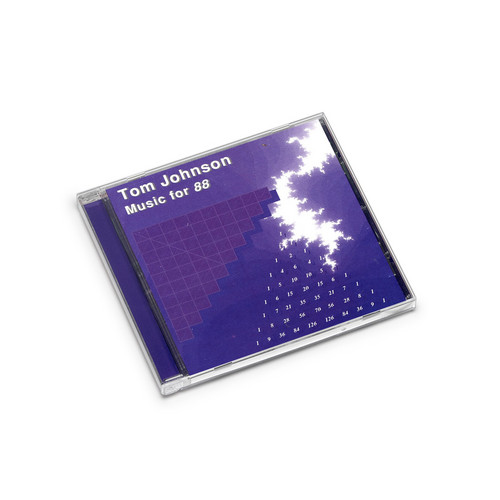
Music for 88
Simplicity and clarity have always been among Tom Johnson's chief concerns as a composer. That concern led him to research number theory, particularly by Pascal, Fermat, and Euclid, and these sources suggested musical structures somewhat more complicated than those that he had used before. Music for 88 is the result of these researches. It contains nine sections (six of which are on this recording), each of which is a musical demonstration of a mathematical phenomenon.
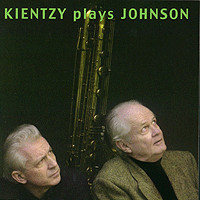
Kientzy plays Johnson
In Kientzy Loops, the accompanying loop is a mix of six alto saxophones played in continuous blowing, while the principal lines are played on alto saxophone, except for the third section, played on baritone. The piece, premiered at the auditorium of the ADAC in Paris, was awarded a French national prize in the Victoires de la musique as the best piece of contemporary music for the year 2000. We are indebted to our friend Marc Chemillier for La Tortue de mer. As a mathematician Chemillier became …
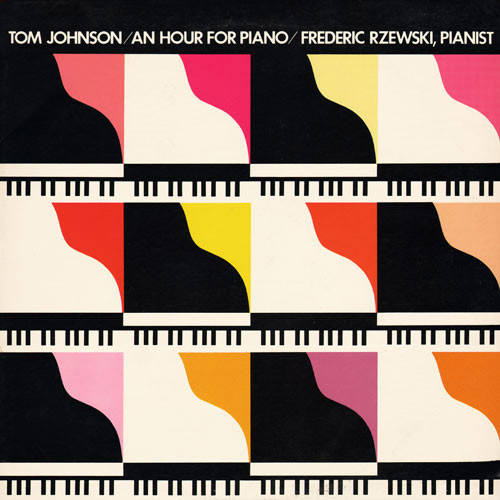
An Hour For Piano
"First, the booklet notes. If you pine for Gertrude Stein speaking circles around herself, meaning what she doesn’t mean, and not meaning what she means, you’ll probably like Tom Johnson’s non-sort-of-explanation of his magnum keyboard opus, An Hour For Piano. The composer prefers that you don’t read his notes while listening to the music. In fact, don’t read them before you play the CD for the first time. Listen to the piece first. Then, if you’re feeling artsy, put on the CD again and read the…
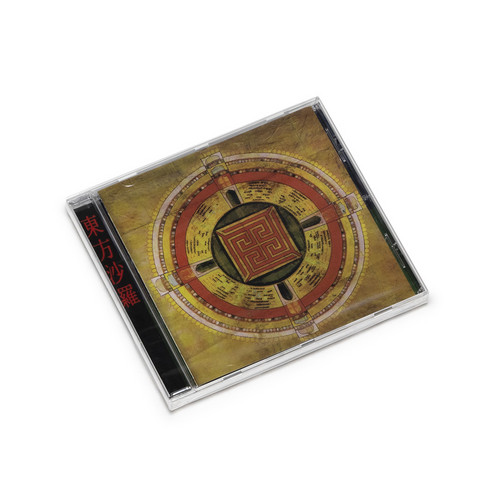
Hourouurin
The Japanese underground band Johari was create in 1990 by the magic duo Asahito Nanjo (High Rise) and Makoto Kawabata (Acid Mothers Temple) and will became later, in 1995, this shamanistic avant-garde formation Toho Sara. “Hourouurin” is their third opus, after two albums on PSF “Eastern most” (1995) and “Mei Jou Tan Sho” (1999) and some live performances in Europe during the years 1996 and 1997. “Hourouurin” is a weird unit who attempt to achieve a mystic fusion of ethnic music and rock, accor…
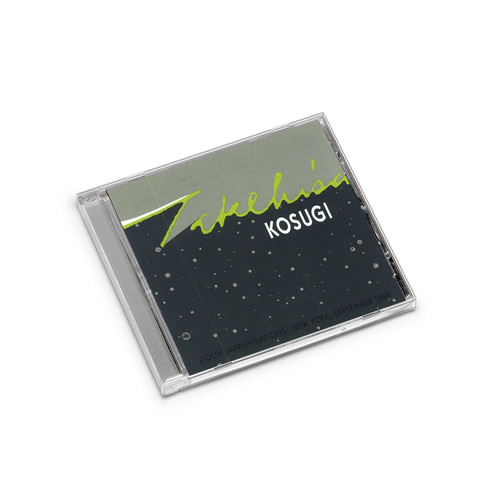
Violin Improvisations
Originally released in 1989, Violin Solo documents Takehisa Kosugi's improvisations with electric violin and miscellaneous sounding objects, recorded September 3-4, 1989. Kosugi's approach has a sense of emerging from the bottom of a spiritual unconscious. From this place comes a music based more on the feeling of sounds than conscious arrangement. Memory, physical action, tactile perceptions, environmental conditions, and awareness of subconscious microcosmic and macrocosmic extremes inform his…
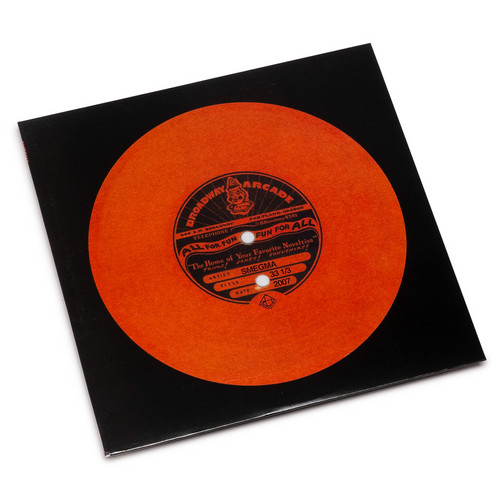
33 1/3
2024 stock 33 1/3 is Smegma''s tribute to their 20th century avant-garde and out-jazz influences. The title is one part reference to the happy revival of passionate vinyl listening in the 21st century and one part celebration of their long hard slog of 33 1/3 years of being one of the most free thinking and original American underground groups. Their focus, ideas and determination has brought them through more than three decades and to this day they remain unparalleled, original and highly influ…
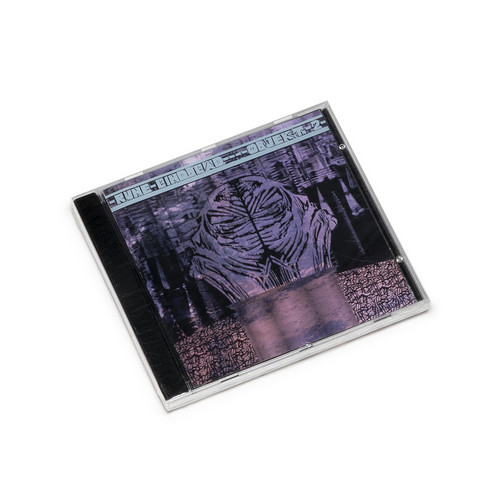
Objekt 2
Volume 2 of the music of RUNE LINDBLAD (1923-1991). This cd consists of the remainder of the long out of print Radium double lp. These works cover the years 1962-1988. Lindblad, a Swede began composing music in 1953. Ignored by the musical establishment in Stockholm, Rune went his own merry way, composing over 200 works of electronic music. Limited in the early years to often primitive equipment, he carved out his own musical niche. The sounds were often raw, occasionally scary.