“Close your eyes and you could easily imagine it as a soundtrack to some fever dream William Burroughs adaptation that never was”
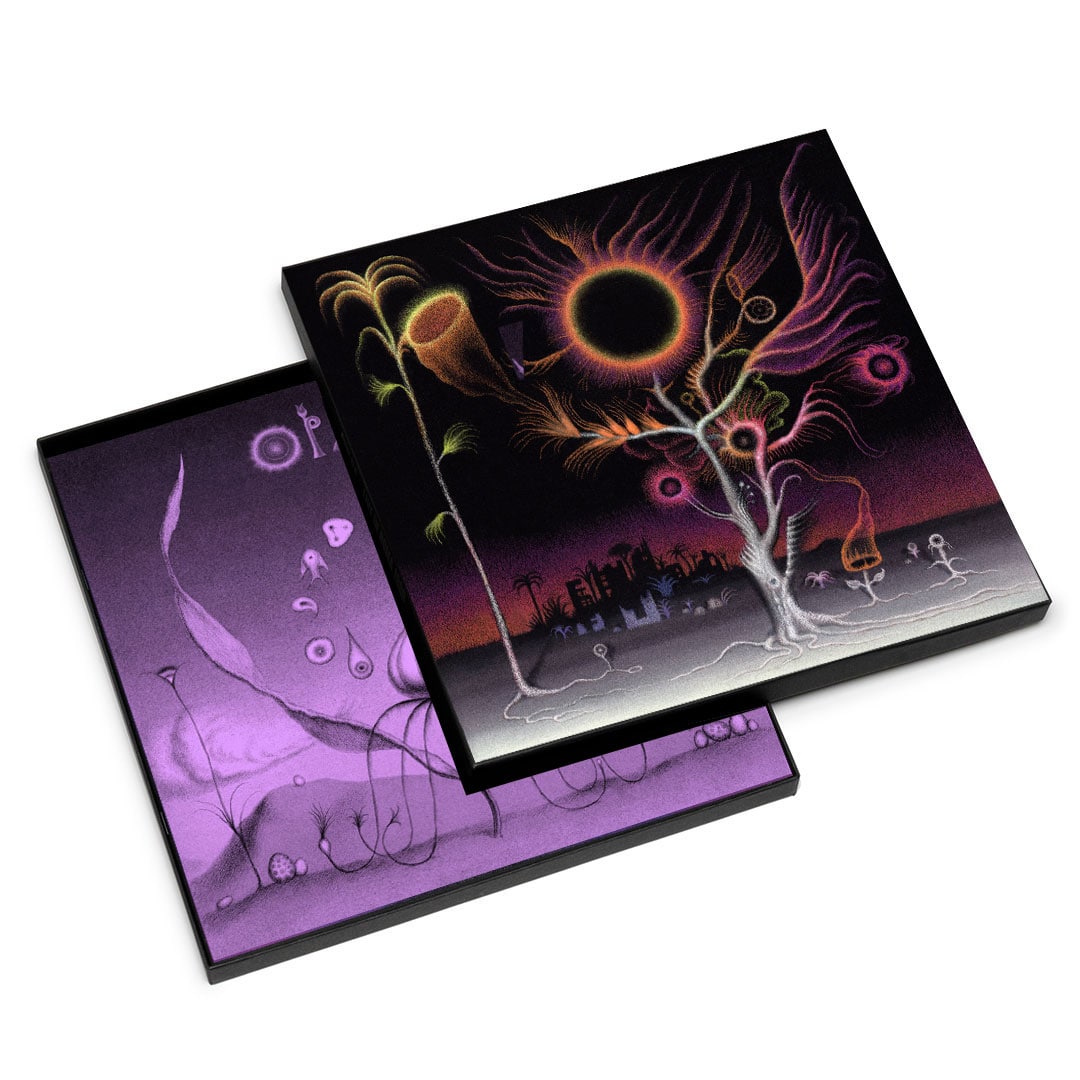
Laura Agnusdei Flowers Are Blooming In Antarctica Maple Death DL/LP There was a time when the citation of JG Ballard as an influence on music could be read as a warning of some dour ruminations about empty silos and roundabouts. Slightly resituating Ballard as a literary predecessor to the still fairly recent shift from sci-fi to cli-fi (climate fiction) is a refreshing angle at least. That’s just one way in which Flowers Are Blooming In Antarctica by Italian tenor saxophonist Laura Agnusdei reroutes expectations.
Flowers is a sort of concept album about climate change, both stylistically and conceptually allied to fusion. It offsets a plethora of reeds with electronics and environmental recordings while alternately invoking exotica, Eno & Hassell, electric Miles and Ethio-jazz. A cohort of signifiers that threatens glibness, perhaps, but executed here with such a gripping hallucinatory power that it’s hard not to be drawn in.
The opener “Ittiolalia” introduces a motif that crops up throughout the set, splicing animal and human vocalisation. The same kind of hybridity is enacted by the brass which, besides Agnusdei’s tenor saxophone, includes alto sax, clarinet, flute and flugelhorn. “PPRN (Physarum Polycephalum Rail Network)”, the longest track and centrepiece, sees a chirping metallic trumpet responding to and dovetailing with recorded bird calls. It’s one of the album’s most agitated movements even as it’s also possessed of a weird stillness and a perfect upper register lightness. Meanwhile, although the absence of rock inflection is almost total, the lumbering “The Drowned World” has a low key discord and queasiness that can only be described as heavy.
It’s all richly evocative, picturesque, even cinematic – close your eyes and you could easily imagine it as a soundtrack to some fever dream Burroughs adaptation that never was (Cities Of The Red Night perhaps). It’s grimly ironic that the ecological collapse the record addresses is a dystopian one when collapse is key to the appeal of such a polyglot, polymorphous record teeming with borderless creative life. James Gormley
Originally published by The Wire.