
“These records are near perfect distillations of African American social, political, and creative consciousness from that era.”
Superior Viaduct returns on the back of an already remarkable year with what just might be their most hotly anticipated releases to date; four first time vinyl reissues from the highly coveted catalog of the seminal drummer, percussionist, composer, and educator Milford Graves, “In Concert At Yale University”, “Nommo”, and “Bäbi”, joined by the deluxe edition “The Complete Yale Concert, 1966”, all originally released on Graves' own private SRP and IPS imprints during the 1960s and 70s. Furious storms of rhythm and tone, and high among the most astounding gestures of free jazz / creative music ever laid to tape, Superior Viaduct has pulled out all the stops with each of these stunning LPs.
Over the last decade, Superior Viaduct has become synonymous with making the improbable and impossible real. One after another, spanning nearly every idiom of ambitious music, they’ve reissued some of the greatest holy grails in the history of sound. While it’s impossible to single out any one of Superior Viaduct’s many efforts, until now their recent reissue of La Monte Young’s “Black Record”, alongside their forthcoming reissue of his “Dream House 78'17”, have to be regarded as their most noteworthy accomplishments. That said, their latest batch - four incredible reissues from Milford Graves - might just take the top slot.
Born in 1941 and first emerging at the outset of the 1960s leading Latin and Afro Cuban dance bands in New York, the drummer and percussionist, Milford Graves, belonged to the generation of musicians who were drawn toward the avant-garde by the innovations of John Coltrane and his legendary quartet. In 1962, he began playing with saxophonist Giuseppi Logan, and fully embraced the newly emerging idiom of free jazz, before quickly forming the New York Art Quartet with John Tchicai, Lewis Worrell, and Roswell Rudd, in addition to working with The Jazz Composer's Orchestra, Paul Bley, Albert Ayler, Sonny Sharrock, and numerous others.
While Graves’ work in the bands of others and larger collectives remains the stuff of legend, it is his work as a leader, driven by his highly singular philosophy about rhythm, for which he remains most celebrated, particularly three highly sought after LPs that he self-issued on his own imprints during the 1960s and 70s, “In Concert At Yale University” (1966), “Nommo” (1967), and “Bäbi” (1977). These records are near perfect distillations of African American social, political, and creative consciousness from that era. As Graves sought to think beyond the hegemony of European approaches to rhythm, meter, timbre, tonality, musical structure, he also sought to take control of his music’s modes and methods of distribution by starting his own label. As remarkable as all of this was, in conjunction with his constant push toward future explorations and possibilities, this had the unfortunate byproduct of allowing these three incredible albums to fall out of print. Each subsequently became, in the rare instances a copy appeared on the market, hotly pursued by free jazz collectors at towering prices, thus keeping them out of the hands of many of those who deserved to encounter them. Thankfully, Superior Viaduct has brought this reality to an end.
1966’s “In Concert At Yale University” appeared during a remarkable moment in Milford Graves’ career. The year prior, in addition to laying down drums on seminal recordings by Giuseppi Logan, Paul Bley, The Jazz Composer's Orchestra and Lowell Davidson, he had issued the stunning duo LP, “Percussion Ensemble”, with Sunny Morgan on ESP, as well as New York Art Quartet’s two primary recorded documents to great acclaim.
Capturing the drummer and percussionist performing a live duo in concert at Yale University in New Haven, Connecticut, John Corbett writes in the liner notes, “This performance was something of a turning point for Graves. Until then he had been working in other people's bands or collective ensembles. He was phenomenally busy… Every one of these is important in its own way, but none of them quite anticipate how radical was the music that he and Pullen would unleash that evening in New Haven.” Originally released on the artists' own Self-Reliance Program label, this legendary one-night performance would be split into two volumes: In Concert At Yale University and Nommo, becoming some of the earliest documents of Graves’ signature approach to drumming, which shifted away from normative structures of rhythm and polyrhythm toward a more organic approach based on the body’s biorhythms. As he stated in a DownBeat interview from that same year: “Time was always there, and the time I see is not the same as what man says time is. It works by impulsion.”
“In Concert” is a pure capsule of what the emerging forms of American free jazz and African American “creative music” was all about during the mid-1960s and beyond. As Graves and Pullen dance and interlock among the other’s interventions and responses, what we hear is a multidimensional conversation unfolding in real time; between two men - two bodies and minds - between those men and many histories of music, and between imaginings of what the future might be. It is both the imagining and becoming of freedom through sound, at the very center of the struggle for civil rights.
As Graves and Pullen unfurl their expressions, often firing rapid sheets of percussive tonality in the other’s direction, the listener is immersed in one of the most radical and forward gestures of creativity of its moment, digging toward something deeper, more emotive and fundamental that anticipates the output of the “Loft Scene” in NY that would emerge fully across the 1970s. It’s a staggering piece of work that, nearly 60 years on, remains at the top of its class and remarkably ahead of its time. There’s little wonder why it’s remained one of the great holy grails for collectors of free jazz for decades.
Known for his percussive approach to the piano, Don Pullen’s career in the avant-garde is sinfully under documented. Born and raised in Virginia, following a brief stint in Chicago, where he encountered Muhal Richard Abrams and the philosophies that would soon help to found the AACM, he moved to New York where he joined Giuseppi Logan’s band, alongside Milford Graves, and contributed the piano parts to the saxophonist's two seminal LPs for ESP, which are both crucial artefacts from the early years of free jazz, as well as with Albert Ayler. Unfortunately, by the second half of the 1960s, Pullen became discouraged by the difficult financial realities that came with playing freely improvised music, and spent the majority of the remaining part of the decade and the 1970s playing Hammond organ for soul acts, as well as playing more straight-ahead fare with Art Blakey and Charles Mingus.
While Pullen did occasionally return to a free method of playing, the great documents of his talents are unquestionably the two LPs he recorded and released with Milford Graves, drawing on the recordings made together at Yale University in 1966. The second, and arguably most famous of these is “Nommo”, originally issued by the pair’s private imprint, Self-Reliance Program, in 1967. As legend has it, both albums were almost entirely ignored at the time in the United States, but were well received in Europe, where most of the copies were sold.
While, for obvious reasons, very much related to the material that was unleashed across the two sides of its predecessor, “Nommo” is very much its own thing. More sparse and delicate textural moments, infused with a greater sense of open airiness punctuate the conversant, rapid-fire battery of the two players’ assaults. As Graves is quoted on the sleeve of the second edition: “This music will cause a Mind-Challenge-Struggle within the self insofar that internal control is needed to adjust to the spontaneous forces that will activate previously stagnant nerve impulses.. if one tries to formulate our music, or listen to it with a biased mind toward rhythm-sound, he will only baffle himself. If can let yourself react according to the natural principles of organic structure and free the mind of conventional laws of western music, you will cause less bewilderment with yourself.”
An absolute force in the idiom of free jazz and African American creative music, “Nommo” is a truly staggering work of rare artistry at the juncture of spontaneous mind and body interaction. Notably, the pure power and quality was affirmed and catapulted into the greater consciousness when Thurston Moore chose to include it in his “Top Ten From The Free Jazz Underground”, published in Grand Royal Magazine in 1996, subsequently sparking the hunt for a whole new generation of fans.
Back in 2020, the venerable Chicago based imprint, Corbett vs. Dempsey, had the inspired idea of rejoining, as a CD release, the entire concert performed by Milford Graves and Don Pullen in 1966 at Yale, previously issued as the two LPs “In Concert At Yale University” and “Nommo”. Superior Viaduct has now taken this one step further with the deluxe double LP edition of “The Complete Yale Concert, 1966”, marking its first ever vinyl issue in this form.
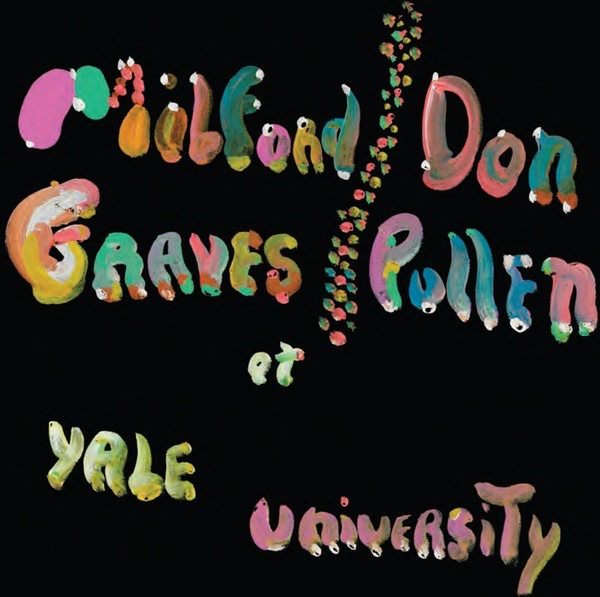
Like Corbett vs. Dempsey’s CD, “The Complete Yale Concert, 1966”, Superior Viaduct’s edition features a cover that reproduces (albeit a different one) one of the hand painted covers made by Graves and Pullen, in a tiny number, for a special, very limited-edition of “In Concert At Yale University” that were sold at a Nation of Islam convention and other events. It’s a fantastic way to encounter the full concert as it unfolded in real time.
Milford Graves’ “Bäbi” appeared in 1977, a full decade after the release of “Nommo”. While the drummer had laid his rhythms across seminal records like Albert Ayler’s “Love Cry” and Sonny Sharrock’s “Black Woman”, as well as recording “Message To The Ancestors” with Andrew Cyrille, the album marked something of a return for the artist. By the early 70s, having pushed his unique approach to drumming to the point of emotionally and physically demanding ritual, he recognized the toll of playing the way he did and more or less stopped performing.
This hiatus came to an end in March of 1976 when Graves was invited to perform on WBAI's Free Music Store radio show. For the live, on-air performance, he decided upon a trio line-up of himself joined by the twin saxophones of Hugh Glover and Arthur Doyle, both of whom maintained philosophies toward playing that were closely aligned with his own. This same, now legendary ensemble, also features on Black Editions’ incredible recent double LP “Children of the Forest”.
In the spirit of immediacy and the moment, rather than later entering the studio with what had become a well-honed band over the preceding months, Graves chose to use the very live radio performance toward which they were working as the material for “Bäbi”. Originally released the following year (1977) on Graves’ own IPS (Institute Of Percussive Studies) imprint, the album arguably remains Graves’ defining statement, and by far one of the most important records to emerge from the then thriving New York loft scene.
Driven by Graves’ unrelenting rhythms, across each side of “Bäbi”, comprising the three pieces - “Bä”, “Bi” and “Bäbi” - Glover and Doyle unleash a furious storm of tonal interplay, gruff harmonics, and bristling texture in a highly responsive dance of furious energy, as the trio pushes the expressions of free jazz into uncharted realms, howling horns play against Graves’ raw tribalism and latin infused rhythms, producing something both intricate and rigorously creative, and emotive, buoyant and joyful at the same time.
Originally published by Soundohm.