“Comprised of microtonal synthesizer music, composed and recorded by Bergstrøm-Nielsen at the Danish Institute for Electroacoustic Music (DIEM), largely on a Yamaha TX802, Humlebier is a striking, stand out work of its era.”
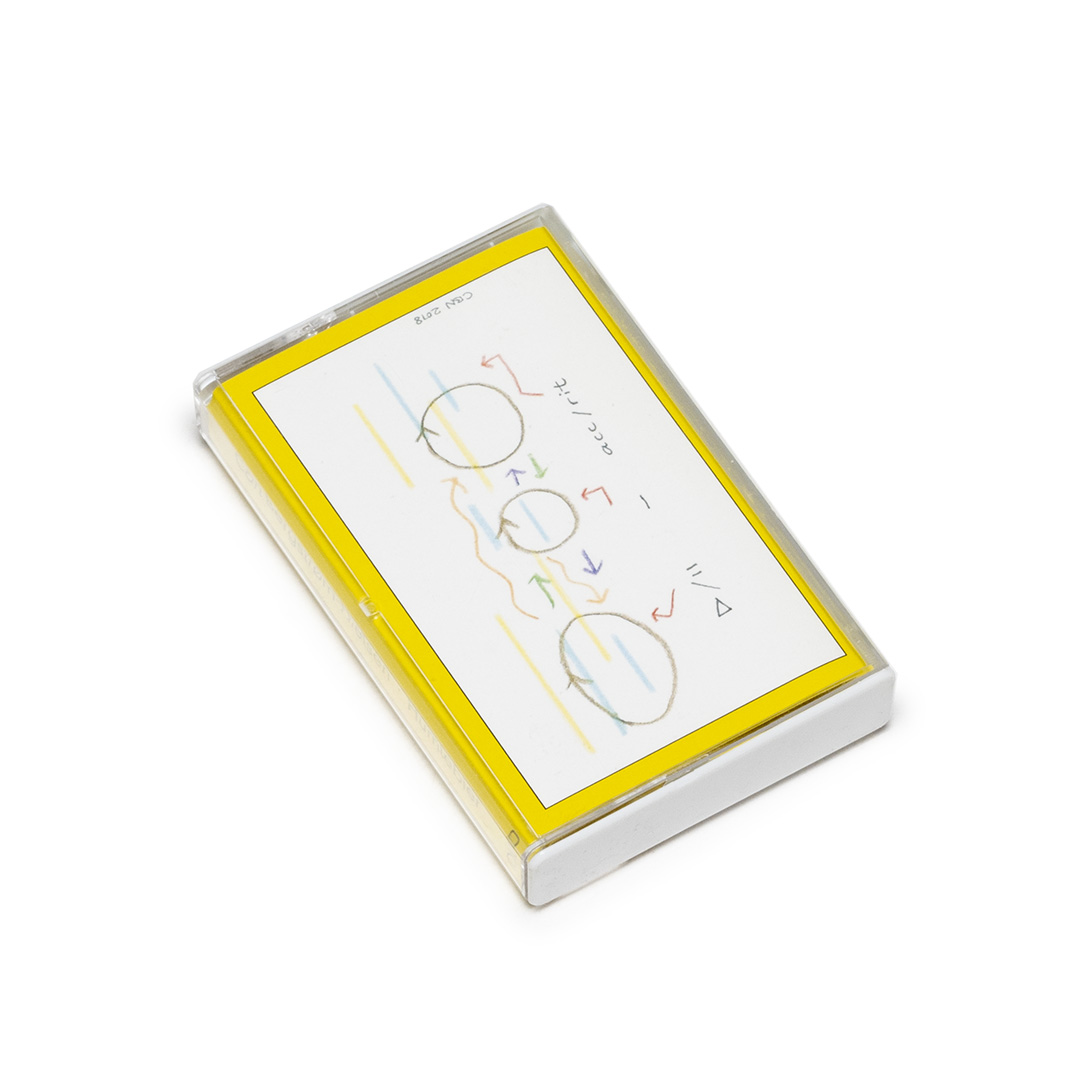
You might have noticed, we can’t get enough of the Institute for Danish Sound Archaeology. Since launching in 2017, uncovering and releasing astounding artifacts of historical Danish electronic music and sound art by Knud Viktor, Henning Christiansen, Per Nørgård, Lene Adler Petersen, and others - each melting the collective brain, while broadly reforming the understanding of Denmark’s contribution to the fields of experimental sound. Mid-way through 2019, they’ve already had a stunning year, and now they’re back with one of our favourite releases to date - a cassette reissue, faithful to its original format, of Carl Bergstrøm-Nielsen’s overwhelmingly beautiful Humlebier, originally released in 1981.
Born in 1951, from the mid-1970s on, Carl Bergstrøm-Nielsen has remained a crucial, but often overlooked member of the Danish landscape of forward thinking sound - teaching courses in music therapy, intuitive music and graphic notation, as well as, in addition to his solo efforts, working within numerous collectives, playing in the Group of Intuitive Music, and in ABFA with John Tchicai. While having appeared on various collections of experimental music over the years, Humlebier, issued as a cassette in 1981 by Samfundet Til Udgivelse Af Dansk Musik, remains his only full length solo release. What he lacks in numbers, he certainly makes up in a single punch.
Comprised of microtonal synthesizer music, composed and recorded by Bergstrøm-Nielsen at the Danish Institute for Electroacoustic Music (DIEM), largely on a Yamaha TX802, Humlebier is a striking, stand out work of its era. Comprised of three different versions of “static” music, built from humming sound formations - the parts combined, activated, or paused in a diverse number of ways at a slowly changing pace, with shifting motifs modifying the pitch of the other, culminating as an astounding body of shifting and droning tonal interplay. So delicately conversant that it’s hard to believe that its sounds are the voices of machines rather than humanity itself, this is unquestionably one of the most stunning and revelatory releases to reach our ears this year.
Originally published by Soundohm.