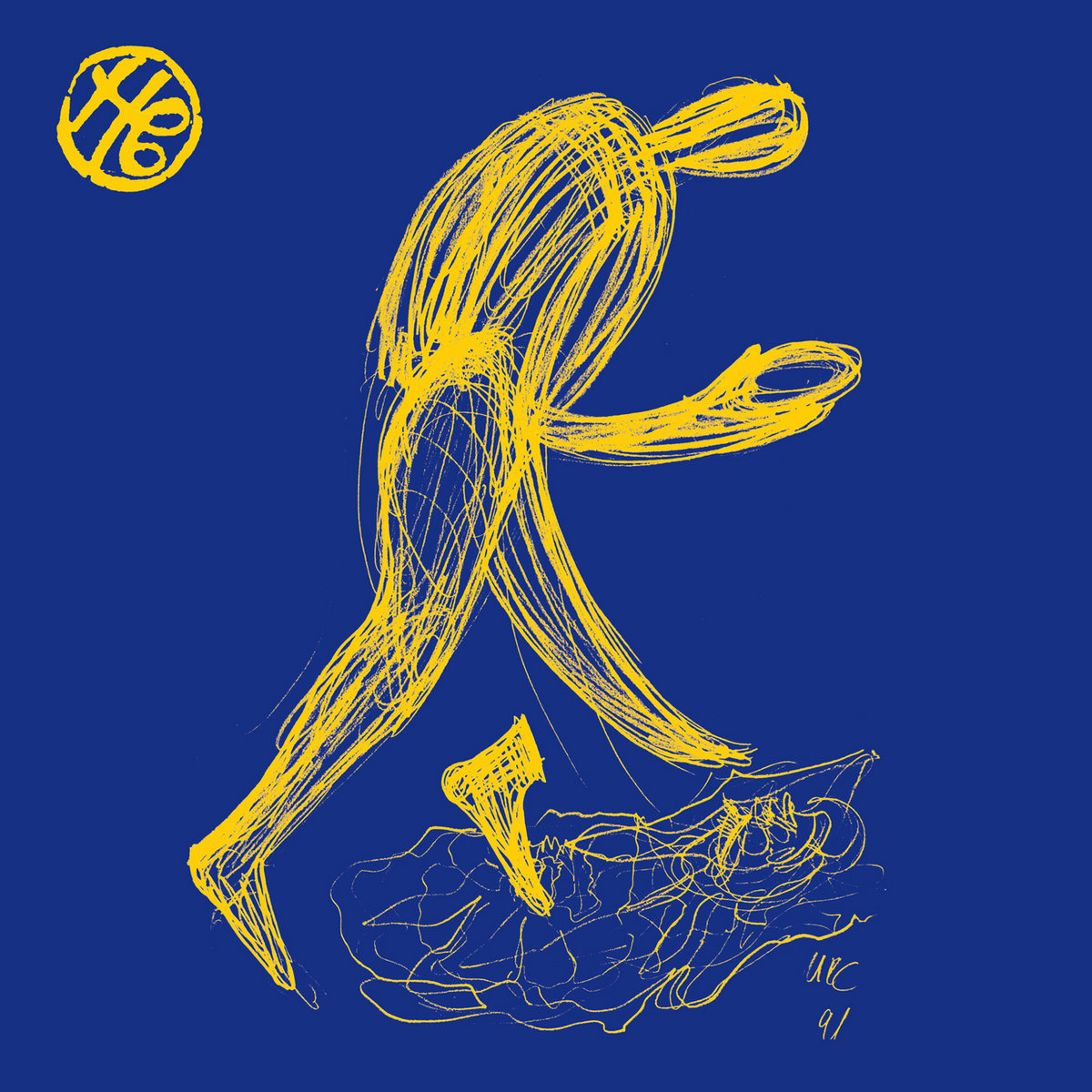
“Unlike anything else in Christiansen’s output, L'essere Umano Errabando La Voce Errabando is a meditation that wraps the listener in a melancholic mantra that doubles as a haunting and beautiful image of political hope.”
A mantra for four voices threaded by the sound of the ocean, a PVC tube, effects, and wind instruments, the Henning Christiansen Archive’s release of L'essere Umano Errabando La Voce Errabando - a previously unreleased archival work - stands among this seminal composer and Fluxus collaborator’s most distinct and remarkable works available to date.
The impact of a handful of years and a few records on perception of history can be incredible. Less than a decade ago, for all but a few sound-art fans and scholars, Henning Christiansen ranked among the most obscure figures in 20th century music. Just a stone’s throw down the road, thanks to the devotion of a small number of labels - Institut for Dansk Lydarkæologi, Holidays, Slowscan, Penultimate Press - each bringing forth reissues and archival releases of incredibly rare works by the Danish multi-disciplinary artist and composer, Christiansen has come into focus as one of the most important and distinct creators of experimental sound of the last half century or more. Recently, rather than simply acting as facilitator, the Henning Christiansen Archive has entered the fold as an imprint in their own right, adding depth and range to what we have thus far been able to glean from his vast and incredibly varied body of work. Their latest and third release, a beautiful LP comprising a previously unreleased work from 1991, L'essere Umano Errabando La Voce Errabando (The Wandering Human Being - The Wandering Voice), takes this even further, offering yet another world of exploration from this singular mind.
Not only was Henning Christiansen (1932 - 2008) one of the 20th Century’s most striking and visionary composers, he was also the most notable member of Fluxus’ Danish arm. A bridge between the world of fine art and realms of avant-garde sound, over the course of his career he continuously dismantled the standard terms for categorization and definition within the arts. The purity of his work and ideas cast a long shadow, refocussing the ear on the truths at the heart of experimental and avant-garde practice. He was a radical collectivist as much as an assertive individualist - contradictory and reactionary - theatrical and inward facing - possessed by a singular vision which drove him down uncharted paths that paid little mind to the expectations placed upon where music rests in our lives.
Like so much of Christiansen’s work, L'essere Umano Errabando La Voce Errabando, grows from, and blurs the boundaries between, art and life. A piece for voice, featuring Carlo Quartucci, Carla Tatò, Ursula Reuter Christiansen, and Henning Christiansen, it grew from a series of conversations and previous collaborations between the two couples who retained a close friendship for many years. Conceived on a beach on the island of Møn in the eastern sea in Denmark, the four mused on the sea as a connecting vehicle between their lives and those of others, laying conceptual root to finest in Henning's vast catalog.
L'essere Umano Errabando La Voce Errabando rolls hypnotically like the sea, feeling as organic, matter of fact, and at ease, as it does radical and forward thinking. Phrases in various languages flirt with forms of sonic mysticism that touch the intuitive origins of music. In Christiansen’s hands, a conceptual bridge between the geographic points implied by the two couples’ respective lives forms, allowing words and language to become a shared sound that eradicates identity, nationalism, and the very idea of difference.
Unlike anything else in Christiansen’s output, L'essere Umano Errabando La Voce Errabando is a meditation that wraps the listener in a melancholic mantra that doubles as a haunting and beautiful image of political hope.
Originally published by Soundohm.