“Unmissable across the two sides of Le Massacre Du Printemps is the striking balance of joy and rigour that permeates this music.”
The venerable Paris based imprint, Souffle Continu, is back with 2 killer offerings from the furthest reaches of the 1970s French avant-garde - Jef Gilson’s seminal LP, Le Massacre Du Printemps, and Sahib Shihab and Gilson Unit’s La Marche Dans Le Désert. Absolutely stunning statements that bring the rare artistry of Jef Gilson into central focus at long last.
We have an unquestionable love affair with the Paris based imprint, Souffle Continu. Since their launch in 2014, they’ve yielded an astounding stream of LPs, tapping remarkable, under explored trajectories within the history of French avant-garde and experimental music, while offering particular emphasis to the country’s contributions to the fields of free-improvisation and jazz. In 2020 alone, they’ve dropped crucial reissues from Philippe Doray and Les Asociaux Associés, Théâtre Du Chêne Noir, Steve Potts, and Alain Bellaïche, and now they’re back with two more stunning artifacts, Jef Gilson’s seminal 1971 LP, Le Massacre Du Printemps, and Sahib Shihab and Gilson Unit’s La Marche Dans Le Désert, from the following year. Both reissues mark their first reemergence on vinyl since their initial release, and, in addition to their staggering artists, offer essential insight into one of the most important figures in French avant-garde jazz of that era.
Jef Gilson was a fascinating figure in the history of the French avant-garde. Not only did he work prolifically as a side man and band leader, but his work as an engineer - recording albums by Jacques Thollot, Frank Wright, Byard Lancaster, Steve McCall, Baikida Carroll, Khan Jamal, Steve Potts, Archie Shepp, Jean-François Pauvros, Gaby Bizien, David S. Ware, Roscoe Mitchell, Wadada Leo Smith, Anthony Braxton, Joe McPhee, and Steve Lacy, among many others - brings him into focus as one of the most important, but under-recognized figures in improvised music from the 70s and 80s. He is also the man behind the legendary imprint Palm, one of the few imprints of the era to deftly bridge the connections between the forefronts of American and European free jazz.
Gilson got his start - first as a clarinetist and then as a pianist - working in fairly straight-ahead jazz big bands, before, during the early 70s, beginning to shift toward hybrid forms of jazz and total improvisation. His 1971 LP, Le Massacre Du Printemps, originally issued by Futura Records and now returning to vinyl for the first time via Souffle Continu, takes us deep into the remarkable state of ferment transpiring for the composer and band leader during this moment. Featuring Gilson on Electric Piano, horns, and tuba, joined by Jean Claude Pourtier on drums, Pierre Moret on organ, and Claude Jeanmaire on prepared piano, with the ensemble intertwining percussive interventions on Timbales, Bongos, Gongs, Bells, Woodblocks, Claves, Maracas, and various percussion instruments collected by Gilson on a recent trip to Madagascar, collectively producing a startlingly unique tapestry of rhythmic and tonal interplay.
While undeniably pushing toward the furthest reaches of free jazz and improvisation, Le Massacre Du Printemps has a considerably different point of inception. Recorded in 1971 on the day following the death of Igor Stravinsky, Jef Gilson and his ensemble embarked upon what amounts to a remarkably unique homage to western classical music, joining the temperaments and approaches of jazz, contemporary and electroacoustic music, and wild, free passages that foreshadow the movement of ‘noise’, across a session that nods to everything from the work of John Cage, Pierre Henry, John Coltrane, Percussions de Strasbourg, and the Art Ensemble of Chicago, as well as forward thinking gestures from the French scene like Tacet, by Jean Guérin, etc.
Unmissable across the two sides of Le Massacre Du Printemps is the striking balance of joy and rigour that permeates this music. Each artist is locked into the sounds offered by the next, exactingly careful, spontaneous interplay and call and response of billowing, windswept proportions - the radical rattle and texture of multiple percussion instruments fed by forceful daggers of tone on pianos, organ, and tuba.
Souffle Continu’s reissue of his seminal LP, Le Massacre Du Printemps, is a work of towering historical importance.
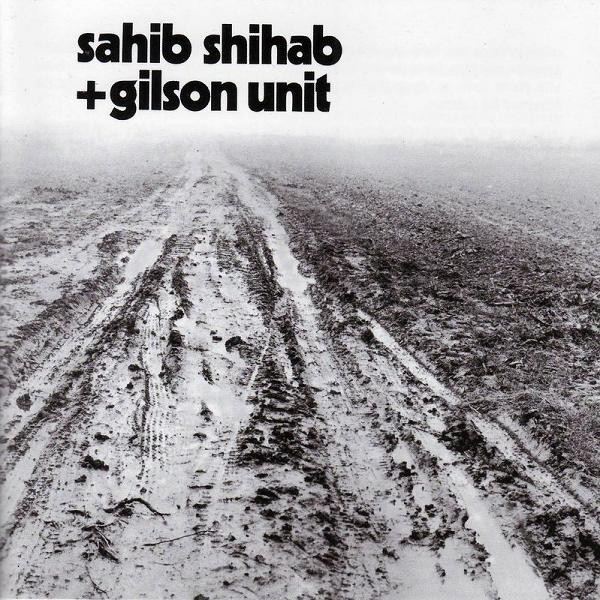
Recorded in Paris during February 1972 - a few months after the release of Le Massacre du Printemps - Jef Gilson was back behind his keyboards, embarking on a project that, particularly for its close proximity to its predecessor, displays the remarkable creative range of its creator. Featuring a much larger ensemble flying the banner of Gilson Unit, it encounters his interventions on piano, percussion, and synthesizer, fed by Jef Catoire on bass, Bruno Di Gioa on flute, balafon, and bongos, Maurice Bouhana on flute, drums, and additional percussion, Pierre Moret on organ, percussion, and synthesizer, and Jean-Claude Pourtier on whistle, drums, and percussion, joined by the American saxophonist, Sahib Shihab - notable for his work with Dizzy Gillespie, Thelonious Monk, and John Coltrane - who joins forces with Gilson to lead the way.
La Marche Dans Le Désert is a cosmic journey in sound, fed by Jef Gilson’s cross-cultural curiosities, that takes the temperaments of Pharoah Sanders and Alice Coltrane, and threads them with the wilder notions of sonic interaction, similar to those pursued by artists like Pierre Henry and Karlheinz Stockhausen during this rough moment. It is, first and foremost, a meeting of two iconoclastic creative minds, Jef Gilson and Sahib Shihab, the latter of whom had only recently crossed paths with the former, while touring with the Clarke-Boland Big Band. It’s immediately clear that the two inspired each other, both taking the opportunity to push into new ground, and in so doing are rare documents through which we can catch a glimpse of and celebrate Shihab at his most radical and arguably best.
Falling somewhere between spiritual jazz and full throttle free improvisation, La Marche Dans Le Désert pushes Shihab’s playing on amplified sax front and center, with the percussion heavy ensemble creating washes of bristling texture behind his striking, soulful lines of tone, matched closely by Gilson’s interventions and responses on electric piano. Over the course of 3 quarters of an hour, a life changing expanse of modal jazz wanders and darts, painting an imagistic landscape that alters the perceptions of modal jazz.
Immersive, challenging, and incredibly beautiful, La Marche Dans Le Désert is nothing short of a seminal document from the crucial dialog between free jazz artists from the United States and France during one of the most exciting moments in improvised music the world has yet to witness.
Originally published by Soundohm.