“Emerging in Sonorama's hands, Soundmagnificat rises from the shadows of history as a lost statement of 1970s European spiritual jazz, leaving you thirsting for more.”
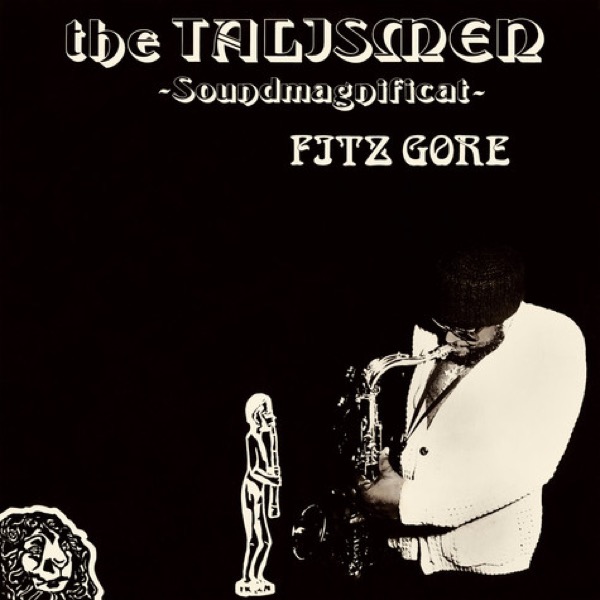
One of the most exciting jazz releases of the year, from Sonorama Records comes the first ever reissue of Fitz Gore & The Talismen's stunning 1976 LP, Soundmagnificat, a towering gesture of European spiritual jazz that turns history on its head, and brings a sinfully overlooked player to center stage.
By the mid 1970s, jazz - born in African American communities during the early part of the 20th century - had evolved into an avant-garde idiom with numerous creative offshoots - be-bop, free jazz, spiritual jazz, fusion, etc - and became a global music, sprouting new, indigenous realizations everywhere it went. Nowhere was this truer than in Europe, which played host to a substantial number of artists from the United States and elsewhere, as well as its own, giving way to some of the most important efforts in the history of this music. The Berlin based imprint Sonorama Records' latest unveils a crucial artefact within this tale. Privately issued and heard by only a handful of fans over the years since, it's a truly mind-blowing gem that pushes well off the beaten path, while challenging the dominant narratives regarding what was taking place in the German jazz scene at the time.
Fitz Gore was born and raised in Jamaica, before moving to Europe during the early 1950s. A self-taught saxophonist, across the 1960s he traveled across the continent, seeking out like minds to play with, while drawing heavy inspiration from the work of John Coltrane and Sonny Rollins and laying the groundwork for his deeply spiritual and modal sound. In 1975, Gore settled in Germany and formed his own group, The Talismen, drawing an international cast of astounding players into his midst - the Moroccan bassist, Gérard Ebbo, the Martiniquais drummer Philippe Zobda-Quitman, percussionist Lamont Hampton (later of the Noah Howard Group), the Hungarian drummer, Janos Sudy, the German pianist and producer, Ulrich Kurth, and the vibraphonist Jochen Paul - before entering the studio to record a handful of releases that would emerge over the next few years on his own private imprint, GorBra Records, co-run with his wife Gisela.
Soundmagnificat is Fitz Gore & The Talismen's second outing, released in 1976 on the heels of its predecessor, the band's debut, Soundnitia, issued the previous year. Arguably the greatest document of Gore's incredibly deep sound, it recasts the narratives of 1970s German jazz with far more creative diversity than the long-standing dominance retained by free jazz has generally allowed for, diving deep into the spiritual realms charted in the United States by the likes of John and Alice Coltrane, Pharoah Sanders, Albert Ayler, Kalaparusha Maurice McIntyre, Kelan Phil Cohran, and Don Cherry.
Comprising 4 tracks across 2 sides, Soundmagnificat presents Fitz Gore as a singer, composer, and a tenor saxophonist of towering presence, leaving you wondering why his place in the canon of jazz isn't already well established. Brilliant, introspective, and sensitive playing marks every moment, from the album's opener, Requiem for Julian "Cannonball" Adderley - a minimal and deeply emotive lament to the seminal American saxophonist - through a soulful, live rendering of the African American traditional, Steal Away, and the heavy, infectious grooves of Delilah, before culminating with Gore's delicate ballad, A Sinner Kissed An Angel, which encounters The Talismen weaving restrained interventions into the saxophonist's profoundly expressive tones.
Emerging in Sonorama's hands, Soundmagnificat rises from the shadows of history as a lost statement of 1970s European spiritual jazz, leaving you thirsting for more.
Originally published by Soundohm.