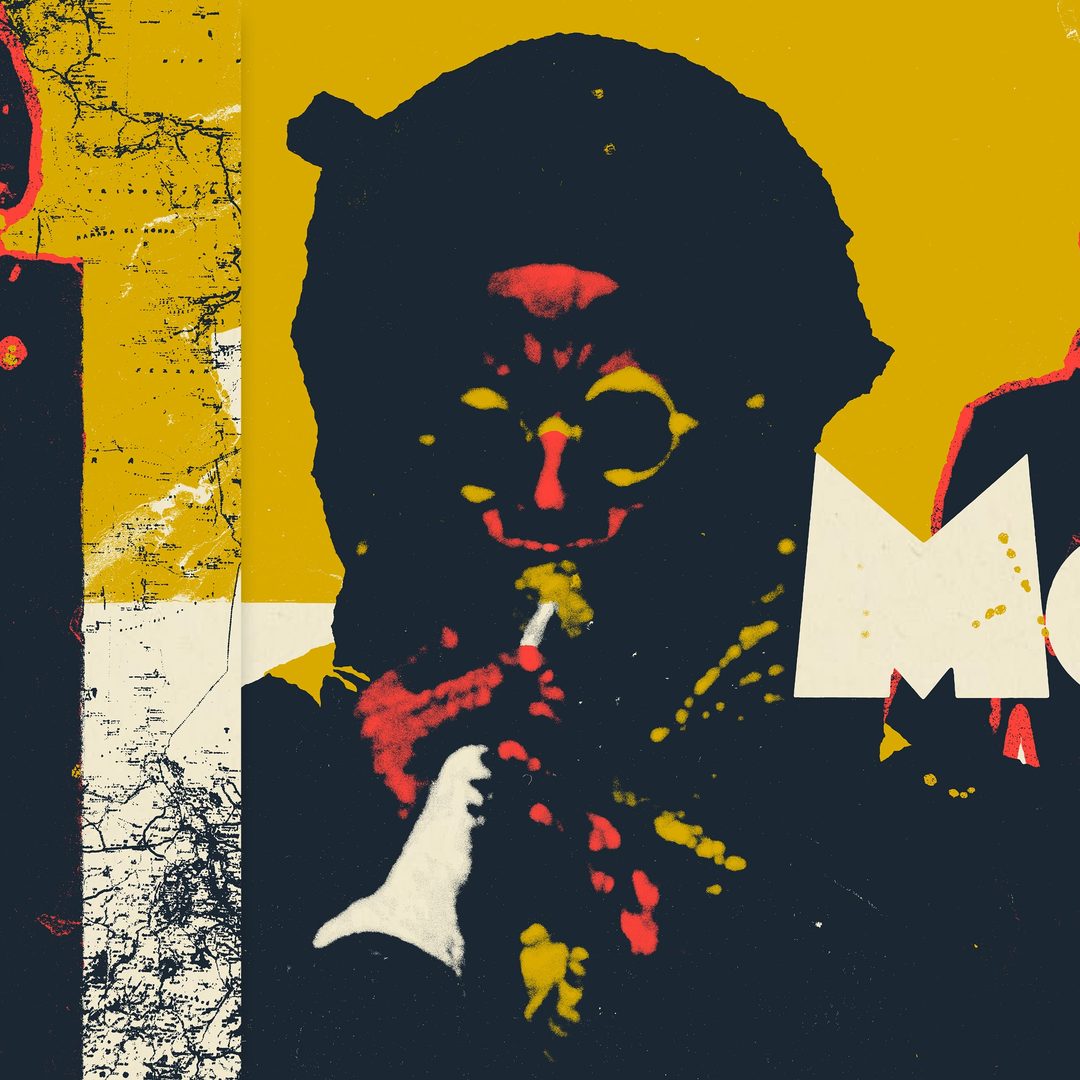
“Stretching across two LPs, it's sometimes difficult to know where Africa stops and Wilen begins.”
Back in 2017, the venerable, Paris based imprint, Souffle Continu, reissued one of the greatest artefacts of the 1970s French avant-garde, Barney Wilen's Moshi. A towering accomplishment that is so singular it has no equal, Souffle Continu's original edition - its first return to vinyl in decades - sold out fast. Thankfully, 4 years on, they've returned to this sonic wonder with 2 beautiful represses.
Originally issued by the seminal imprint Saravah in 1972, and among the most uncategorizable and sought after artefacts of the French avant-garde, Barney Wilen's Moshi is a stone-cold masterpiece - long holding a coveted spot in the hearts of adventurous listeners and record collectors alike. A wild unkempt cultural collage. A series of sonic experiments. A funky, psychedelic pilgrimage into the unknown - darting from one continent to the next, each of its tangents building toward a more optimistic world view through ordered sound.
Barney Wilen first came to prominence during the late 1950's and early 60's, working with Miles Davis, Kenny Clarke, Art Blakey, and Thelonious Monk, during the beginnings of post war American jazz's slow migration toward Europe. Always ambitious, his restless spirit pushed him forward. Wilen was among the first French players to embrace Free-Jazz, and equally among the earliest to attempt a fusion with rock music and the dawning psychedelic underground. At the outset of 1970, he began to look further afield, ultimately bringing together a team of filmmakers, technicians, and musicians, who traveled to Africa to document and record the continent's indigenous music. Released two years later following his return, Moshi is the conceptual result of that journey. Stretching across two LPs, it's sometimes difficult to know where Africa stops and Wilen begins.
Moshi is a vast collage of sound that incorporates field recordings made during Wilen's travels, placed in connection and association with the efforts of the saxophonist and his ensemble (many of whom were from Africa themselves); a cluster of diversity and a complex hybrid steeped in humanity, where the music of Africa, sometimes literally and sometimes conceptually, enters the music of Europe and America, and where the music of Europe and America equally enters that of Africa.
A series of restless expanses, each of Moshi's fourteen pieces becoming autonomous adventures, teeming with single-mindedness while never losing sight of the album's cohesive whole. The moment you think you understand it, it becomes something else. At times the unmediated voices of Africa in the form of field recordings are allowed to stand on their own, while during other moments they are radically intervened with, laying the groundwork for an extended jam. In passages, the imprint of popular music comes to the fore, placing the distinct sounds of African Jazz against funky excursions similar to the territories Miles Davis, Herbie Hancock, and Soft Machine were exploring during this period. In other moments the band drops into loose, free improvisations, and still others, psychedelic meanderings which stretch toward the realms of the Grateful Dead.
Singular, exciting, and challenging - rebelling against all forms of categorisation - Moshi is an artistic triumph; a high water mark from the 1970's French avant-garde that proposes a different way of seeing the world and understanding relationships between its diverse elements, and where the artist may play only a minor part.
In addition to Souffle Continu's beautifully remastered 2 LPs containing the original album, their 2 new represses - the deluxe screen print edition and the standard edition - contain the original liner notes with additional artwork, a 7", and a bonus DVD of Caroline de Bendern's film A l'intention de Mlle Issoufou a Bilma, documenting the incredible journey through Africa which gave way to Moshi - made that much more vivid by its brilliant soundtrack, also composed by Wilen.
Originally published by Soundohm.