“Nearly 50 years on, it feels as fresh and forward thinking as anything that has come since.”
An inevitable revelation for anyone unaware of them, Dialogo launches their brand new Piero Umiliani Legacy Series, with stunning vinyl reissues of Africa and Continente Nero, two of the celebrated Italian composer's most important and creatively visionary works. Challenging the influences of the African continent and beyond, ranging from the outright experimentalism of Africa, to the deep, spiritual jazz groove of Continente Nero, these albums represent some of the most thrilling and visionary sounds to have emerged from Italy during the 1970s, and remain mind-blowing 4 decades on.
The Milan based imprint, Dialogo, is on fire. 2020 saw them drop the astounding Ennio Morricone & Bruno Nicolai Dimensioni Sonore box set, while 2021 has already been graced by their reissue of Spirale’s legendary self-titled LP and the inauguration of their focused reissue series from the vaults of Cramps. With more on the way, they’re back with the launch of their Piero Umiliani Legacy Series, mining some of the most celebrated and sought-after works by the seminal composer. First up are two incredible LPs that were originally issued on labels that the composer ran himself, Continente Nero from 1975 and Africa, released under his mysterious moniker M. Zalla in 1972. Blurring the boundaries between jazz, psych, and outright experimentalism in the way that only Umiliani could, they’re a thrilling aural journey into the mind of one of the most important musical minds to emerge from Italy during the latter half of the 20th century.
Like so many members of his generation, Piero Umiliani (1926-2001) exists within a fascinating paradox of social and musical history; a composer of profound importance and vision, whose sprawling body of work has remained sinfully obscure. In part, this is a consequence of his devotion to the mysterious and often anonymous realm of Italian library music and soundtrack composition.
Rigorously experimental and forward-thinking, Umiliani produced hundreds of albums that collectively resist notions of genre, movement, and ideological position, many of which appeared under monikers - M. Zalla, Moggi, Old Big Chief And His Magic Twenty Fingers, Rovi, Tusco, etc - and add further mystery to his body of work. Few artists have ever been as prolific or visionary, making the inauguration of Dialogo’s Piero Umiliani Legacy Series - diving into the composer’s remarkable and hard to obtain catalog - as urgent as it is exciting.
Africa, released by Liuto Records - the label founded in 1970 by Piero Umiliani and his wife Stefania - belongs to the canon of library music produced in Italy across the 1960s, 70s, and 80s, which encountered many of the country’s most talented composers employed within the film industry, where they were offered unparalleled creative freedom to experiment and produce radical and forward-thinking sounds.
A long-standing holy grail for collectors of visionary Italian music, Africa emerged under Umiliani’s moniker M. Zalla, the pseudonym he used when tidying up uncompromising and avant-garde music textures. It was years ahead of its time upon release in 1972, encountering the maestro locked within the walls of his Sound Work Shop Studio, weaving complex narratives and sonic collisions, while incorporating dozens of influences from a life spent experimenting and discovering new sounds.
Launching from the prog-tinged rhythms of “Africa To-Day”, the album immediately shifts toward radical waters with the glacially paced pulsing rhythms and abstract electronics of “Echos” and “Sortilege”, the rippling minimalism of “Savana”, and the ‘fourth world’ temperaments of “Green Dawn”, but still refuses to be nailed down. Across the two sides, experimentation drives the sound, as the hypnotic drumming and bass lines of “Rhythmical Stress” break through, opening space for the flute driven works, “Sadness”, “Folk Tune”, and “Mysterious”, as much as driving, percussive and tonally rich works that make up the majority of the second side.
If ever there was an LP to expand the notions of library music’s vast potential and scope, M. Zalla’s Africa has to be it. Nearly 50 years on, it feels as fresh and forward thinking as anything that has come since. A true masterpiece of the genre, that stands with the best of any other idiom of experimental music.
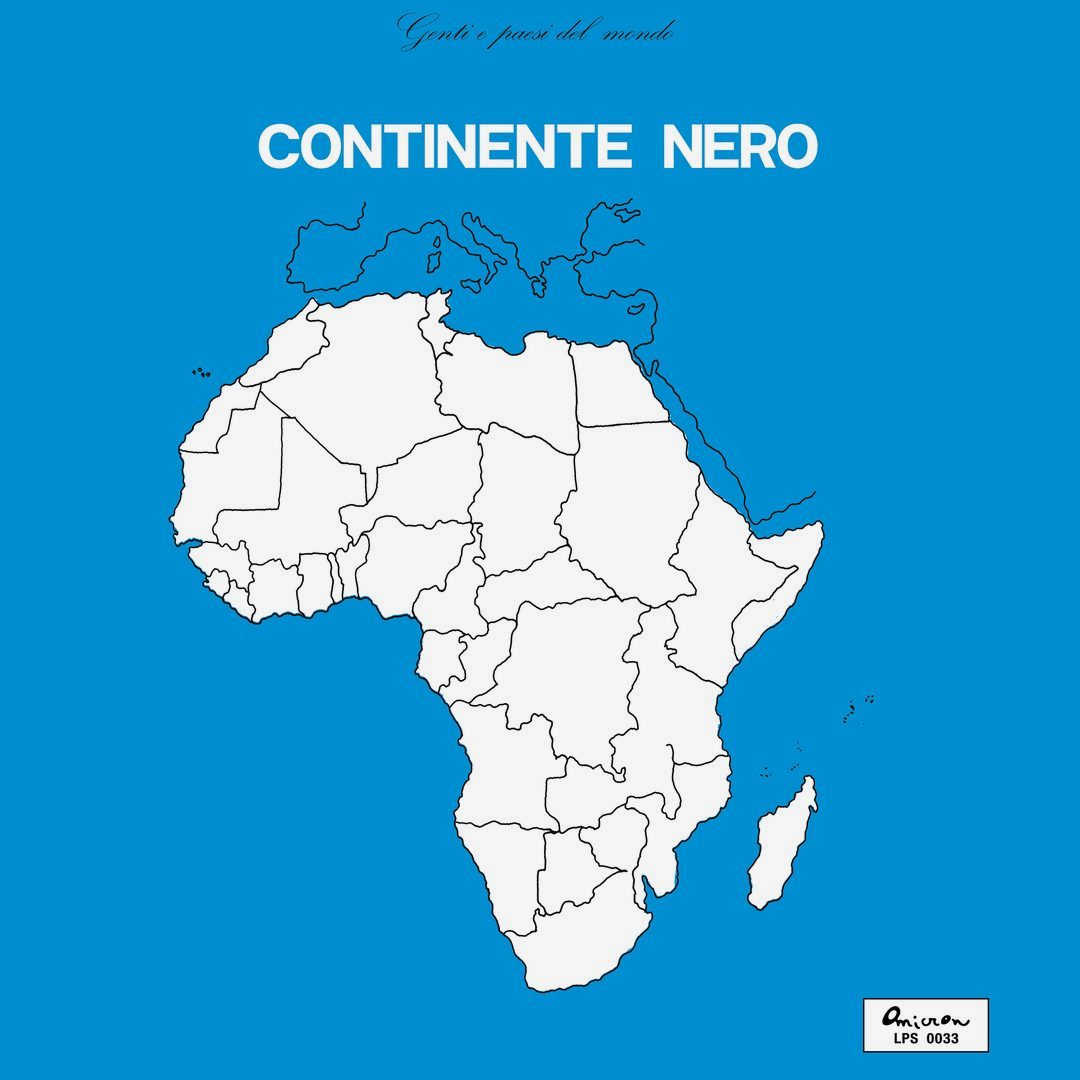
Released three years later in 1975, “Continente Nero” - issued by the composer’s Omicronis imprint - is the perfect complement to “Africa”. Where the former channeled sounds and influences drawn from the African diaspora into decidedly abstract terms, with “Continente Nero” Umiliani pays a similar homage by incorporating a vast palette of rhythmic variations into a visionary rethinking of the idiom of jazz, channeling Fela Kuti, Art Ensemble of Chicago, John Coltrane, Max Roach, Charles Mingus, Freddie Hubbard, and hundreds of others into a free-flowing vessel that’s entirely his own.
Chugging and free flowing, driven by tonal and rhythmic depth that only large bands can achieve, “Continente Nero” possesses such a remarkable sense of emotiveness and creative honesty that the fact that it was made for use in films, rather than being issued within the broader context of jazz, seems to defy reason. It easily stands among the greatest documents of the idiom to have emerged from Italy during any period.
Closely related to multiple threads of spiritual jazz that were emerging within the United States during roughly the same period, the band locks in and plows forward with African tinged melodies and carefully orchestrated distances, guided by Umiliani’s startling vision, repetitive structures - often bordering on the minimalistic - and unique rhythmic sensibility that runs like a river beneath it all, sending the listener plunging into a deeply personal, imagined world; a hypothetical fourth world concept of jazz.
Impossible to sum up, “Continente Nero” is incredible from start to finish. Long deserving of wide recognition, if not outright celebration, Dialogo’s reissue of this masterpiece is nothing short of a momentous event.
Originally published by Soundohm.