“There are certain albums that work like keys, unlocking the hidden mysteries and connections of what was.”
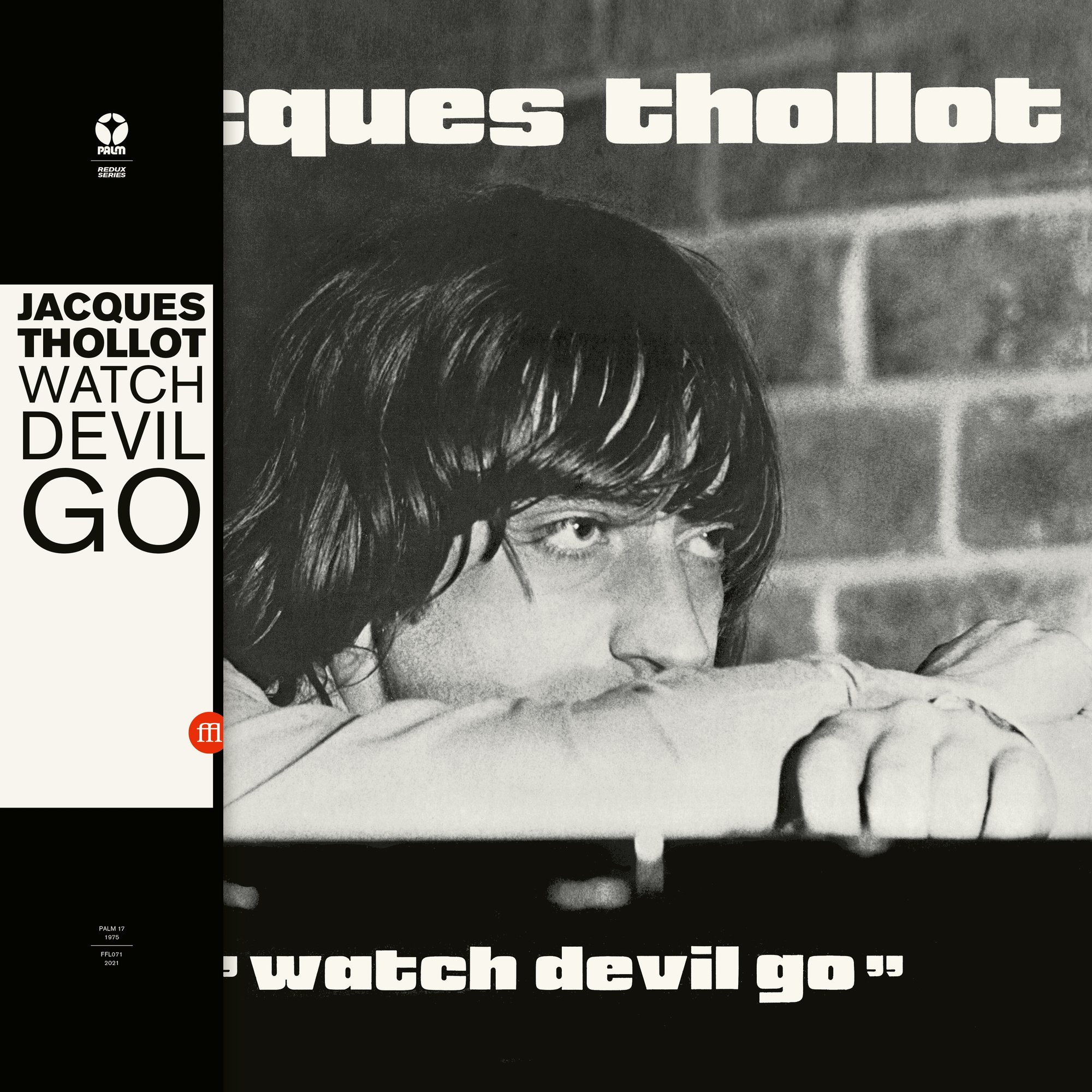
Souffle Continu continue to blow minds with their stunning discography of long-lost artefacts from the 1960s and 70s French avant-garde. Joining their “Palm Redux Series” - dedicated to the output of Jef Gilson’s legendary Palm Records - come two of their most striking releases to date, beautiful first-time vinyl reissues of Jacques Thollot’s 1975 LP, “Watch Devil Go”, and the lone self-titled offering produced by the one-off quartet of Jean-Charles Capon, Philippe Maté, "Butch" Morris, and Serge Rahoerson, issued in 1977. Entirely singular and illuminating what made the French context of jazz and free improvisation so special and unique, more than 40 years after they were laid to tape, they manage to pull the rug from beneath everything we think we know.
Since their humble launch in 2014, the Paris based imprint, Souffle Continu, has assembled a discography that is second to none, bringing together some of the most important gestures of the historic French avant-garde. Particularly focused on efforts of free improvisation that sprang from the country across the 1960s and 70s, artefacts from the vaults of seminal imprints like Futura, Saravah, and Un-Deux-Trois have formed an axis around which their cause has spun. Among these labels, few are as important as Palm, founded by the legendary pianist, producer and improvisor, Jef Gilson, during the early 1970s, the focus of Souffle Continu’s “Palm Redux Series”, to which their latest two releases belong. Each carving out creative territories that haven’t been witnessed before or since, these long out of print master-strokes stand among the most exciting and unique releases from Souffle Continu to date.
Jacques Thollot (1946-2014) was among the most important voices on the 1960s and 70s French jazz scene. A force behind the drums, he cut his teeth playing live with Kenny Clarke and Eric Dolphy, before carving out a seminal place in the country’s indigenous movement of free improvisation with Jef Gilson, François Tusques, Barney Wilen, Joachim Kühn, and Steve Lacy across the 60s, playing on many of the era’s seminal releases - Don Cherry’s Eternal Rhythm, Sonny Sharrock’s Monkey-Pockie-Boo, Kühn’s Paris Is Wonderful, and Lacy’s Moon, etc. - before venturing out on his own as a leader in 1971 with “Quand Le Son Devient Aigu, Jeter La Girafe À La Mer”, one of the greatest debut LPs in the history of French jazz, issued by Futura and reissued by Souffle Continu in 2019.
Despite the passage of 4 years, “Watch Devil Go”, released by Palm in 1975, is Thollot’s second LP as leader. Where its predecessor encountered him playing all of the featured instruments, here we find him on drums, piano, and synthesizer, backed by veteran players François Jeanneau on saxophone, flute, synthesizer, and Jean-François Jenny-Clark on bass. Like so much of his output, it forms the image of a radically free-thinking mind, breaking free from the scene within which he had been entrenched since his teens, and veering far afield.
Recorded in a single go, following Thollot’s inexplicable disappearance from the studio for most of the period for which the sessions had been booked, “Watch Devil Go” could arguably be best described as left-field jazz, with the album predominantly made up of short form “miniatures” as its two sides trace through stumbling, drunken passages of minimalist repetition, off kilter melodic confrontations that dance with rhythmic and harmonic tension, strange almost sci-fi synth vignettes, meandering free-form suites of striking and singular beauty, and outright free jazz assaults.
So strange, wonderful, and singular, while covering a remarkable amount of ground, “Watch Devil Go” is impossible to sum up. It is the witness to an artist seeking total freedom, that must be heard to be understood.
There are certain albums that work like keys, unlocking the hidden mysteries and connections of what was. In 2018 Souffle Continu dropped the reissue of Philippe Maté and Daniel Vallancien’s incredible s/t LP released by Saravah in 1972, followed by 2019’s reissue of the stunning album “L’Univers-Solitude”, by Jean-Charles Capon, also released by Saravah that same year. Then, earlier in 2021, they brought forth reissues of Palm’s two early 70s releases of Jef Gilson’s collaborations with the ensemble Malagasy, which included the contributions of Madagascar based multi-instrumentalist Serge Rahoerson. Stringing them all together, comes the Paris based label’s latest offering, a beautifully produced reissue of a one-off collaboration between Capon, Maté, and Rahoerson, joined by the legendary African-American cornetist / trumpet player “Butch” Morris, revealing remarkable collaborative connections taking place in France during the mid-70s that have otherwise remained obscure.
As the story goes, during November of 1976 Jef Gilson received a call from the drummer Serge Rahoerson, one of the musicians he had met in Madagascar at the end of the 60s. Rahoerson had played on Gilson’s first album and was in Paris for a few days. Inspired, Gilson immediately set up a recording session for the next day, enlisting the cellist Jean-Charles Capon, before struggling to complete the full ensemble he had hoped for. In the end, the saxophonist Philippe Maté, and the cornetist "Butch" Morris were brought in later to lay down additional parts that were masterfully mixed together by Gilson to appear as though they had all been recorded during the same session.
Simply issued under its players’ names on Gilson’s Palm imprint in 1977, the result - heard more than 40 years on - is nothing short of staggering. Each instrumentalist is at the top of his game, joined to collectively produce 5 compositions spread across 2 sides - 1 penned by Capon, 3 by Gilson, and 1 by Gilson and Rahoerson together - of languid, free flowing jazz that intertwines the idioms of bop, spiritual, and free in remarkably unique ways. Like an intricate tapestry drenched in oil, blowing in the breeze, moving between playful dances and tightly wound passages of bristling interplay, each player locks into the whole with perfect harmony, while inexplicably feeling as though their instruments have taken control and have a mind of their own, before peaking with the remarkable heights achieved by the wild, unkempt electronic sounds of the album’s penultimate track, “Orly Ivato”.
A truly staggering slow burn, the lone meeting of Jean-Charles Capon, Philippe Maté, "Butch" Morris, and Serge Rahoerson is easily one of the most fascinating moments captured during France’s remarkable, long history in jazz; an international quartet coming together in song, creating a music with few parallels, before its players drifted outward toward other points. Crazy important, and filled with truly intoxicating sounds.
Originally published by Soundohm.