“Sounding almost as though Tortoise and Stereolab had joined forces to play jazz, Piero Umiliani described his 1975 LP, “Piano Fenderblues”, as “Music with a modern but discreet sound”.”
Following on the back of their recent reissues of the Italian library music giant Piero Umiliani's Continente Nero and “Africa”, Dialogo returns with three brand new entries in their Piero Umiliani Legacy Series, stunning reissues of the composer's mid 70s, highly sought-after LPs, L'uomo e la città, Polinesia, and Pianofender Blues. Fully authorized, beautifully produced, and covering a vast amount of creative territory - dashing across funk laden worlds of jazz, as well as indigenous Italian, Latin, and Eastern temperaments - together they reveal the remarkable versatility of one of Italy's most radical musical minds.
The Milan based imprint, Dialogo, is on fire. 2020 saw them drop the astounding Ennio Morricone & Bruno Nicolai Dimensioni Sonore box set, while 2021 has already been graced by their reissue of Spirale’s legendary self-titled LP, the inauguration of their focused reissue series from the vaults of Cramps - yielding reissues of Horacio Vaggione’s "La Maquina de Cantar", Steve Lacy’s "Straws", David Tudor's "Microphone", and Costin Miereanu's “Luna Cinese” - and the launch of the Piero Umiliani Legacy Series, mining some of the most celebrated and sought-after works by the seminal composer. Last month they dropped beautiful reissues of Umiliani’s “Continente Nero” from 1975 and “Africa”, released under his mysterious moniker M. Zalla in 1972. Now they’re back with three more masterstrokes created by the composer during the mid 70s, pressed on vinyl for the first time in decades, that stand among the rarest and most sought after LPs in his discography. Where Dialogo’s first instalment of the series orbited around the composer’s visionary rethinking of spiritual jazz and African tinged idioms, the latest 3 - "L'uomo e la città", originally released in 1976, "Polinesia", and "Pianofender Blues", both from 1975 - illuminate the vast scope of his highly versatile mind, all peppered with a healthy dash of playfulness and a hint of 70s kitsch.
Like so many members of his generation, Piero Umiliani (1926-2001) exists within a fascinating paradox of social and musical history; a composer of profound importance and vision, whose sprawling body of work has remained sinfully obscure. In part, this is a consequence of his devotion to the mysterious and often anonymous realm of Italian library music and soundtrack composition.
Rigorously experimental and forward-thinking, Umiliani produced hundreds of albums that collectively resist notions of genre, movement, and ideological position, many of which appeared under monikers - M. Zalla, Moggi, Old Big Chief And His Magic Twenty Fingers, Rovi, Tusco, etc - and add further mystery to his body of work. Few artists have ever been as prolific or visionary, making the recent launch of Dialogo’s Piero Umiliani Legacy Series - diving into the composer’s remarkable and hard to obtain catalog - as urgent as it is exciting.
Originally issued in 1976 by the composer’s own imprint, Liuto Records, L'uomo e la città falls toward the end of a remarkably productive period for the composer. Over the 10 years prior, he created multiple dozens of film soundtracks and library releases in various roles and guises, before dramatically slowing his pace during the last 2 and a half decades of his life. “L’uomo e la città”, an intricate panorama of urban Italian themes - factories, metropolis, work, technology, etc. - attempts (and arguably achieves) to provide a plausible soundtrack to a rapidly changing world during the hectic 1970s, drawing on a vast palette of references and approaches, from avant-garde techniques / sound sources, risky experimentation, and easy-listening songs, all hinting toward the chaos of traffic and assembly lines, counterbalanced by the silence of the night, the end of the working day, and the happy ease of Sunday’s rest.
With Umiliani backed by a large, all-star ensemble that includes celebrity players like Bruno Tommaso, Oscar Valdambrini, Dino Piana and Nino Rapicavoli, “L’uomo e la città” falls solidly within the idiom of jazz that emerged during the 1970s, resting slightly adjacent to popular music, with funky, sweet tonalities and rhythms that reference the big band sounds of the 30s and 40s, while making something entirely new and of the moment, brought further afield by the presence of futuristic, electronic sounds.
Comprising 13 free-standing compositions that double as components within a seamless sonic journey of imagined and real spaces, from hard driving to smooth and silky the band rises and falls - locked in with extraordinary tightness - that plays like an absolute joy before the ear, “L’uomo e la città” is Umiliani gold.
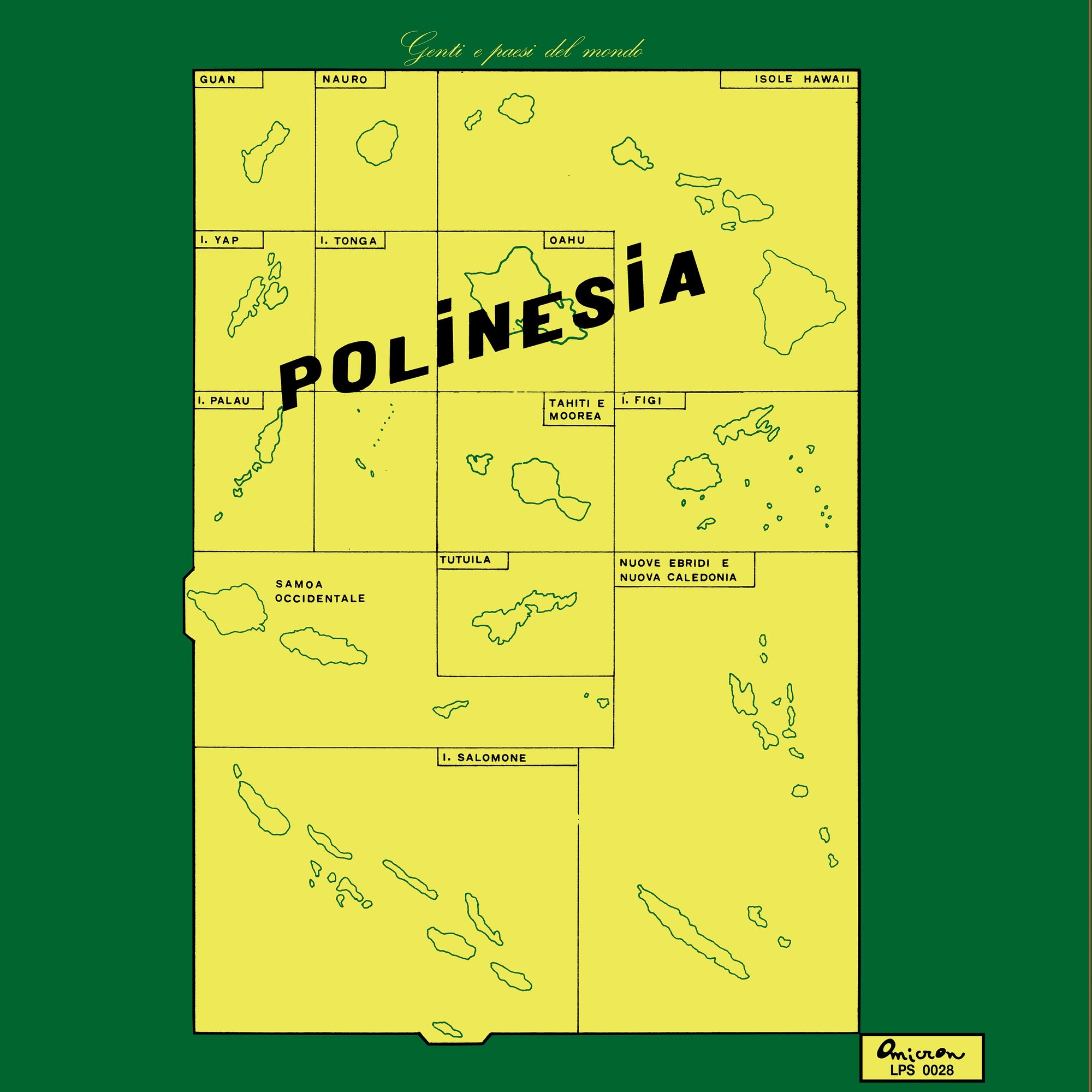
Belonging to a series of geographical-themed albums that draw upon numerous indigenous traditions from across the globe, like the previous releases in Dialogo’s Piero Umiliani Legacy Series - “Continente Nero” and “Africa” - “Polinesia”, issued by Piero Umiliani’s own Omicron imprint in 1975, highlights the composer’s travels and his striking ability to mirror these physical movements through sound, activating a seemingly unstoppable realm of creative freedom and exploration for composer and musician alike.
Rooted in a foundation of rich percussion, soft tribalism, and exotic suggestion, “Polinesia” renders an abstract mirage of white beaches kissed by the ocean via its colorful cocktail of sonority, dancing blissfully across the album’s 15 songs, and covering a startling amount of creative territory as it goes. From the loungy kitsch of its opening tracks, or the overwhelmingly beautiful vocal melodies of “Sotto le Palme”, to the percussive minimalism of “Conoe”, “Erbe Magiche”, “Danza Magica” - each calling to mind Moondog at his best, with a bit of Midori Takada thrown in - and the dense ambiences of “Pellegrinaggio”, the composer takes us deep into an imagined realm, moving freely across its geographies and drenching the ears in its sounds.
Beautiful and striking from the first turn to the last, Umiliani’s “Polinesia” fleshes out the world we began to explore with Dialogo’s reissues of “Continente Nero” and “Africa”, adding breezy sounds to the mix and plenty of dynamism across its length.
Sounding almost as though Tortoise and Stereolab had joined forces to play jazz, Piero Umiliani described his 1975 LP, “Piano Fenderblues”, as “Music with a modern but discreet sound”. Recorded by an ensemble comprising two electric pianos (Fender and Wurlitzer), bass, piano, drums, and percussion, the album encounters the famed Florentine composer stretching out into territories that stand slightly apart from his most widely celebrated efforts and avant-garde experimentations.
Released under the moniker Rovi by Umiliani’s own Omicron imprint, at first glance Pianofender Blues appears to be what the literalness of its title describes, a bluesy excursion driven by electric piano. At a closer listen, the album’s “light”, “easy listening” repertoire - orbiting around the melancholic tones produced by the famous keyboard - reveals a startling level of complexity and tension, that highlights the composer's remarkable versatility.
Funky and smooth, darting to and fro like elevator music on the high seas, Piano Fenderblues is a fascinating and startling listen - revealing its depths slowly over time - embedded in what might be misunderstood as one of Umiliani’s more accessible works. Dialogo’s beautiful, fully-authorized vinyl reissue of this strange wonder - the first on any format since its original 1975 release - further expands our understanding and approach to one of Italian music’s most radical and complex minds.
Originally published by Soundohm.