
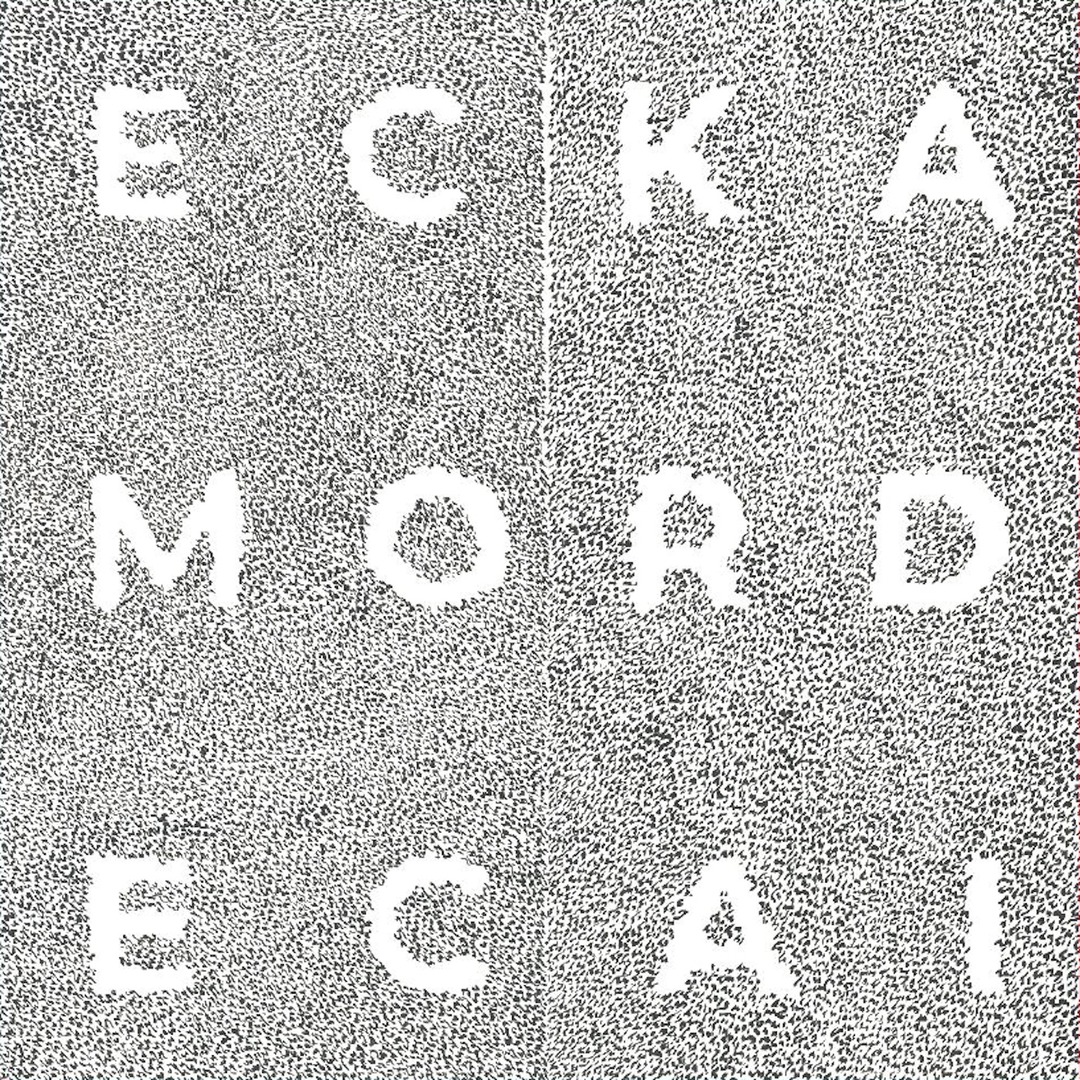
“Slow to unfold, dense with meaning, and filled with richness and depth, Ecka Mordecai’s “Promise & Illusion” is a brilliant and profoundly moving debut.”
Fresh off the back of their incredible Blue Notes and Park Jiha & Roy Claire Potter LPs, OTOROKU - the inhouse imprint of Cafe Oto - returns with a deep dive into the London experimental music scene, with Ecka Mordecai's "Promise & Illusion" and Billy Steiger's "Loud Object". Each is respectively the debut LP by artists focused around highly personal practices of improvisation, and are truly beautiful and visionary in entirely distinct ways.
Founded by Hamish Dunbar and Keiko Yamamoto (O Yama O) in 2008, over the years Cafe Oto has not only emerged as the beating heart of London’s thriving experimental music scene, it has become one of the most important platforms for a diverse, international constellation of adventurous sounds. Through its windows and between its walls, a vision of a community, bound by a passion for rigorous and radical forms of creativity, has solidified in unexpected ways. The support and cultivation of this community has always been central to the venue's mission, making the founding of OTOROKU, its in-house label, in 2012, a logical step. Initially run by the (now Stockholm based) composer John Chantler, and currently guided by the deft hand of Abby Thomas (whose own imprint, Bison, is equally worthy of accolades), during their run they’ve produced a remarkable body of LPs by Evan Parker, Okkyung Lee, Otomo Yoshihide, Peter Broetzmann, Pat Thomas, and numerous others. Despite all the legendary names that have come to grace OTOROKU’s output, their latest two LPs - Ecka Mordecai’s “Promise & Illusion” and Billy Steiger’s “Loud Object” - arguably best illuminate Oto’s greater mission, cultivating and supporting artists who have yet to receive the full attention that they deserve. Both Mordecai and Steiger are up and coming figures on the London scene, respectively embracing varied improvisation approaches via numerous sound sources, to produce deeply personal and emotive bodies of sonority.
Initially trained on viola da gamba during her youth, before studying performance and sound art, Ecka Mordecai has been active for a number of years, working with David Toop and Rie Nakajima, among others, and in the ensemble Circaea alongside Andrew Chalk and Tom James Scott. Running parallel to these activities, Mordecai has been slowly refining a practice of solo gestures rendered for cello, voice, egg flutes, and any number of other objects that fall into her hands. More recently, she collaborated with Valerio Tricoli on his 2022 LP, “Say Goodbye To The Wind” issued by Shelter Press, as well as on her cassette release, “The Addiction”, released by Hedione, also earlier this year.
While her playing incorporates numerous technical approaches - including timbral / extended techniques - Mordecai stands slightly apart from most other cellists currently working on the experimental music scene. Rather than the ferocious energy embraced by players like Okkyung Lee, Hannah Marshall, and Leila Bordreuil, or the micro-intervalic long-tones favored by Charles Curtis, Judith Hamann, and Lucy Railton, there are flirtations with melody, rhythm, and song - albeit in deconstructed form - that place her closer to the endeavors of Abdul Wadud, Lori Goldston, and Arthur Russell. Even here, the comparisons don’t fully jibe. While the instrument exists at the core of her practice, it feels slightly deemphasized within a broader palette of sonority - voice, field recordings, and other instrumental and non-instrumental sources - incorporated into compositions that seemingly pursue the elemental, human root rumbling beneath the impulse to commune through sound.
The culmination of years of a slowly honed practice, like much of Mordecai’s work, “Promise & Illusion” plays with the imaginary, harnessing improvisation as a means to dream. Deploying cello, voice, horsehair harp, violin, and field recordings, its ten works - beginning with the sound of footsteps and a door opening and closing repeatedly - were composed as an exploration of la charnière (from the French ‘hinge’), a subject rich in metaphor and literal meanings. As mysterious as it is emotively tangible, “Promise & Illusion” draws the ear into the constructs of an interior world, haunted by the sounds of her voice, strings, and a myriad of other sounds, each step forward illuminating further depths within a fascinating interplay between the perception of space, action, and performer.
Shifting between warbling, disembodied forms of musique concrète - dense with the textures of chance encounter and environmental sound - where Mordecai’s interventions of tonality may as well be the utterances of a ghost, and sorrowful, stripped back duets between her cello and voice that resemble passing encounters with the abstract stages of folk songs, “Promise & Illusion” embraces a sense of beauty and sentiment all too often abstained by experimental music, making it a much needed middle finger to Cage’s antiquated pursuit of a music “free of individual taste and memory (psychology) and also of the literature and ‘traditions’ of art” that has been guilty of hobbling the multifaceted potential of this territory of sound.
Slow to unfold, dense with meaning, and filled with richness and depth, Ecka Mordecai’s “Promise & Illusion” is a brilliant and profoundly moving debut. Presenting a deeply personal form of exploratory music - searching for gold amongst the gloom - it leaves you anxious to know what’s coming next from this rising star.
In many ways, Billy Steiger is an emblem of what makes the context of experimental music such a remarkable place. For years, he was a constant presence at Cafe Oto, working behind the bar, and in the audience for nearly every show. Whether he made music during those years is unknown, but it would be hard to think of anyone more devoted and engaged with experimental sound. Then, somewhere along the way, Steiger found himself on stage, clutching a battered old violin, embarking on solo conversations with the audience, or in improvised duets, trios, quartets, etc. with some of the most engaging players on the London scene. Eventually, he joined O Yama O - the duo of Keiko Yamamoto and Rie Nakajima, which often expands to include the contributions of Steiger, Marie Roux, and David Cunningham - which helped illuminate his versatility and multifaceted talents. Through it all, he has been developing a singular, focused practice exploring the expressive possibilities activated by strings suspended over a small, resonating body of wood.
“Loud Object”, Steiger’s debut solo LP, plays with the duality of his practice as both a musician and a visual artist, embarking upon an experiment in mark making through sound and writing with the ear; lines imprinted and pressed by metal, hair, and wood in the auditory realm. While easily interpreted as an allusion to Steiger’s chosen instrument, the album draws its name from that given by the Brazilian author, Clarice Lispector, to an early draft of her 1973 novel “Água Viva”. Among the most radical works of 20th century modernist prose, this visionary text departs from the conventions of structure, plot, and named characters, and follows the course of a directionless monologue that Lispector hoped might be "an arrow that will sink into the tender and neuralgic center of the word".
Like Lispector’s text, the two violin improvisations that comprise Steiger’s “Loud Object” embrace the unknowable moment of experience, the joys found in looseness, and the meaning found in the absence of definition. Both employ a kind of minimalist restraint and draw toward repetition, while entirely side-stepping that idiom’s draw toward certain harmonic relationships and the hypnotic. The first departs into a rapid-fire succession of strokes on the strings with the bow, calling to mind the possibilities of chance activated by muscle spasms, consciously pursued by Charlemagne Palestine in the development of “strumming music”. Like that composer, within limited means, Steiger draws the ear toward the monumentality of tiny shifts in delivery, tonality, and timbre, before actively intervening with the structure via the creation of what he refers to as “wells” in the composition; gaps or dips in the recording which could be filled or poured into with aggressive processing and sampling of the sound. While slower in its delivery and more complex in its tonal make up, the second follows the consistency of this process, transforming the raw emotive quantities of the violin into infinitely evolving landscapes of sonority.
Channeling the restrained elegance and energy of Takehisa Kosugi, while capturing something of the focused irreverence of Tony Conrad, Steiger’s “Loud Object” manages to transform the familiarity of the violin into a vital and raw aggregator of sound. In his hands - threaded through the acts of recording and processing - much like the acts of drawing or painting, it is immediate and full of life, added to and subtracted from, repeated and multiplied, in its quest for an actualized form. While Evie Scarlett Ward writes in the liner notes that this “record holds loss” it is clearly also a space in which something truly meaningful has been found.
Originally published by Soundohm.