“It’s a sinfully overlooked artefact from the histories of sound poetry, musique concrete, and electroacoustic practices at large.”
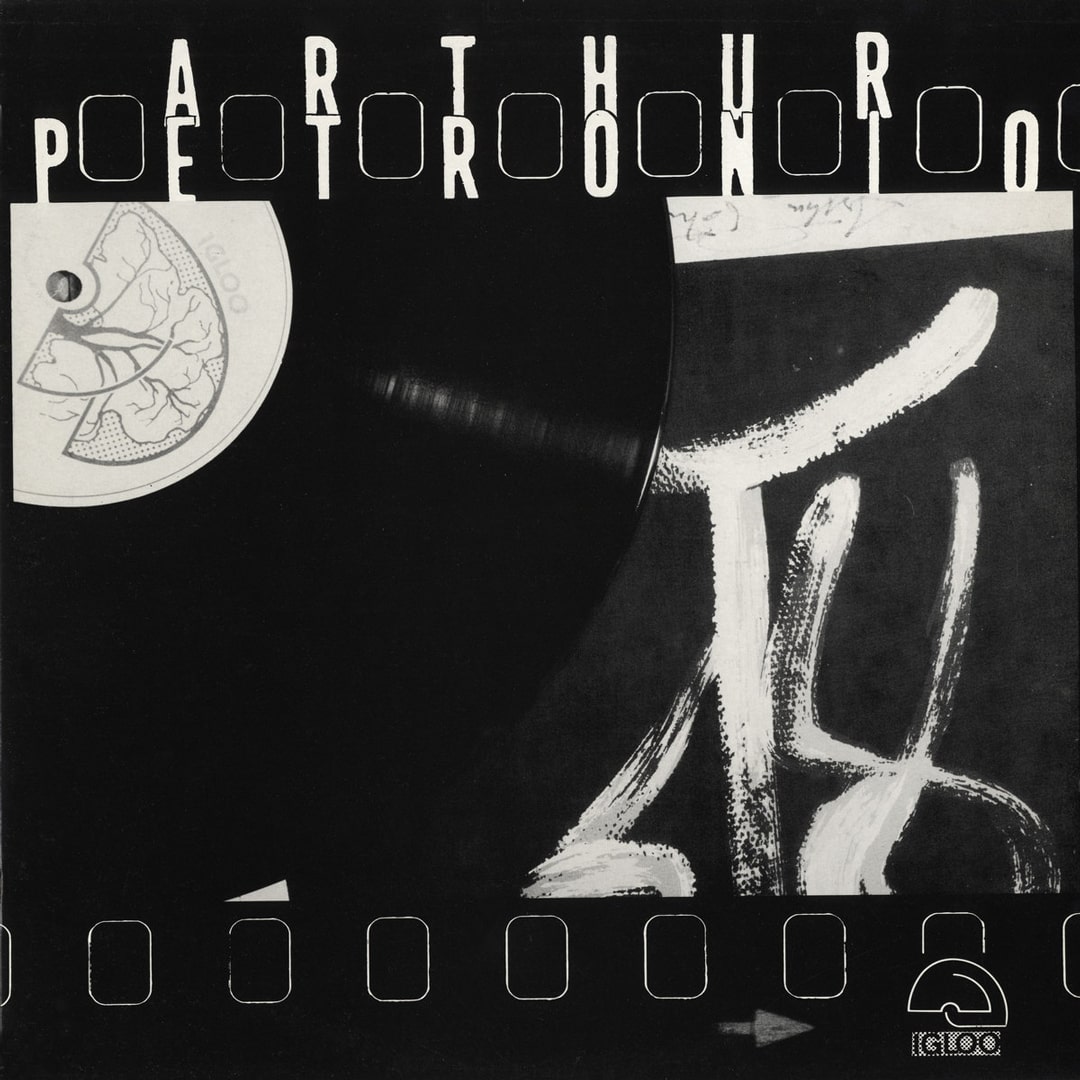
Appearing alongside their incredible 3LP box dedicated to the French composer, Nicole Lachartre, the Belgian imprint, Metaphon, returns with the first-ever reissue of Arthur Pétronio’s lone LP, originally issued by Igloo in 1979. Comprising four astounding works that rest at a highly singular juncture of musique concrete, electroacoustic music, and sound poetry, the album represents an immersive and truly captivating lost grail from the history of avant-garde and experimental sound.
Working at a slow, meticulous pace, for a decade and half, Metaphon - the Brussels based imprint run by Timo Van Luijk, Greg Jacobs and Marc Wroblewski - has continuously illuminated fascinating trajectories within a number of historically neglected contexts of electronic music and sound art. Primarily focused on work produced in Belgium - with their own criteria of personal taste guiding them well - they’ve produced an incredibly important body of albums that endeavour to respect and support radically forward thinking music and those who make it. The last year or so has witnessed Metaphon delve into increasingly more ambitious ground with some killer releases by Jacques Bekaert; Toshi Ichiyanagi, Michael Ranta, and Takehisa Kosugi; Johannes Fritsch; and Jan Bruyndonckx. Their latest is the first-ever reissue of the musician, poet and painter Arthur Pétronio’s lone LP, originally issued by Daniel Sotiaux's legendary Igloo imprint in 1979. Resting at a singular juncture of tape music, sound poetry, and acoustic avant-garde music, nearly half a century after it originally appeared, drawing on roots that stretch across the better part of the previous century, it feels as fresh, radical, and new today as when it was first laid to tape.
Born in Switzerland, Arthur Pétronio (1897-1983) lived in Belgium and The Netherlands between 1910 and 1924, before relocating to France, where he spent the remainder of his life. Regarded as a violin virtuoso, he studied under the master violinist, Eugène Ysaÿe, and played solo violin for Belgian King, Leopold II, at the age of 9, before being drawn toward the avant-garde and visionary ideas of Gesamtkunstwerk - 'total work of art' - at a fairly young age. A friend of some of the great luminaries of early 20th century creative practice - Kandinsky, Mondrian, Cocteau and Picasso - by 1919, drawing on the influence of Italian futurists, Pétronio had developed his own radical concept of what he referred to as “Verbophonie”, a compositional method integrating sound poetry / the human voice with acoustic instrumentation, in both scores and live performances.
Pétronio worked across numerous mediums over the course of his life, creating paintings, publishing several avant-garde journals and poetry books with participation of like minded artists, and writing an array of scores for solo instruments, small ensembles, orchestral works, and opera. While radical and revolutionary every step of the way, it was arguably his meeting with Henri Chopin in 1950 that pushed his work toward its most innovative zenith, extending his musical ideas with new possibilities of tape composition.
It is this work that features across his lone full length LP. With the exception of a small number of compilations - the legendary “Poesia Sonora” anthology and Cramp’s “Futura: Poesia Sonora” - it is the only place where the artist’s work can be encountered.
Pétronio’s self-titled LP comprises four reasonably long form works - “Tellurgie”, “Nouvelle Innocence”, “Cosmosmose” and “Sortileges” - that rest at a singular juncture of musique concrete, electroacoustic music, and sound poetry, culminating as what might be regarded as the fullest realisation of the ideas of “Verbophonie” that the composer developed sixty years prior during the second decade of the 20th Century. Each piece offers a writhing body of vibrating sound, from numerous acoustic and possibly electronic sound sources, that are threaded by interventions of Pétronio’s own vocalizations, as well as the voices of several female readers/performers, that contribute to the album’s expanded sense of theatricality.
Feeling as chaotic as it does ordered, across the length of the LP we are immersed in a multiplicity of fleeting meanings, drawing on the duality of the voices’ clarity and heavy abstraction of each work’s total structure. Often surprisingly rhythmic in their totality, within each piece Pétronio deftly taps the vast range of expressive possibilities possessed by the human voice: phonically, sonically, and as a transmitter of explicit and metaphorical meaning, in each instance pushed to the max by the unique possibilities activated by the manipulation of magnetic tape.
A truly thrilling listen at every turn that continues to evolve and transform with every spin, Metaphon has done us a great service by bringing this gem by Arthur Pétronio back into the world. It’s a sinfully overlooked artefact from the histories of sound poetry, musique concrete, and electroacoustic practices at large.
Originally published by Soundohm.